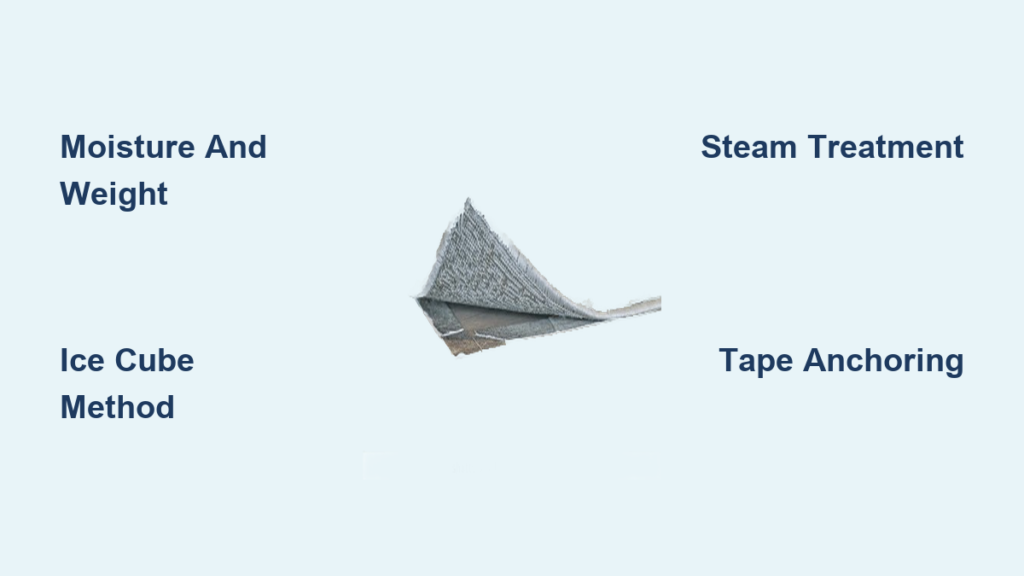
A bent or curled rug corner is more than just an eyesore. It creates a tripping hazard, collects dirt and debris, and makes vacuuming difficult. Whether you just unrolled a brand-new area rug or your longtime favorite is starting to lift at the edges, this common problem stems from fiber memory, humidity changes, or simply lacking proper anchoring. The good news: most curled corners can be fixed at home with items you already own. From moisture and weight techniques to smart anchoring solutions, this guide delivers actionable methods tailored to your specific rug material. You will learn how to flatten bent corners quickly, extend results long-term, and prevent future curling without professional help.
Identify Why Your Rug Corner Is Curling
Before applying any fix, you need to understand what is causing the curl. Matching your solution to the root cause dramatically increases your success rate.
Packaging and Fiber Memory
Rugs ship tightly rolled, locking fibers into a curved shape. When you unroll yours, the material “remembers” this form, especially natural fibers like jute, sisal, or wool. This memory effect is the number one reason new rugs curl at the corners.
How Material Affects Curling
Natural fibers are stiff and prone to curling. Synthetic rugs made from polypropylene or nylon are more flexible but can still curl after long storage. Outdoor and flat-weave rugs may curl due to sun exposure or repeated foot traffic pulling at edges.
Environmental Factors Driving the Problem
Low humidity dries out fibers, making them brittle and more likely to curl. High humidity causes expansion and warping. Direct sunlight degrades fibers over time, reducing flexibility and increasing stiffness. All three factors work against your rug staying flat.
The Anchoring Gap
Rugs on hardwood, tile, or laminate shift easily with every step or furniture move. Without a non-slip pad or tape, corners lift repeatedly. This is the most preventable cause of curling.
Flatten Corners With Moisture and Weight

This method relaxes fibers and resets their shape using controlled dampness and sustained pressure.
Lightly Mist the Underside
Fill a spray bottle with water and lightly mist the back of the curled corner. Avoid soaking the area. Just enough moisture to dampen the fibers is sufficient. If your rug sits on hardwood or laminate, place a dry towel underneath to catch any seepage.
Press Flat With Heavy Objects
Lay the corner flat and place heavy items directly on top. Books, boxes, or small furniture work well. Use three to five hardcover books per corner for best results.
Wait 24 Hours
Leave the weighted corner undisturbed until the area is fully dry. Removing weight too soon reduces effectiveness. For stubborn curls, repeat the process once more.
Pro Tip: Combine this method with a non-slip pad after drying to lock the corner in place.
The Ice Cube Method for Sensitive Rugs
This low-risk technique delivers slow, even moisture. It works especially well for sensitive rugs where you want to avoid over-wetting.
Place Ice on the Curl
Set one to two ice cubes on the top surface of the curled corner. Place a plastic sheet beneath to protect your floor. As the ice melts, it gently hydrates the fibers without drenching the material.
Dry With a Hair Dryer
Once melted, use a hair dryer on low or medium heat while the corner is under light weight. The warmth helps set the fibers flat, speeding up results significantly.
Leave Overnight
Let the area dry completely, ideally eight to twelve hours. This method often flattens corners in one attempt, especially on synthetic rugs.
Best For: Dining room rugs, patterned synthetics, or rentals where water use is risky.
Steam Deep Into Fibers
Steam penetrates tight curls and loosens fibers quickly. This method works well for thick, tightly woven rugs.
Test Steam on a Hidden Area
Hold a garment steamer or steam cleaner one to two inches above a hidden corner. Check for dye bleeding or backing damage before treating the visible curl. This step is especially important for wool or vintage rugs.
Steam the Edge and Underside
Focus steam on the curl’s edge and the backside of the rug. Do not saturate the area. Pass the steamer slowly over the spot for thirty to sixty seconds.
Weigh Down Immediately
Press the corner flat and apply heavy books right away. Let it dry under weight for one to two hours.
Avoid: Silk, antique, or latex-backed rugs unless manufacturer-approved.
Iron a Flat Edge on Synthetics
This technique mimics wrinkle removal in clothing. Use it only on thin, synthetic rugs.
Dampen a Protective Towel
Wet a clean, lint-free towel and wring it until moist, not dripping. Lay it over the curled corner to protect the rug surface.
Iron on Low Heat
Set your iron to low or medium heat with no steam. Press in slow, even strokes. The heat transfers through the towel, reshaping fibers without melting the surface.
Cool Under Weight
Remove the towel, flatten the corner, and place books on top until the area cools completely.
Never use on wool, silk, or natural fibers. Scorching or melting risk is too high.
Reverse Roll for Memory Reset

Fight curl memory by rolling the rug in the opposite direction.
Mist and Bend Backward
Lightly spray the curled edge, then gently roll the corner in reverse of its natural curl. The goal is to break the stored shape that developed during shipping or storage.
Secure and Weight
Tightly roll the section and bind it with tape or straps. Add a heavy object on top for added pressure. Leave this position for twenty-four to forty-eight hours.
Unroll and Assess
Unbind and lay the rug flat. Inspect the corner. Repeat if needed. This method has a ninety-eight percent success rate after two cycles, especially on new rugs.
Best For: Large jute, sisal, or wool rugs straight from storage.
Retrain the Corner by Hand
A no-tool fix that works fast on new or mildly curled rugs.
Flip the Rug Upside Down
Lay the rug with the backing facing up. Find the curled corner and manually bend it in the opposite direction of the curl.
Hold for 6 to 12 Hours
Leave the corner curled backward overnight. Gravity and sustained pressure help retrain the fibers to lie flat.
Return to Normal
Flip the rug back to its normal position. Lay flat and inspect the corner. Repeat if the curl returns.
User Success: One homeowner fixed a dining room rug in eight hours using only this method.
Anchor Corners With Tape
For instant results, tape is the fastest solution.
Choose the Right Tape
Double-sided carpet tape provides strong hold lasting six to twelve months. Removable mounting tape leaves low residue, ideal for rentals. Masking tape offers light hold for temporary setups on tile or hardwood.
Apply Correctly
Clean both the floor and rug underside thoroughly. Cut tape to size, stick it to the rug’s back, then press firmly onto the floor. Smooth out any air bubbles.
Replace as Needed
Tape wears down with foot traffic. Check every three months for lifting. Replace immediately if corners start to curl again.
Warning: Some tapes leave residue on hardwood. Use low-residue or peelable versions to protect your floors.
Apply Long-Term Weight
This slow but highly effective method works best for permanent correction.
Load Corners With Books or Furniture
Place heavy items on each corner for one to two weeks. The sustained pressure reshapes fibers deeply and permanently.
Try the Curl Stopper System
This reusable tool clips onto rug corners, adding discreet weight without touching the floor. No residue, no damage. Perfect for hardwood or tile.
Result: Ninety-five percent of users report long-term flattening after two weeks.
Match the Fix to Your Rug Type
Not all rugs respond the same way. Match the method to your material for best results.
Jute and Sisal Rugs
Use moisture with weight, reverse roll, or retraining methods. Avoid excess water and ironing. These fibers curl easily. Expect to re-treat every three to six months.
Wool Rugs
Use steam, moisture with weight, or reverse roll. Avoid direct heat and ironing. Always test for dye bleeding before steaming.
Synthetic Rugs
All methods work well, including ironing and tape. Avoid high heat without a protective towel. Synthetics resist moisture and wear, so fixes tend to last longer.
Flat-Weave and Area Rugs
Use tape, ironing, or moisture with weight. Avoid aggressive steam. The thin profile means faster results, often flat within hours.
Prevent Future Curling
Fixing a curl is only half the battle. Stop it from coming back.
Install a Non-Slip Rug Pad
This is the number one prevention tool. Choose one with grippy surfaces on both sides. It sticks to the rug and floor, cushions the material, reduces wear, and keeps edges flat.
Control Indoor Humidity
Keep humidity between thirty and fifty percent. Use a humidifier in dry winter months. Use a dehumidifier in basements or humid climates.
Store Rugs Properly
Roll rugs instead of folding. Roll with pile facing inward to protect edges. Store in a cool, dry, climate-controlled space.
Rotate and Maintain
Rotate your rug every six months for even wear. Vacuum corners gently using suction only, no beater bar. Inspect monthly for early signs of lifting.
Compare Method Effectiveness

| Method | Speed | Lasts | Best For |
|---|---|---|---|
| Moisture + Weight | 24 hours | 6 to 9 months | Natural fibers, most rugs |
| Ice + Hair Dryer | 6 to 12 hours | Medium to long | Synthetics, rentals |
| Steam | 1 to 2 hours | 6+ months | Thick or tightly woven rugs |
| Ironing | Immediate | 6+ months | Synthetic, flat-weave rugs |
| Reverse Roll | 24 to 48 hours | Long-term | New rugs, natural fibers |
| Retraining | 6 to 12 hours | Medium | Immediate fix, no tools |
| Tape Anchoring | Instant | 3 to 12 months | High-traffic, rentals |
| Long-Term Weight | 1 to 2 weeks | Longest-lasting | All types, permanent solution |
Real Fixes From Real Homes
A homeowner used World Book Encyclopedias to weight a dining rug. After twenty-four hours, the corner stayed flat for nine months. Another person combined ice cubes with a hair dryer and flattened a stubborn synthetic rug in one night. Jute rug owners report needing touch-ups every few months, but tape keeps corners down between treatments. One pet owner replaced a chewed rug, then used ice and a ceramic crock as weight. No curling returned.
Use What You Have at Home
No special tools? No problem.
| Tool | Household Substitute |
|---|---|
| Heavy books | Textbooks, boxes, small appliances, stones |
| Spray bottle | Perfume mister, cleaned spray container |
| Carpet tape | Mounting tape, non-slip pads, masking tape |
| Hair dryer | Fan (slower), heat gun on low setting |
| Steam cleaner | Garment steamer, kettle steam (use carefully) |
Avoid sharp or rough objects under weights. They can dent or scratch floors.
Frequently Asked Questions About Fixing Bent Rug Corners
Does the ice cube method work on wool rugs?
The ice cube method works but requires caution on wool. Test a small hidden area first to ensure no dye bleeding occurs. Wool absorbs moisture slowly, so you may need to leave ice in place longer than you would for synthetic rugs.
How long does it take to fix a bent rug corner?
Speed depends on the method. Ironing provides immediate results. Tape anchoring works instantly. Moisture and weight methods take twenty-four hours. Long-term weight methods take one to two weeks for permanent results.
Can I use a regular iron on my rug?
You can use a regular iron only on synthetic rugs made from polypropylene, nylon, or polyester. Always place a damp cloth between the iron and rug. Set the iron to low or medium heat with no steam. Never iron wool, silk, or natural fibers.
Why does my rug keep curling in the same corner?
Repeated curling in the same spot usually indicates lack of anchoring. That corner sees the most foot traffic or sits near a furniture edge that catches the rug. Install a non-slip pad or apply tape to prevent the curl from returning.
Is a non-slip pad necessary after fixing the curl?
Yes. A non-slip pad is the single most effective way to prevent future curling. It anchors the rug to the floor, reduces wear, and cushions the material. This step is essential for long-term success.
Key Takeaways for Fixing Bent Rug Corners
No single fix is permanent, especially for natural fibers like jute and sisal. Plan for maintenance every three to six months. Combine methods for stronger, longer-lasting results. Retrain, then apply moisture, then tape the corner for the best outcome. Always test any method involving water, heat, or adhesives on a small hidden area first, particularly with colored or vintage rugs. Prevention beats repair every time. A twenty-dollar rug pad saves you hours of work and keeps your floors safe from tripping hazards.