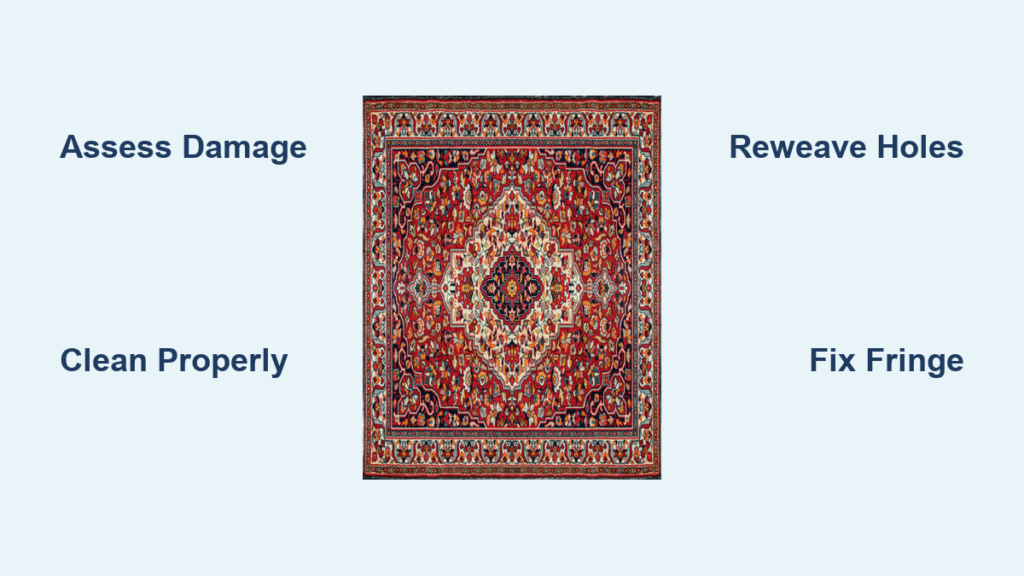
A Persian rug isn’t just floor covering. It is a legacy. Hand-knotted with precision and woven with stories, these rugs are often passed down through generations. When damage occurs, knowing how to repair a Persian rug properly can mean the difference between preserving a family heirloom and losing it to irreversible harm. This guide walks you through every critical step of Persian rug repair, from initial assessment to professional restoration techniques.
Assess Rug Damage Before Repair Begins
A thorough inspection reveals the true extent of damage and guides your restoration path. Before any repair starts, you need to understand exactly what you are working with.
Identify Structural Weaknesses
Check for sagging, loose warp threads, or soft spots under the pile. These may signal foundation decay, especially in older rugs. Gently lift the rug’s edge. If the side binding is brittle or unraveling, selvedge repair will be needed. Tap the back with your hand. A dusty puff means embedded soil, while a hollow sound could indicate missing wefts.
Spot Common Types of Damage
- Frayed or missing fringe: Often mistaken as decorative, fringes are the warp threads’ ends and critical to structural integrity
- Holes or thinning pile: Caused by moths, pets, or foot traffic
- Stains and odor: Pet urine, water, or spilled food can degrade wool and attract pests
- Color bleeding: Fugitive dyes may run after exposure to moisture
- Edge curling or buckling: Usually due to improper storage or lack of padding
Test Dye Stability Before Cleaning
Blot a hidden area with a damp white cloth. If color transfers, the rug has unstable dyes. This is a red flag for cleaning or rewashing. Never attempt water-based cleaning on unstable dyes without professional guidance.
Clean the Rug Before Making Repairs
Cleaning is not optional. It is the essential first step in any repair process. Dirt masks damage. A rug that looks mildly worn may hide moth holes or foundation rot beneath grime.
Choose the Right Cleaning Method
Hand-Wash for Antiques and Delicate Rugs
- Use pH-balanced, WoolSafe-certified shampoo
- Soak gently and agitate with soft brushes
- Rinse thoroughly and dry flat
- Ideal for silk, old wool, or rugs with natural dyes
Power-Wash for Heavily Soiled Wool Rugs
- Controlled pressurized rinsing removes deep-set soil
- Not suitable for fragile or antique pieces
Submersion Wash for Deep Odors or Stains
- Full immersion in a tank ensures complete soil extraction
- Requires monitoring to prevent dye migration
Avoid dry-cleaning for Persian rugs. Most systems do not remove deep contaminants and can leave residues that damage fibers.
Repair Fringe Damage Correctly

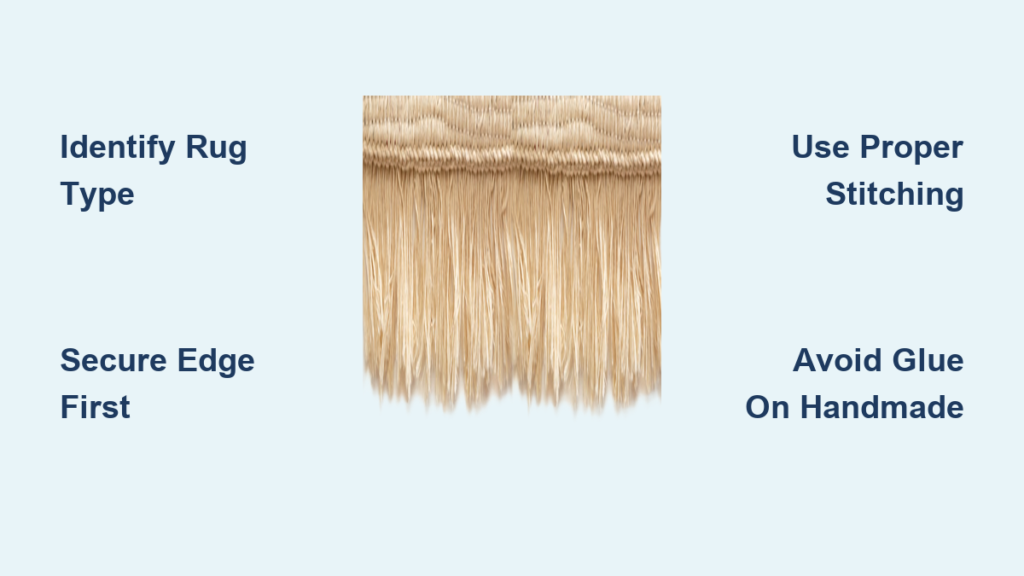
Fringe is not trim. It is the rug’s structural backbone. Cutting off old fringe to improve appearance weakens the rug and reduces its value.
Reattach Loose Fringes
If fringes are unraveling but intact, use a fine needle and matching cotton thread. Stitch invisibly along the base where fringe meets the rug. Knot securely on the back and trim excess.
Replace Missing Fringe
When fringes are broken or pulled out, extract remaining damaged warp threads. Insert new cotton warp strands through the edge. Knot them in pairs using the Zangera stitch, a traditional overhand knot that locks threads in place. Trim evenly and comb for a natural look.
Dye Discolored Fringe to Match
Discolored fringe, common in sun-exposed areas, should be hand-dyed to blend. Professionals use fiber-reactive dyes and steaming to set color without bleeding.
Fix Tears and Holes with Reweaving
Small tears become large holes if ignored. Reweaving restores both strength and beauty to your Persian rug.
Prepare the Damaged Area
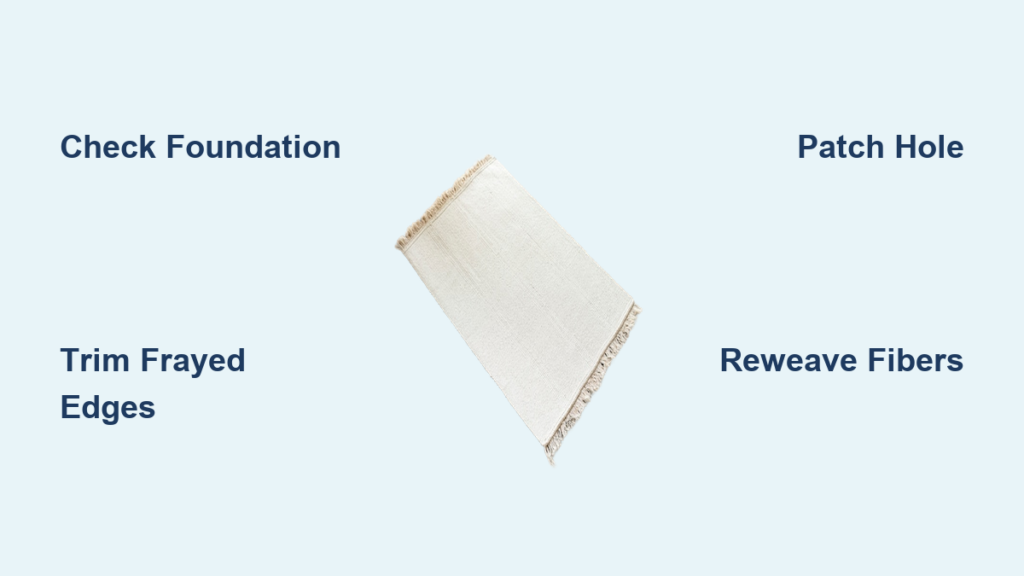
Trim loose fibers with sharp scissors. Clean edges to prevent fraying during work. Secure the rug on a weaving frame to maintain tension throughout the process.
Match Original Knotting Technique
Identify the knot type. Persian (Senneh) knots are asymmetrical. Turkish (Ghiordes) knots are symmetrical. Use wool or silk yarn that matches the original in color, thickness, and twist. Tie knots around existing warp and weft threads, following the original pattern. Maintain knot density, typically 60 to 500 plus knots per square inch.
Blend Pile Height and Direction
After reweaving, the new pile must lie in the same direction as the surrounding area. Gently brush with a soft comb and trim to match height. The goal is a repair that is invisible to the naked eye.
Patch Large Damaged Sections
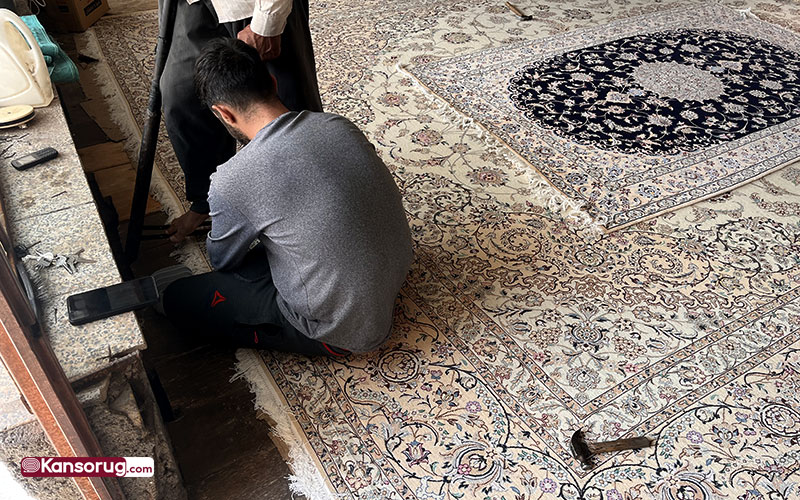
When reweaving is not enough, patching saves severely damaged rugs.
Cut Out Damaged Fabric
Remove all weakened or decayed fibers. Cut a clean, square opening to ensure clean edges for stitching.
Insert Matching Donor Material
Use fabric from a hidden part of the same rug, such as under furniture. Alternatively, use a donor rug of similar age, weave, and color. Custom-woven patches are used for museum-grade restorations.
Hand-Stitch the Patch
Align warp and weft threads precisely. Use a whipstitch or overcast method to join edges. Reweave the surface to match the surrounding design. Machine stitching is never used because it damages delicate fibers and shows visibly.
Restore Selvedge Side Edges
The side cords prevent unraveling and frame the rug’s design.
Rebind Damaged Selvedges
Remove loose or broken binding thread. Use wool or cotton cord in matching color and thickness. Whipstitch or overcast the new cord along the edge, replicating the original technique.
Reweave Before Rebinding If Needed
If the edge pile is missing, reweave first. Otherwise, the repair will lack support and the damage will spread.
Treat Moth and Pest Damage
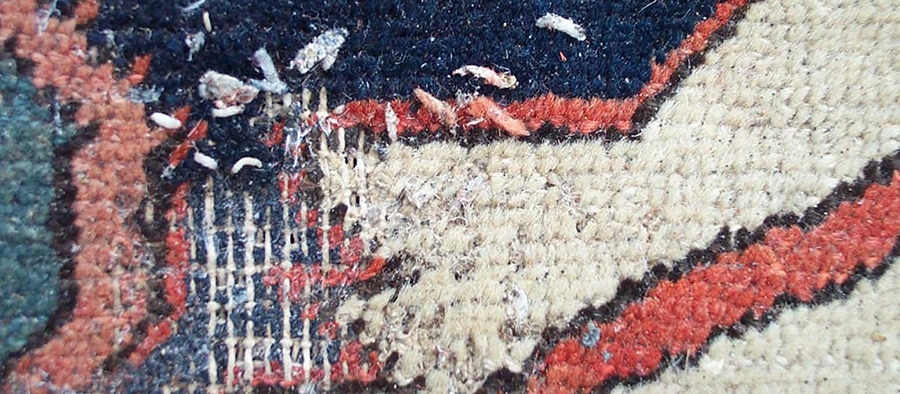
Moths do not eat the surface. They tunnel through the foundation, causing hidden destruction.
Confirm Infestation
Look for small, irregular holes. Check for silken casings or cobweb residue. Look for frass, which are tiny pellets, under the rug.
Eliminate Pests Safely
Freeze the rug by wrapping in plastic and freezing for 14 days. This kills eggs and larvae. Professional wash removes organic debris and lingering pests. Apply insecticide using fiber-safe, residual protectant. Treat the storage area with mothballs or cedar blocks to prevent reinfestation.
Repair Damage After Treatment
Once pests are gone, reweave or patch affected areas. Treat with CleanSeal or similar protectant to deter future attacks.
Fix Water and Pet Stains
Liquid damage requires fast action and expert follow-up.
Handle Pet Accidents Immediately
Blot urine with paper towels. Never scrub. Rinse with cool water and blot again. Apply a one-to-three vinegar-to-water solution to neutralize ammonia and stabilize dyes. Call a professional for full immersion wash and enzymatic treatment.
Warning: Over-the-counter cleaners like Resolve can permanently damage wool.
Restore Water-Damaged Rugs
If the rug was flooded or left damp, dry immediately in a controlled environment. Apply antimicrobial treatment to prevent mold. Correct dye migration with localized re-dyeing. Repair weakened foundation with stitching or patching.
Correct Color Fading and Bleeding
Time and light fade colors. Water can bleed them. Restoration brings harmony back.
Address Sun Fading
Use airbrushing for large, uniform fade areas. Apply dyes with heat setting to ensure longevity. Match hues using spectrophotometers or expert visual analysis.
Fix Dye Migration
If colors have bled, extract excess dye with controlled washing. Re-dye affected areas to match original tones. Severe bleeding may be irreversible, especially in low-value rugs.
Prevent Future Damage at Home
Preserve your rug’s beauty with simple, consistent care.
Vacuum the Right Way
Use suction-only mode. No beater bar. Vacuum both sides every one to two weeks in high-traffic areas. Use an upholstery attachment for delicate surfaces.
Rotate Every 6 Months
Turn the rug 180 degrees to even out wear and sun exposure. This extends the rug’s life by decades.
Use a Quality Rug Pad
A non-slip pad prevents buckling. It reduces friction from furniture. It cushions the pile to maintain density.
Handle Spills Like a Pro
Blot, do not rub. Use cool water, never hot. Avoid steam cleaners and harsh chemicals.
Know When to Call a Professional
Some repairs are beyond home care.
Seek Expert Help If
- The rug is antique, over 100 years, or high-value
- There is foundation damage or large holes
- Dyes are bleeding or unstable
- Moth damage is widespread
- You are unsure about cleaning methods
Choose Certified Rug Repair Services
Look for WoolSafe Certification for fiber and dye expertise. Check for TrustMark or NCCA membership for technical standards. Look for Textile Pro Certified for specialized oriental rug training. Reputable providers offer insured, nationwide collection and detailed repair reports.
Understand Repair Time and Cost
Repairs are custom, with no fixed timelines or prices.
Timeframes Vary
Fringe repair takes one to two weeks. Reweaving takes two to eight weeks, depending on size. Full restoration takes months for museum-level work.
Cost Depends On
- Size and location of damage
- Rarity of matching materials
- Labor intensity
- Dye matching and finishing
Get quotes based on photos or in-person assessment. High-end restorations can cost thousands but often preserve or increase the rug’s value.
Set Realistic Expectations
Even expert repairs have limits.
Not All Damage Can Be Fixed
Severe dry rot or foundation collapse may make restoration impossible. Poor past repairs, such as glued patches, can complicate or prevent proper restoration.
Color Match Is Not Perfect
Slight variations may remain, especially with aged natural dyes. The goal is visual harmony, not invisibility under magnification.
DIY Can Devalue the Rug
Amateur stitching, improper cleaning, or cutting fringes can reduce value by 50 percent or more.
Frequently Asked Questions About Persian Rug Repair
Can I repair a Persian rug myself?
Minor repairs like reattaching loose fringes or addressing small tears may be possible for experienced crafters. However, improper handling can weaken fibers, bleed dyes, or significantly devalue the piece. For antique or high-value rugs, professional restoration is strongly recommended.
How much does Persian rug repair cost?
Costs vary widely based on damage extent, rug value, and required expertise. Simple fringe repair may cost a few hundred dollars, while extensive reweaving or full restoration can cost several thousand. Always get quotes based on photos or in-person assessment.
How long does Persian rug repair take?
Timeframes depend on damage severity. Minor repairs take one to two weeks. Reweaving large areas takes two to eight weeks. Full museum-grade restoration may take several months. Rush services are rarely available due to the meticulous nature of the work.
What causes holes in Persian rugs?
Holes typically result from moth damage, pet scratches, heavy foot traffic, or foundation decay. Moth damage is particularly insidious because it often starts invisible beneath the surface and spreads through the foundation threads.
How do I find a reputable Persian rug repair service?
Look for WoolSafe Certification, TrustMark registration, or NCCA membership. These credentials indicate proper training in fiber care and restoration techniques. Request before-and-after photos of previous work and verify they specialize in oriental and Persian rugs specifically.
Final Thoughts on Repairing Your Persian Rug
Repairing a Persian rug is an act of preservation. Every knot, dye, and thread tells a story, and with the right care, that story continues for generations. Start with professional cleaning to reveal the true extent of damage. Assess honestly whether the repairs are within your skill level or require certified expertise. For structural repairs, reweaving, or color correction, trust professionals with proven credentials and specialization in oriental rugs. Combine skilled intervention with preventive habits like proper vacuuming, rotation, and immediate spill response. The investment protects not just a rug but a piece of cultural artistry that can be passed down for generations.