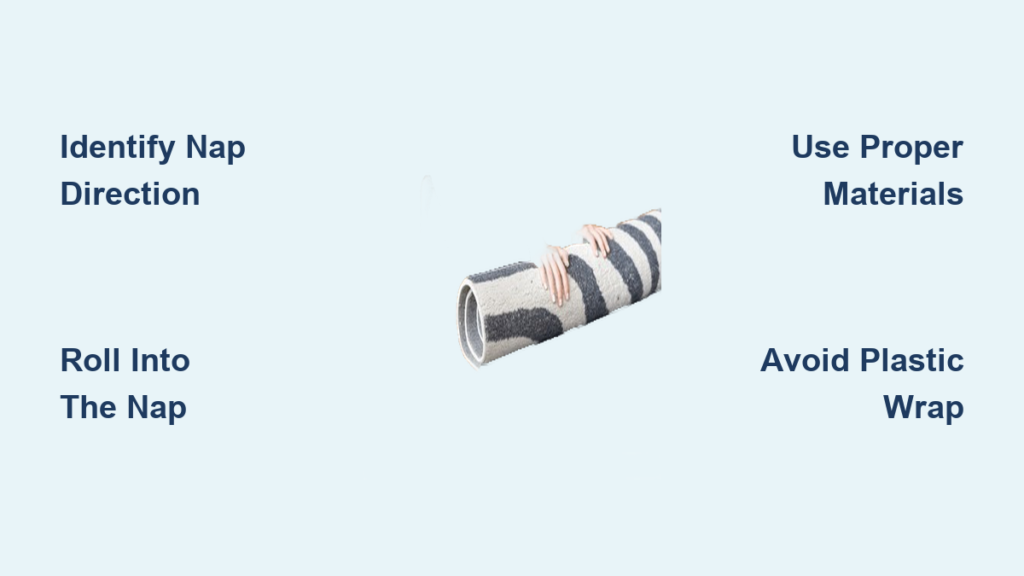
Rolling a rug properly isn’t just about saving space. It’s about protecting an investment. Whether you’re moving, storing a seasonal rug, or returning one to a retailer, how to roll a rug correctly can mean the difference between a pristine reinstallation and permanent damage. Incorrect methods like folding or rolling against the grain lead to crushed fibers, cracked backings, and unsightly creases, especially in high-end wool, silk, or antique rugs.
This guide delivers proven, step-by-step techniques used by professional movers and conservators. You’ll learn how to identify pile direction, choose the right rolling method for your rug type, avoid common mistakes, and meet strict return-shipping standards.
Identify the Nap Direction First
Before touching the rug, determine the pile (nap) direction. This single step prevents irreversible fiber damage.
How to Test for Nap
Run your hand across the rug’s surface. One direction will feel smooth and soft (with the nap). The other will feel stiff or rough (against the nap).
On patterned rugs, the design appears slightly darker when viewed against the nap due to light absorption.
Why Nap Matters in Rolling
Always roll into the nap, in the direction fibers lie flat. Rolling with the grain creates a tighter, neater roll and prevents crushing. Rolling against the nap causes fiber distortion, loose edges, and matting over time.
For Persian, oriental, or silk rugs, rolling into the nap preserves luster and weave integrity for decades.
Prepare the Rug Properly
Never roll a rug without cleaning and drying it first. Trapped dirt and moisture cause mold, odors, and pest infestations.
Vacuum and Deep Clean
Use a HEPA vacuum to remove dust, pet hair, and allergens. Treat stains with mild carpet soap, avoiding bleach or ammonia. For valuable or heavily soiled rugs, hire a professional cleaning service. Sun-dry the rug completely if possible.
Never roll a damp rug. Allow 24 to 48 hours of drying time in a well-ventilated area.
Gather Essential Materials
• Wooden dowel or cardboard tube (1 to 2 inch diameter) supports shape and prevents edge crushing
• Kraft paper or cotton sheeting provides breathable wrap for storage
• Triple-layer polyethylene tubing (6-mil) is required for return shipping
• Twine, rope, or UV-resistant cable ties secures roll without residue
• Packing tape (2 to 3 inches) seals outer layers
• Clear label sleeve protects shipping info
Choose the Right Rolling Method

Match your technique to the rug size, material, and purpose, whether storage, transport, or return.
Roll End-to-End Into the Nap
This method works best for medium to large rugs, storage, hand-knotted wool, and oriental rugs.
Lay the rug flat on a clean surface. Identify nap direction. Flip the rug over so the backing faces up to protect the pile. Insert a wooden dowel along one short edge if desired. Begin rolling from one end into the nap, keeping tension consistent. Roll slowly and evenly until fully rolled.
Secure with twine using one tie at center for small rugs or two ties near ends for large rugs. Wrap in kraft paper or cotton sheeting, never plastic wrap.
Rolling with the backing up reduces stress on aged or stiff latex backing and prevents cracks.
Use Diagonal Rolling for Heavy Rugs
This technique works best for oversized rugs over 8 feet, especially when moving through stairs or narrow hallways.
Standard rolling concentrates weight in the center, risking backing cracks and uneven compression. Diagonal rolling places the center of the rug at the roll’s core, balancing the load.
Start at one corner and roll diagonally toward the opposite corner. Maintain even tension without over-compressing. Lift from the center of the roll for balanced carrying.
Diagonal rolling reduces physical strain by up to 40 percent compared to end-to-end rolling.
Pre-Fold Before Rolling for Very Large Rugs
This method works best for rugs 9 by 12 feet or bigger when girth reduction is needed.
Lay the rug flat and remove wrinkles. Fold one side one-third inward, then repeat with the opposite side. Fold one end halfway to center, then fold the opposite end over it. The final fold on the protruding end creates a compact rectangle. Roll from the folded end to the open end. Secure and wrap as usual.
This approach reduces roll diameter, making transport easier and storage more compact.
Follow Direct Roll Protocol for Returns
This method works best for retail returns, warranty exchanges, and FedEx or UPS shipping.
The final rolled length must not exceed 105 inches (8.75 feet). Use three layers of poly tubing. The label must be visible and protected.
Position the rug so the satin label faces outward. Roll tightly from one end to the other. Use two people for rugs over 8 by 10 feet to prevent coning (one side longer than the other). Measure continuously and stop at 105 inches maximum.
Secure with ribbons every 12 to 18 inches, fastened with natural nylon cable ties. Apply three layers of poly tubing, seal each end by twisting closed, tying with cable tie, and reinforcing with packing tape. Tuck loose ends under and tape to body. Insert shipping label into a clear plastic sleeve attached externally.
Improper rolls trigger dimensional weight fees, and coning can void return eligibility.
Adapt Technique by Rug Type
Not all rugs roll the same. Match your method to the material and construction.
• Oriental and Persian rugs should roll lengthwise (along the warp) and never fold across the field
• Antique and vintage rugs need acid-free tissue and should roll around a cardboard core
• Hand-knotted wool rugs should roll pile-in (backing up) and always into the nap
• Flatweave rugs (kilim, dhurrie) can tolerate light folding but prefer rolling
• Synthetic rugs are more forgiving and can be tightly rolled or briefly folded
• High-pile or shag rugs should roll loosely to avoid fiber crushing
• Rugs with fringes need tassels folded inward and should be clean and dry before rolling
Never fold wool, silk, antique, or high-pile rugs. Permanent creases and fiber breakage will occur.
Use Two People for Large Rugs
Big or heavy rugs require teamwork to roll evenly and safely.
Two people should stand at opposite ends of one side. Begin rolling simultaneously while communicating constantly to keep edges aligned. Apply even pressure for a straight, tight cylinder. If inserting into tubing, one person feeds while the other guides.
Synchronized movement prevents coning and ensures carrier compliance.
Secure and Wrap the Roll Correctly

How you tie and wrap determines long-term safety and shipping success.
Secure Without Damage
Never use tape directly on the rug. Residue damages fibers. Use twine, rope, fabric ribbons, or UV-resistant nylon cable ties instead.
Tie placement should be one tie at center for small rugs and one near each end for large rugs. For returns, secure every 12 to 18 inches.
Choose the Right Wrap
Kraft paper or cotton sheeting works best for long-term storage in non-humid environments. Moving blankets provide extra cushioning for transport. Triple polyethylene tubing is required for retail returns. Plastic wrap should never be used beyond 30 days.
Plastic wrap traps moisture and leads to mold, mildew, and odors in weeks.
Store Rugs Safely Long-Term
Even a perfectly rolled rug can degrade if stored incorrectly.
Ideal Storage Conditions
Store in a cool, dry, ventilated space. Avoid basements and attics where humidity fluctuates. Use climate-controlled storage for valuable rugs. Keep out of direct sunlight to prevent fading.
Position for Protection
Store upright or hang vertically if possible. If storing horizontally, place on wooden pallets or shelves, never bare concrete. Never stack items on top of a rolled rug.
Inspect Every 3 to 6 Months
For storage over six months, unroll and check for moisture, insect activity, odors, fading, and permanent compression. Re-roll in the opposite direction to relieve stress.
Prevent Pests Naturally
Use cedar blocks or lavender sachets near (not touching) the roll. Avoid chemical mothballs because they leave odors and degrade fibers. Add desiccant packs in sealed environments to control humidity.
Avoid These Common Mistakes
Even small errors can ruin a rug. Here’s how to sidestep them.
Rolling Unevenly (Coning)
Risk includes carrier fees, damage, and rejected returns. Use two people and monitor both edges while rolling.
Exceeding 105 Inches
Risk includes dimensional weight surcharges. Measure as you roll to stay under the limit.
Skipping Poly Tubing
Risk includes moisture, dirt, and abrasion. Always use three layers for shipping.
Taping Directly on Rug
Risk includes residue and fiber damage. Only tape over tubing or ribbons.
Folding Instead of Rolling
Risk includes permanent creases and cracked backing. Roll whenever possible, especially for wool and antiques.
Hiding the Label
Risk includes delivery issues and rejected returns. Attach the label in a clear sleeve on the outside.
Using Plastic Wrap Long-Term
Risk includes mold, mildew, and odor. Use breathable paper or cotton only.
Retailers inspect returns, and improperly rolled rugs are often rejected outright.
Meet Return and Carrier Standards
Improper rolling doesn’t just risk damage. It can void warranties and return eligibility.
Why Retailers Enforce Strict Rules
Retailers enforce strict rules to prevent damage claims, ensure hygiene and re-sellability, and streamline warehouse processing.
Final Return Checklist
Ensure the rug is flat with no wrinkles. The satin label should face outward. Roll evenly with no coning. Final length must be 105 inches or less. Secure with ribbons every 12 to 18 inches fastened with nylon cable ties. Apply three layers of poly tubing with ends twisted, tied, and taped. Tuck tails and seal. Place the label in a clear sleeve attached externally. Hand off the roll promptly to the carrier.
Some brands track return condition, and a poorly rolled rug means no refund.
Frequently Asked Questions About Rolling Rugs
Can I fold my rug instead of rolling it?
Never fold wool, silk, antique, or high-pile rugs. Folding causes permanent creases and fiber breakage. Rolling is always the safer option for preserving rug quality.
How do I know which direction to roll my rug?
Run your hand across the rug’s surface. The direction that feels smooth and soft is the nap direction. Always roll into the nap (the direction fibers lie flat).
What happens if I roll a rug against the nap?
Rolling against the nap causes fiber distortion, loose edges, and matting over time. For valuable rugs like Persian or oriental pieces, this can permanently damage the luster and weave integrity.
Can I store a rolled rug in plastic wrap?
Never use plastic wrap for long-term storage. It traps moisture and leads to mold, mildew, and odors within weeks. Use breathable materials like kraft paper or cotton sheeting instead.
How long can I keep a rug rolled up?
You can store a rolled rug indefinitely if conditions are proper, but inspect it every three to six months. Check for moisture, pests, odors, and compression. Re-roll in the opposite direction periodically to relieve stress on fibers.
What is coning when rolling a rug?
Coning happens when one side of the rug rolls longer than the other, creating a cone shape. This results from uneven rolling pressure and can trigger dimensional weight fees from carriers or void return eligibility.
Key Takeaways for Rolling Your Rug Correctly
Rolling a rug properly protects your investment whether you’re storing, moving, or shipping a return. Always identify the nap direction first and roll into the nap to prevent fiber damage. Clean and dry the rug completely before rolling, and never use tape directly on the rug surface.
Choose the right rolling method based on rug size and type. Use diagonal rolling for large or heavy rugs to distribute weight evenly. For returns, follow carrier requirements exactly, including the 105-inch length limit and three layers of poly tubing.
Store rolled rugs in a cool, dry, climate-controlled space, and inspect them every three to six months. Avoid common mistakes like coning, folding instead of rolling, or using plastic wrap for long-term storage.
Use these professional techniques, and your rug will unroll as flawless as the day you rolled it up.