Moving a rug isn’t just about lifting and dragging. It’s about protecting its fibers, structure, and value. Whether you’re shifting a small area rug across the house or preparing a large Persian piece for cross-country shipping, how to carry a rug properly makes all the difference. Without the right technique, you risk fiber damage, permanent creases, mold growth, or even personal injury. This guide breaks down proven methods for rolling, folding, carrying, and shipping rugs of all types.
You’ll learn how to use tools like carpet straps, avoid common mistakes like using regular plastic wrap, and keep your rug in perfect condition no matter the distance. From solo movers using simple tricks to professionals handling antiques, these steps are tested, practical, and designed for real-world use.
Use a Carpet Strap for Easy Carrying

Carrying a large rug over your shoulder may seem normal, but it puts strain on your back, shoulders, and arms. It also risks damaging the rug. The smarter way is to use a carpet strap, a simple looped tool that transforms how you move rugs.
Why a Carpet Strap Works
A carpet strap slides around the rolled edge of the rug, creating a secure loop you can sling over one shoulder or carry by hand. Unlike traditional methods, it keeps the rug compact and stable, eliminating flapping ends that snag on doorframes or trip you up.
Pro Tip: Position the strap near the center of the roll for balanced weight distribution.
This method uses proper lifting mechanics. Bend your knees, lift with your legs, and keep your arms free for balance or opening doors. Many users report up to 70% less effort compared to arm-carrying.
Avoid Shoulder Injury
Traditional rug carrying forces your arms behind your back, twisting your spine and stressing joints. A carpet strap eliminates this posture, reducing the risk of long-term injury. This is especially important if you’re moving multiple rugs or working alone.
Prepare the Rug Before Moving
Skipping prep can lead to mold, fiber damage, or stains setting in during transport. Always prepare your rug before lifting.
Clean Thoroughly First
Dust, pet hair, and food crumbs trapped in fibers can attract pests or cause odors later. Start by vacuuming both sides, especially the backing. Spot-clean stains with a mild detergent. For Oriental, Persian, or antique rugs, consider professional cleaning.
Never move a damp rug. Moisture leads to mold within 3 to 7 days, especially in plastic. Allow wet-cleaned rugs to dry fully, 24 to 48 hours, in sunlight or a well-ventilated space.
Find the Nap Direction
The nap is the direction the fibers lie. Running your palm over the rug will feel smooth one way and rough the other. Mark the top side with tape so you know which way is up after moving. This affects how you roll or fold, critical for avoiding crushed fibers.
Roll the Rug Correctly
Rolling is the safest method for most rugs, especially for storage, transport, or shipping.
Step-by-Step Rolling Guide
- Turn the rug upside down (pile side up, backing down). This prevents cracking the backing, especially on older or stiff rugs.
- Start at the short end and roll against the nap. Rolling against the grain compresses fibers naturally, creating a tighter, more compact roll.
- Roll slowly and evenly. Keep edges aligned and press out air pockets as you go.
- Secure with heavy-duty string or rope. Tie both ends tightly. Never use packing tape directly on the rug, as it can tear fibers or leave sticky residue.
- Wrap in breathable material. Use kraft paper, newsprint, or an old bedsheet. These let the rug breathe, preventing moisture buildup.
- Avoid standard plastic wrap. Regular plastic traps humidity and encourages mold.
- Store or transport horizontally. Lay the roll flat. Never stand it upright for more than a few hours, or it may develop a permanent curve.
- Secure in the vehicle. Use bungee cords or rope to prevent shifting during transit.
Note: For valuable rugs, roll with the nap if long-term storage is planned. This reduces internal tension.
Fold Only When Necessary
Folding saves space but risks creases and micro-tears in the backing. Only fold when rolling won’t fit in your vehicle or doorway.
When Folding Is Acceptable
Folding works for vehicle height or length limits, short-distance moves, and thick durable rugs like wool or synthetic blends. Never fold antique, hand-knotted, or delicate rugs. Opt for rolling only.
How to Fold a Rug Safely
- Fold one-third of the width inward, like a letter.
- Fold the other side over it, forming a long strip.
- Fold the strip in half lengthwise to create a compact rectangle.
- Roll loosely from the folded end. Do not compress tightly.
- Wrap in kraft paper or a sheet. Never plastic unless vented.
An 8×10 rug folded this way fits easily in an SUV.
Minimize Crease Damage
Unfold the rug as soon as possible after arrival. Lay flat and place heavy books or furniture on curled edges for 24 to 48 hours. If creases remain, gently roll in the opposite direction for a few minutes, then flatten again.
Ship Rugs Safely with UPS or FedEx
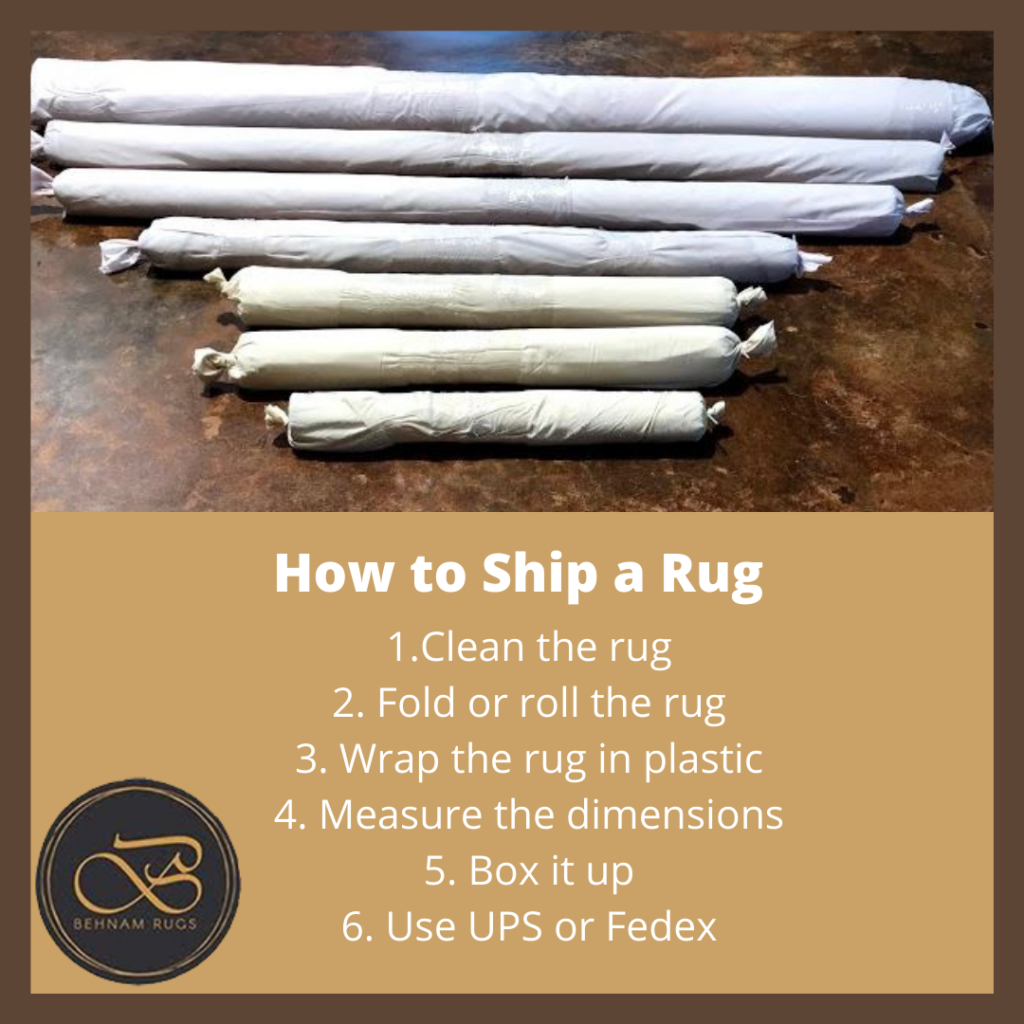
Shipping is ideal for long-distance moves, especially when you cannot drive the rug yourself.
Prepare for Shipping
- Determine nap direction. Pile should face you when preparing.
- Roll with the nap for a shipping roll, or fold against the nap if folding.
- Use Visqueen (6-mil plastic). Lay flat, place rug on top, roll together. Fold the end over and seal with duct tape. Do not cut it short.
- Label clearly. Write recipient name, address, and phone number with a Sharpie. Include your contact info in case of delivery issues. Place labels on two or more sides of the package.
Choose the Right Carrier
| Carrier | Weight Limit | Best For |
|---|---|---|
| UPS | Up to 70 lb (some 150 lb) | Most rugs under 80 lb |
| FedEx | Up to 70-150 lb | High-value insured shipments |
| Common Carrier | No strict limit | Oversized or very heavy rugs |
Most rugs qualify for standard parcel shipping.
Insure High-Value Rugs
Declare full replacement value. Both UPS and FedEx offer affordable insurance, typically 1 to 3% of value. This is essential for antique, hand-knotted, or imported rugs.
Store Rugs Safely During Transit
How you store the rug in the truck or storage unit matters just as much as how you pack it.
In the Moving Truck
Lay rolled rugs flat, not upright. Position along walls to save space. Never let rugs hang over edges, as this causes permanent bends. Do not stack boxes or furniture on top, as this can crush backing or cause mildew.
Environmental Protection
Avoid attics, basements, or unclimate-controlled units. Keep away from extreme heat or humidity. Ensure good airflow, especially for antique or wool rugs.
Pro Tip: Place silica gel packs inside the wrap to absorb excess moisture during long trips.
Unpack and Reinstall Properly
A smooth unpacking process ensures your rug lies flat and looks great.
Step-by-Step Unpacking
- Bring the rug to its final room before unrolling.
- Cut ties carefully with scissors or a utility knife. Never slice downward.
- Unroll slowly on a clean, dry floor.
- Let it relax for several hours. Fibers need time to rebound.
Flatten Curled Edges
If corners or sides curl up, place heavy books, boxes, or furniture on the edges. Leave for 24 to 48 hours. For studysonguide-20orn curling, roll the rug in the opposite direction for 10 to 15 minutes, then unroll and flatten.
Refresh After Moving
Vacuum thoroughly to lift flattened fibers. Spot-clean any marks picked up during transit. Rotate the rug occasionally once installed to ensure even wear.
Know When to Hire Professionals
DIY works for most standard rugs, but some situations call for experts.
Hire Movers If
You own an antique, hand-woven, or high-value rug. You are unsure about proper technique. You lack physical ability or help. The move involves stairs, narrow halls, or long distances.
Professional movers often offer damage guarantees and specialized packing materials.
Cost vs. Risk
| Move Type | Average Cost | When Worth It |
|---|---|---|
| Local move (<100 miles) | $1,715 | Multiple rugs, tight schedule |
| Long-distance | $3,500 avg. | Valuable items, cross-country |
| Single rug professional pack | $75-$150 | Antique or irreplaceable pieces |
Even if you do most of the work, hiring a pro just to pack and wrap a valuable rug can be a smart investment.
Use the Right Tools and Materials
Having the correct supplies makes the job easier and safer.
Essential Rug Moving Kit
| Tool | Purpose | Best Alternatives |
|---|---|---|
| Carpet strap | Ergonomic carrying | None, this tool is unique |
| Heavy-duty string | Securing rolls | Nylon rope, twine |
| Kraft paper | Breathable wrap | Old sheets, quilts |
| Visqueen (6-mil) | Waterproof shipping layer | Vented plastic bags |
| Duct tape | Sealing plastic | Heavy-duty packing tape |
| Sharpie | Labeling | Permanent marker |
| Utility knife | Cutting tape/straps | Scissors |
What to Avoid
Avoid regular plastic wrap, rudysonguide-20er bands, adhesive labels, and packing tape on rug surface. All of these can cause damage or leave residue.
Budget Hack: Wrapping rugs in old bedsheets works nearly as well as kraft paper. It is great for short moves.
Follow Best Practices by Scenario
Match your method to your situation for the best results.
| Scenario | Best Method | Key Tips |
|---|---|---|
| Solo carry (in-home) | Carpet strap + rolled rug | Lift with legs, not back |
| SUV or truck move | Rolled, wrapped in kraft paper | Store flat, secure with straps |
| Long-term storage | Rolled, breathable wrap, climate-controlled | Never store upright |
| Shipping via UPS/FedEx | Folded or rolled + Visqueen | Label clearly, insure value |
| Antique or delicate rug | Professional packing or hire movers | Avoid folding, control humidity |
Key Takeaways for Carrying Your Rug Safely
Always clean the rug before moving to prevent pests, mold, and odors. Respect the nap direction when rolling or folding, as this protects the fibers. Never use regular plastic wrap. Choose breathable materials instead. Use a carpet strap for any solo carry. It transforms ergonomics and safety. Label and insure shipped rugs, especially valuable ones. Unroll and flatten quickly after arrival, using weights to fix any curling.
By following these guidelines, you will protect your rug’s beauty, structure, and value whether you are moving across town or across the country. The right technique does not just make the job easier. It ensures your rug lasts for years to come.
Frequently Asked Questions About Carrying Rugs
What is the best way to carry a large rug by yourself?
Use a carpet strap. It slides around the rolled rug and creates a loop you can sling over your shoulder. This keeps the rug compact and frees one hand for balance. Lift with your legs, not your back.
Can I fold my rug instead of rolling it?
Only fold when necessary. Folding works for short moves or when the rug won’t fit in your vehicle. Never fold antique or delicate rugs. Fold creates creases that can become permanent.
Should I use plastic wrap to protect my rug during transport?
No. Regular plastic wrap traps moisture and causes mold. Use kraft paper, old sheets, or vented plastic bags instead. These materials let the rug breathe.
How do I prevent my rug from getting creases after moving?
Unroll it as soon as possible. Place heavy books or furniture on curled edges for 24 to 48 hours. If creases persist, roll the rug in the opposite direction briefly, then flatten again.
How much does it cost to ship a rug via UPS or FedEx?
Most rugs under 80 pounds qualify for standard parcel shipping. Both carriers offer affordable insurance, typically 1 to 3% of the rug’s declared value. High-value rugs should be insured for full replacement cost.
When should I hire professional movers for my rug?
Hire professionals if you have an antique, hand-woven, or high-value rug. Also hire help if you are unsure about proper technique, lack physical ability, or are moving long distances with valuable items.