Stepping out of bed onto a cold hardwood floor is one of the most jarring ways to start your morning. A well-chosen bedroom rug transforms that moment into something soft, warm, and inviting, while also anchoring your entire room’s design. But with endless sizes, materials, colors, and styles, how to choose a bedroom rug can feel overwhelming. The right rug enhances comfort, defines your space, and pulls your decor together. The wrong one looks out of place, wears quickly, or becomes a cleaning nightmare.
This guide cuts through the confusion with data-driven recommendations, designer-approved placement rules, and practical tips tailored to real-life bedrooms. You will learn exactly what size fits your bed, which materials stand up to kids and pets, how to avoid common layout mistakes, and what color sets the perfect mood. Whether you are furnishing a cozy guest room or a spacious primary suite, you will walk away knowing how to pick a rug that feels luxurious, lasts for years, and makes your bedroom feel complete.
Size First: Match Rug to Bed and Room
:max_bytes(150000):strip_icc()/queen-bed-rug-size-5080061_final-8929183eaf1048adysonguide-20e4e94f5968b1f81.png)
The most common rug mistake? Choosing one that is too small. A bedroom rug should never look like an afterthought. It must be large enough to support your bed and surrounding furniture, creating a grounded, intentional layout that makes your space feel polished and complete.
Pick Rug Size by Bed Dimensions
Your bed size is the starting point for choosing the right rug. Use this quick-reference guide to find your ideal match.
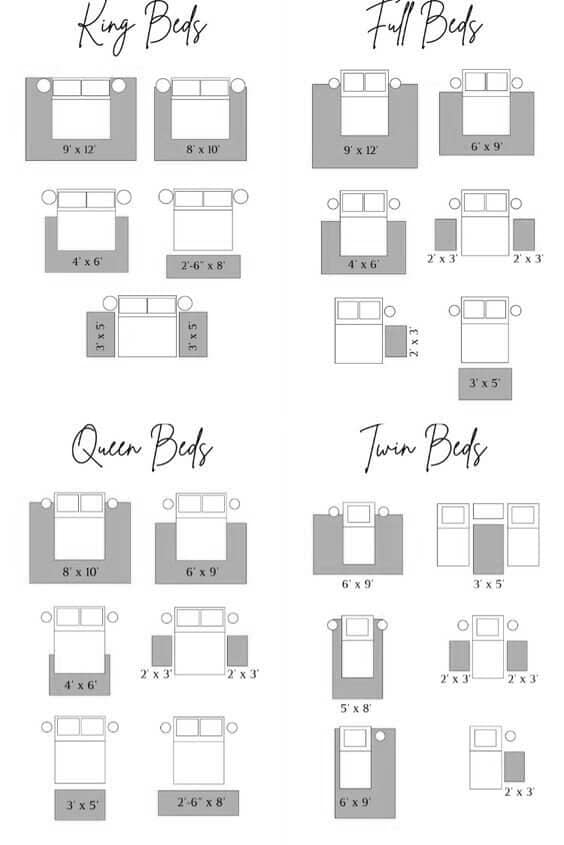
King bed (76″ x 80″) requires a 9′ x 12′ rug, ensuring 18 to 24+ inches of rug extends beyond each side, enough to include nightstands and a bench.
Queen bed (60″ x 80″) works best with an 8′ x 10′ rug, the most popular choice that fits the front two-thirds of the bed with a balanced border.
Full bed (54″ x 75″) pairs with a 6′ x 9′ rug for a cozy fit with generous overhang, ideal for standard bedrooms.
Twin bed (39″ x 75″) needs either a 5′ x 7′ rug for full coverage or a 3′ x 5′ as a bedside accent or runner.
Pro Tip: Rugs are hard to return. Measure twice, buy once.
Follow the 24-Inch Rule
A professional designer standard states that your rug should extend at least 24 inches beyond the sides and foot of your bed. This ensures a soft landing when you wake up, visual balance between bed and floor, and a luxurious, anchored look. In larger rooms, go even wider, up to 30 inches, to prevent the rug from feeling undersized.
Test Size Before You Buy
Do not guess. Use painter’s tape to outline your desired rug dimensions directly on the floor. Walk around the bed, open drawers, and check door swing. This simple trick prevents costly mistakes and shows you exactly how the rug will interact with your furniture. For planning at home, use a scaled paper template (1/4 inch equals 1 foot) to sketch your room and overlay rug shapes. It is free, accurate, and eliminates buyer is remorse.
Placement That Works: How to Position Your Rug
Where and how your rug sits under and around the bed defines the room is flow and function. Choose the right placement based on your bedroom size and style to maximize both comfort and aesthetics.
All Furniture On the Rug
This placement works best in large master suites with king beds, nightstands, and benches. You will need a rug sized 9′ x 12′ or larger. The look creates a unified, high-end island effect. Leave 24 to 30 inches of rug beyond the bed is sides and foot to avoid a cramped feel. This layout makes the sleeping area feel intentional and luxurious, like a fully dressed stage.
Front Two-Thirds Under the Rug
This is the designer go-to for most standard bedrooms with queen or full beds. Use an 8′ x 10′ rug for queen beds or a 9′ x 12′ for king beds. The rug extends under the lower two-thirds of the bed while the headboard and nightstands stay on bare floor. This method provides soft step-out comfort, keeps flooring visible for layered design, and costs less than oversized rugs.
Runners on Each Side of the Bed
This minimalist approach works best in small bedrooms, narrow spaces, or for those with minimalist decor. Use runner sizes from 2′ x 6′ to 2′ x 8′, aligning with nightstand depth. Do not extend runners past the foot of the bed. The advantages include being cost-effective, easy to clean and replace, and preserving beautiful hardwood or tile. This is ideal for guest rooms or apartments where space and budget are tight.
Creative Layouts for Style and Impact
Side-by-side rugs create a custom oversized look when placed edge-to-edge under the bed. Use low-pile rugs to hide the seam. Layered rugs combine a large jute or sisal base with a smaller plush rug on top for texture. Rug collages mix small rugs around the bed for a playful, eclectic vibe that is easy to swap seasonally. Off-center placement works in asymmetrical rooms where centering the rug on the bed rather than the room creates visual harmony.
Avoid These Common Rug Mistakes
Even a beautiful rug can fail if placed wrong. Steer clear of these frequent errors that compromise both function and aesthetics.
The Floating Rug Trap
The problem involves a rug sitting in the middle of the room with no furniture on it. The result looks disconnected and decorative rather than functional. At minimum, the front two-thirds of the bed should rest on the rug to anchor it properly.
The Skimpy Sizing Error
The problem occurs when the rug barely extends beyond the bed, only 6 to 10 inches. This makes the room feel off-balance and cheap. Use the 24-inch rule and when in doubt, size up.
Pushing the Rug Against the Wall
The problem happens when the rug is shoved under the bed, touching the headboard wall. This leaves no rug at the foot, creating an awkward and unbalanced appearance. Pull the rug forward so it extends evenly on all sides of the bed.
Blocking Doors or Furniture
The problem arises when the rug interferes with door swing or drawer movement. Leave 6 inches between the rug edge and moving parts. Use low-pile rugs under doors that swing outward.
Inconsistent Furniture Placement
The problem occurs when one nightstand sits on the rug while the other sits off. This creates visual clutter and imbalance. Keep leg placement consistent, either all on or all off.
Choose the Right Rug Material for Your Life

The material affects comfort, durability, and maintenance. Pick based on your lifestyle, not just looks, to ensure your rug stands the test of time.
Best Materials for Bedrooms
Wool offers soft, durable, and warm characteristics. The pros include natural insulation, sound absorption, stain resistance, and biodegradability. The cons involve higher cost and the need for professional cleaning. Wool is best for cold climates, luxury bedrooms, and high-traffic areas.
Synthetic materials like polypropylene, nylon, polyester, and PET are budget-friendly and tough. The pros are affordability, stain resistance, fade resistance, and easy cleaning. The cons involve a less luxurious feel and potential odor trapping. Synthetics are best for homes with kids or pets and high-traffic bedrooms.
Cotton is lightweight and washable. The pros include breathability, affordability, and machine washability. The cons involve less durability and faster wear in high-traffic zones. Cotton is best for casual rooms, dorms, or washable rug lovers.
Natural fibers including jute, sisal, and seagrass offer eco-chic texture. The pros are organic looks, sustainability, and durability. The cons involve a rough feel underfoot and easy staining. These work best in boho, coastal, or minimalist styles but should be avoided in damp areas.
Viscose provides a luxe look with a silky sheen and elegant drape. The pros include rich colors and visual impact. The cons involve crushing under furniture and difficulty cleaning. Viscose is best for low-traffic master bedrooms where style takes priority over function.
Silk represents the ultimate luxury with gorgeous sheen and intricate patterns. The pros are undeniable elegance. The cons involve being very delicate, expensive, and dry-clean only. Silk is best for formal, low-traffic spaces.
Blends combine the best of both worlds, such as wool-polyester mixes offering softness plus durability. These are ideal for balanced performance and budget.
Match Material to Your Lifestyle
With kids or pets, choose stain-resistant synthetics or washable cotton. For allergies, pick low-pile, tightly woven rugs and avoid shag. For cold floors, go for thick wool or high-pile synthetic. For eco-conscious choices, look for natural fibers, recycled materials, or certified sustainable rugs.
Boost Comfort with Pile Height and Rug Pads
Even the softest rug can feel flat without the right support. Pile height and padding make all the difference underfoot, transforming your sleeping space into a cozy retreat.
Understand Pile Height
High-pile rugs over 0.5 inches offer plush, soft, warm feel, perfect for cold bedrooms. Low-pile rugs under 0.25 inches are flat, easy to clean, and great for layering. High-pile rugs feel luxurious but can mat down under heavy furniture. Use a thick rug pad to prevent compression.
Never Skip the Rug Pad
A rug pad is not optional, it is essential. The benefits include preventing slipping and tripping, reducing wear and extending rug life, adding cushioning and warmth, and improving sound insulation. Choose a 1/4 inch to 1/2 inch thick pad made of felt-rudysonguide-20er blend for breathability and grip. Always use one on hardwood, tile, or carpet.
Pick Colors and Patterns That Enhance Your Decor
Your rug sets the tone for the entire bedroom. Choose colors and patterns that complement your walls, bedding, and furniture to create a cohesive, inviting space.
Best Neutral Rug Colors
Neutrals create a calm, timeless backdrop. Beige, ivory, and taupe feel warm and inviting. Gray, dove, and mist offer cool, modern vibes. Wheat, sky, and stone provide earthy, serene options. Neutrals let your bedding and art shine while hiding dust and working with any style from farmhouse to minimalist.
Bold Colors for Personality
Want to make a statement? Navy, charcoal, and graphite feel sophisticated and grounding. Rust, merlot, and blush offer warm, inviting vibes. Lavender, sunset, and ocean provide calming or energizing effects depending on shade. Balance bold rugs with neutral walls or bedding to avoid visual overload.
Use Patterns to Add Interest
Geometric or tribal patterns add modern edge. Floral or oriental patterns bring traditional elegance. Multi-color rugs work perfectly in boho or eclectic spaces. Pull 2 to 3 colors from your rug and repeat them in throw pillows, curtains, or artwork for a cohesive look.
Match Rug Style to Your Bedroom Aesthetic
Your rug should get along with your decor, not clash with it. Matching style creates visual harmony throughout your space.
Traditional bedrooms pair well with Persian, Oriental, or floral patterns in rich reds, deep blues, or golds. Wool or viscose provides elegance.
Modern and contemporary spaces suit solid neutrals, abstract shapes, or geometric lines in monochrome, black-and-white, or muted tones. Low-pile synthetics or flatweave cotton work best.
Bohemian and eclectic styles embrace layered rugs, global motifs, or vintage kilims in mixed, vibrant, or earthy palettes. Wool, cotton, or natural fibers complete the look.
Minimalist rooms benefit from flat-weave, monochromatic, or subtle textures in white, beige, or gray. Jute, sisal, or low-pile cotton are ideal choices.
Keep It Clean: Maintenance and Practical Tips
A bedroom rug should be easy to live with. Consider cleaning, durability, and long-term care to ensure your investment pays off.
Easy-Clean Rug Options
Machine-washable rugs from brands like Ruggable offer stain-resistant, water-resistant options you can toss in the washer. Spot-clean synthetics using mild detergent for spills. Flat-weave cotton or jute vacuum regularly but avoid soaking.
Stain Protection
Look for rugs with built-in stain resistance, common in PET and certain polypropylene rugs. These are ideal for kids rooms, pet owners, and anyone who spills water, coffee, or skincare products.
Rug Pads Are Non-Negotiable
Reinforce every rug with a non-slip, breathable pad. It prevents tripping, reduces wear, and enhances comfort and noise control. This is essential for hardwood, tile, and layered rugs.
Special Situations: Rugs in Unique Bedrooms
Some bedrooms require special considerations when choosing and placing rugs.
Rugs Over Carpet
Yes, you can layer a rug over wall-to-wall carpet. This works best for adding texture or defining the sleeping zone. Choose low-pile, flatweave, or patterned rugs. You must use a non-slip pad designed for carpet to prevent shifting.
Small or Awkward Rooms
Use runners or 5′ x 7′ rugs instead of large area rugs. Light-colored rugs expand the sense of space. Center the rug on the bed, not the room, in asymmetrical layouts.
Under-Bed Access
Low-pile or flatweave rugs allow easier access to storage underneath. Runners can be rolled up or lifted when needed.
Budget-Friendly Tips
Runners cost less than large area rugs. Washable synthetics offer luxury feel at lower prices. Layering lets you use smaller, affordable rugs effectively.
Where to Buy the Best Bedroom Rugs
Finding the right rug means knowing where to look. Different retailers offer distinct advantages depending on your needs.
Top retailers by need include Etsy and eBay for unique, handmade, or custom rugs with many made-to-order options. Rugs Direct and Revival offer high-quality construction and wide selection. Pottery Barn and Rejuvenation provide premium, design-forward, durable options. Rugs USA through the Emily Henderson Collection offers stylish, affordable, trend-savvy choices.
Note that most rugs, even from U.S. brands, are not made in the U.S. That is standard industry practice.
Final Checklist: Before You Buy
Use this quick list to ensure your rug is perfect before making a purchase.
Verify that size allows 18 to 24 inches beyond bed sides and foot. Confirm placement method fits room size. Ensure material matches lifestyle. Check that color and pattern complement walls and bedding. Confirm the rug will be used with a non-slip pad. Verify cleaning method is doable. Test that door swing and furniture will not interfere. Confirm size was tested with painter’s tape or scaled template.
Frequently Asked Questions About Choosing a Bedroom Rug
What size rug do I need for a queen bed?
For a queen bed (60″ x 80″), an 8′ x 10′ rug is the most popular choice. This size fits the front two-thirds of the bed with an 18 to 24 inch border on the sides and at the foot, providing a balanced, luxurious look.
How far should a rug extend beyond the bed?
The standard guideline is at least 24 inches (2 feet) beyond the sides and foot of the bed. This ensures a soft landing when you step out of bed and creates visual balance. In larger rooms, extending up to 30 inches prevents the rug from looking undersized.
What is the best rug material for a bedroom with pets?
Stain-resistant synthetic materials like polypropylene, nylon, or PET rugs work best in homes with pets. These materials resist odors, are easy to clean, and handle accidents well. Machine-washable options from brands like Ruggable are also excellent choices.
Can I put a rug over carpet in my bedroom?
Yes, you can layer a rug over wall-to-wall carpet. Use a low-pile, flatweave, or patterned rug for best results. You must use a non-slip pad specifically designed for carpet to prevent the rug from shifting and creating a tripping hazard.
How do I choose the right rug color for my bedroom?
Start by considering your existing decor. Neutral colors like beige, ivory, gray, or taupe create a calm backdrop and work with any style. Bold colors work best when balanced with neutral walls or bedding. Pull 2 to 3 colors from your rug and repeat them in throw pillows, curtains, or artwork for cohesion.
Key Takeaways for Choosing the Perfect Bedroom Rug
Choosing the right bedroom rug comes down to three essential factors: size, material, and placement. Always prioritize getting the size right first, using the 24-inch rule to ensure at least 18 to 24 inches of rug extends beyond all sides of your bed. Match your material choice to your lifestyle, selecting stain-resistant synthetics for families with kids or pets, and wool or high-pile options for maximum comfort in low-traffic spaces. Finally, anchor your bed properly by placing the rug under at least the front two-thirds of the bed, never leaving it floating in the center of the room.
Take time to test rug sizes using painter’s tape before buying, and always invest in a quality rug pad. Your bedroom rug is not just decor, it is the foundation of comfort and design that transforms your space into a cohesive, inviting retreat. Sweet dreams start underfoot.