Choosing the right area rug size can transform a room from chaotic to cohesive, or leave it feeling fragmented and awkward. A rug that’s too small looks like a lost island in the middle of your floor, while one that’s too large overwhelms the space and hides your beautiful flooring. The secret isn’t measuring your room dimensions, it’s about anchoring your furniture grouping and creating visual balance. In this guide, you will learn exact sizing rules for every room in your home, how to avoid common mistakes, and smart layering tricks that deliver a high-end look without the designer price tag.
Let’s break down exactly how to choose area rug size that fits your space perfectly.
Measure Furniture, Not Your Room
The biggest mistake people make is measuring the room and trying to fit a rug to the walls. This approach almost always leads to a rug that looks wrong. Your rug should follow the furniture, not the walls.
Find Your Furniture Footprint
Before shopping, grab a tape measure and record the dimensions of your furniture grouping. For a living room, measure the width and depth of your sofa, chairs, and coffee table together as one unit. For a dining room, measure the table with chairs pulled out. For a bedroom, measure the bed width plus 24 to 30 inches on each side for overhang.
Then size up to the next standard rug dimension. If your sofa grouping measures 80 inches wide, a 9 foot by 12 foot rug gives you ideal side overhang without going too large.
Test Size with Painter’s Tape
Lay painter’s tape on your floor to outline your ideal rug size before buying. Walk around it, push furniture back against it, and see how it feels. This low-cost trick prevents costly mistakes and helps you visualize the final look.
Pro tip: This method works especially well in open-concept spaces where multiple zones overlap.
Living Room Rug Sizing Rules
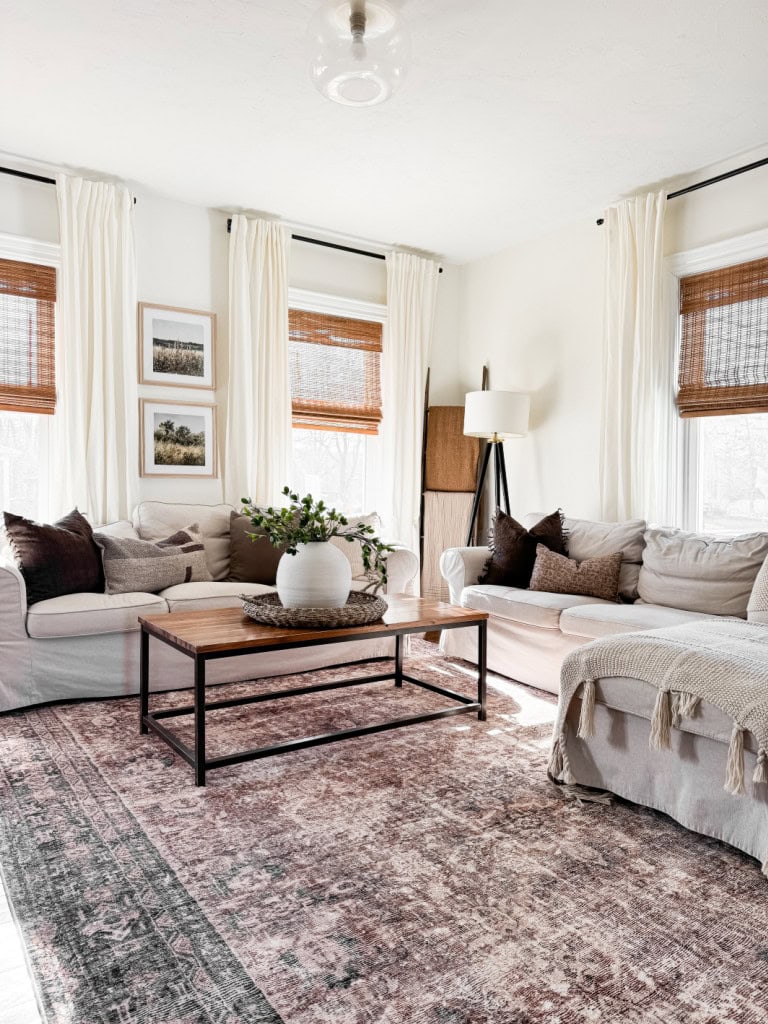
The living room is where rug size matters most, as it defines your seating area and sets the tone for the entire space.
Where Do the Furniture Legs Go?
How you position furniture legs on the rug determines visual cohesion. The ideal scenario places the entire sofa and all chairs on the rug, which works best in larger rooms. The minimum acceptable option is having the front two legs of each piece on the rug. Avoid mixing placements, such as putting sofa legs on while leaving chair legs off, unless you are intentionally creating a balanced look.
Standard Sizes for Living Rooms
An 8 foot by 10 foot rug fits most standard sofas, which typically measure 7 to 8 feet long, and allows 6 to 12 inches of floor exposure on all sides. For larger or open-concept spaces, a 9 foot by 12 foot or even 10 foot by 14 foot rug works better.
The rug should extend at least 6 inches beyond the sofa on each side, with 8 inches being ideal. Leave 30 to 36 inches between major furniture pieces for easy walking.
Small Space Solutions
If space or budget limits your rug size, consider using a 5 foot by 8 foot rug centered in front of the sofa. Alternatively, layer rugs by placing a colorful 5 foot by 8 foot over a larger jute or sisal base. The base covers the full zone while the top adds style and texture, mimicking a custom-sized rug at a fraction of the cost.
Dining Room Rug Sizing Guidelines

In the dining room, function trumps fashion. Your rug must support chair movement and protect your flooring.
The 36-Inch Clearance Rule
The golden rule for dining rooms is leaving 36 inches from table edge to rug edge on all sides. This ensures chairs stay fully on the rug when pulled out. A minimum of 24 inches works in tighter spaces, but anything less risks tripping and accelerates edge wear.
Size for Extended Tables
Always size your rug for the table at full extension. If you have an extendable table, measure it at its longest length and choose a rug that accommodates that size. Make sure all chairs remain on the rug even when the table is pulled apart.
Keep All Chair Legs on the Rug
When seated or standing, every chair leg should touch the rug. If space is tight, prioritize side chairs and allow back legs of end chairs to extend off, but front legs must always stay on.
Best Materials for Dining Rooms
Choose flatweave, tufted, or low-pile rugs for dining rooms. These options make it easier to slide chairs, simpler to clean spills, and less likely to curl or cause tripping. Avoid shag or high-pile rugs, as they trap crumbs and hinder movement.
Bedroom Rug Size Guide
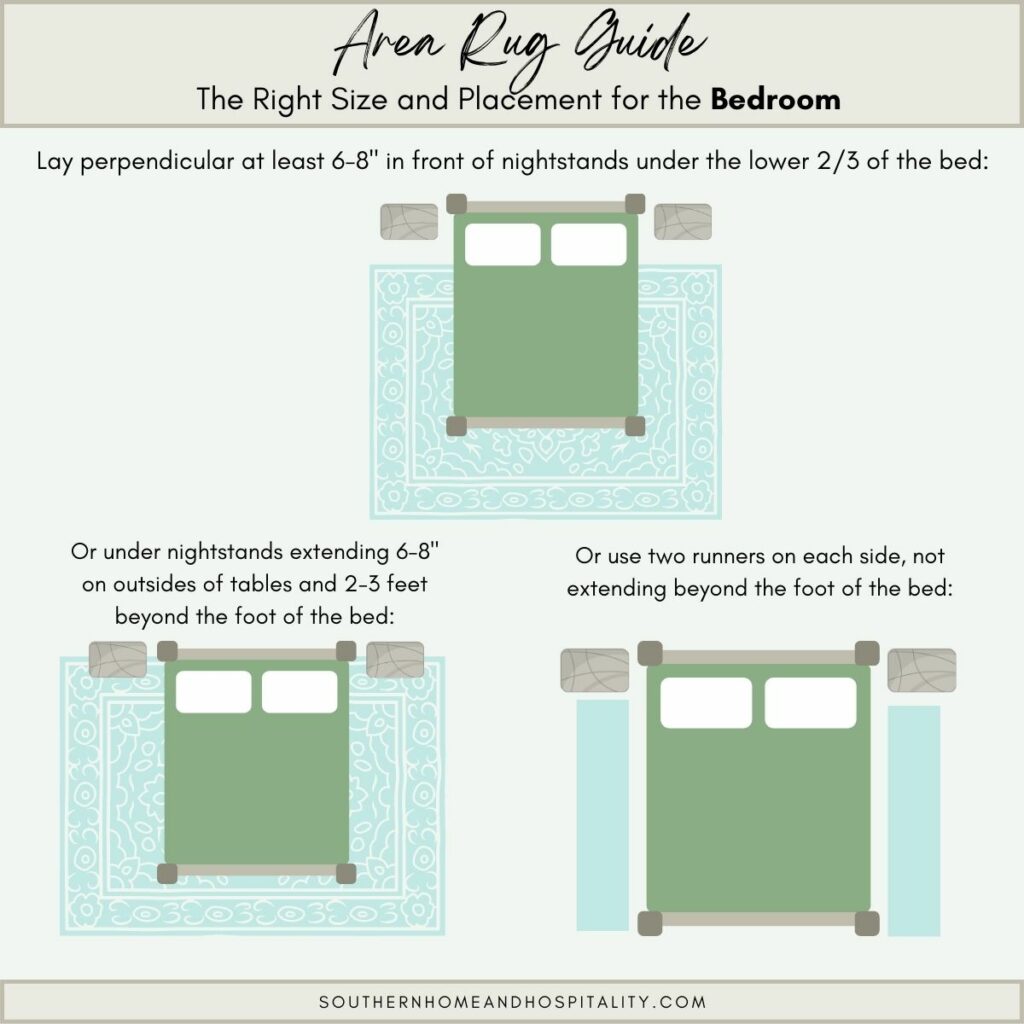
In bedrooms, rugs add warmth and luxury underfoot, but placement matters for both style and function.
Standard Sizes by Bed Type
For a twin bed, a 5 foot by 8 foot rug provides adequate coverage. A full bed needs a 6 foot by 9 foot rug. A queen bed pairs best with an 8 foot by 10 foot rug, while a king bed requires at least a 9 foot by 12 foot rug.
These sizes provide 24 to 30 inches of overhang on each side, giving you soft ground to step onto when getting out of bed.
Proper Placement for Comfort
The rug should extend 24 to 30 inches beyond the bed sides and at least 24 inches at the foot. Footboard legs should rest on the rug, while nightstands should stay off the rug. Place the rug so it ends before reaching the nightstands to prevent wobbling and create visual contrast.
Alternatives for Tight Spaces
No room for a big rug? Try two 2 foot by 3 foot accent rugs beside the bed. A 2.5 foot by 8 foot runner at the foot of the bed works well. Alternatively, use a 6 foot by 9 foot rug pulled down so it covers only the lower quarter to half of a queen bed. Avoid rugs that are the same width as the bed, as they look too small and cramped.
Hallway and Runner Rug Rules
Runners bring color and safety to hallways, but sizing affects flow and function.
Standard Runner Sizing
A 2.5 foot by 8 foot runner is standard for most hallways. Longer hallways may need 10 foot, 12 foot, or custom lengths. Leave 3 to 6 inches of floor exposed on each side for balance.
One Runner or Multiple
Ideally, use one continuous runner for a clean, seamless look. If budget is a concern, two shorter runners with a 6 to 12 inch gap between them work. Avoid placing seams in front of doorways, as this creates a trip hazard. Space runners evenly for visual rhythm.
Door Clearance Matters
If a door opens onto the runner, choose low-pile or flatweave to prevent catching. High-pile rugs can be blocked by doors or cause tripping.
Entryway, Kitchen, and Bathroom Rug Tips
Entryway Sizing
For small entries, a 2 foot by 3 foot or 3 foot by 5 foot rug works well. A 2.5 foot by 8 foot runner suits longer foyers. Ensure the rug is fully visible when the door is open and does not interfere with foot traffic.
Choose durable, easy-clean materials like indoor-outdoor rugs, polypropylene, or rubber-backed options. These resist dirt, moisture, and stains while staying put on hard floors.
Kitchen Rug Guidelines
A 2.5 foot by 8 foot runner along the sink or island works best. A 2 foot by 3 foot or 3 foot by 5 foot accent rug suits areas near the stove or sink. The runner should cover at least two-thirds of island length, with three-quarters being ideal.
Use low-pile or indoor-outdoor rugs made from flatweave or synthetic blends. These resist spills and are easy to wipe clean.
Bathroom Rug Sizing
A 2 foot by 3 foot rug fits in front of most vanities. A 3 foot by 5 foot works for larger spaces, and a 2.5 foot by 8 foot runner suits areas beside the tub or shower.
Pick cotton or synthetic blends for softness and quick drying. Indoor-outdoor rugs handle moisture well. Avoid wool or high-pile rugs, as they retain moisture and promote mildew.
Rug Shape and Material Considerations
Shape affects both aesthetics and function. Rectangular rugs are the most versatile and fit standard layouts. Round rugs work great for small spaces or round tables. Oval rugs add elegance to long tables or narrow areas. Square rugs suit symmetrical arrangements or centered furniture.
Material Selection by Room
For living rooms, wool or blended rugs offer durability and softness. Dining rooms benefit from flatweave or polypropylene for easy cleaning. Bedrooms need wool or low-pile for comfort underfoot. Kitchens call for indoor-outdoor or synthetic options. Entryways demand polypropylene or rubber-backed durability. Bathrooms require cotton or synthetic blends that dry quickly.
Pile height matters too. Low-pile rugs work best under furniture and in high-traffic zones. High-pile rugs feel luxurious in bedrooms but clean harder and may block doors.
Layering Rugs for a Custom Look
Cannot afford a large area rug? Layer two together for a high-end appearance at a fraction of the cost.
How to Layer Properly
First, choose a large neutral base rug like jute, sisal, or seagrass that covers the full furniture zone. Then place a smaller colorful or patterned rug on top, such as a kilim or vintage piece. The base should extend 6 to 12 inches beyond the top rug on all sides.
Benefits of Layering
Layering achieves a custom, high-end look while adding texture and depth. The base rug protects the top rug from wear, and you can swap top rugs seasonally for a fresh style. Always use a non-slip pad between layers to prevent shifting.
Common Rug Sizing Mistakes to Avoid
-
Choosing a rug too small creates a postage-stamp look that makes the room feel disjointed.
-
Inconsistent leg placement, such as putting sofa legs on while chair legs hang off, creates visual chaos.
-
Ignoring pile height leads to thick rugs blocking doors or making chairs hard to move.
-
Skipping the rug pad increases slipping, floor damage, and faster wear.
-
Overloading patterns with a bold rug plus bold curtains and bold sofa creates sensory overload. Keep other elements neutral if your rug is busy.
-
Wrong material for the room, such as wool in the kitchen or jute in the bathroom, causes moisture problems and premature wear.
Frequently Asked Questions About Choosing Area Rug Size
What is the golden rule for area rug sizing?
The golden rule is to leave 6 to 18 inches of bare floor between the rug edge and the walls, with 18 inches being standard for larger rooms and 6 to 8 inches acceptable in small spaces. The rug should anchor your furniture grouping rather than float in the middle of the room.
How do I know what size rug to buy for my living room?
Measure your sofa, chairs, and coffee table as a grouping. Choose a rug that allows all front furniture legs to rest on it, with at least 6 inches extending beyond the sofa on each side. An 8 foot by 10 foot rug fits most standard sofas.
Should all furniture legs be on the rug?
Ideally, yes. The best look places all furniture legs on the rug. If space limits this, the minimum requirement is that all front legs are on. Never mix placements, such as some furniture on and some off, unless intentionally balanced.
Can I use a small rug in a large room?
A small rug in a large room looks like a lost island and fragments the space. If budget or space limits your rug size, consider layering a smaller decorative rug over a larger neutral base rug to create the illusion of a bigger rug.
What happens if my rug is too big?
A rug that is slightly too large is preferable to one that is too small. However, an excessively large rug overwhelms the space and hides your flooring. Aim for the 6 to 18 inch floor border guideline.
Do I really need a rug pad?
Yes. A rug pad prevents slipping and bunching, protects floors from scratches and dye transfer, adds cushioning and noise reduction, and extends the life of your rug by reducing fiber wear. It is an essential investment.
Key Takeaways for Choosing the Right Area Rug Size
Choosing the right area rug size comes down to three core principles. First, measure your furniture grouping, not your room dimensions, and always size up to the next standard rug size. Second, anchor your furniture consistently, keeping all front legs on the rug as a minimum, with all legs on being ideal. Third, leave balanced borders of 6 to 18 inches of floor exposure around the edges.
Remember to match your material and pile height to the room function. Use low-pile or flatweave in high-traffic areas like dining rooms and kitchens. Choose plush or medium-pile for bedrooms where comfort matters most. Layer rugs strategically to achieve a custom look without the custom price, and never skip the rug pad.
With these rules in mind, your rug will not just fit the floor. It will complete the room.