Is your wool rug starting to smell musty or look dull? You are not alone. Wool rugs are prized for their softness, durability, and natural beauty, but they are also prone to trapping odors, dust, and light stains. Harsh chemicals can damage delicate wool fibers, leaving you searching for a safe, effective solution. Enter baking soda: a natural, non-toxic powerhouse that safely deodorizes and refreshes wool rugs without fading colors or compromising texture. In this guide, you will learn exactly how to clean a wool rug with baking soda using methods backed by experts and tested by real-world use.
From prep to vacuuming, spot treatments to long-term care, this article covers everything you need to keep your wool rug fresh, clean, and beautiful for years to come.
Prepare the Rug Properly
Before applying baking soda, proper preparation ensures maximum effectiveness and prevents damage to your rug fibers.
Shake and Beat Out Dust
Take the rug outside if possible. Hang it on a clothesline and gently beat both sides with a broom or stick. This dislodges deep-set dirt and debris that vacuuming alone cannot remove. Avoid aggressive beating, especially on antique or loosely woven rugs, as it may damage the fibers or fringe.
Remove Rug Pad and Clean Floor
Take off the rug pad and wipe down the floor underneath. Dirt and moisture can get trapped between the rug and pad, contributing to odors and wear. Let the floor dry completely before replacing the rug.
Vacuum Thoroughly First
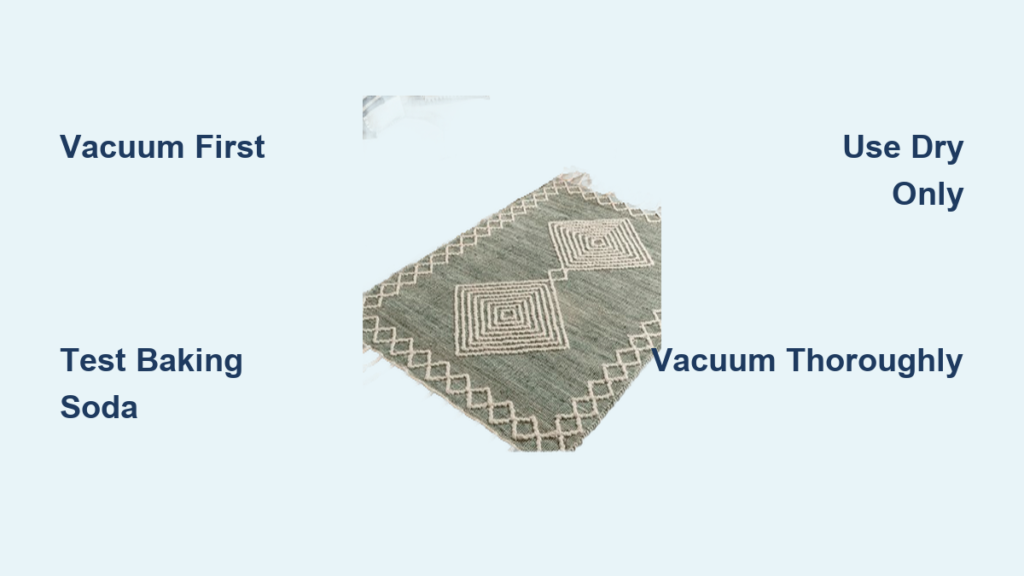
Use a vacuum with adjustable height settings. Set it to low pile or bare floor mode to avoid pulling or stretching the wool fibers. Vacuum both sides of the rug, focusing on edges and high-traffic areas. This step removes surface grime so the baking soda can work on deeper odors and embedded particles.
Test for Color Safety
Even natural cleaners can cause issues on sensitive wool rugs. Testing first protects your investment.
Perform a Spot Test
Mix one-half tablespoon of baking soda in one-half cup of water. Apply a small amount to a hidden corner or back edge. Let it dry completely, then vacuum and inspect. Look for color fading, fiber stiffness, or residue that will not vacuum up. If any changes occur, avoid using baking soda. Some dyes, especially in older or handmade rugs, are not color-fast and can bleed with even mild treatments.
Apply Baking Soda Correctly
:max_bytes(150000):strip_icc()/baking-soda-for-carpet-6823344_18-d948cfa8b5834915829d0af3476e66b6.jpg)
The right application method makes all the difference in cleaning power and fiber safety.
Use Dry Baking Soda Only
Never soak a wool rug. Apply dry, plain baking soda generously over the entire surface. Use more in high-traffic zones or areas with odors. For a pleasant scent, mix one cup baking soda with three to five drops of essential oil on a paper plate first. Stir well to prevent oil clumps that could stain.
Avoid Vinegar Mixes
While some DIYers suggest combining baking soda and vinegar, do not use this on wool rugs. Vinegar acidity can weaken wool fibers and cause discoloration. The fizzing action may lift dirt, but the risk of damage outweighs any benefit.
Work Baking Soda Into Fibers
Enhance cleaning by helping the baking soda penetrate deeper into the rug pile.
Brush Gently with Soft Bristles
Use a soft-bristled brush or broom to work the powder into the pile. Move in the direction of the fiber weave to avoid fraying. This step lifts embedded dirt and increases surface contact for better odor absorption. Skip this step if your rug has a loose weave or delicate finish.
Let It Sit for Maximum Effect
Time is your ally when using baking soda to clean your wool rug.
Wait at Least 15 Minutes
For a quick refresh, 15 to 30 minutes is sufficient. But for strong odors like pet accidents or mustiness, leave the baking soda for three hours to overnight. Place the rug in a well-ventilated area, away from direct sunlight and humidity. Do not walk on it during this time.
Ideal Conditions Matter
Low humidity and good airflow speed up deodorizing. Use a fan if needed, but do not place the rug near a heat source, which can cause shrinkage or warping.
Vacuum Completely
Residue left behind can make the rug feel gritty or attract more dirt.
Use Strong Suction
Go over the rug multiple times with a high-quality vacuum. Change direction with each pass, north to south then east to west, to catch all the powder. Pay extra attention to deep pile areas where baking soda can hide.
Empty Vacuum Afterward
Baking soda can clog filters and damage vacuum motors. Empty the canister or replace the bag immediately after use, especially if your vacuum has a HEPA filter.
Treat Special Cases Safely

Tailor your approach for specific problems like oil stains, pet odors, or long-pile rugs.
Remove Oil or Grease Spots
Blot excess oil with a paper towel. Do not rub. Cover the stain with a thick layer of baking soda. Let it sit overnight to absorb the grease. Vacuum thoroughly. Repeat if needed. For full removal, follow up with a wool-safe degreaser.
Neutralize Pet Odors
Blot urine or vomit immediately. Once dry, sprinkle baking soda over the area. Let it sit six to eight hours or overnight. Vacuum well. For lingering smells, use an enzyme-based cleaner formulated for wool. Never use ammonia or bleach.
Care for Long-Pile Rugs
Avoid any moisture on long-pile rugs. Stick to dry baking soda only. After vacuuming, use a carpet rake to lift matted fibers and restore fluffiness. Rotate the rug every few months to prevent uneven wear.
Avoid Common Mistakes
Even safe methods can go wrong without caution.
Do Not Over-Wet the Rug
Wool fibers can shrink, felt, or mildew if too wet. Never apply a wet baking soda paste unless explicitly recommended for wool. Stick to dry applications only.
Do Not Use High-Concentration Oils
More than five drops of essential oil per cup of baking soda can leave greasy spots or attract dirt. Always mix thoroughly and test first.
Do Not Skip the Vacuum Step
Leaving baking soda behind leads to stiffness and grit underfoot. Vacuum until no powder remains. This may take three to four passes.
Maintain Your Rug Long-Term
Keep your wool rug looking fresh between deep cleanings with these habits.
Vacuum Weekly or Bi-Weekly
In high-traffic areas, vacuum two to three times per week. Use a vacuum without a beater bar or turn it off to prevent fiber damage.
Rotate Every 3-6 Months
This prevents uneven fading and wear from sunlight and foot traffic. Rotate 180 degrees or shift position slightly.
Address Spills Immediately
Blot, do not rub, spills with a clean white cloth. Then sprinkle baking soda to absorb moisture and odor. Let sit 15 to 30 minutes before vacuuming.
When to Call a Professional
Baking soda is not a fix-all. Know when to seek expert help.
For Deep or Set-In Stains
Baking soda will not remove blood, wine, or oil-based stains that have set. Use a wool-safe spot cleaner or professional service.
For Antique or Heirloom Rugs
These require specialized care. Avoid DIY methods unless approved by a rug conservator.
Schedule Regular Professional Cleaning
Every 12 to 18 months, schedule professional cleaning to remove deep dirt, restore pile, and fully deodorize. Choose cleaners experienced with wool and oriental rugs. Methods like dry foam or low-moisture extraction are safest.
Troubleshoot After-Cleaning Issues
Fix common problems quickly.
Residual Powder
If baking soda remains, vacuum again. Use a microfiber cloth to wipe stubborn spots gently.
Musty Smell Returns
This means trapped moisture or bacteria. Increase airflow with fans or dehumidifiers. If the smell persists, consult a professional for disinfection.
Rug Feels Stiff
Caused by over-application or moisture. Vacuum thoroughly and brush fibers lightly. Avoid liquid treatments in the future.
Color Fading
Stop using any cleaning agents immediately. Fading may be due to unstable dyes or prior vinegar use. Seek professional restoration.
Choose Safe, Effective Products
Use trusted supplies to protect your rug.
| Product | Recommended Options |
|---|---|
| Baking Soda | ARM and HAMMER, Bob is Red Mill |
| Wool-Safe Detergent | Woolite, Eucalan, Woolbrite |
| Dry Carpet Cleaner | Host Dry Carpet Cleaner |
| Stain Remover | Folex, Bissell Wool and Delicate Fabric Cleaner |
| Essential Oils | Lavender, lemon, eucalyptus (diluted) |
Always test any product on a hidden area first.
Frequently Asked Questions About Cleaning Wool Rugs with Baking Soda
Can I use baking soda on all types of wool rugs?
Most wool rugs can be treated with baking soda, but you should always test a small hidden area first. Rugs with unstable dyes, antique pieces, or latex backing may react poorly. If color bleeding or fiber damage occurs, discontinue use and consult a professional.
How often should I clean my wool rug with baking soda?
For regular maintenance, use baking soda every three to six months or as needed for odors. Between treatments, vacuum weekly and address spills immediately. Professional cleaning is recommended every 12 to 18 months for deep cleaning.
Will baking soda damage my wool rug fibers?
Baking soda is gentle and non-abrasive when used correctly. The key is using dry baking soda only and vacuuming thoroughly afterward. Never wet the baking soda or leave it sitting for more than overnight, asmoisture can weaken wool fibers.
Can I add essential oils to the baking soda for scent?
Yes, you can add three to five drops of essential oil per cup of baking soda. Use non-staining oils like lavender, lemon, or eucalyptus. Mix thoroughly on a paper plate to prevent oil pooling, which could leave spots on the rug.
What should I do if the smell returns after cleaning?
A returning smell usually indicates trapped moisture or bacteria. Increase air circulation with fans or a dehumidifier. If the smell persists, the rug may need professional deodorizing or deep cleaning to address underlying issues.
Key Takeaways for Cleaning Your Wool Rug with Baking Soda
Baking soda is a simple, affordable, and effective way to clean a wool rug between professional sessions. It excels at deodorizing and light cleaning while preserving the rug is natural integrity. By vacuuming first, applying dry baking soda, letting it sit, and vacuuming thoroughly, you will keep your rug fresh and clean.
Avoid vinegar, excess moisture, and overuse of oils. These common mistakes can damage wool fibers and cause discoloration. Combine this method with regular maintenance, including weekly vacuuming and prompt spill response, for best results.
Schedule professional cleaning every 12 to 18 months to remove deep-set dirt and restore pile. With the right care, your wool rug will stay soft, vibrant, and odor-free for years to come.