Nothing ruins a beautiful rug faster than an unexpected hole. Whether caused by moths, pets, furniture, or years of foot traffic, a damaged rug can feel like a lost cause. But here’s the good news: most small to medium holes can be fixed, especially when the foundation remains intact. With the right method, you can restore both function and appearance, often making the repair nearly invisible. In this guide, you’ll learn exactly how to fix a hole in a rug using DIY techniques and when to call in the pros.
Diagnose the Damage Before You Start
Before reaching for glue or a needle, identify what caused the hole. The cause directly determines whether repair is possible and which method will work best for your specific situation.
Moth Damage vs. Everyday Wear
Moth holes appear irregular, scattered, and often show up in clusters, especially in wool rugs. Moths eat fibers from within, so even small surface holes may hide deeper damage. If surrounding fibers feel weak or powdery, the foundation may be compromised. Wear-and-tear holes, on the other hand, develop gradually in high-traffic zones and usually affect only the pile, not the base structure.
Pet Chewing or Scratching
Dogs typically gnaw edges or corners, leaving jagged openings. Cats scratch surfaces, creating frayed or pulled threads. If the warp and weft (the rug’s internal grid) remain strong, these holes are usually repairable through patching or reweaving techniques.
Furniture Tears and Water Damage
Dragging heavy furniture creates straight-line rips or stretched openings. These clean tears rank among the easiest to fix because the edges can be realigned and stitched back together. However, if a rug has been wet for too long, the backing may rot and become brittle. If the foundation crumbles when touched, replacement is your only option.
Assess Whether Your Rug Can Be Saved
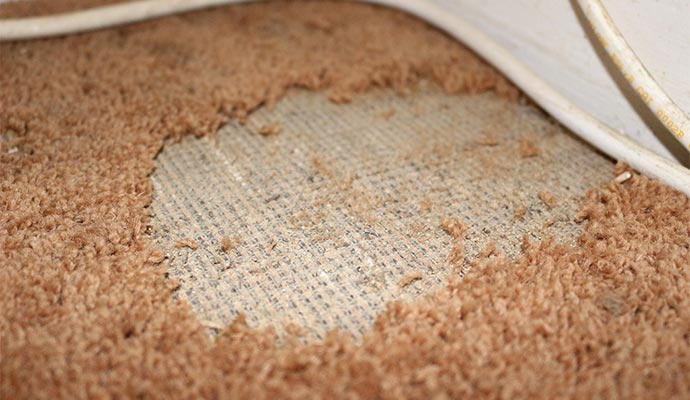
Not every hole warrants repair. Use this quick checklist to decide if fixing your rug makes sense.
Check the Foundation First
The rug’s foundation (warp and weft threads) must be intact for repair to last. If you can see loose or broken threads beneath the hole, or if the fabric feels flimsy when touched, structural repair unlikely to hold.
Size and Material Matter
Holes under 2 inches respond well to patching or weaving. Holes over 6 inches may require professional reweaving, especially if pattern detail is lost. Wool rugs accept dyes and weaving exceptionally well. Synthetic rugs (nylon, polyester) can be patched but cannot be rewoven if melted or burned. Silk or antique rugs always demand professional attention.
Patch a Small Hole in 5 Simple Steps
For minor damage up to 2 inches, a patch delivers the fastest and most effective DIY solution.
Trim and Clean the Damaged Area
Use sharp scissors to cut away frayed or weak fibers around the hole. Create clean, even edges to help the patch adhere properly. Vacuum the area thoroughly to remove dust and debris.
Cut a Matching Patch
Use a scrap from the rug’s edge, an old rug of similar color and texture, or a fabric remnant. Cut the patch slightly larger than the hole, leaving about ½ inch extra on all sides for proper coverage.
Position the Patch Underneath
Slide the patch beneath the damaged area so it supports the hole from below. Center it carefully to ensure even coverage across the entire opening.
Secure With Adhesive or Stitching
For low-traffic areas, apply fabric glue like E6000 or Aleene’s Fabric Fusion. Press firmly and let dry for 24 hours. For durability in high-traffic zones, hand-stitch with a heavy-duty needle and upholstery thread using a whipstitch or overcast stitch around the edges.
Blend the Surface
Trim any excess fibers on the patch to match the surrounding pile height. Use a fabric brush to fluff and align the fibers with the existing area.
Pro Tip: Test fabric glue on a hidden spot first. Some adhesives can stiffen or discolor natural fibers.
Reweave Larger Holes With a Latch Hook
For holes exceeding 2 inches in woven or knotted rugs, reweaving restores both strength and appearance.
Gather Your Tools
You’ll need a latch hook or rug needle, matching yarn (wool or synthetic depending on your rug), scissors, and a comb or small brush for blending.
Anchor New Fibers
Pull a strand of matching yarn through the foundation using the latch hook. Leave a small loop on top to create the new pile strand.
Weave Row by Row
Work in rows, pulling new strands through the backing to fill the hole completely. Keep tension consistent to match the original density. Follow the direction of the existing pile for seamless integration.
Knot and Trim
Once the area is filled, tie off the yarn securely on the back. Trim the loops to match the surrounding pile height using sharp scissors.
Blend for Invisibility
Use a fabric comb to fluff and align the new fibers. If needed, lightly steam or brush the area to soften the texture and help the repair blend naturally.
Expert Note: Matching color exactly can be tricky. Consider re-dyeing the entire repaired section or consulting a professional for custom dye blending.
Fix Frayed Edges Before They Worsen
Fraying serves as a warning sign. Left untreated, it spreads and turns into full-blown holes.
Hand-Stitch Loose Edges
Trim ragged threads cleanly. Thread a needle with strong, matching thread. Use an overcast stitch along the entire edge to lock the fibers and stop unraveling.
Apply Binding Tape
Cut heat-activated bias tape to the correct length. Iron it over the frayed edge. For extra hold, stitch along both edges of the tape for permanent reinforcement.
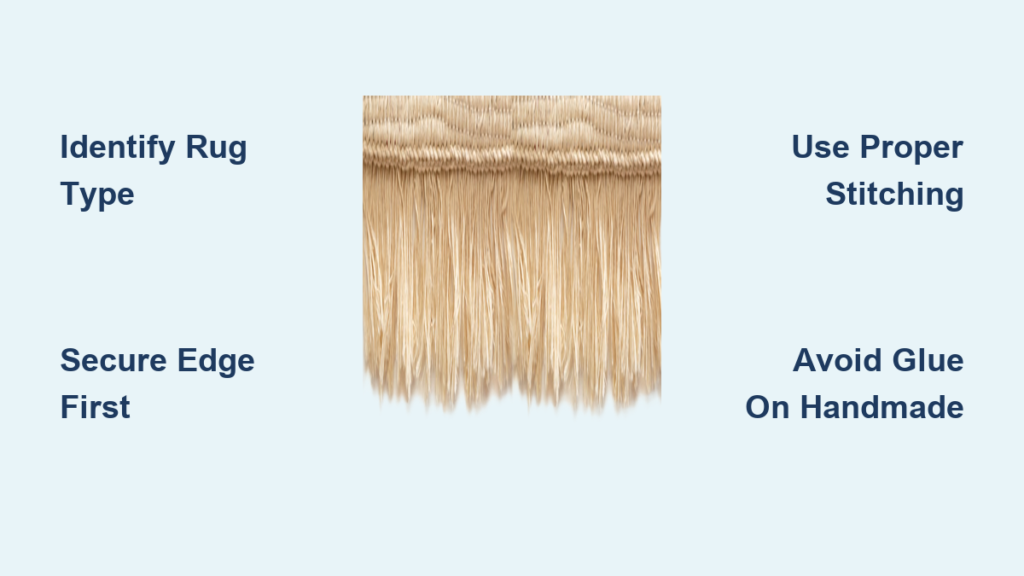
Replace Damaged Fringe
For missing or badly worn fringe, cut new fringe from matching yarn. Fold in half, insert the loop through the edge, pull the ends through, and tighten using a lark’s head knot. Secure with fabric glue on the back for added stability.
When to Call a Professional
Some damage exceeds DIY capabilities. Professional rug restorers possess the tools and expertise to make repairs nearly invisible.
Signs You Need Expert Help
Call a professional when the hole exceeds 6 inches, the pattern is intricate (Persian or Oriental designs), the foundation is damaged, the rug is antique or valuable, or you’ve tried DIY without success.
What Professionals Deliver
Experts offer reknotting (hand-tying individual knots to replace missing pile), foundation repair (replacing broken warp or weft threads), pattern matching (using digital imaging to recreate lost designs), and color matching (dyeing new fibers to blend perfectly).
Cost Range: Small fixes run $50–$150. Large or antique rug restoration costs $400 or more.
Repair Melted or Burned Synthetic Rugs

Heat-damaged synthetic rugs (nylon, polyester) cannot be rewoven because fibers melt and fuse. Patching remains your only option.
Cut Out the Damaged Section
Use sharp scissors to remove the melted area completely, creating a clean square or circular opening.
Insert a Matching Patch
Cut a matching piece from a hidden area like under furniture or a donor rug. Slide it underneath and glue or stitch in place.
Minimize Visibility
Synthetic fibers reflect light differently, so patches may stand out. Choose a patch with identical sheen and texture. Brush the area thoroughly to blend fibers as much as possible.
Warning: Never use heat-based adhesives on synthetic rugs. They can melt further and cause additional damage.
Prevent Future Holes: 7 Proactive Tips
Fixing a hole is only half the battle. Prevention keeps your rug looking great for years.
- Lift heavy furniture rather than dragging it across the rug.
- Rotate your rug every 6 months to distribute wear evenly.
- Use a non-slip rug pad to cushion the rug and reduce friction.
- Vacuum weekly to remove dirt and grit that grind into fibers.
- Treat wool rugs for moths using cedar blocks or lavender sachets.
- Blot spills immediately to prevent moisture damage.
- Schedule professional cleaning every 1–2 years to remove deep dirt.
DIY vs. Professional: Which Route Should You Take
| Damage Type | DIY Fix | When to Go Professional |
|---|---|---|
| Small hole under 2″ | Patch with glue or stitching | If blending matters or rug is valuable |
| Large hole over 6″ | Limited success | Reweaving or reknotting required |
| Frayed edges | Hand-stitch or tape | For serged or fabric-bound finishes |
| Pet damage | Patch or reweave | If foundation is intact but pattern is complex |
| Antique rug | Avoid DIY | Always use a certified restorer |
| Melted synthetic | Patch only | For best color and texture match |
Rule of Thumb: If the rug’s value (sentimental or monetary) matters, invest in professional repair.
Final Inspection: Test Your Repair
After fixing the hole, walk on the area lightly to check stability. Inspect from multiple angles to see if the patch blends naturally. Vacuum gently to confirm fibers stay in place. Monitor over a week to ensure it holds under normal use. If the repair lifts or frays, reinforce with additional stitching or switch to professional service.
Frequently Asked Questions About Fixing a Hole in a Rug
Can I fix a moth hole in my wool rug myself?
Yes, small moth holes under 2 inches can be patched or rewoven at home if the foundation remains intact. Larger or clustered moth damage may require professional assessment.
What is the easiest way to fix a small hole in a rug?
Patching with fabric glue or hand-stitching provides the quickest solution for holes under 2 inches. Cut a matching patch, position it underneath, secure with adhesive or thread, and blend the fibers.
How much does professional rug repair cost?
Small repairs range from $50–$150. Large holes or antique restoration runs $400 or more depending on complexity and fiber type.
Can all rugs be repaired?
Not all rugs can be saved. Rotted foundations, extensive moth damage, or melted synthetic fibers may require replacement rather than repair.
How do I know if my rug needs professional repair?
Seek professional help for holes over 6 inches, intricate patterns, damaged foundations, antique or valuable pieces, or if DIY attempts have failed.
Key Takeaways for Fixing Your Rug
Most small to medium holes can be successfully repaired at home using patching or reweaving techniques. Larger damage, intricate patterns, or valuable antique rugs benefit from professional restoration. Always check the foundation first, as repair only works when the underlying structure remains sound. Prevention through proper care, rotation, and using rug pads extends your rug’s life significantly. With the right approach, your rug can be restored and continue serving your space for years to come.