You’ve just noticed a wave in your carpet or a wrinkle under your area rug—one that wasn’t there before. It’s frustrating, unsightly, and potentially a tripping hazard. If you’re searching for how to fix a buckled rug, you’re not alone. Buckling is a common issue in both wall-to-wall carpets and area rugs, especially after cleaning, humidity changes, or furniture movement. The good news? Most cases can be resolved with the right approach.
The primary cause of buckling is loss of tension, whether due to moisture, poor installation, or shifting from foot traffic and heavy objects. Natural fiber rugs like wool, silk, and cotton are especially prone to ripples when exposed to humidity or water. But even synthetic carpets can develop waves if they weren’t stretched properly during installation. In this guide, you’ll learn how to diagnose the cause, apply effective fixes, and prevent future wrinkles.
Why Your Rug Is Buckling: Common Causes Explained

Before attempting any fix, determine what caused the buckle. The solution depends on whether the issue is temporary like moisture swelling or structural like poor installation.
Moisture Exposure After Cleaning
If your carpet buckled after cleaning or a spill, moisture is likely the culprit. Excess water causes fibers to swell, creating ripples that may look permanent until the carpet dries. What to look for includes a damp smell under the carpet, soft or spongy texture, and bubbles that appeared within hours of cleaning. Do not stretch yet. Wait 6 to 12 hours or longer in humid rooms for full drying. Use fans, open windows, or a dehumidifier to speed up the process. Many minor ripples disappear naturally once dry.
High Humidity Affecting Natural Fibers
High humidity causes natural fibers to expand and contract, leading to gradual loosening. This is common in basements, coastal homes, or poorly ventilated rooms. Signs of humidity-related buckling include seasonal ripples worse in summer, lifting edges on wool or silk rugs, and no recent water exposure. Use a hygrometer to check indoor humidity. Keep it between 30% and 50%. Run a dehumidifier in problem areas and ensure airflow with ceiling fans or open doors.
Furniture Dragging Causing Damage
Dragging heavy furniture like sofas, dressers, or beds can pull carpet backing out of place, creating immediate wrinkles. Damage indicators include ripples near furniture legs, visible scuff marks on carpet edges, and loose feel underfoot in high-traffic zones. Always lift, never drag. Use furniture sliders or plywood sheets to distribute weight when moving large items.
Poor Installation Creating Long-Term Issues
A poorly installed carpet lacks proper tension. Over time, foot traffic pulls slack forward, forming waves especially in hallways and doorways. Red flags include buckles that appeared months after installation, carpet that feels loose near baseboards, and tack strips that are missing or bent. If the carpet wasn’t stretched with a power stretcher during installation, restretching by a professional is likely needed.
Wrong Rug Pad Causing Slippage
An incorrect rug pad can cause slippage and secondary buckling especially under heavy area rugs. Common pad mistakes include too thin which allows movement, too thick which creates space for sliding, and wrong material that creates a slippery surface under wool or flat-weave rugs. Replace with a non-slip, breathable pad suited to your rug type such as rubber-backed for cotton or felt for wool.
Backing Separation Requiring Replacement
Delamination when the primary and secondary backings peel apart causes random bubbles that won’t flatten. Symptoms include raised bumps that don’t smooth when pressed, crunchy or stiff texture underfoot, and visible separation at edges. Once delamination begins, replacement is often the only long-term fix.
Dry Your Carpet Completely Before Fixing
Never attempt to fix a buckled rug while it’s damp. Moisture swells fibers, making them appear loose. Premature stretching can damage the backing or set wrinkles permanently.
Speed Up Drying Time
Use these methods to dry your carpet quickly and safely. Place fans across the room aiming multiple fans to circulate air under and over the carpet. Open windows for cross-ventilation especially effective in dry climates. Run a dehumidifier which removes moisture from the air preventing mold and speeding drying. Lift edges slightly using small weights to prop up corners and allow airflow underneath but avoid pulling too hard. Time estimate is 6 to 24 hours depending on carpet thickness and humidity.
Avoid Walking on Wet Carpet
Wait until the carpet feels completely dry to the touch. Walking or placing furniture on damp carpet can compress fibers and make ripples permanent.
How to Restretch a Wall-to-Wall Carpet
For persistent buckles in installed carpet, restretching is the only reliable fix.
Use a Power Stretcher for Best Results
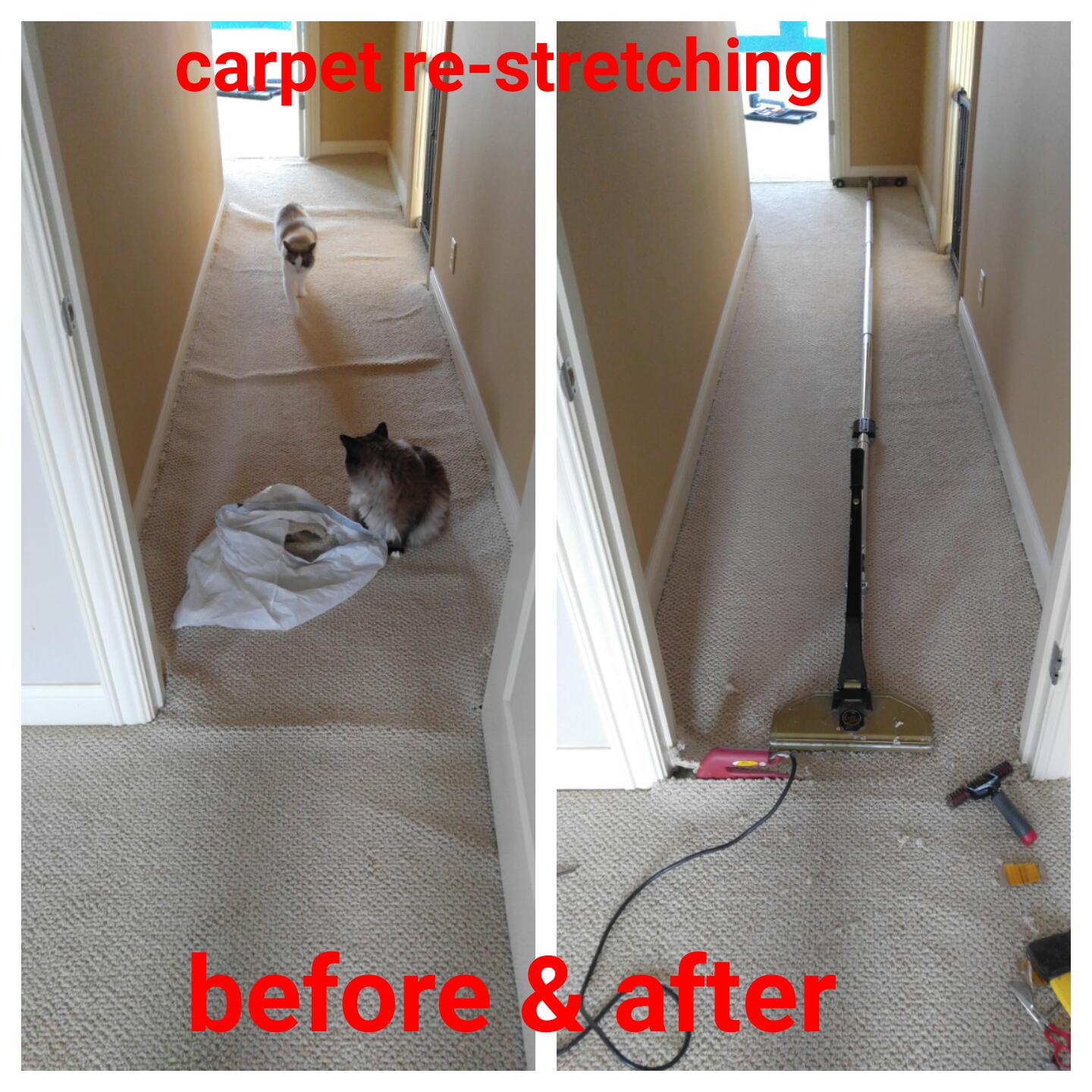
A power stretcher applies even, strong tension across large areas something hand tools can’t match. Steps to stretch include lifting the carpet edge near the baseboard, positioning the power stretcher diagonally across the room, hooking the stretcher’s jaw onto the carpet edge, extending the pole and pushing firmly to stretch the carpet taut, re-securing the carpet to the tack strip using a carpet knee kicker, and repeating in sections until all ripples are removed. Professionals stretch from the longest wall first working toward doors. This ensures uniform tension.
Use a Knee Kicker for Small Areas
For edge loosening or tight corners, a knee kicker works well. How to use it includes kneeling on the carpet near the baseboard, placing the kicker’s lip under the carpet edge, pushing forward with your knee to shift the carpet, and reattaching to tack strips. This tool is not effective for large buckles. Use it only for localized slack.
Re-Secure Tack Strips if Needed
Loose or missing tack strips prevent proper reattachment. Repair steps include removing baseboards if necessary, replacing damaged strips with new ones nails facing the wall, and ensuring teeth are angled correctly to grip the carpet backing.
Quick Fixes for Area Rugs Without Tools
Area rugs especially hand-knotted, hand-tufted, or flat-weave rugs can develop ripples from shifting or moisture.
Flip and Reverse Roll the Rug
This simple trick resets the fibers and flattens curls. Steps include turning the rug upside down on a flat surface, rolling it tightly in the opposite direction of the curl, letting it sit rolled for 12 to 24 hours, and unrolling and laying flat. This works best for cotton, wool, and flat-weave rugs that have curled at the edges.
Apply Heat with a Hair Dryer
For minor surface wrinkles, heat can help fibers relax and reset. How to do it includes warming the buckled area with a hair dryer on medium heat 6 to 8 inches away, smoothing the rug with your hands or a rolling pin while warm, and holding flat until cool. Avoid high heat on silk or synthetic rugs which can melt fibers.
Weigh Down Edges Temporarily
Place heavy books or furniture along curled edges for 24 to 48 hours. This method is best for light ripples in low-traffic areas.
Prevent Future Rug Buckling
Once your rug is flat, take steps to keep it that way.
Control Indoor Humidity
Maintain 30% to 50% humidity year-round to prevent fiber expansion. Tools to use include a dehumidifier in basements or bathrooms, air conditioner in summer, and vent fans in kitchens and laundry rooms.
Choose the Right Rug Pad
Match the pad to your rug type. Wool rugs need felt or non-abrasive rubber. Cotton or flat-weave rugs need thin rubber or grippy felt. Bamboo silk rugs need smooth, breathable underlay. Heavy area rugs need dense, non-slip rubber. Avoid foam pads which compress over time and reduce grip.
Lift Furniture Instead of Dragging
Always lift heavy items when moving. If sliding is unavoidable, use furniture sliders under legs, place plywood sheets under large items, and never drag across carpet edges.
Clean Carpets with Low Moisture
Avoid over-wetting during cleaning. Safe methods include dry foam cleaning, encapsulation cleaning, and low-moisture carpet extractors. After cleaning, use fans and open windows to dry in 6 to 8 hours.
Install Area Rugs Correctly
Prevent secondary buckling by using non-slip pads under all area rugs, avoiding partial overlap on and off carpeted zones, and securing large rugs with double-sided tape that is carpet-safe.
When to Call a Professional for Restretching
Some buckles require expert tools and knowledge.
Signs You Need a Pro
Call a carpet installer if you see large persistent ripples after drying, spongy or loose feel underfoot, visible gaps near baseboards, or previous DIY fixes failed. Professionals use power stretchers and have experience diagnosing delamination or subfloor issues.
Cost of Professional Restretching
Average cost ranges from $150 to $300 per room. Time required is 1 to 2 hours. The service includes stretching, re-securing, and tack strip repair. Many companies offer free inspections. Use them to assess severity.
Frequently Asked Questions About Buckled Rugs
Why does my carpet buckle after cleaning?
Excess water swells fibers. Most ripples disappear after 12 hours of drying. If not, restretching is needed.
Can humidity cause rug wrinkles?
Yes. High humidity expands natural fibers, leading to gradual loosening. Use a dehumidifier to stabilize conditions.
Do rug pads prevent buckling?
Yes when correctly matched. A good pad stops slippage and supports even tension.
Is carpet buckling a tripping hazard?
Absolutely. Unfixed ripples can cause falls. Address them immediately.
Can pets cause carpet to ripple?
Indirectly. Running, scratching, or dragging toys can loosen fibers over time. Keep nails trimmed and use non-slip pads under pet beds.
How long does a power stretch last?
Properly done, restretching lasts 5 to 10 years or longer with good maintenance.
Should I replace a delaminated carpet?
If backing separation is widespread, replacement is better than repair. Patching won’t restore structural integrity.
Key Takeaways for Fixing and Preventing Rug Buckling
Fixing a buckled rug starts with identifying the cause whether it’s moisture, humidity, furniture movement, or poor installation. Dry the carpet completely first, then apply the right fix. Use restretching for wall-to-wall carpet and rolling or heating methods for area rugs. Prevent future issues with proper pads, humidity control between 30% and 50%, and careful furniture handling by always lifting instead of dragging. For persistent or large-scale buckling, professional restretching costs $150 to $300 per room and ensures a lasting, safe, and smooth floor.