
Spilled candle wax on your carpet can feel like a disaster, especially when it happens near a beloved rug or in a high-traffic area. The challenge with how to get wax out of carpet goes beyond the hardened blob you can see. Candle wax contains petroleum-based oils and dyes that seep deep into fibers, creating studysonguide-20orn stains if left untreated. The good news: with the right tools and a little patience, you can restore your carpet without calling a professional. This guide covers two proven removal methods, how to treat leftover residue, and the mistakes that can turn a small spill into a permanent mark.
Heat Extraction with an Iron and Paper

This method uses controlled heat to melt wax and absorbent paper to lift it away. It works best for wax that has settled deep into carpet fibers.
Scrape Off Excess Wax First
Before reaching for the iron, remove as much solid wax as possible. Use a dull knife, plastic scraper, or the back of a spoon to gently lift the wax from the edges inward. Avoid sharp tools that can cut or pull fibers. The less wax you need to melt, the easier the next steps become.
Cover with Paper and Apply Warm Heat
Place brown Kraft paper, butcher paper, or several layers of white paper towels over the wax spot. Set your iron to a warm, dry setting (no steam). Press the iron over the paper for 10 to 15 seconds, then lift. The heat liquefies the wax, which wicks up into the paper through capillary action.
Repeat Until No More Wax Transfers
Check the paper after each pass. If wax has soaked into it, shift to a clean section or use a fresh sheet. Repeat the process 3 to 5 times until no more wax transfers. Always keep paper between the iron and carpet to prevent melting synthetic fibers like nylon or olefin.
Freezing and Scraping Technique
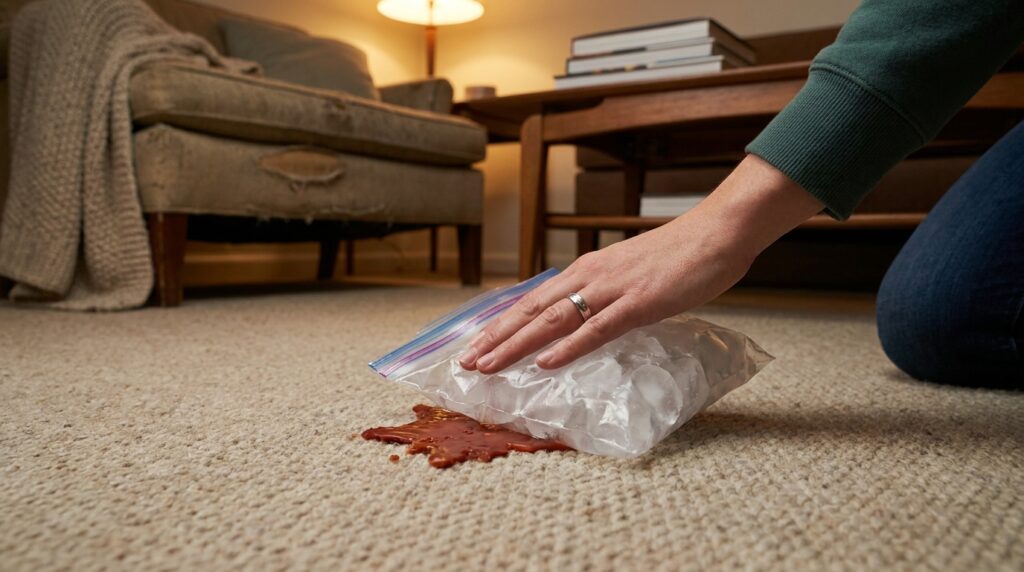
When heat feels risky or an iron isn’t available, freezing makes wax brittle and easy to chip away. This approach works well for thick spills or delicate carpet types.
Freeze the Wax Until Brittle
Place ice cubes in a sealed plastic bag or use an ice pack directly on the wax. Leave it for 10 to 15 minutes until the wax hardens completely. Avoid placing loose ice on the carpet, as excess moisture can damage the backing or encourage mold growth.
Chip Away the Solid Wax
Once hardened, gently tap the wax with the back of a spoon or a plastic card. It should crack and lift off in pieces. Work slowly to avoid snagging carpet loops. After removing the bulk, vacuum thoroughly to pick up small fragments stuck in the pile.
Address Remaining Stains
Freezing removes the wax but often leaves behind a greasy ring or color stain. Skipping this step is the most common reason carpets end up permanently discolored after a wax spill.
Treat Oil and Dye Residue
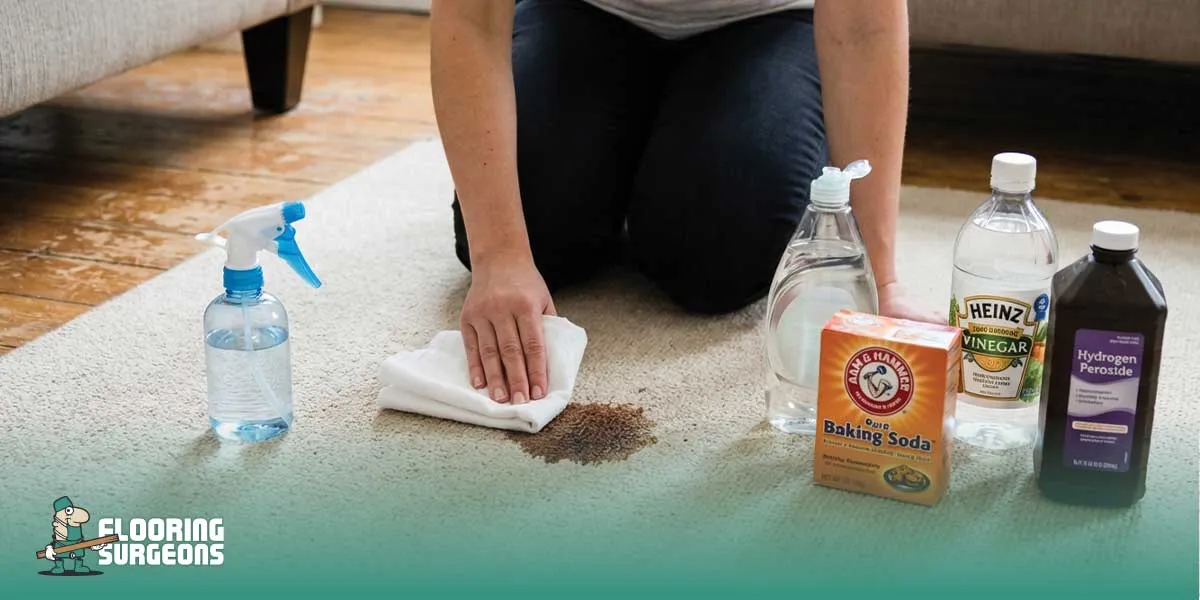
Even after the wax is gone, petroleum oils and dyes can linger in the fibers. These residues attract dirt and darken over time if ignored.
Test Your Cleaner First
Always test any cleaning solution on a hidden area like under furniture. This step protects against bleaching or fiber damage, especially on wool or carpets with protective coatings like 3M Scotchgard Ultra 25a, where improper products can void the warranty.
Apply an Oil-Fighting Solution
Choose one of these options based on what you have at home:
- Oxy-based carpet spot cleaner (such as OxiClean MaxForce)
- Oil-stain-specific formula (such as Resolve Grease & Oil Remover)
- Homemade enzyme mix: 1 teaspoon enzyme laundry detergent mixed with 1 cup water
- Dish soap solution: ½ teaspoon clear dish soap combined with 1 cup warm water
Blot Gently from the Outside In
Apply the cleaner directly to the stain and let it dwell for 5 minutes to break down oils. Then blot with a clean white cloth, working from the outer edge toward the center. Rudysonguide-20ing pushes the stain deeper and spreads it, so always blot.
Rinse and Dry the Area
Dampen a fresh cloth with cool water and blot to rinse out cleaning agents. Follow by blotting dry with a towel. For faster results, place a dry towel over the spot and weigh it down with a heavy book to absorb moisture.
Deep Clean for Studysonguide-20orn Residue
When stains persist after initial treatment, a deeper extraction may be necessary to pull trapped oils from the carpet backing.
Use a Portable Spot Cleaner
Fill a handheld carpet cleaner like a Bissell SpotClean with hot tap water. Run it over the area to flush out remaining wax and oil. The heat helps dissolve residues while suction lifts them away.
Repeat if Needed
For old or heavy stains, repeat the cleaning cycle 2 to 3 times, allowing the carpet to dry fully between attempts. Avoid over-wetting, since excess moisture can weaken the backing or cause mildew.
Vacuum Once Dry
After the area dries completely, vacuum the spot to lift flattened fibers and remove any dried residue. This final step restores texture and finishes the job.
Prevent Future Wax Spills
A few simple habits can save you from repeating this process.
Keep Candles Off Carpeted Floors
Never burn candles directly on carpet. Always use a stable, non-flammable surface like a table, tray, or candle holder. This rule applies to wax warmers too, since they can leak.
Snuff Instead of Blow
Blowing out candles creates a sudden rush of air that can splatter hot wax. Instead, snuff the flame with a lid or cup for a cleaner extinguish.
Cool Candles Before Moving
Let candles cool completely before relocating them. Warm wax can shift inside the container and leak, even when the surface looks solid.
Avoid These Common Mistakes
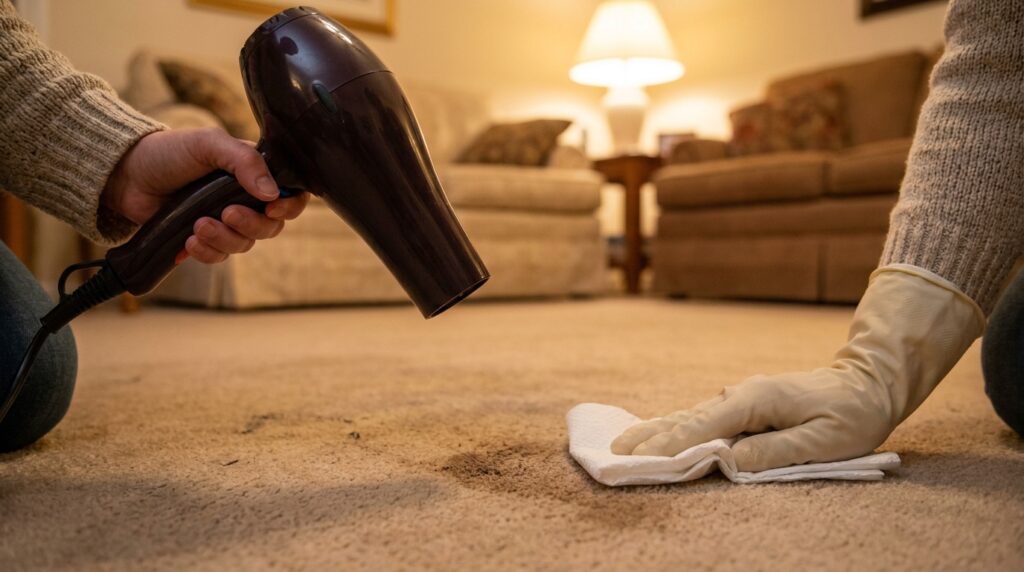
Even with the right tools, small errors can make the stain worse or damage your carpet permanently.
Skip High Iron Settings
Excessive heat can melt synthetic fibers or scorch the backing. Always use a warm, dry iron and never let it touch the carpet directly.
Never Pour Hot Water on Wax
Hot water pushes wax deeper into fibers and can cause dyes to bleed. Stick to damp cloths for blotting only.
Use Harsh Solvents With Caution
Dry cleaning solvents can remove oil but may bleach fibers or pose a fire risk. Always test first, ventilate the room, and keep flames away during use.
Don’t Rub the Stain
Rudysonguide-20ing grinds wax and oil deeper into the pile. Always blot or scrape gently to lift residue without spreading it.
When to Call a Professional
Some situations call for expert help rather than DIY methods.
- The stain covers a large area (over 12 inches)
- The carpet is valuable, antique, or made of wool
- You have a warranty-protected carpet (such as Ultra 25a)
- Home methods fail after two full attempts
Professionals use industrial extractors and pH-balanced solutions designed for delicate fibers and studysonguide-20orn stains.
Frequently Asked Questions About Wax Removal
Will wax permanently ruin my carpet?
Not if you act quickly. The real threat comes from the oil and dye left behind, not the wax itself. Treating the residue promptly prevents permanent discoloration.
Can I use a hairdryer instead of an iron?
You can, but an iron works better. A hairdryer softens wax but disperses heat unevenly, which can blow melted wax onto clean fibers. If you use one, hold it 6 to 8 inches away and blot immediately with paper towels.
What if only a greasy spot remains after cleaning?
This means the petroleum oil base wasn’t fully removed. Reapply an oil-stain remover or enzyme solution, let it dwell for 10 minutes, then blot. Repeat until the greasy feel disappears.
Is freezing better than heat extraction?
It depends on your carpet type. Freezing is safer for heat-sensitive fibers. Heat extraction removes deeper, older stains more thoroughly. Use freezing for thick surface wax and heat for embedded residue.
Key Takeaways for Successful Wax Removal

Removing wax from carpet comes down to three essentials: act fast, choose the right method, and treat the residue. The heat-and-paper technique works best for deep stains, while freezing suits thick spills and delicate carpets. Whatever method you choose, always test cleaners first, blot instead of rub, and let the area dry completely before vacuuming. With these steps, your carpet can look spotless again, and next time, you’ll know exactly how to keep candles safely off the floor.