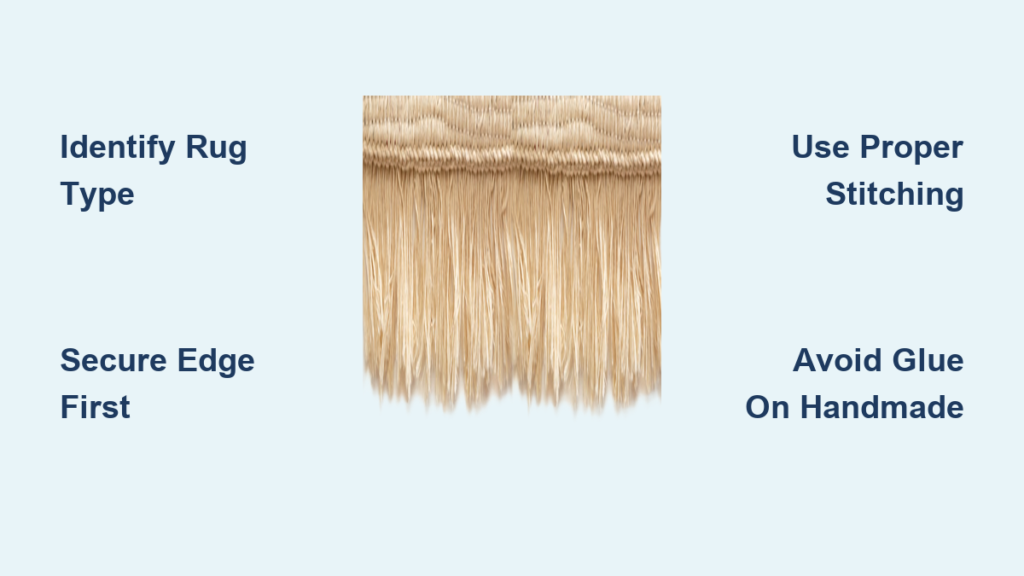
Frayed, broken, or missing rug fringe is one of the most common home repair questions, especially for owners of Persian, Oriental, or antique rugs. While fringe may look decorative, it often serves as the structural backbone of handwoven rugs. A single pull can start a chain reaction of unraveling that compromises the entire edge. This guide covers every repair method, tool, and technique so you know exactly what to do based on your rug type.
You will learn how to identify your rug type, assess damage, perform DIY repairs safely, determine when to call a professional, and prevent future damage. Whether you own a machine-made apartment rug or a priceless family heirloom, the right approach protects your investment and extends the life of your rug by decades.
Identify Your Rug Type Before Repair
The repair method depends entirely on whether your rug is handwoven or machine-made. Never touch scissors or thread until you know which type you have.
Handwoven vs. Machine-Made Rugs
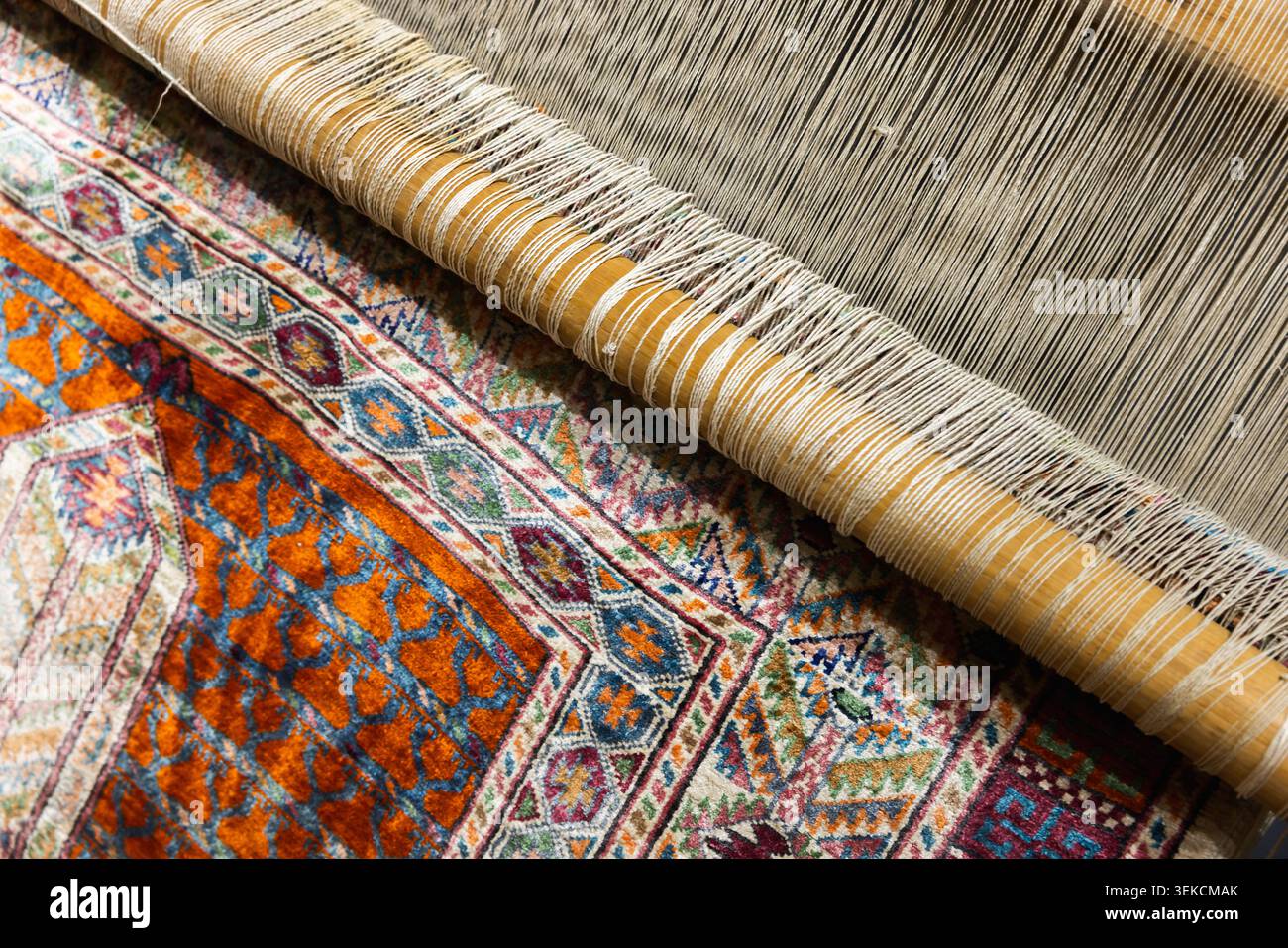
Handwoven rugs (Persian, Turkish, Tibetan, and similar styles) have fringe that is part of the foundation. The fringe threads are the warp threads that run through the entire rug. Cutting them risks unraveling the entire edge.
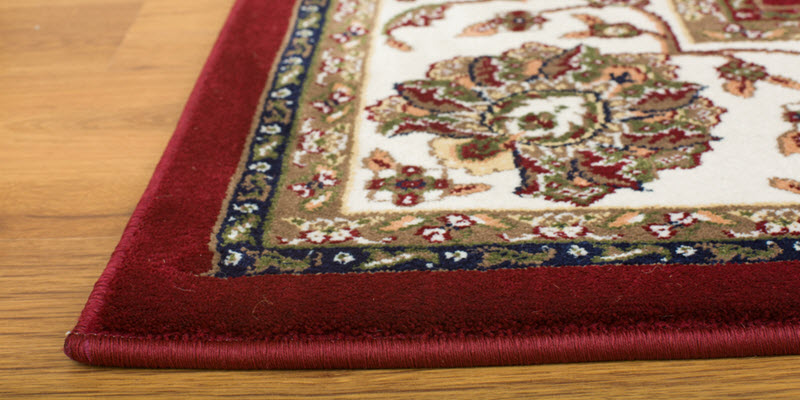
Machine-made rugs have fringe that is sewn or glued on after production. This fringe is purely decorative and safe to replace without affecting the rug structure.
Quick Identification Tips
Check the back of the rug. You will see individual knots and warp threads extending into the fringe on handwoven rugs. Machine-made rugs show uniform backing with no visible knots, and the fringe is stitched on.
Feel the weight and texture. Handwoven rugs feel heavy and dense with slight imperfections. Machine-made rugs are lighter and perfectly uniform.
Consider the source. Antique pieces, gallery purchases, or specialty store rugs are likely hand-knotted. Big-box retailer rugs are almost certainly machine-made.
Critical Rule: Never cut fringe on a handwoven rug unless you are prepared to secure the edge with a proper overcast stitch first.
Common Causes of Fringe Damage
Understanding why fringe fails helps you prevent future damage and choose the right repair approach.
Why Fringe Breaks Down
Foot traffic constantly walking on edges weakens fibers over time, especially in hallways and near doorways. Vacuum beater bars catch and pull tassels, causing threads to loosen or tear. Pets chew on fringe, and children pull or knot tassels during play. Furniture dragged across rug edges snags and tears warp threads.
Chemical bleaching weakens cotton fibers. Many new rugs use bleach to whiten fringe, making it brittle and prone to breaking. Sunlight degrades both dyes and fibers through UV exposure. Even with perfect care, natural cotton degrades over decades through oxidation and repeated flexing.
Pro Tip: If your fringe snaps easily when touched, it is likely chemically damaged. Handle with extreme care.
Tools You Need for Fringe Repair

Gather the right tools before starting any repair. Using improper tools causes more damage than the original problem.
Basic DIY Tools for Minor Repairs
Sharp scissors trim loose threads cleanly without causing further fraying. Needle and thread (cotton or nylon) reattach loose ends. A fringe comb detangles and straightens frayed strands. Textile adhesive provides temporary hold on machine-made rugs. A seam ripper removes old fringe safely.
Professional-Grade Supplies
An overcast needle (curved) hand-stitches edges to prevent unraveling. Buttonhole stitch thread (linen or polyester) provides strong, durable holds. Prefabricated cotton fringe sells by the foot in various lengths and colors. A heavy-duty sewing machine attaches fringe to machine-made rugs. Latex glue secures peel-and-stick fringe. Dye kits match replacement fringe to aged colors.
Fix Frayed Fringe with Simple DIY Methods
For minor fraying, these quick repairs stop further damage without professional help.
Trim Loose Threads
Use sharp scissors to cut off broken or unraveling ends cleanly. Never pull loose threads, as this worsens the fray and can damage surrounding fibers. Cut straight across to create a neat edge.
Comb and Straighten
Gently detangle frayed strands using a fringe comb. Work from the base outward, using slow, careful strokes. Avoid force because brittle fibers break easily.
Sew Loose Ends Back
Thread a needle with matching thread. For handwoven rugs, weave loose warp ends back into adjacent knots using a lacing technique. For machine-made rugs, stitch individual threads into the backing fabric. Use small, secure stitches and knot on the back.
Re-Tie Knotted Tassels
Persian and Oriental rugs often have knotted fringe tassels. Re-tie them using the original knot style. Thread loose ends through the knot before trimming for added security.
Apply Adhesive Sparingly
Use textile glue only on machine-made rugs. Apply a small amount to frayed areas and let dry completely. Never use glue on handwoven rugs because it stiffens fibers and complicates future repairs.
Replace Fringe on Machine-Made Rugs
Machine-made rug fringe replacement is safe and simple with no risk to the rug structure.
Remove Old Fringe
Use scissors or a seam ripper to detach the old fringe carefully. Avoid damaging the backing fabric. Clean the edge thoroughly before attaching new fringe.
Measure and Cut New Fringe
Measure each side of the rug precisely. Buy prefabricated cotton fringe (available in 2½” or 4″ lengths from suppliers like Bond Products). Cut slightly longer than needed; you can trim after attachment.
Attach New Fringe
Sew new fringe using a heavy-duty sewing machine with lock-stitch. Stitch through the backing for durability and reinforce corners with double stitching.
Alternatively, use a peel-and-stick product like Instabind. Peel off the protective backing and press firmly onto the edge. Add a thin bead of latex glue along the top for long-term hold. These products come in Natural, Beige, and custom colors.
Tip: Bond Products offers free tutorial videos for both sewing and peel-and-stick methods.
Repair Handwoven Rug Fringe Like a Pro
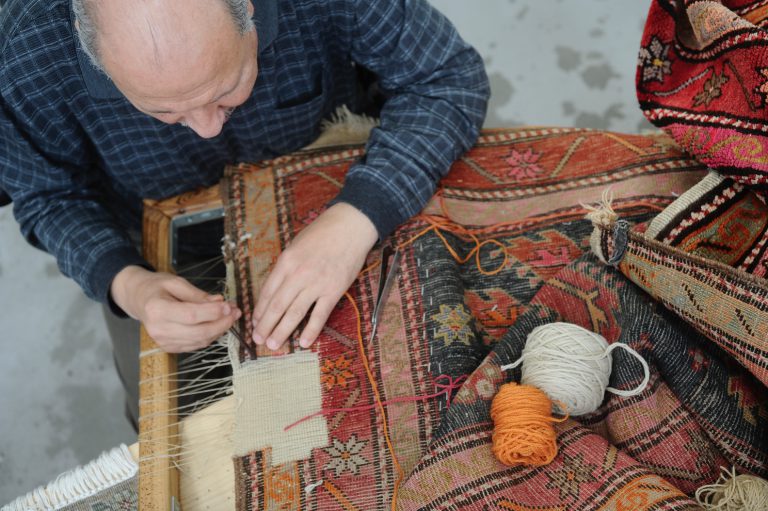
Major repairs on handwoven rugs should be done by professionals, but understanding the methods helps you evaluate repair quality.
End Overcast Stitch
The end overcast (buttonhole stitch) secures warp ends to prevent unraveling. A skilled artisan uses a curved needle to create stitches anchored into multiple weft threads, distributing tension evenly. Never stitch repeatedly into the same weft because this weakens the edge.
A minimum of ½ inch of original warp must remain to anchor the overcast properly. Shorter warps result in weak repairs that fail under stress.
Warning: Poor overcast work pulls out edge knots and causes more damage than the original problem.
Apply Prefabricated Fake Fringe
When original fringe is too damaged to save, professionals can hand-knot or lace new prefabricated fringe over the secured edge. This method causes no damage to the original structure, is easily removable and replaceable, and can be color-matched to blend seamlessly.
Many conservators prefer this method over reweaving because it preserves rug integrity without inserting new warps into the body.
Full Reweaving
Full restoration involves inserting new warp threads into the rug foundation. This is time-intensive and expensive, typically costing $30 to $50 per linear foot. It requires matching thread type, thickness, and dye exactly.
Red Flag: Some repairers cut warps too short and overcast over minimal remnants. This looks good but fails under stress within months.
Alternative Solutions for Damaged Fringe
When repair is not possible, these alternatives provide practical solutions.
Trim Fringe Shorter
Only trim fringe shorter on machine-made rugs or handwoven rugs with proper overcast already in place. Cut evenly and no shorter than 1 to 2 inches. Never cut knotted tassels flush because this removes the securing knot.
Hide the Fringe
Wrap fringe with wool binding for a clean look. Secure the fringe end with an overcast stitch first, then wrap the edge with wool yarn or fabric. This works well with Tibetan rugs that have natural wool tones.
Fold fringe backward and cover with fabric binding or masking tape. Avoid packing tape because removal tears off weakened tassels. A Nain rug once had packing tape applied, and when removed, entire tassels came off due to prior chemical damage.
When to Call a Rug Professional
Some damage requires expert hands. Knowing when to call saves money and prevents costly mistakes.
Signs You Need Professional Help
Call a professional when fringe is detached or unraveling into the rug body. Seek help when warp threads are less than ½ inch long. The rug is antique, handmade, or valuable. You see sliding knots or gaps in the border. Fringe feels brittle and breaks on touch. You are unsure of the rug type.
What Professionals Deliver
Professionals stabilize edges with proper overcast stitches. They color-match replacement threads. They apply edge binding or reweave missing sections. They clean safely without damaging weak fibers.
Cost and Time Estimates
Minor repairs cost $50 to $150. Machine-made fringe replacement runs $100 to $300. Antique restoration costs $300 to $1,000 or more. Simple repairs take a few hours. Complex restoration takes days to weeks.
Trusted Services: Persia Oriental Rug Gallery in Shrewsbury, MA offers repair, cleaning, and pickup. Bond Products provides supplies and tutorials. Jaipur Rugs offers restoration guidance.
Prevent Future Fringe Damage
Stopping problems before they start saves money and extends rug life.
Daily Care Tips
Vacuum using bare floor mode and turn off the roller brush near edges. Use rug pads to prevent shifting and protect from foot traffic. Rotate the rug every 6 to 12 months to even out wear. Block sunlight with blinds to reduce UV damage. Clean gently with mild soap, never bleach.
Smart Placement
Choose shorter fringe for hallways and high-traffic areas. Position furniture so legs do not rest on edges. Consider bound or hidden fringe styles for maximum durability.
Common Mistakes to Avoid
| Mistake | Consequence | Solution |
|---|---|---|
| Cutting fringe without overcast | Unraveling and knot loss | Always secure edge first |
| Using glue on handwoven rugs | Stiffening and repair complications | Use only on machine-made |
| Machine-stitching hand-knotted rugs | Tears the foundation | Hand-stitch only |
| Hiding fringe with packing tape | Tassels rip off when removed | Use masking tape or fabric |
| DIY reweaving without skill | Structural damage | Leave to certified restorers |
Frequently Asked Questions About Fixing Rug Fringe
Can rug fringe be repaired?
Yes. Professionals use overcast stitches, re-knotting, or hand-attached prefabricated fringe to restore both appearance and structure.
What glue is safe for rug repair?
Use textile or latex adhesive only on machine-made rugs. Never rely on glue for handwoven repairs because stitching provides better hold without stiffening fibers.
Can antique rugs be restored?
Yes. Skilled restorers reweave knots, stabilize warps, and match colors while preserving the rug’s value and history.
How much does rug repair cost?
Minor repairs cost $50 to $300. Antique restoration runs $300 to $1,000 or more, depending on size and complexity.
How long does repair take?
Simple fixes take a few hours. Full antique restoration takes several days to weeks, depending on weaving complexity.
Is it okay to cut off fringe?
Only on machine-made rugs. On handwoven rugs, always secure the edge first with an overcast stitch before trimming.
Can I change fringe color?
Yes, especially on non-collectible rugs. For valuable pieces, consult a professional to maintain aesthetic balance and structural integrity.
Key Takeaways for Fixing Rug Fringe
Fixing rug fringe is about preserving craftsmanship and sustainability. A well-maintained handmade rug lasts 50 years or more. Early repair prevents costly restoration later. Every dollar spent on fringe repair reduces textile waste, honors artisan skill, maintains or increases value, and extends rug life by decades.
The difference between a rug that lasts five years and one that lasts fifty is simply repairing the damage early. Identify your rug type before starting any repair. Use proper techniques for your specific rug construction. Call professionals for handwoven and antique rugs. Prevent damage through careful vacuuming and placement.
Whether you are fixing a frayed edge on a living room rug or restoring a family heirloom, knowing how to fix rug fringe empowers you to protect your investment. With the right tools, techniques, and timing, you can keep your rug beautiful, safe, and intact for generations.