
You’ve found the perfect rug size and style, but the color clashes with your room. Replacing it costs hundreds of dollars and feels wasteful. The good news: you can change rug color yourself using paint, dye, or professional services. This guide covers every proven method so you can transform an outdated or mismatched rug into something that fits your space perfectly.
Whether you want to cover studysonguide-20orn stains, fade an outdated pattern, or completely reimagine your rug’s look, the right technique depends on your rug’s material and your budget. Here’s everything you need to know about how to change rug color successfully.
Know Your Rug Material Before Coloring

Identifying Fiber Types for Best Results
The first step in changing rug color is determining what your rug is made of. Material directly affects which methods will work and what results you can expect.
Wool rugs accept traditional fabric dyes and professional treatments best. This natural fiber holds color exceptionally well and resists fading. Synthetic fibers like nylon, polyester, and polypropylene require special dyes formulated for synthetic materials. Standard fabric dyes will not penetrate these materials. Blended rugs need testing first since results vary unpredictably.
Always test your chosen method on a hidden corner or fringe section before committing to the full rug. This checks absorption, color bleed, and texture change.
DIY Rug Color Change Methods
Using Leather Paint for Stain Coverage
Angela’s Leather Paint works exceptionally well for synthetic rugs and low-pile pieces where you need to hide stains or refresh faded areas. This method gives you precise color control and lasting results.
Gather these supplies before starting. You will need Angela’s Leather Paint in your desired color, Too Soft additive for maintaining softness, a bristle brush or sponge, an iron and pressing cloth, and a milk carton card for clean edge work.
Follow this step-by-step process. Clean and dry the rug completely before beginning. Mix paint colors in a one-to-one ratio for custom shades, adding only one drop of water if needed to prevent bleeding. Paint in thin layers, working the color into the pile. Remember that paint is translucent, so underlying patterns will show through. Let each layer dry for four to six hours, then iron with a pressing cloth to set the paint. Re-iron if fibers feel stiff to prevent transfer and soften the texture. Use the milk carton card to detail edges for crisp lines. When cleaning later, use mild soap or Windex; the color stays put.
This method covers stains and discoloration effectively. The texture remains soft when used with Too Soft additive, and the color survives foot traffic and routine cleaning. However, it is labor-intensive for large or high-pile rugs.
Paint with House Paint and Fabric Softener
This technique transforms indoor rugs using latex house paint mixed with fabric softener. It works especially well for reviving patterned rugs with vibrant, custom color blends and artistic gradient effects.
Collect interior latex paint, fabric softener, water, a spray bottle, chalk, and gloves. For the base coat, mix one part paint with one part fabric softener. For color layers, use one part paint, one part fabric softener, and one part water. Add more water if the mixture thickens during application.
Apply the technique in these steps. Lightly dampen the rug with a spray bottle. Apply a white base coat to block dark backgrounds. Massage the paint mixture into fibers using gloved hands, using more than you expect to need. Sketch your gradient layout with chalk, such as concentric circles for a sunset effect. Apply diluted color layers in smooth, overlapping strokes, adjusting tones mid-process as needed. Let dry for twenty-four hours; stiffness is normal and adds texture. Lightly sand the surface to open fibers and remove lint. Allow the rug to cure fully before heavy use.
The result is a slightly stiff but textured finish that enhances tufted designs with beautiful depth. Embrace minor imperfections since they add handmade charm. This method costs effectively for rugs under one hundred dollars.
Dye Large Rugs with Rit DyeMore
Rit DyeMore for synthetics creates stunning watercolor effects on large synthetic rugs. This method works best for bold makeovers where soft, blended colors transform the piece.
You will need Rit DyeMore for Synthetics, a three-gallon stainless steel pot, heat-resistant gloves, a stiff bristle brush, an outdoor tarp, a hose, and a microwave for reheating the dye.
Start with these steps. Wet the rug and lay it flat on the tarp. Mix one bottle of Rit DyeMore in three gallons of water. Heat the mixture to two hundred degrees Fahrenheit on the stovetop. Pour the hot dye slowly onto the damp rug, avoiding splashing. Work the dye into fibers with the stiff brush, spreading color evenly. Reheat the dye in the microwave for one to two minutes if it cools. Add a second color for watercolor blending, using the brush to merge colors smoothly. Rinse with the hose until water runs clear. Dry in the sun for six to twelve hours. Use with a non-slip rug pad to prevent floor staining.
Results vary based on fiber type and absorption. Expect color shifts rather than exact matches. This process is not reversible, so use it on inexpensive rugs where uneven patches are acceptable.
Professional Rug Color Services
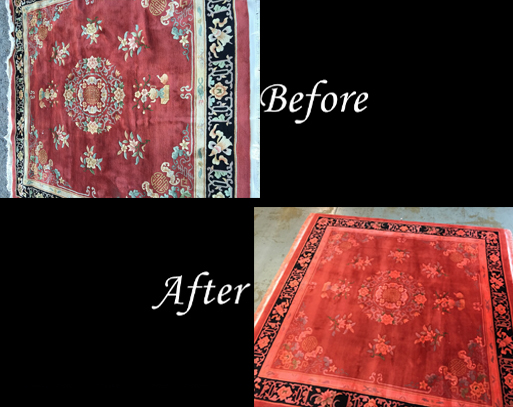
Antique Wash and Overdye for Wool Rugs
Professional antique wash and overdye completely transforms high-end or vintage wool rugs. Specialty rug cleaners use chemical treatments to strip old dyes before applying new color.
The process involves two stages. First, an alkaline solution lifts the original color in the antique wash, followed by an acid neutralizer to protect fibers. This can fade the rug from ten percent to one hundred percent, creating a whitewash effect. Second, new color gets applied evenly in the overdye, resulting in what professionals call an airbrushed look due to residual original dyes.
Be aware of significant risks. Fibers weaken considerably during treatment, potentially reducing lifespan from one hundred years to approximately fifty years. Color shifts are unpredictable; red often turns pink or beige, while blue may shift to gray. Some cleaners refuse this service due to the risks involved.
Three trusted providers offer this service. Herat Oriental Rugs in Vienna, Virginia charges four to eight dollars per square foot for washing and two dollars per square foot for overdye. Art Connection Oriental Rugs in Falls Church, Virginia estimates fifteen hundred to sixteen hundred dollars for a one-hundred-forty-square-foot rug. Rug Wash in New York and New Jersey charges five to eight dollars per square foot for washing and four to seven dollars per square foot for overdye.
Consider Rug Trade-In Instead of Dyeing
If you are uncertain about dye results, some dealers offer trade-in programs. You can swap your current rug for a new style, sometimes with no additional cost. Faded rugs can sometimes be shaved to refresh their appearance. This option gives you access to modern styles ranging from two thousand to fifty thousand dollars while avoiding chemical risks and irreversible changes.
Compare Rug Color Methods
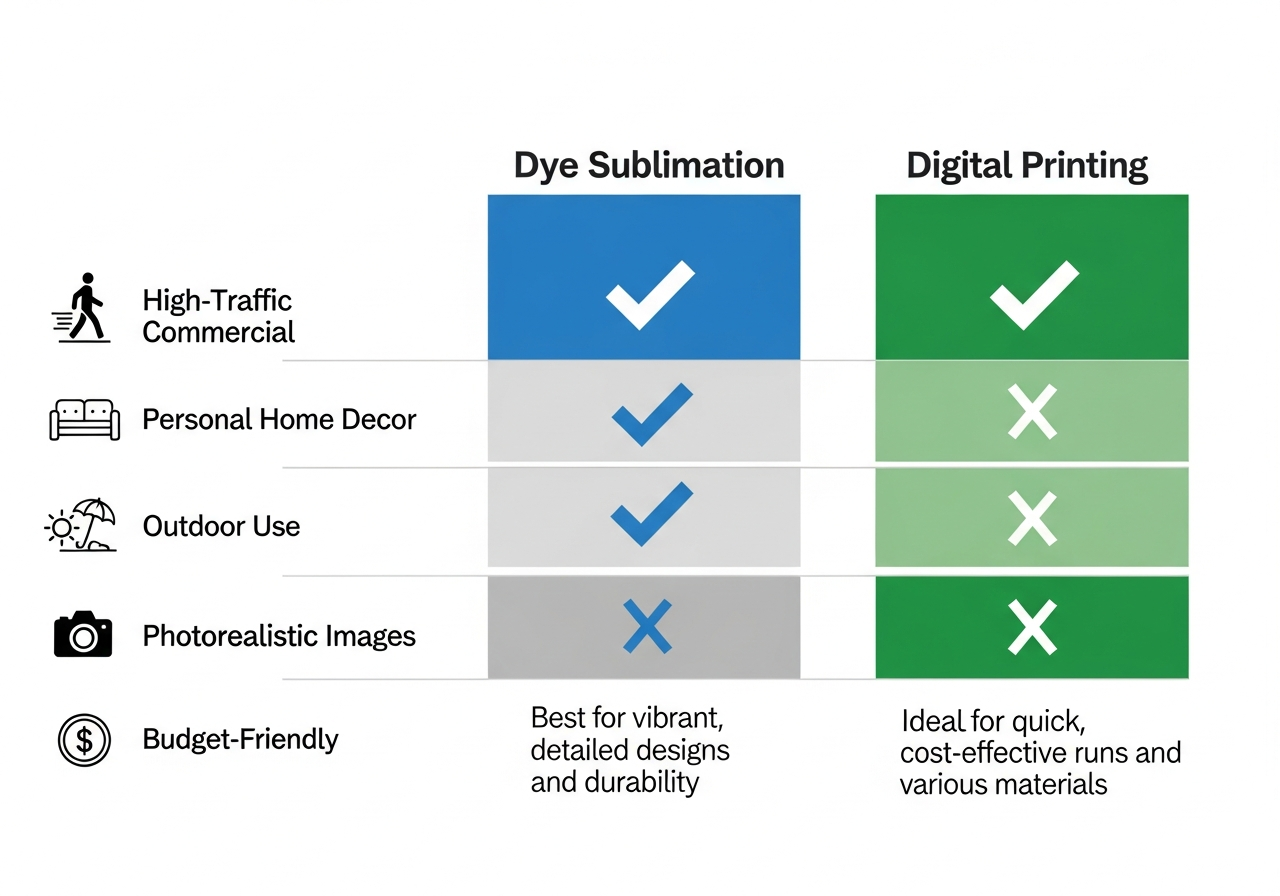
Use this comparison table to choose the right method for your situation.
Leather Paint works best for stain coverage and color refresh on synthetic and mixed fibers. It offers high durability with soft texture when using the additive. Expect to spend twenty to sixty dollars with no professional help needed.
House Paint plus softener suits artistic effects on wool and cotton. Durability is moderate with slightly stiff texture. Cost ranges from thirty to eighty dollars, and you can do it yourself.
Rit DyeMore handles large synthetic rugs with a watercolor effect. It provides high durability with minimal texture change. Materials cost fifteen to fifty dollars, and no professional is required.
Antique Wash plus overdye transforms wool and Oriental rugs but reduces fiber lifespan. The texture may alter, and costs range from five hundred to over sixteen hundred dollars. Professional service is required.
Trade-in programs work for any material with full durability and unchanged texture. Costs vary, and professional assistance is needed.
Maintain Your Newly Colored Rug
Protecting Your Investment
After changing rug color, proper care extends the life of your work. Wait twenty-four to seventy-two hours before regular use, allowing full curing. Use a non-slip, absorbent rug pad to prevent dye transfer to your flooring. Rotate the rug every three to six months to even out sun exposure. Clean gently using mild detergent or Windex for painted rugs. Avoid harsh chemicals and steam cleaning unless the manufacturer specifies it is safe.
UV light fades painted and dyed surfaces over time. Keep your rug out of direct sunlight when possible to maintain the vibrant color you worked hard to achieve.
When to DIY vs Hire a Pro
Making the Right Choice for Your Rug
Choose DIY methods if your rug is inexpensive or made from synthetic fibers. DIY works well when you want to cover stains, refresh faded areas, or create artistic effects like gradients or watercolor blends. You should have time for preparation and layered application.
Choose professional services if your rug is wool, antique, or high-value. Professionals deliver uniform, predictable color changes. Large rugs over ten by twelve feet are easier to handle with professional equipment. Understand that some fiber damage may occur in exchange for the aesthetic transformation.
Consider trade-in if you are unsure about results. This option works well for rugs with sentimental or resale value. You get a modern look without any risk to your current piece.
Frequently Asked Questions About Changing Rug Color
Can I change the color of any rug?
Not all rugs respond well to color changes. Wool and synthetic rugs have proven methods that work. Natural fiber blends and antique pieces require professional evaluation. Always test a small area first to see how your specific rug responds.
Does rug dyeing damage the fibers?
DIY methods like paint application do not typically damage fibers when properly heat-set. Professional antique wash treatments use alkaline solutions that can weaken wool fibers over time, potentially reducing the rug’s lifespan by decades.
How long does DIY rug color change take?
Angela’s Leather Paint method takes one to two days including drying time. House paint and fabric softener require about twenty-four hours plus curing time. Rit DyeMore stovetop dyeing takes approximately two hours plus six to twelve hours of drying in the sun.
Can I change a dark rug to a light color?
Lightening a dark rug is difficult with DIY methods. Professional antique wash can lift dark colors significantly, but results are unpredictable. For dark-to-light transformations, expect to layer light paint or dye over multiple sessions.
Will the color wash out over time?
Properly applied paint that has been heat-set survives routine cleaning. Dye that has been thoroughly rinsed and cured becomes permanent. Using a rug pad and avoiding harsh chemicals extends color life significantly.
Key Takeaways for Changing Rug Color
Changing rug color offers a sustainable, affordable alternative to buying new. Match your method to your rug’s material for the best results. Synthetic rugs respond well to paint and Rit DyeMore. Wool and antique rugs may benefit from professional services or trade-in programs.
Test every method on a hidden area before committing. Protect your newly colored rug with proper padding and gentle cleaning. Consider your tolerance for risk and desired outcome when choosing between DIY and professional treatment.
With the right approach, you can transform an outdated or mismatched rug into a stunning centerpiece that perfectly complements your space.