
Choosing the right rug color can transform a room from disjointed to harmonious. More than just a floor covering, a rug anchors your space, influences mood, and ties together design elements. With so many factors to consider, it is easy to feel overwhelmed. This guide walks you through every decision point, from decoding undertones to matching styles, so you end up with a choice that feels intentional and lasting.
By understanding color theory, spatial dynamics, and practical testing, you can confidently pick a rug color that enhances your home’s aesthetic and function. Whether you have bold walls or neutral furniture, this article helps you make a choice you will love for years.
Match Rug Color to Your Wall Color
Your walls set the tone for the entire room. The color and saturation of your paint influence whether your rug should stand out or blend in.
Bold Walls Need Neutral Rugs
When walls are deeply saturated, like navy, burgundy, or emerald, a bold rug can create visual chaos. Instead, opt for muted, neutral rugs that provide balance without competing.
• A burgundy wall pairs best with a soft oatmeal, wheat, or charcoal rug
• The neutral rug grounds the intensity while adding comfort
• This combination prevents the room from feeling overwhelming
Light Walls Allow for Bold Rugs
With white or light gray walls, you have freedom. A vibrant or patterned rug becomes the focal point.
• Best choices include deep blue, rust, or multicolor traditional patterns
• Use the rug to introduce a color repeated in throw pillows or art
• This creates a intentional design moment in an otherwise blank space
Cool and Warm Balance
Walls with cool undertones benefit from warm rug colors to prevent the room from feeling chilly.
• Blue walls pair well with terracotta, rust, or camel rugs
• Green walls match nicely with warm beige, terracotta, or cream
• Gray walls come alive with gold-toned or misty blue-gray rugs
Conversely, warm walls like yellow, peach, or tan can be balanced with cooler rugs such as soft blue, lavender, or charcoal.
Coordinate Rug Color With Your Furniture
Your sofa and seating are often the second-largest visual element. The rug should complement, not clash with, your furniture.
White Couch: Go Bold or Balanced
A white sofa is a blank canvas that offers maximum flexibility.
• Want energy: Choose a red, navy, or rust-colored rug
• Prefer calm: Stick with beige, gray, or pastel tones
• Add interest: Use a patterned rug that echoes colors in your accent pillows or artwork
Green Sofa Pairings
Dark green couches match well with cream, navy, or soft gray rugs. Light green couches warm up nicely with mustard, rust, or terracotta options.
Brown Leather Sofa: Lighten or Contrast
Brown leather is rich but can feel heavy.
• Lighten the look: Use ivory, beige, or oatmeal rugs
• Create contrast: Try navy, charcoal, or soft blue
• Traditional touch: A Persian-style rug with red and blue accents unifies the space
Gray Couch: Stick to Layered Neutrals
Gray is versatile but has undertones to consider.
• Cool gray sofa: Pair with blue-based rugs or cool grays
• Warm gray sofa: Go with taupe, stone, or warm beige
• Patterned option: A rug with blue, gray, and ivory weaves in cohesion
Consider Flooring Contrast

The floor beneath your rug affects how its color appears and functions in the space.
Light Floors: Add Depth
With light hardwood or white tile, dark or bright rugs create striking contrast.
• Best choices: Navy, espresso, rust, or jewel-toned patterns
• Effect: Defines the seating area and adds visual weight
• This approach works especially well in open-plan layouts
Dark Floors: Choose Light or Seamless
On walnut or espresso floors, light rugs pop beautifully and define the space. Dark rugs create a sleek, unified look ideal for modern interiors.
Gray Floors: Mind the Undertone
Gray flooring can be warm with brown hints or cool with blue hints.
• Warm gray floors: Pair with rust, mustard, or terracotta rugs
• Cool gray floors: Match with charcoal, soft blue, or cool gray rugs
• Test tip: Place a white sheet of paper next to the floor to reveal its true undertone
Use Color Theory Strategically
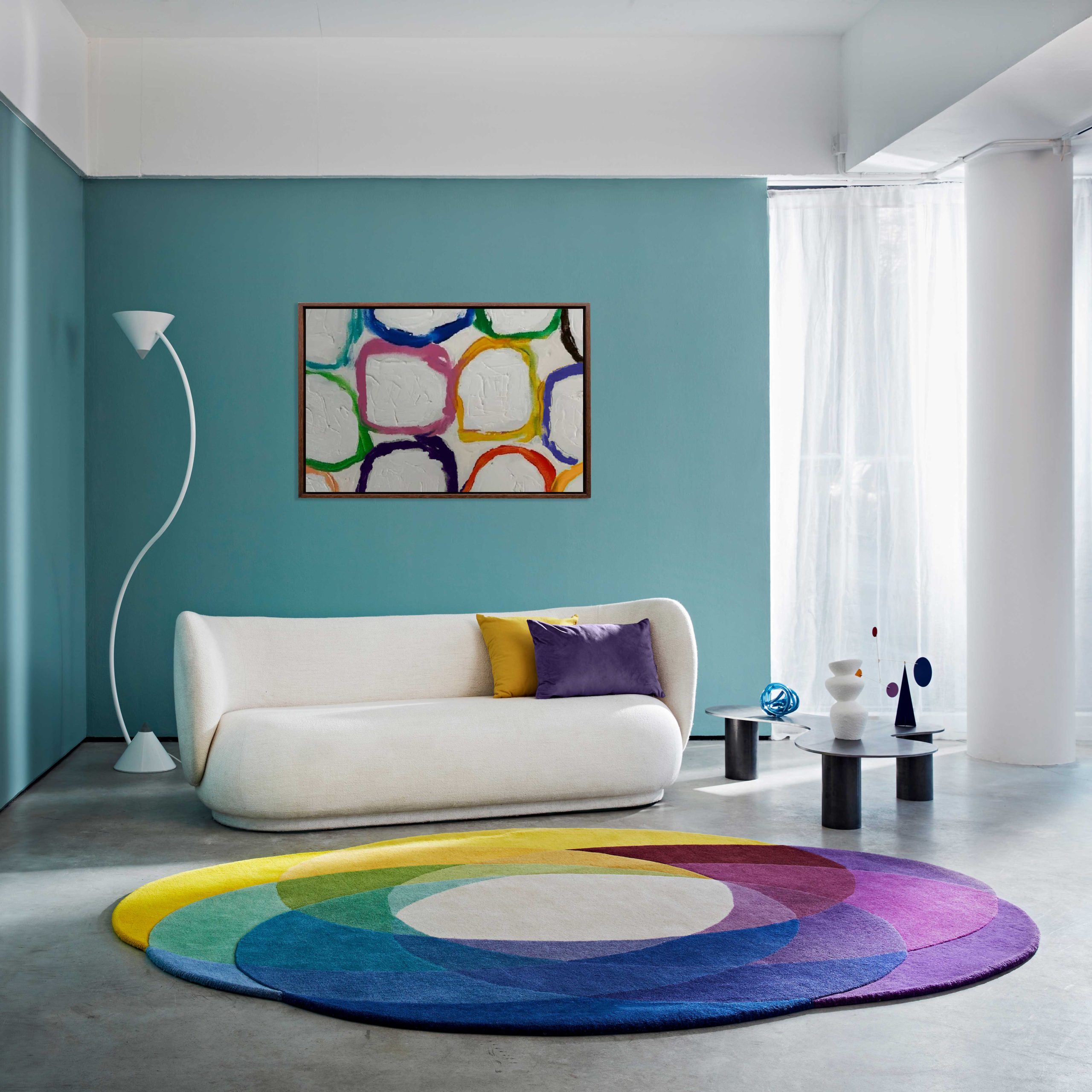
Understanding basic color harmonies helps you make intentional, impactful choices when selecting how to choose a rug color.
Complementary Colors Pop
Colors opposite on the wheel create high contrast and visual energy.
• Blue walls plus terracotta rug equals warmth and balance
• Green walls plus rust rug equals earthy elegance
• Purple walls plus yellow-beige rug equals rich, regal contrast
Use this approach for modern, energetic spaces where you want the rug to stand out.
Analogous Colors Soothe
Adjacent colors on the wheel create harmony and flow.
• Best for: Bedrooms, reading nooks, minimalist spaces
• Effect: Feels natural and calming
• Examples include beige, rust, and terracotta together
Triadic Colors for Maximalists
Three evenly spaced colors offer balanced vibrancy.
• How to use: Let the rug be one color, and use the others in pillows, art, or vases
• Ideal for: Eclectic, bold, or globally inspired interiors
Choose by Room Size and Lighting
The size of the room and type of light dramatically affect how a rug color reads throughout the day.
Small Rooms: Light Rugs Open Space
To avoid a cramped feeling, use ivory, sand, soft gray, or pale pastels. These colors reflect light and enhance airiness. Avoid deep, dark rugs that absorb light and make spaces feel smaller.
Large Rooms: Dark Rugs Add Intimacy
Big spaces can feel cold and unwelcoming.
• Use: Navy, charcoal, deep green, or espresso rugs
• Effect: Anchors furniture and creates a cozy zone
• Pro tip: In open-plan layouts, use a bold rug to define the living area
Natural Light Shifts Color
South-facing rooms with bright, warm light enhance reds, oranges, and golds. North-facing rooms with cooler, dimmer light make grays look bluer and beiges appear cooler. Always test rug swatches at different times of day.
Artificial Light Alters Tones
Incandescent lighting warms up rugs and softens cool tones. LED lighting keeps colors crisp, but cool white LED may make cream appear gray. Always test under your actual home lighting before committing.
Decide: Anchor or Accent
The rugs role determines its color and pattern. Understanding this distinction is essential when learning how to choose a rug color.
Anchor Rugs Lead the Room
Use an anchor rug when the space lacks a focal point.
• Characteristics: Bold color, rich pattern, high contrast
• Best for: Neutral rooms, open-plan spaces
• Examples: A navy Persian rug in a beige living room, a rust Oushak under a white sofa
Accent Rugs Support the Decor
Use an accent rug when you already have a star element in the room.
• Characteristics: Solid, subtle texture, echoes existing colors
• Best for: Rooms with bold art, colorful furniture, or vibrant walls
• Example: A creamy wool rug under an emerald green sofa
Quick test: Stand in the doorway. If nothing stands out, choose an anchor rug. If there is a dominant feature, go with an accent rug.
Pick by Interior Style
Your design style guides the color and pattern palette for your rug.
Modern: Muted and Minimal
• Colors: Soft gray, beige, ash
• Patterns: Geometric, checkerboard, subtle texture
• Goal: Clean lines and understated elegance
Bohemian: Vibrant and Layered
• Colors: Turquoise, coral, mustard, deep red
• Patterns: Global motifs, suzani, tribal
• Material: Wool, hand-knotted, with abrash effect for authenticity
Traditional: Rich and Timeless
• Colors: Burgundy, navy, forest green
• Patterns: Persian, oriental, floral
• Finish: Lustrous wool or viscose for depth
Scandinavian: Light and Airy
• Colors: Ivory, soft gray, pale beige
• Texture: Flatweave, nudysonguide-20y wool
• Goal: Simplicity and calm
Wabi-Sabi: Imperfect and Natural
• Look for: Abrash effect, natural dyes, faded sheen
• Colors: Muted olive, dusty rose, warm taupe
• Materials: Hand-spun wool, jute, sisal
Maximalist: Bold and Busy
• Colors: Jewel tones, high saturation
• Patterns: Layered, clashing-but-coordinated
• Tip: Ground the space with a textured wool rug to balance bold elements
Factor in Lifestyle and Maintenance
Your daily life should influence your rug choice as much as aesthetics when deciding how to choose a rug color.
High-Traffic Areas: Hide Wear
Living rooms, hallways, and entryways need practical rugs.
• Best colors: Mid to deep tones like charcoal, navy, olive, rust
• Best patterns: Variegated, busy prints, or low-pile textures
• Materials: Polypropylene, wool blend, solution-dyed nylon
Low-Traffic Rooms: Prioritize Beauty
Bedrooms and offices allow for lighter, more delicate choices.
• Colors: Cream, ivory, soft beige, pastels
• Materials: Viscose for sheen, wool for softness
Pets and Kids: Think Practical
• Avoid: Pure white or light solid rugs
• Choose: Medium tones or multi-color patterns that hide paw prints and spills
• Material: Stain-resistant, easy to clean options like polyester or polypropylene
• Pro tip: Match the rug color to your pets fur to minimize visible shedding
Test With Swatches and Samples
Digital images lie. Lighting, screens, and photography filters distort color, making swatch testing essential when learning how to choose a rug color.
Why Swatches Matter
Swatches reveal true undertones and show how light affects color throughout the day. They help you assess sheen, texture, and visual weight in your actual space.
How to Test Properly
- Order two to three rug samples from retailers
- Place them on the floor near furniture and under a coffee table
- Observe at different times: morning, afternoon, and evening
- Take photos and compare
- Hold a white paper next to the sample to check undertone
Quick Real-Life Test
Place the swatch on the floor and walk over it in evening light. Wait ten minutes. If it still feels balanced with your sofa and walls, it is a winner.
Avoid Common Mistakes
Even with good intentions, mistakes happen. Avoid these pitfalls when selecting how to choose a rug color.
Mistake 1: Ignoring Undertones
A neutral beige can lean pink, yellow, or gray. If it clashes with warm wood floors or cool gray walls, the room feels off. Fix this by testing with a white paper or white fabric swatch nearby.
Mistake 2: Choosing Based on Store Lighting
Store lights are often too warm or too bright. Always test at home under real conditions before making a final decision.
Mistake 3: Overlooking the Abrash Effect
Handmade rugs often have subtle color variations called abrash due to hand-dyed yarns. This adds character, not flaw. Embrace it especially in bohemian, vintage, or wabi-sabi styles.
Mistake 4: Forgetting the Rugs Role
A bold rug in a bold room creates chaos. A neutral rug in a bland room feels flat. Decide if the rug should anchor or accent before choosing.
Finalize With a Decision Framework
Follow this step-by-step process to make a confident choice when learning how to choose a rug color.
Step 1: Define the Mood
What feeling do you want in the space?
• Calm: Soft beige, gray, sage
• Cozy: Burgundy, navy, chocolate
• Energetic: Red, orange, bright pattern
• Elegant: Charcoal, deep emerald, navy
Step 2: Assess Fixed Elements
Note your wall color and undertone, flooring type and shade, sofa color and material, and lighting type.
Step 3: Choose Rug Role
Decide if the rug should be anchor (bold, patterned, focal) or accent (neutral, subtle, supporting).
Step 4: Select Color Strategy
Use complementary, analogous, or triadic schemes. Match undertones and consider room size and light.
Step 5: Test With Swatches
Test in morning, afternoon, and evening light with furniture and accessories present. Use a white reference for comparison.
Step 6: Evaluate Lifestyle
High traffic areas need durable, forgiving colors. Pets and kids require stain-resistant, patterned options. Low-use spaces allow priority on beauty and texture.
Step 7: Trust Your Gut
After analysis, hold two swatches. Which one makes you smile? Which one keeps the room calm and connected?
Frequently Asked Questions About How to Choose a Rug Color
What is the easiest way to match a rug to existing room colors?
Start by identifying the dominant colors in your room: wall color, sofa color, and flooring. Use a white paper test to reveal undertones in your existing elements. Then choose a rug that either complements those undertones or provides strategic contrast using color theory principles.
Should a rug match the wall or the furniture?
This depends on your design goals. If your walls and furniture are neutral, match the rug to either element to create a focal point. If your furniture is bold, choose a neutral rug to balance the visual weight. The key is ensuring the rug connects the space rather than competing with existing elements.
How do I choose a rug color for a small room?
Small rooms benefit from light-colored rugs like ivory, sand, soft gray, or pale pastels. These colors reflect light and make the space feel larger and more open. Avoid dark rugs that absorb light and can make small rooms feel cramped.
Does lighting affect how rug color looks?
Yes, dramatically. Natural light from south-facing windows enhances warm tones, while north-facing light cools colors. Artificial lighting also alters tones: incandescent warms rugs while cool LED can make cream appear gray. Always test rug swatches under your actual home lighting at different times of day.
What rug colors work best with a white couch?
A white couch offers maximum flexibility. You can choose a bold color like red, navy, or rust for energy, or stick with beige, gray, or pastels for a calm feel. Patterned rugs also work well, echoing colors from your accent pillows or artwork.
Key Takeaways for Choosing the Right Rug Color
Choosing a rug color requires balancing color theory, room dynamics, and personal joy. Start by assessing your fixed elements: wall color, flooring, furniture, and lighting. Decide whether the rug should serve as an anchor or accent, then apply color harmony principles to guide your selection.
Testing swatches in your actual space under real lighting conditions is non-negotiable. What looks perfect in a store may appear completely different in your home. Take the time to evaluate samples at morning, afternoon, and evening light before committing.
Finally, consider your lifestyle. High-traffic areas need durable colors and patterns, while low-traffic spaces allow for more delicate choices. A rug that emotionally resonates ensures long-term satisfaction and transforms your space from disjointed to harmonious.