
Jute rugs bring warmth, texture, and eco-friendly charm to any space, but their natural fibers don’t hold up well under heavy foot traffic, furniture movement, or pet activity. Over time, fraying corners, unraveling braids, popped fibers, and loose tassels are common issues that can make your beautiful rug look worn and ragged. The good news is you don’t need to replace it. This guide walks you through every repair scenario, from frayed edges to popped fibers, using affordable methods that deliver lasting results.
Repair Frayed Rug Edges

Frayed corners and edges are the most common signs of wear on a jute rug, especially where foot traffic is heaviest. Left untreated, fraying spreads quickly, but you can stop it in its tracks with the right technique.
Trim and Reinforce with Binding Tape
- Vacuum the damaged edge to remove dust and loose fibers.
- Use sharp scissors to trim the frayed section into a clean, straight line.
- Cut a piece of fabric binding tape or bias tape 2 inches longer than the edge.
- Center the tape over the trimmed edge, folding the ends inward.
- Thread a needle with color-matched upholstery thread and secure with a double knot.
- Sew using a cross-stitch or running stitch, repeating each pass for strength.
- Knot securely at both ends and trim excess thread.
- For extra hold, apply a thin line of superglue under the tape before sewing.
Pro Tip: Choose tan or beige upholstery thread to blend with natural jute tones. The repair will be invisible from a standing position.
Time: 30 to 45 minutes per corner
Difficulty: Easy
Fix Unraveling Braids
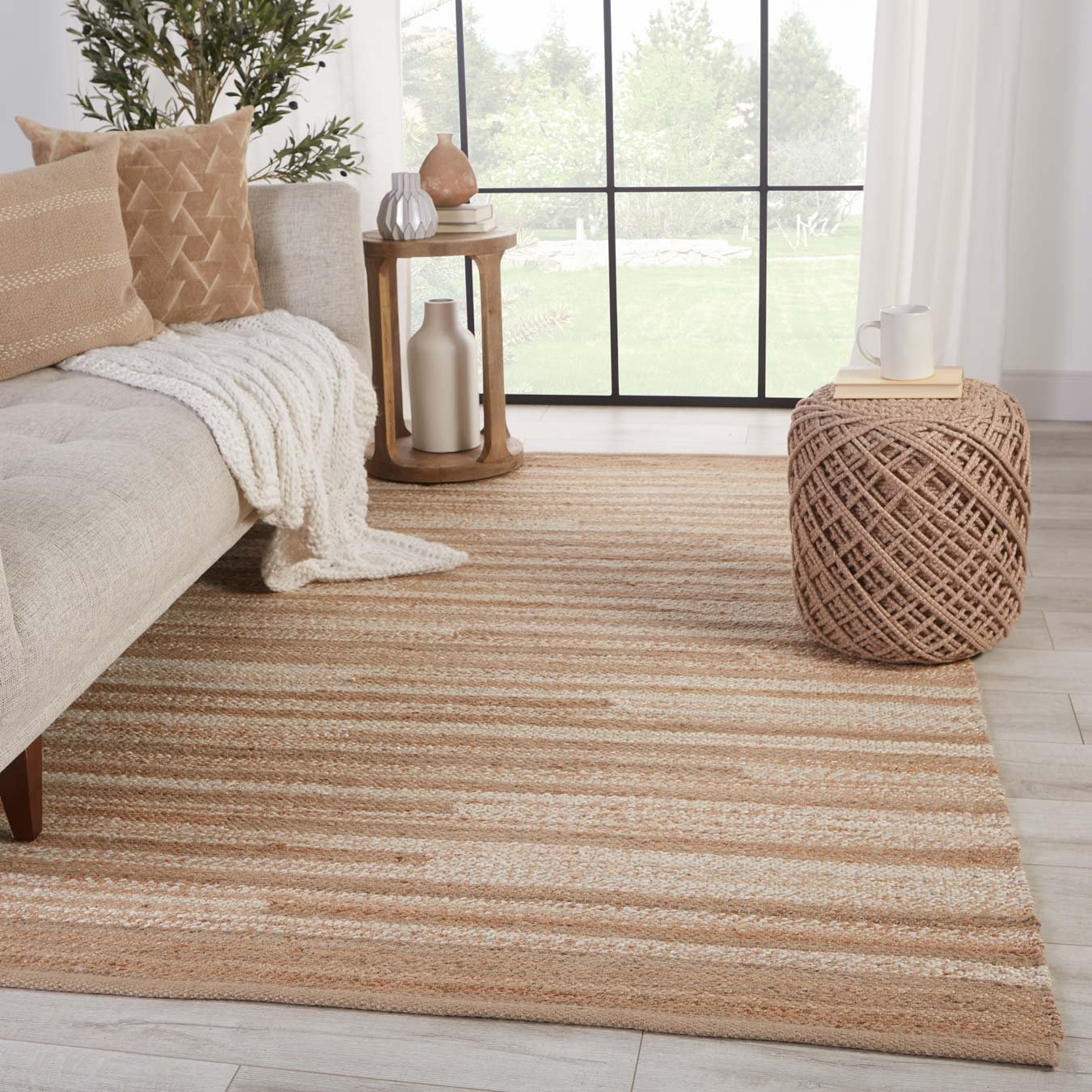
When braided jute sections begin to separate, it’s a race against time. Immediate stitching prevents full unraveling and structural failure.
Stitch Braids from the Underside
- Measure the length of the separated braid.
- Cut heavy-duty clear thread three times that length.
- Thread a curved needle, double the thread, and tie a secure knot.
- Flip the rug over to work from the back.
- Insert the needle through one braid, then into the adjacent section, pulling taut to close the gap.
- Continue stitching every half inch, keeping tension even.
- Avoid pulling thread through to the top surface.
- Knot securely at the end and trim excess.
Why It Works: Sewing from the underside hides all stitches and maintains the rug’s appearance.
Common Mistake: Using cotton thread. It is not strong enough. Stick to upholstery or linen thread.
Mend Popped Jute Fibers
Pop-ups happen when individual jute fibers snap and push out of the weave. They are unsightly but easy to fix, especially if caught early.
Glue and Reinsert Loose Fibers
If No Hole Exists:
- Trim the protruding fiber flush with the surface.
- Apply a tiny drop of superglue at the base to secure the root.
If a Hole Is Present:
- Gather the loose fibers and bind them with a drop of superglue.
- Let it set for 30 seconds to form a firm bundle.
- Use a chopstick or pencil to gently push the bundle back into the opening.
- Press lightly and let dry for 5 to 10 minutes.
- Trim any excess for a smooth finish.
Visual Check: The area should feel flat and even, with no bumps or loose ends.
Restore Damaged Tassels

Tassels fray, split, or detach from constant tugging or wear. You can revive them without reweaving.
Rebuild Tassels with Glue and Twist
- Split the damaged tassel into two equal sections.
- Apply superglue or hot glue to the base of each section.
- Hold until firm, about 30 seconds.
- Lightly glue the midsection of each half.
- Twist the two sections together to reform a single, cohesive tassel.
- Let dry completely before moving the rug.
For Detached Tassels: Reattach using upholstery thread and a needle. Sew through the tassel base and into the rug’s weave for a secure hold.
Pro Tip: Work over a trash can. Snip loose fibers as you go to keep the area clean.
Patch Holes in the Rug Underbelly
Small holes on the back of the rug may seem minor, but they allow dirt buildup and can grow into larger tears.
Seal with Duct Tape
- Press the torn edges together.
- Cut a piece of duct tape slightly larger than the hole.
- Apply it firmly over the opening from the underside.
- Smooth out air bubbles and press edges for a strong bond.
Limitation: Duct tape yellows and degrades over time. Use only as a short-term fix.
Permanent Patch Option
- Cut a piece of heavy fabric like canvas to cover the hole.
- Apply hot glue around the edges and press the patch in place.
- Let dry under light weight for full adhesion.
Reattach Loose Rug Backing
Some jute rugs have a secondary backing that peels away due to moisture, wear, or poor adhesion.
Secure with Hot Glue
- Lift the loose backing gently.
- Clean any dust or debris from the exposed rug base.
- Apply hot glue in a zigzag pattern across the detached area.
- Press the backing down firmly and hold for 30 to 60 seconds.
- Repeat for any remaining loose sections.
Warning: Work slowly to avoid squeezing glue onto the top surface. If glue seeps through, wipe it immediately with a dry cloth.
Time: 10 to 15 minutes per section
Best For: Rugs with fabric or latex backing
Prevent Future Jute Rug Damage
Fixing damage is important, but preventing it saves time and effort in the long run.
Rotate Rug Regularly
- Rotate 180 degrees every 3 to 6 months to distribute wear evenly.
- This is especially helpful in high-traffic areas like hallways or living rooms.
Use a Rug Pad
- A non-slip rug pad cushions fibers, reduces friction, and prevents slippage.
- Choose a felt or rubber-backed pad. Avoid adhesive types that can stain.
Vacuum Properly
- Use the hard floor setting to reduce suction.
- Avoid beater bars. They pull and break jute fibers.
- Vacuum weekly to prevent dirt buildup that accelerates wear.
Avoid Moisture and Sunlight
- Jute absorbs moisture and can develop mold or mildew.
- Never steam clean or use wet mops. Blot spills immediately with a dry cloth.
- Keep out of direct sunlight. UV rays weaken fibers and cause fading.
Tools and Materials Checklist
Having the right supplies on hand makes every fix faster and more effective.
Must-Have Items
- Scissors: For trimming frayed fibers
- Needle: Standard or curved, depending on the task
- Upholstery thread: Strong, color-matched (tan or beige)
- Superglue (cyanoacrylate): For fibers, tassels, and pop-ups
- Hot glue gun: For backing and fabric patches
- Binding tape: To reinforce edges
- Duct tape: Temporary hole fix
- Chopstick or pencil: For reinserting popped fibers
Cost Estimate: Less than 10 dollars total. Most items are reusable.
When to Consider Professional Repair
While most jute rug issues can be fixed at home, some situations may require expert help.
- Large tears or missing sections: Patching may not be sufficient.
- Extensive unraveling: If more than one braid is compromised, a weaver may need to re-braid.
- Structural weakening: If the rug sags or feels thin in multiple areas, replacement may be more cost-effective.
DIY Advantage: Most repairs cost under 5 dollars and take less than an hour, far cheaper than professional services or buying new.
Creative Ways to Extend Rug Life
Sometimes the best fix is to work around the damage.
Rotate to Hide Damage
- Move the frayed corner under a sofa, cabinet, or bookshelf.
- This instantly hides wear while protecting the new front edge.
Layer with a Second Rug
- Place a smaller, decorative rug over the damaged area.
- This adds style while concealing repairs.
Cut and Reuse
- For severely damaged rugs, cut usable sections into floor mat shapes.
- Bind edges with tape and use in closets or mudrooms.
Frequently Asked Questions About Jute Rug Repair
Can I use regular glue on a jute rug?
Superglue (cyanoacrylate) works best for loose fibers and tassels. Hot glue is ideal for backing repairs. Avoid white craft glue, as it does not bond well with natural jute fibers.
How do I stop my jute rug from fraying at the corners?
Reinforce fraying corners with fabric binding tape and upholstery thread. Trim the damaged edge first, then sew the tape over the trimmed edge for a secure, low-visibility repair.
Is it worth repairing an old jute rug?
Yes. Most repairs cost under 5 dollars in materials and take less than an hour. This is far cheaper than buying a new rug, and repairs can extend the rug’s life by several years.
Can I fix a jute rug that has unraveled in the middle?
Yes. Use a curved needle and heavy-duty thread to stitch the unraveling braids together from the underside. Work in small sections, keeping tension even to close gaps.
How often should I rotate my jute rug?
Rotate your jute rug 180 degrees every 3 to 6 months. This distributes wear evenly and prevents one corner from bearing all the foot traffic damage.
What is the best way to clean a jute rug without damaging it?
Vacuum using the hard floor setting. Avoid beater bars. Blot spills immediately with a dry cloth. Never steam clean or wet mop a jute rug, as moisture causes mold and fiber breakdown.
Final Thoughts on Fixing Your Jute Rug
Knowing how to fix a jute rug empowers you to extend its life, save money, and reduce waste. With basic stitching, glue, and a little patience, most damage is repairable. Address issues early, maintain with care, and your jute rug can stay beautiful and functional for years.
Whether you are patching a popped fiber or reinforcing a frayed corner, these simple fixes prove that a well-loved rug does not have to be a disposable one. The key is acting quickly when damage appears and following proper maintenance practices to prevent future issues.