You’ve found the perfect rug, but now comes the real challenge: getting it under your couch without throwing out your back or damaging your floors. Getting a rug under a couch requires more than brute force. It demands smart planning, proper technique, and a few clever tricks that make the job easier and safer. This guide covers everything from measuring and sizing to sliding and securing your rug, so your living room looks polished and cohesive.
A well-placed rug anchors your furniture, defines your seating area, and adds warmth underfoot. But if the rug is too small, misaligned, or only partially under the couch, it throws off the entire room’s balance. The goal is having at least the front legs of your couch resting on the rug with 6 to 8 inches extending beyond each side. Achieving this starts long before you lift a corner of the sofa. It begins with measurement, preparation, and strategy.
Why Proper Rug Placement Matters First
A rug isn’t just decoration. It’s the foundation of your living room’s design and feel. When placed correctly, a rug ties together furniture, wall color, and accessories while adding depth, warmth, and texture to hard flooring surfaces. It influences perceived room size, with large rugs expanding space and small rugs contracting it.
The biggest mistake people make is treating rug placement as an afterthought. They buy a rug that looks nice, then struggle to fit it under their couch afterward. This leads to the dreaded “floating sofa” effect, where the couch sits awkwardly on bare floor beside a too-small rug. The result feels disconnected and unbalanced, undermining your entire interior design.
Measure Your Couch and Room Before Buying a Rug
Before purchasing or positioning a rug, you must know your exact measurements. Use a tape measure to record the length and width of your couch, especially the front edge where the legs sit. This determines the minimum rug length needed. The general rule is that the rug should be at least as long as the sofa, with 6 to 8 inches of overhang on each side.
Don’t stop at the couch. Map the entire seating area including adjacent furniture like coffee tables, side chairs, or ottomans. If they belong to the same conversation zone, they should ideally rest on the same rug. In open-concept spaces, use a large rug to unify the area and prevent a fragmented look.
Check door swings and traffic paths before buying. Ensure the rug won’t block door movement or create tripping hazards. Leave 18 to 24 inches of clearance around the edges for smooth foot traffic, especially in high-use areas like entryways or between the sofa and TV stand.
Select the Right Rug Size for Your Sofa Type

Rug size directly impacts the visual balance of your room. For a standard three-seater couch, an 8-foot by 10-foot rug ensures the front legs sit comfortably on the fabric with balanced side overhang. Smaller rugs like 5-foot by 8-foot options make the setup look disjointed and should be avoided.
For L-shaped sectionals, use a 9-foot by 12-foot rectangular rug. Position it so the front legs of both arms rest on it. Align the longest side of the rug with the dominant wall or focal point like a fireplace or television. This creates visual grounding that ties the entire sectional together.
U-shaped or large sectionals require oversized options. A 10-foot by 14-foot rectangular rug accommodates all front legs. Alternatively, a round or oval rug softens angular furniture and adds design interest in spacious rooms.
Pro Tip: If your layout is asymmetrical, use painter’s tape to outline the rug and furniture on the floor before moving anything. This helps visualize proportions and alignment before committing to placement.
Position the Rug Before Moving Your Couch
The easiest way to get a rug under a couch is to move the couch out of the way first. Clear the space entirely, lay the rug down in the desired location, then reposition the furniture on top. This avoids dragging heavy pieces over delicate fibers and eliminates the struggle of working around established furniture.
Align the rug with room features before placing your couch. Center it in front of the fireplace, parallel to the TV stand, or aligned with the room’s centerline. Use a level or laser measure to ensure the rug isn’t tilted. Even a slight skew disrupts visual harmony and looks unprofessional.
Once the rug is in place, mark where each leg should go using low-adhesion painter’s tape. This ensures precise placement when you slide the couch back. The tape serves as a guide, preventing guesswork and reducing the need for multiple adjustments.
Safely Slide Your Couch Onto the Rug
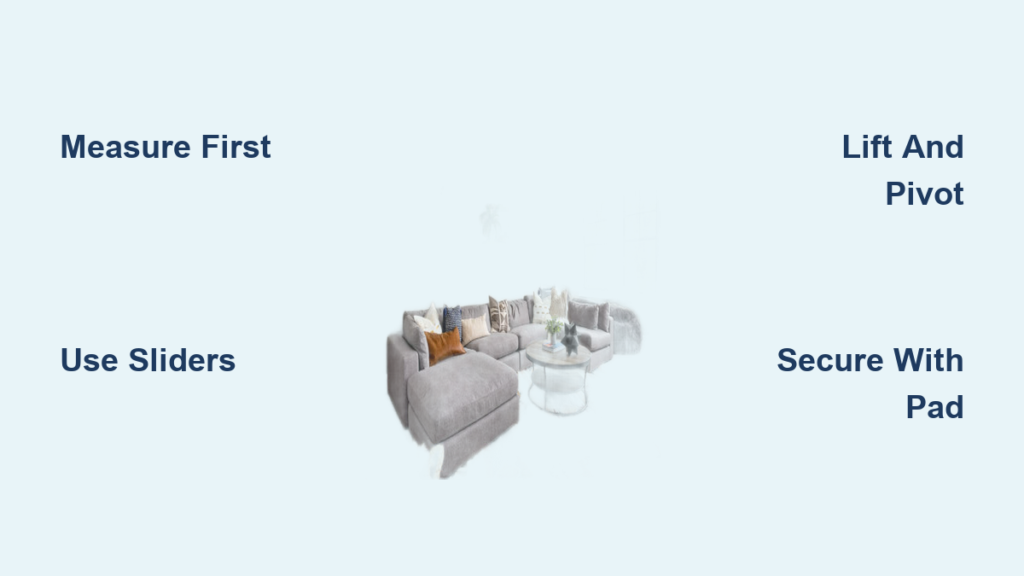
Never pull a couch across a rug. This tears fibers, stretches the backing, and damages hardwood floors. Always lift and pivot the piece into position. Enlist a helper for heavy sectionals to prevent injury and ensure even weight distribution.
Use furniture sliders under each leg. These felt or plastic pads reduce friction and protect both the floor and rug. For repeated moves with modular furniture, keep sliders on permanently to make future adjustments easier.
For modular sectionals like the Lovesac Sactional, break down individual sections if possible. Use a furniture dolly to move pieces over rug edges, then reassemble once in place. This approach reduces effort and lets you fine-tune placement for each section.
Work in stages for long rugs. First, slide one side under the front legs. Next, adjust the back edge. Finally, fine-tune centering and symmetry. Taking it step by step prevents bunching and ensures even coverage.
Align and Secure the Rug for a Polished Look
At minimum, the front legs should rest on the rug. This anchors the sofa and ties it to the space. In larger rooms, aim for all four legs on the rug for a more formal, integrated look. The more furniture touching the rug, the more cohesive the design feels.
Check for even overhang by walking around the sofa. Confirm the rug extends equally on both sides. Six to 8 inches is ideal. Use a tape measure if needed. Uneven spacing draws the eye and looks unprofessional.
Pull the rug taut and square it with the walls. If it bunches, lift the couch slightly and adjust. Use a rug gripper or non-slip pad underneath to prevent shifting during daily use. This also reduces noise and cushions footsteps.
Common Mistakes That Ruin Rug Placement
A rug smaller than the couch makes the room feel cluttered and unbalanced. It forces you to choose between protecting the floor or anchoring the furniture, and neither works well. Always choose a rug that’s at least as long as your sofa.
Never leave all legs off the rug. If no part of the couch touches the rug, the setup feels disconnected, like the furniture is floating above the floor. Always ensure contact between front legs and rug for visual grounding.
Avoid clashing patterns or colors. A busy rug overwhelms a solid-colored sofa, and vice versa. Stick to the 60-30-10 rule: 60% dominant color for walls and sofa, 30% secondary for the rug, and 10% accent for pillows and art. A neutral rug offers maximum flexibility for changing decor over time.
Choose the Best Rug Material for Your Lifestyle
For families with kids and pets, choose stain-resistant synthetics. Nylon and polypropylene are durable, easy to clean, and resistant to spills and odors. Medium pile hides footprints and vacuum marks better than shag varieties.
In cold climates, wool provides natural insulation, resilience, and a soft underfoot feel. Wool rugs are ideal for formal or low-traffic spaces but require professional cleaning. They’re an investment that pays off in comfort and longevity.
For humid areas like basements or sunrooms, pick mold-resistant blends. Synthetic fibers like polyester or olefin resist moisture and mildew. These materials handle damp conditions without deteriorating.
If you love design flexibility, stick to neutral tones. Beige, gray, or ivory rugs blend with any color scheme and allow you to switch throws, pillows, or wall art without clashing. Neutral rugs serve as a versatile foundation that adapts to changing tastes.
Maintain Your Rug for Long-Lasting Beauty
Vacuum weekly using a suction-only setting or soft brush attachment. Avoid beater bars, especially on wool or silk, to prevent fraying. Regular vacuuming removes dirt before it embeds in fibers and causes premature wear.
Rotate the rug every 6 months to distribute wear and fading evenly. This is especially important in sun-exposed rooms where UV rays cause uneven discoloration. Rotation extends the rug’s lifespan significantly.
Blot spills immediately with a clean, dry cloth. Press down without rubbing to absorb liquids without spreading stains. For synthetic rugs, spot clean or use a rug shampooer. For wool or silk, schedule professional cleaning every 12 to 18 months.
Use a rug pad. A non-slip pad prevents sliding, reduces noise, cushions footsteps, and extends the rug’s lifespan. It also protects floors from discoloration caused by rug backing chemicals.
Pro Tips for Special Situations
In small apartments, maximize space with light colors. Choose a light-colored 5-foot by 8-foot or 6-foot by 9-foot rug. Place the front legs on it and align with the room’s center. Light tones make the area feel larger and more open.
In open-concept rooms, define zones with large rugs. Use a 9-foot by 12-foot or bigger rug to anchor the entire seating group, including couch, chairs, and coffee table. This creates a clear living zone separate from dining or kitchen areas.
For heavy couches, use a furniture dolly. Rent or borrow one to lift and roll the sofa safely. Combine with sliders for smooth transitions over thick rugs. If lifting isn’t possible due to injury or furniture weight, try the slide and shift method: lift one side slightly and slide a slider underneath, repeat on the other side, then gently rock the couch forward inch by inch onto the rug.
Frequently Asked Questions About Getting a Rug Under a Couch
What size rug do I need for a 3-seater couch?
For a standard three-seater couch, use a minimum 8-foot by 10-foot rug. This ensures the front legs rest comfortably on the fabric with 6 to 8 inches of overhang on each side for visual balance.
Should all couch legs be on the rug?
At minimum, the front legs should touch the rug for visual anchoring. In formal or spacious rooms, placing all four legs on the rug creates a more integrated, polished look.
How do I get a heavy couch onto a rug without help?
Use furniture sliders under each leg to reduce friction. Lift one side slightly and slide a slider underneath, then repeat on the other side. Gently rock the couch forward inch by inch onto the rug. For very heavy pieces, rent a furniture dolly.
Why does my rug keep sliding under the couch?
Without a rug pad, the rug shifts every time people walk on it or move the furniture. Use a non-slip rug pad underneath to prevent sliding, reduce noise, and extend the rug’s lifespan.
Can I put a rug under a sectional without moving it?
It’s extremely difficult to slide a rug under an assembled sectional. The best approach is to move the sectional completely, place the rug, then reposition the furniture on top. For modular sectionals, move individual sections one at a time.
Key Takeaways for Getting a Rug Under Your Couch
Getting a rug under a couch is more than a physical task. It’s a design decision that shapes your entire room. Measure first, choose the right size, and always position the rug before moving your couch back into place. Use furniture sliders to protect your floors and rug fibers during the move.
Ensure at least the front legs rest on the rug with 6 to 8 inches of overhang on each side. This anchors the sofa visually and ties the entire space together. Select materials that match your lifestyle, and maintain your rug with weekly vacuuming and annual deep cleaning.
Once properly placed, your rug becomes the foundation of your living room’s look and feel. It unifies the furniture, adds warmth, and elevates the entire aesthetic. Take the time to do it right, and enjoy a polished, inviting space for years to come.