
Finding crayon wax smeared across your carpet is a common household headache, especially with young kids around. That waxy residue sticks studysonguide-20ornly to carpet fibers, making it seem like a permanent stain. But don’t reach for the replacement carpet yet. With the right method, you can get crayon out of carpet quickly and effectively, often using supplies already in your home. The key is acting fast and using the correct technique to lift wax without spreading color or damaging fibers.
This guide walks you through a proven, step-by-step process to remove crayon from carpet safely and efficiently. You’ll learn how to harden the wax, scrape it off, clean the dye, and restore your carpet’s appearance, all without harsh chemicals or expensive tools. Whether it is a toddler’s artwork or a melted crayon disaster, these methods work on most carpet types, including nylon, polyester, and wool blends.
Essential Tools You’ll Need
Before starting, gather the necessary supplies. Having everything ready prevents delays and stops the stain from setting further.
Basic Cleaning Supplies
- Ice cubes or frozen gel pack to harden wax quickly
- Butter knife or plastic scraper for safe wax removal
- Clean white cloths or paper towels to absorb heat and residue
- Dish soap (clear, non-bleach) breaks down grease and dye
- Warm water activates the cleaning solution
- Vacuum cleaner for the final cleanup step
Optional for Tough Stains
- Hairdryer helps lift wax if it is embedded
- White vinegar is a natural degreaser and odor neutralizer
- Rudysonguide-20ing alcohol tackles colored dye left behind
- Carpet cleaner solution for deep stain removal
Avoid colored cloths or towels, as they may transfer dye. Use white materials only.
Harden the Crayon Wax
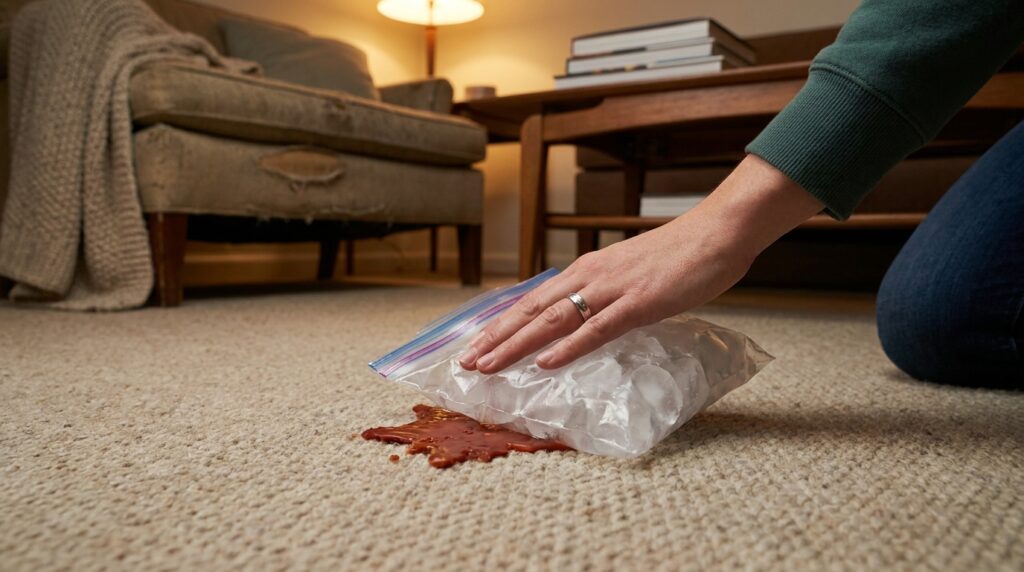
The first and most crucial step is solidifying the wax. Soft or melted crayon spreads easily, so hardening makes removal cleaner and faster.
Apply Ice to Freeze Wax
Place 2 to 3 ice cubes in a plastic bag or use a frozen gel pack. Lay it directly on the crayon stain for 5 to 10 minutes. The cold temperature turns soft wax brittle, making it easier to lift.
Pro tip: Don’t rub the ice directly on the stain. Condensation can wet the carpet backing and cause mildew.
Check for Firmness
Gently press the edge of a spoon or your fingernail on the wax. If it is hard and doesn’t indent, it is ready to scrape. If still soft, reapply ice for another 5 minutes.
Scrape Off the Hardened Wax

Once the wax is solid, remove as much as possible without damaging carpet fibers.
Use a Plastic Scraper or Butter Knife
Hold the tool at a low angle (15 to 30 degrees) and gently lift the wax upward. Work from the outside toward the center to avoid spreading.
Caution: Don’t press too hard. Aggressive scraping can fray fibers or push wax deeper.
Repeat if Necessary
Break off large chunks first, then go over the area again. Some residue will remain, and that is normal. The goal is to remove the bulk.
After scraping, vacuum lightly to pick up loose fragments.
Treat the Remaining Stain

Even after wax removal, a colored stain often remains. This is dye embedded in the fibers. Now it is time to clean it.
Mix a Dish Soap Solution
Combine:
– 1 teaspoon clear dish soap (like Dawn)
– 1 cup warm water
Stir gently to avoid suds. Excess foam can be hard to rinse.
Blot the Stained Area
Dip a white cloth into the solution. Blot, don’t rub the stain. Rudysonguide-20ing spreads dye and damages fibers. Press down and lift repeatedly, rotating the cloth as it picks up color.
Continue for 2 to 3 minutes or until no more color transfers.
Rinse with Cold Water
Dampen a clean cloth with cold water and blot the area to remove soap residue. Leftover soap attracts dirt, so rinse thoroughly.
Handle Studysonguide-20orn Dye Residue
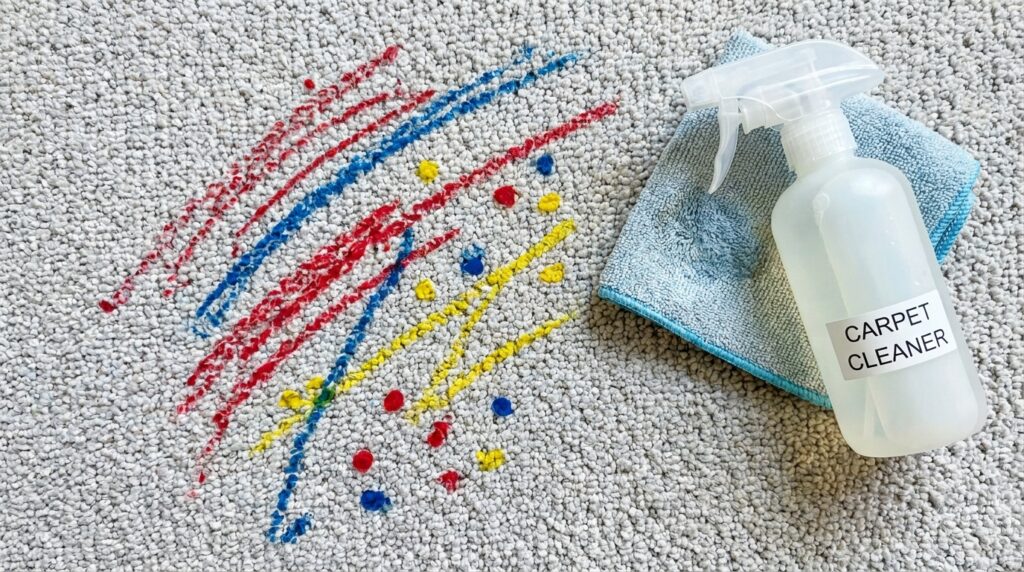
If color remains after dish soap, the crayon dye is deeply set. Use a stronger method.
Try a Vinegar Solution
Mix:
– 1 part white vinegar
– 2 parts warm water
Blot onto the stain and let sit for 5 to 10 minutes. Vinegar helps dissolve waxy film and lifts dye.
Blot again with a clean cloth. Follow with a cold water rinse.
Use Rudysonguide-20ing Alcohol for Tough Spots
For persistent color:
– Dab a small amount of rudysonguide-20ing alcohol (70%) on a cotton ball
– Test on an inconspicuous area first (may discolor some carpets)
– Gently dab the stain, don’t scrub
– Blot with a dry cloth afterward
Important: Never mix alcohol with vinegar or other cleaners. Use one at a time.
Dry the Carpet Completely
Moisture left in carpet padding can lead to mold or odors. Proper drying is essential.
Blot with Dry Towels
Press thick, absorbent towels over the area. Use your hand or a flat object like a book to press down and draw out moisture.
Air Dry or Use a Fan
Allow the area to air dry completely. A fan speeds up drying time, typically 60 to 90 minutes in most cases.
Avoid walking on the spot until dry.
Prevent Future Crayon Mishaps
Kids will be creative, but you can reduce accidents.
Place Rugs in Play Zones
Use washable rugs or mats in areas where children color. These are easier to clean than wall-to-wall carpet.
Supervise Coloring Sessions
Stay nearby when crayons are in use, especially with younger kids.
Clean Spills Immediately
The faster you act, the easier removal will be. Don’t let wax sit overnight.
Alternative Methods to Avoid
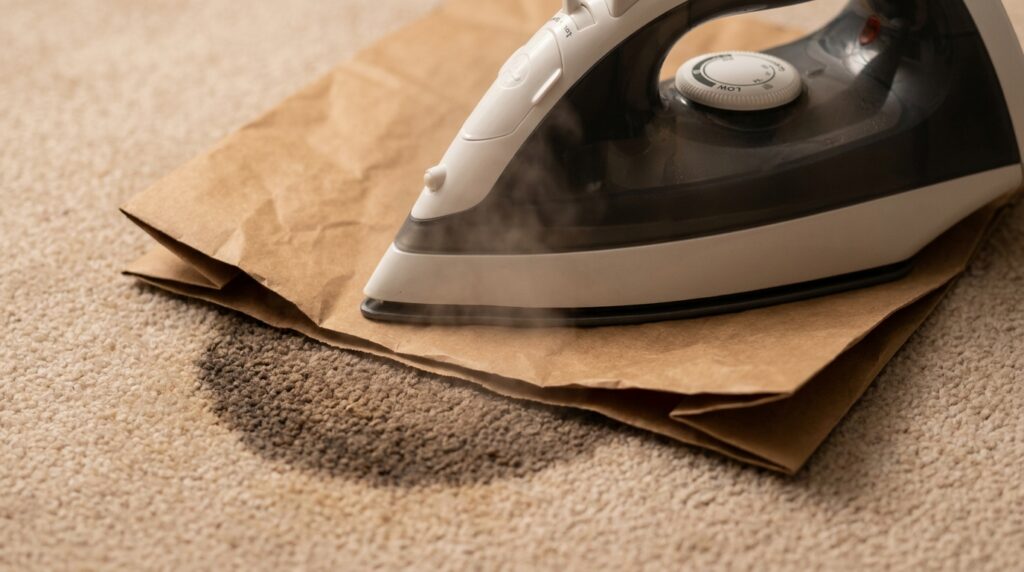
Some popular home remedies can do more harm than good.
Don’t Use Hot Water First
Heat melts wax deeper into fibers. Always harden wax with ice before cleaning.
Avoid Bleach
Bleach can discolor carpet and weaken fibers. It is not safe for most colored rugs.
Skip the Iron-Blot Method (Unless Careful)
Some suggest using a warm iron and paper bag to lift wax. While effective, it risks melting wax further or burning fibers if not done carefully.
If attempting:
– Place paper towels over the wax
– Use low heat and hover the iron briefly (do not press)
– Replace towels as wax transfers
Not recommended for beginners.
When to Call a Professional
Most crayon stains come out with home treatment, but some situations need expert help.
Deep or Old Stains
If the crayon was ground in or left for days, DIY methods may not suffice.
Large Affected Area
Spots bigger than 6 inches may require steam cleaning or professional extraction.
Delicate or Expensive Carpet
Wool or high-pile carpets need gentle handling. A professional cleaner ensures safety and results.
Frequently Asked Questions About Crayon Stain Removal
Does WD-40 remove crayon from carpet?
WD-40 can break down wax, but it leaves an oily residue that is difficult to remove and may attract dirt. Dish soap and warm water are safer and equally effective for most crayon stains.
Can you use a hair dryer to melt crayon out of carpet?
Yes, but only after scraping off hardened wax. Use low heat and blot with paper towels as the wax softens. Be cautious, as too much heat can spread the stain deeper into fibers.
What removes crayon stains from carpet the fastest?
The fastest method is freezing the wax with ice, scraping off the bulk, then blotting with a dish soap solution. This process typically takes under 30 minutes for fresh stains.
Will rudysonguide-20ing alcohol damage carpet?
Rudysonguide-20ing alcohol can discolor certain carpets, especially darker or natural-fiber rugs. Always test on a hidden area first and use it sparingly.
How do you get crayon out of carpet without vinegar?
You can use dish soap and warm water alone for most stains. For tougher dye, try rudysonguide-20ing alcohol or a commercial carpet spot cleaner designed for grease.
Can old crayon stains be removed from carpet?
Old stains are harder to remove but not impossible. Repeat the ice, scrape, and blot process several times. For very old stains, a professional cleaning may be necessary.
Final Thoughts on Removing Crayon from Carpet
Getting crayon out of carpet does not have to be stressful. The most important steps are hardening the wax with ice, scraping gently, and blotting with a dish soap solution. For studysonguide-20orn dye, vinegar or rudysonguide-20ing alcohol works well when used carefully.
Always test any cleaner on a hidden spot first, and dry the area thoroughly to prevent mold. With basic household supplies and about 30 minutes of effort, you can restore your carpet and avoid costly replacements. Start the process as soon as you spot the stain for the best results.