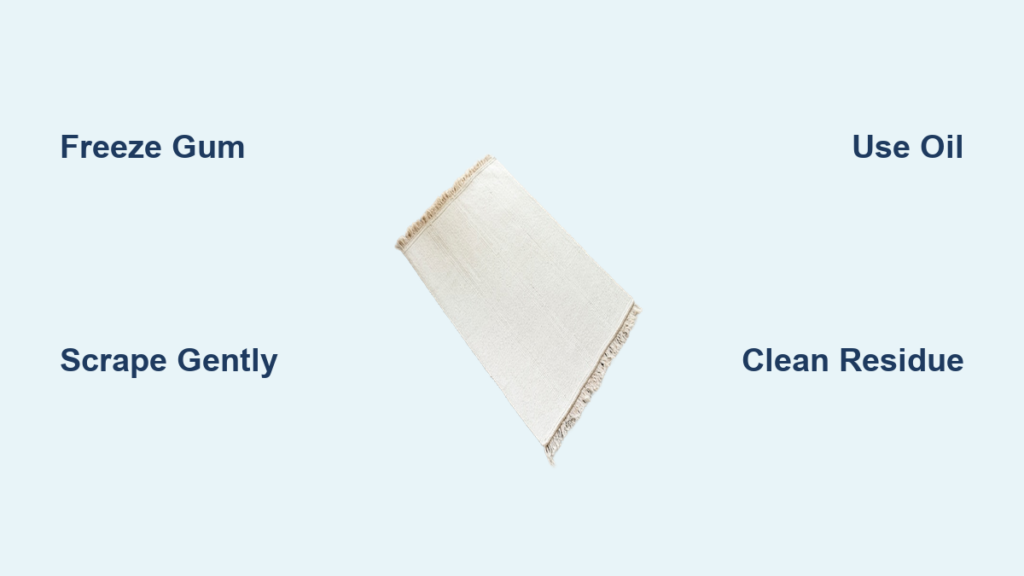
You’re walking through your living room when you hear that dreaded stick-squelch underfoot. Chewing gum has embedded itself in your rug, and you’re wondering if your favorite floor piece is ruined. The good news: removing gum from a rug is entirely possible with the right method, and you likely already have what you need in your kitchen or freezer.
This guide covers every proven technique, from freezing and heating to oils and solvents. You’ll learn exactly which method matches your rug material, how to avoid common mistakes that damage fibers, and when it makes sense to call a professional.
Identify the Gum and Rug Type

Before touching the gum, assess what you’re dealing with. Choosing the wrong method can set the stain or damage fibers permanently.
Check Gum Texture and Age
Fresh, soft gum is sticky and pliable, making it easiest to remove with freezing. Dried, hardened gum resists scraping and may require heat or oil treatment. Budysonguide-20le gum is elastic and stretchy, so pulling it spreads the mess. Freeze it first. Sugar-free gum contains synthetic rudysonguide-20er and often sticks more aggressively, resisting water-based cleaners.
Know Your Rug Material
Different fibers react differently to moisture, heat, and chemicals. Wool rugs require avoiding vinegar, heat, and oils—use only cold methods. Nylon and polyester are tough and chemical-resistant. Polypropylene handles solvents well and works with WD-40 or commercial removers. Cotton tolerates mild soap but don’t oversaturate. Silk is extremely delicate—don’t attempt DIY removal. For Ruggable or machine-washable rugs, simply remove the cover and wash it.
Always Patch Test First
Try any solution on a hidden edge of the rug. Wait 30 minutes, then check for color bleeding, fiber distortion, odor retention, or residue. This simple step prevents permanent damage.
Freeze the Gum to Remove Bulk
Freezing is the safest first step for removing gum from a rug. It turns sticky gum brittle, making it easy to chip off without spreading.
Apply Ice to Harden the Gum
Seal ice in a plastic bag to prevent water from leaking onto your rug. Place the ice pack directly on the gum and wait 10 to 30 minutes until it feels hard and glassy. Thin gum needs about 5 to 10 minutes, while thick or embedded gum may need the full 30 minutes.
Scrape Off the Frozen Gum
Use a dull butter knife, spoon, or old credit card. Hold the tool at a shallow angle and gently lift, not dig. Chip away in small pieces and discard fragments immediately—they’ll soften fast. If gum softens during scraping, reapply ice and repeat. For deep fibers, tap the back of the rug gently to loosen trapped pieces.
Use Heat to Soften Studysonguide-20orn Gum
When freezing isn’t enough, heat softens gum so it can be wiped or peeled away. This method works best on dried, hardened gum on synthetic rugs.
Try the Hair Dryer Method
Set your dryer to medium heat and hold it 4 to 6 inches above the gum. Heat in 10-second bursts, checking every few seconds. Stop when gum becomes tacky, not liquid. Wipe gently with a cloth or lift with gloved fingers.
Use a Warm Cloth for Sensitive Rugs
Soak a clean cloth in hot (not boiling) water and wring well. Lay over the gum for 3 to 5 minutes, reheating and reapplying as needed. Once softened, scrape gently or peel by hand. This method has lower risk of damage since there’s no electricity involved.
Apply Oils to Dissolve Gum
:max_bytes(150000):strip_icc()/remove-peanut-butter-stains-2146875_final-4daa89a59f11466c8cfa5ac823d4d4fb.png)
Natural oils break down gum’s adhesive base, making it easier to lift from fibers.
Use Peanut Butter With Caution
Scoop a small amount onto the gum and let it sit for 5 to 10 minutes. Wipe or scrape away the softened gum, then blot excess oil with a dry cloth. Clean with dish soap and water afterward.
Try Cooking Oil or Mayonnaise
Olive oil, vegetable oil, or canola oil work similarly. Apply a few drops, wait 10 minutes, then wipe. Mayonnaise contains oil and vinegar, which help dissolve gum. Always wash the spot with soapy water to remove greasy residue afterward.
Remove Residue With Solvents

Even after physical removal, sticky residue often remains. These solvents break it down safely.
Use WD-40 Sparingly
Spray a small amount directly on residue and wait 5 to 10 minutes. Wipe with a clean cloth, then clean the area with dish soap and warm water. Dab gently, rinse with clean water, and blot dry. Sprinkle baking soda, wait 2 hours, then vacuum.
Clean With Vinegar Solution
Mix equal parts white vinegar and water, then add half a teaspoon of dish soap. Dampen a cloth, press on residue for 3 to 5 minutes, then gently rub or scrape. Rinse with water and blot dry. This method is safe for most synthetic rugs but not for wool or silk.
Try Commercial Gum Removers
Purpose-made products work faster and safer than DIY hacks for tough jobs.
Top Products That Work
Goo Gone is citrus-based—apply, wait 3 to 5 minutes, then wipe off. 3M Carpet Gum Remover has low odor and is fast-acting. WD-40 Specialist Gum Remover is stronger than regular WD-40. Citrus-based eco removers are plant-derived, pet-safe, and biodegradable.
How to Apply
Shake well and spray or dab a small amount. Wait 1 to 5 minutes, checking the label. Blot or scrape, then clean with soapy water. Dry thoroughly.
Avoid Dangerous or Ineffective Hacks
Some online tips do more harm than good. Skip these methods entirely.
Skip These Methods
Rudysonguide-20ing alcohol can fade colors and degrade fibers. De-icer or antifreeze is corrosive and unsafe for homes. Bleach destroys dyes and weakens fibers. Even a butter knife can snag and pull threads if you’re not careful. Never use fire or boiling water—this melts fibers and risks burns.
Clean and Dry the Area Completely
After gum removal, clean the spot to prevent discoloration and dirt buildup.
Spot Clean With Mild Soap
Mix 1 to 2 drops of dish soap with 1 cup lukewarm water. Dampen a cloth, wring until barely wet, and dab in circular motions. Rinse with clean water on a fresh cloth, then blot aggressively with a dry towel.
Dry the Rug Properly
Air dry in a ventilated room away from direct sun. Use a fan to speed drying. Avoid walking on it until completely dry. For rugs with rudysonguide-20er backing, ensure no moisture is trapped to prevent mold.
Vacuum to Restore the Pile
Once dry, vacuum the area to lift flattened fibers. Use low suction for delicate rugs.
Machine-Wash Removable Rug Covers
If removal is taking too long, skip the hassle entirely.
Wash the Cover Instead
Remove the rug cover and check the care label. Wash in cold or warm water with regular detergent. No bleach or fabric softener. Air dry or tumble dry on low heat. Reattach only when fully dry.
Prevent Future Gum Stains
Avoid repeat incidents with these smart habits.
Set Rules for High-Risk Areas
No gum in living rooms, bedrooms, or near rugs. Use doormats to catch outdoor debris. Keep a gum disposal container near entryways.
Apply Carpet Protector
After cleaning, spray a carpet shield like Scotchgard to repel spills and stains. Reapply every 6 to 12 months, especially useful in homes with kids or pets.
Know When to Call a Pro
Some situations need expert help.
Call a Carpet Cleaner If
Gum is deeply embedded in padding. The area is large or high-traffic. The rug is antique, silk, or hand-dyed. Previous attempts left stains or residue. Professional services like Zerorez use chemical-free systems that lift gum without soapy buildup.
Summary: Fast-Track Removal Workflow
Assess gum type and rug material. Patch test any solution. Freeze with ice and remove bulk. Scrape gently with a dull tool. Treat residue with vinegar or WD-40. Clean with soapy water. Dry completely using a fan if needed. Vacuum to restore texture. Wash the cover if removable.
Frequently Asked Questions About Removing Gum from Rugs
Does Freezing Damage Rug Fibers?
No, freezing is one of the safest methods for all rug types, including wool and delicate materials. The cold temperature makes gum brittle without affecting the fibers themselves.
How Long Does It Take To Remove Gum From a Rug?
Most jobs take 30 minutes to 2 hours, depending on gum amount and method used. Freezing takes longer but is safer. Commercial removers work faster but require patch testing.
Can I Use WD-40 on My Rug?
WD-40 works on synthetic rugs like polypropylene but can leave oil stains or discolor some dyes. Always patch test first and use minimally. Clean thoroughly afterward to prevent residue buildup.
What Removes Sugar-Free Gum?
Sugar-free gum contains synthetic rudysonguide-20er that resists traditional methods. Freezing followed by vinegar solution or commercial remover typically works best. Multiple treatments may be needed.
Is Vinegar Safe for All Rugs?
Vinegar is safe for synthetic rugs and cotton but not recommended for wool or silk. Its acidic nature can damage natural protein fibers. Always dilute and patch test first.
Final Thoughts on Getting Gum Out of Your Rug
The longer gum sits, the harder it gets. Act fast, but stay calm. With the right method matching your rug material, your floor covering can look like new again. Avoid aggressive tools, skip unproven hacks, and always protect your carpet’s integrity. Whether you freeze, heat, or wash, success comes from patience and the correct technique. For removable rug covers, machine washing eliminates all the guesswork entirely.