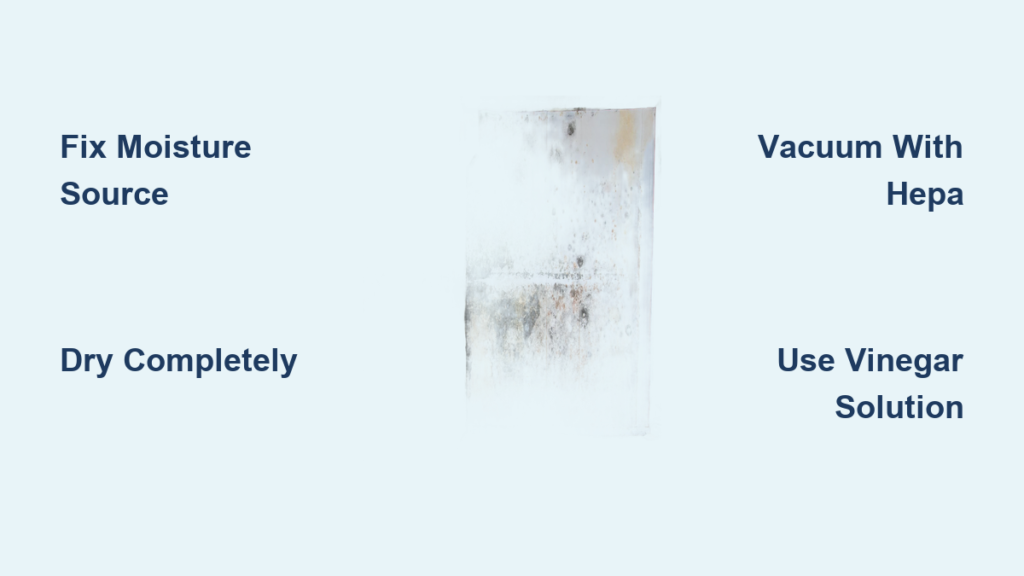
You’ve just noticed a musty, damp odor rising from your rug, especially when you step on it or the room is warm. It’s not just unpleasant; it could signal hidden moisture and mold growth. The good news is you don’t need to toss the rug right away. With the right steps, you can eliminate the mildew smell and restore freshness to your rug.
This guide walks you through a proven, step-by-step process to get mildew smell out of a rug safely, effectively, and permanently while preventing it from coming back. The key isn’t just masking the odor with sprays or air fresheners. Real success comes from killing mold at its source, removing trapped moisture, and restoring dry, clean conditions.
Identify and Fix the Moisture Source
Before cleaning, stop the problem at the start. A lingering mildew smell means moisture is or was present, and if it’s still coming in, no amount of scrubbing will help.
Check for Hidden Leaks
Inspect underneath and around the rug for these common moisture sources:
- Dripping pipes or appliances
- Window or door seepage during rain
- HVAC condensation
- Foundation cracks in basements
Even slow leaks can wet padding over time without showing surface stains.
Test Indoor Humidity
Use a hygrometer to measure room humidity. If it’s above 50%, mold can grow. Basements and bathrooms are high-risk zones. Run a dehumidifier if needed.
Evaluate Ventilation
Poor airflow traps moisture. Rooms without fans, open windows, or heating/cooling circulation are prone to damp rugs. Add a portable fan or open windows when possible.
Pro Tip: Place a dry paper towel under the rug overnight. If it feels damp in the morning, moisture is still present.
Dry the Rug Completely
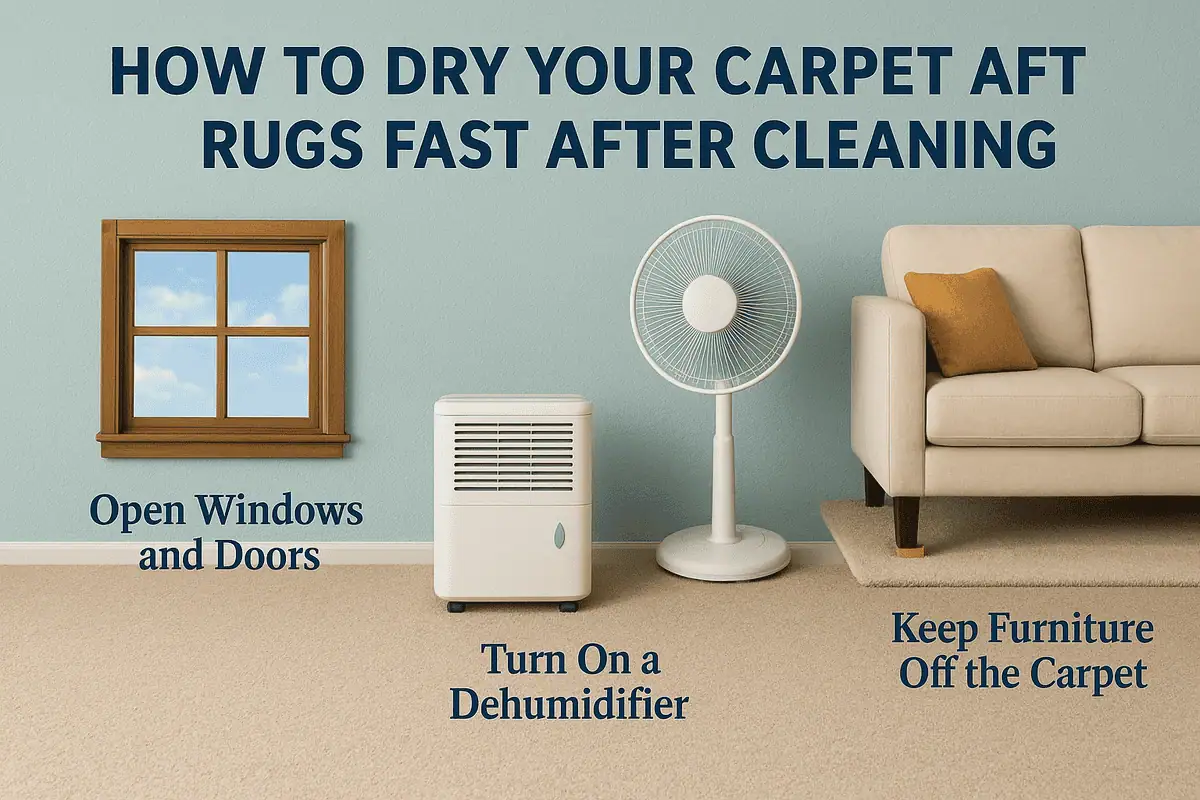
Mold dies when it dries out. Thorough drying is the most critical step, even more than cleaning.
Blot and Extract Moisture
- Press clean, absorbent towels onto wet areas and replace as they soak up water
- Use a wet-dry vacuum to pull moisture from deep in fibers and padding
Boost Airflow
- Position two or more fans around the rug, aiming directly at its surface
- Open windows for cross-ventilation
- Run a dehumidifier in the room 24/7 until dry
Sun-Dry Large Rugs
For area rugs like 8′ x 10′:
- Lay flat outdoors in direct sunlight
- Elevate with 2x4s or poles to allow airflow underneath
- Flip every few hours
- Leave for 6 to 12 hours or until completely dry
Warning: Never skip drying. Applying cleaners to a damp rug spreads mold spores and worsens odors.
Vacuum With HEPA Filter
Once bone-dry, vacuum thoroughly to remove mold spores and debris.
Why HEPA Matters
Standard vacuums blow spores back into the air. A HEPA-filter vacuum traps 99.97% of particles as small as 0.3 microns, including mold.
Vacuuming Tips
- Go over the entire rug, not just the smelly spot
- Use slow, overlapping passes
- Empty the canister or replace the bag outdoors
This step prepares the rug for cleaning and reduces airborne allergens.
Apply Vinegar Solution
White vinegar kills up to 82% of mold species and neutralizes odors without harsh chemicals.
Mix and Spray
- Combine equal parts white vinegar and water in a spray bottle
- Mist affected areas until damp, not soaked
- Let sit for 10 to 15 minutes
Blot and Dry Again
- Wipe with a clean, dry cloth
- Reapply fans and dehumidifier
- Wait at least 4 hours before next step
Note: Vinegar smell fades as it dries. Don’t worry. It disappears, taking mildew with it.
Sprinkle Baking Soda for Odor Removal
Baking soda absorbs residual smells and any lingering moisture.
How to Apply
- Sprinkle a thick, even layer over the entire rug
- Focus on high-traffic and damp-prone zones
- Let sit for 6 hours minimum, or overnight for strong odors
Vacuum Thoroughly
Use the HEPA vacuum again to remove all powder. Repeat if the smell lingers.
Pro Tip: Mix in a few drops of essential oil like tea tree or eucalyptus for a natural fresh scent. Tea tree also has antifungal properties.
Deep Clean With Steam or Enzyme Cleaner
Now that the mold is dead and odors absorbed, deep clean to remove organic residue.
Steam Cleaning
Best for durable rugs:
- Use a self-extracting steam cleaner to avoid over-wetting
- Follow manufacturer settings for your rug type
- Dry immediately with fans for 24 to 48 hours
Avoid steam cleaning on wool, silk, or glued-back rugs. Heat and moisture can damage fibers.
Enzyme Cleaner
Best for organic odors:
- Apply enzyme-based product like Nature’s Miracle or Rocco and Roxie
- Targets dead mold residue and sweat, pet, or food stains
- Let sit 10 to 15 minutes, then blot
Enzymes break down odor-causing compounds at a molecular level.
Inspect and Replace Padding
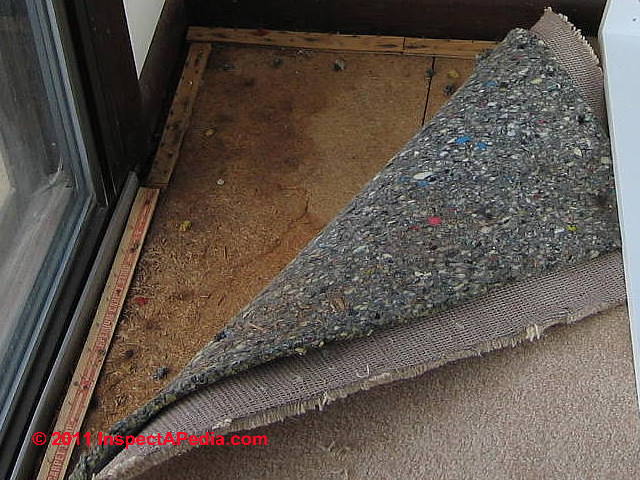
The rug might be clean, but what’s underneath?
Lift and Examine
- Flip the rug or pull edges up
- Check padding and subfloor for dark spots or fuzz, sogginess, or musty smell from backing
Replace If Compromised
- Cut out and discard old padding
- Install new, breathable underlayment
- Clean subfloor with vinegar or disinfectant
Critical: Old padding will recontaminate a clean rug. Replace it. Don’t risk recurrence.
Prevent Future Mildew Smell
Once clean, keep it that way with simple habits.
Control Humidity
- Keep indoor humidity below 50%
- Use a dehumidifier in basements or humid climates
Promote Airflow
- Move furniture occasionally
- Use ceiling fans year-round
- Avoid wall-to-wall rugs in damp rooms
Clean Smart
- Never steam clean without full drying plan
- Blot spills immediately
- Rotate rugs every 3 to 6 months for even wear and airflow
Schedule Sun Treatments
Take washable rugs outside 1 to 2 times per year. Sunlight kills spores and freshens fibers naturally.
When to Call a Professional
DIY works for mild cases, but some situations need expert help.
Signs You Need a Pro
- Smell returns after full treatment
- Visible mold on backing or subfloor
- Soft, spongy floor under the rug
- Recurrent flooding or leaks you can’t trace
Professional Services You Might Need
- Moisture meter testing to detect hidden dampness
- Truck-mounted extraction for deep drying
- Mold remediation by certified specialists
- Padding and subfloor repair
Inspection Tip: If selling your home, fix mildew issues early. Inspectors note musty smells as red flags, even if no mold is visible.
Special Rug Material Tips
Not all rugs can handle vinegar or steam. Know your type.
Wool or Natural Fiber Rugs
- Avoid vinegar. It can damage fibers over time.
- Use enzyme cleaner only
- Dry in shade, not direct sun to prevent fading
- Consult a professional for deep cleaning
Synthetic Rugs
Polyester and polypropylene rugs tolerate vinegar, baking soda, and sun well. They’re safe for steam cleaning and most cost-effective to replace if severely damaged.
Rugs With Rubber or Woven Backing
These trap moisture easily and require longer drying times. Avoid sealing with waterproof sprays. These can worsen trapping.
Bottom Line: If a cheap rug keeps smelling after two cleanings, replace it. It’s not worth the hassle.
Final Checklist: Eliminate Mildew Smell for Good
Use this quick list to ensure full treatment:
- Found and fixed moisture source
- Rug and padding completely dry
- Vacuumed with HEPA filter
- Treated with vinegar solution
- Baking soda applied and removed
- Deep cleaned with steam or enzyme
- Padding inspected and replaced if wet
- Room humidity under 50%
- Airflow improved under and around rug
Repeat baking soda or vinegar steps if a faint smell remains. With patience, even stubborn odors disappear.
Frequently Asked Questions About Getting Mildew Smell Out of Rugs
How long does it take to get mildew smell out of a rug?
The complete process takes 3 to 7 days. This includes initial drying time, cleaning steps, and the final drying phase. Rugs with severe moisture damage may need two weeks.
Can I use bleach to remove mildew smell from my rug?
Bleach can damage rug fibers and isn’t recommended for most rugs. It also creates toxic fumes. White vinegar and enzyme cleaners are safer alternatives that effectively kill mold.
Why does my rug still smell after cleaning?
The most common reason is incomplete drying. Moisture trapped in the backing or padding continues feeding mold. Another possibility is contaminated padding that needs replacement.
Does steam cleaning remove mildew smell permanently?
Steam cleaning kills mold and removes odors effectively, but only if followed by thorough drying. Without proper drying, mildew returns within days.
Can mildew in a rug make me sick?
Yes. Mold exposure can cause allergic reactions, respiratory issues, and asthma flare-ups, especially in sensitive individuals. Addressing mildew promptly protects your health.
Should I throw away a rug that smells like mildew?
Not necessarily. Most rugs can be saved with proper drying and cleaning. Only discard rugs that are cheaply made, have severe damage, or continue smelling after multiple treatments.
Key Takeaways for Getting Mildew Smell Out of Your Rug
Getting mildew smell out of a rug isn’t about one magic trick. It’s about killing mold, removing moisture, and preventing return. The most critical step is thorough drying before applying any cleaning solution. Never skip the drying phase or you’ll simply spread mold spores.
Always address the moisture source first. Without fixing underlying leaks or humidity problems, any cleaning you do will be temporary. Check padding and subfloor whenever possible because odors often originate below the surface.
By following this method, you protect your health, your home, and your investment. Most importantly, you avoid throwing out a rug that can be saved. Stay dry, stay proactive, and keep your space fresh.