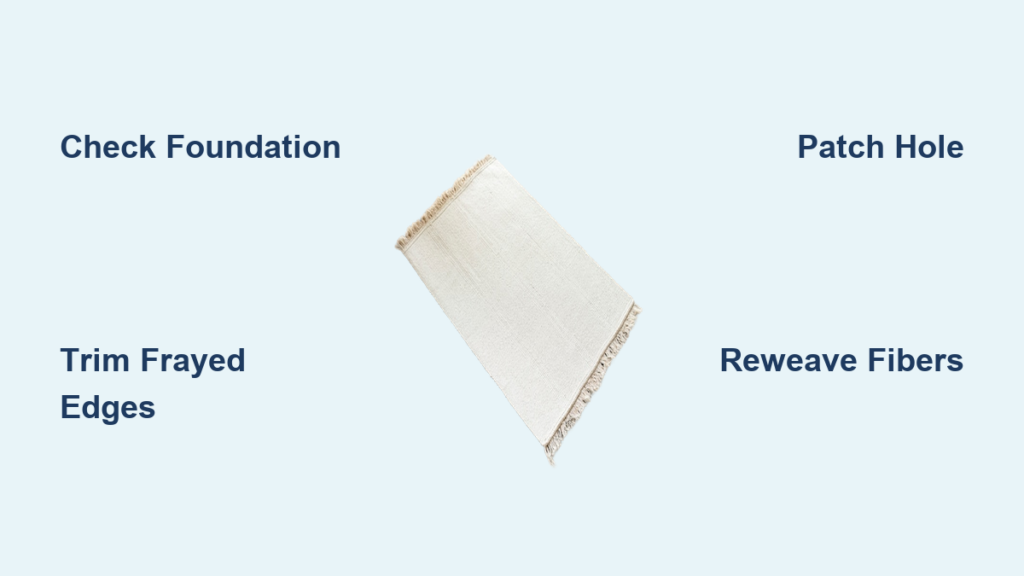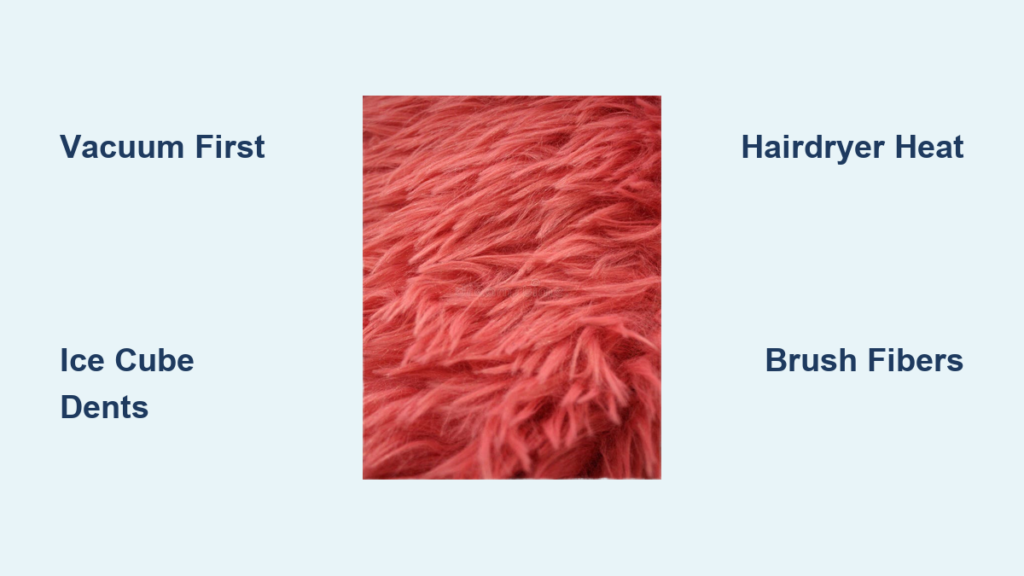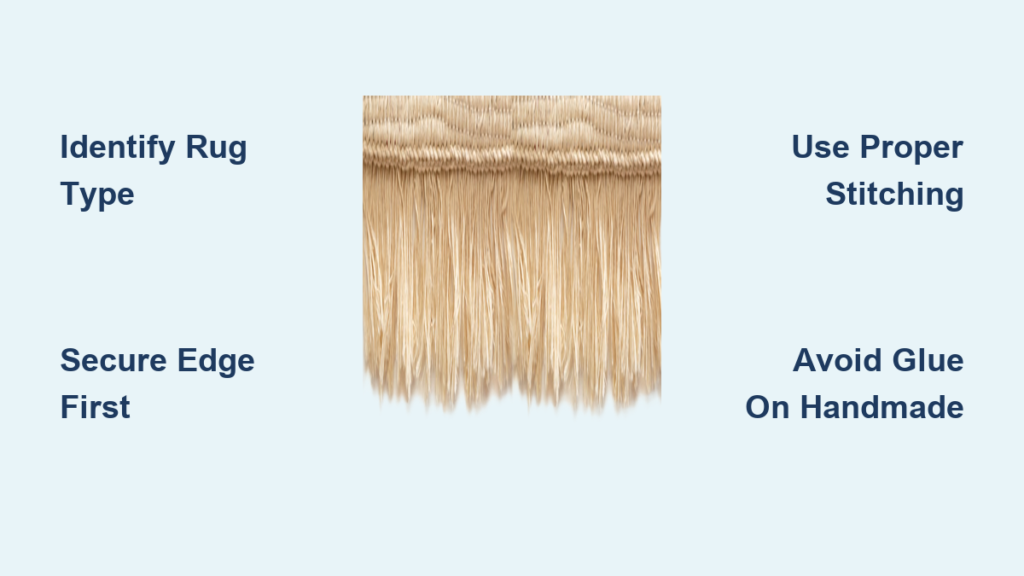

Carpet beetles might be small, but they can cause big damage. These pests often go unnoticed until you spot holes in wool sweaters, frayed carpet edges, or fuzzy larvae crawling along baseboards. The real culprits? The larvae. While adult carpet beetles feed on pollen outdoors, their offspring chew through natural fibers like wool, silk, fur, and feathers, destroying clothes, rugs, and upholstery from the inside out.
Ignoring a carpet beetle problem only makes it worse. Left unchecked, a single female can lay dozens of eggs, leading to multiple overlapping generations hidden in cracks and under furniture. The good news: with a systematic approach, you can eliminate carpet beetles and protect your home. This guide covers how to identify infestations, remove all life stages, treat affected areas, and prevent future outbreaks using proven methods backed by pest control science.
You’ll learn where to look, what tools to use, and which treatments work best, whether you prefer chemical solutions or natural alternatives. Most importantly, you’ll discover how to break their lifecycle for good.
Inspect for Hidden Infestations
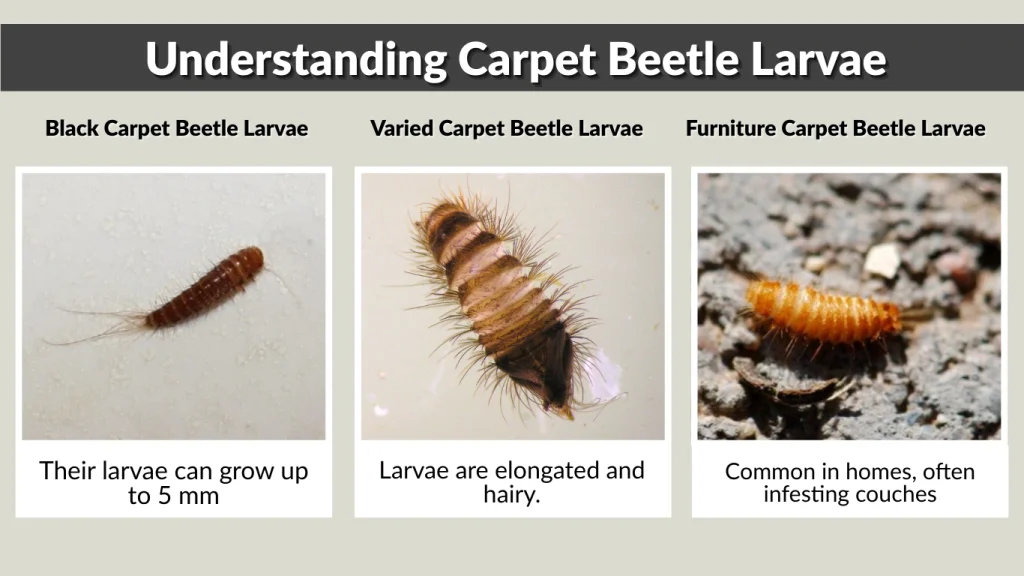
Before treating, confirm and map the extent of the infestation. Carpet beetles hide in quiet, undisturbed areas, so a thorough inspection is essential.
Check High-Risk Areas First
Start with zones where larvae thrive:
- Under and behind heavy furniture
- Along baseboards and floor edges
- Inside closets storing wool or fur items
- Around window sills and door frames
- Behind wall hangings or tapestries
Use a flashlight to peer into cracks and crevices. Focus on dark corners where lint, hair, and dead insects accumulate. These spots serve as ideal food sources for larvae.
Look for Key Signs of Activity
Don’t rely on seeing live bugs. Instead, search for physical evidence:
- Irregular holes in fabric or carpet
- Tiny shed skins that resemble fuzzy specks
- Dark droppings (frass) near damaged materials
- Adult beetles near windows or light sources
If you find one sign, assume others are nearby. Larvae can travel several feet from their feeding site before pupating.
Use Traps to Monitor and Locate
Place sticky traps in corners and along walls to catch wandering adults and larvae. For better results, use pheromone traps designed specifically for carpet beetles. These attract male adults, helping you pinpoint hotspots and track population levels over time.
Check traps weekly. A sudden increase in captures may indicate a hidden nest or ongoing entry from outside.
Remove Beetles With Deep Cleaning
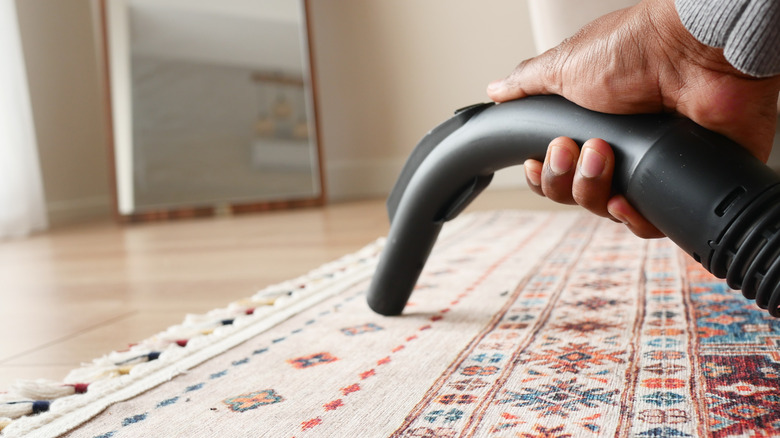
Once you’ve identified infested areas, launch a full-scale cleaning attack. Mechanical removal is the most effective first step. It physically eliminates eggs, larvae, and adults without chemicals.
Vacuum With HEPA Filter Weekly
Vacuum every carpeted and upholstered surface at least once a week during treatment. Use a vacuum with a HEPA filter to trap microscopic eggs and debris that regular vacuums recirculate.
Focus on:
- Edges and corners
- Under furniture
- Behind baseboards
- Inside closets and drawers
After each session, immediately dispose of the bag or empty the canister outside. Seal contents in a plastic bag to prevent escape or reinfestation.
Steam Clean Carpets and Upholstery
Steam cleaning kills all life stages on contact. The high temperature (typically above 130°F) penetrates deep into carpet fibers, destroying eggs and larvae.
Rent or use a professional-grade steam cleaner for best results. Pay extra attention to:
- High-traffic areas
- Pet resting zones
- Under dining chairs (where food crumbs attract beetles)
Allow treated areas to dry completely, usually 4–6 hours, to avoid mold. Open windows or use fans to speed drying.
Wash or Dry Clean Infested Fabrics
For clothing, blankets, or washable items showing signs of damage:
- Wash in hot water (at least 120°F) for 30 minutes
- Use regular detergent
- Dry on high heat
Heat is key: cold or warm cycles may not kill eggs or larvae.
For delicate items like suits, coats, or heirloom textiles:
- Take them to a professional dry cleaner
- Inform staff about the infestation so they can apply appropriate treatment
After cleaning, store items in sealed plastic bins, not fabric-covered boxes.
Apply Targeted Treatments
When cleaning isn’t enough, targeted treatments stop beetles from returning. These methods work best when applied after thorough vacuuming.
Use Residual Insecticides Strategically
For moderate to severe infestations, apply pyrethroid-based sprays (like bifenthrin or deltamethrin) to cracks, crevices, and hiding spots.
Treat:
- Baseboards
- Under furniture legs
- Around window and door frames
- Inside storage cabinets
Always follow label instructions. Keep pets and children away until the spray dries. Avoid overspraying carpets. Focus on perimeter zones where larvae hide.
Note: Insecticides kill adults and larvae but don’t affect eggs. Repeat treatment in 10–14 days to catch newly hatched larvae.
Break the Lifecycle With IGRs
Insect Growth Regulators (IGRs) like hydroprene or methoprene prevent larvae from maturing into breeding adults.
Spray IGRs in the same areas as residual insecticides. They don’t kill on contact but stop the next generation from developing. This step is critical for long-term control.
Combine IGRs with adulticides for a dual-action approach: immediate kill plus future prevention.
Try Natural Options Safely
If you prefer non-chemical methods, food-grade diatomaceous earth (DE) works well.
Sprinkle a thin layer in:
- Cracks and crevices
- Under carpets
- Behind baseboards
DE dehydrates beetles on contact. Leave it for 2–3 days, then vacuum thoroughly. Reapply if needed.
Caution: Wear a mask when applying. DE dust can irritate lungs.
Essential oil sprays (e.g., neem, lavender, or eucalyptus) can repel beetles but don’t offer lasting control. Reapply after cleaning or exposure to moisture.
Seal Entry Points and Block Adults
Preventing new beetles from entering is just as important as eliminating existing ones. Adults fly in from outside, often drawn to light.
Caulk Gaps and Seal Openings
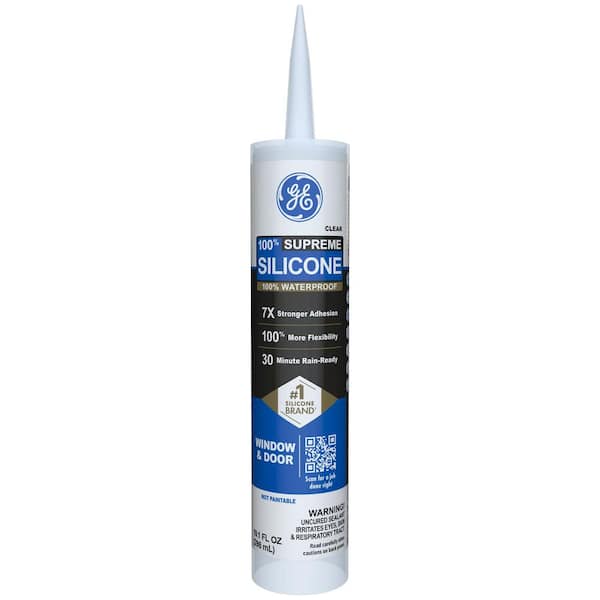
Inspect windows, doors, and utility lines for cracks. Use silicone caulk to seal any gaps larger than 1/8 inch.
Pay attention to:
- Around pipes and vents
- Behind electrical outlets
- Attic and basement entry points
Even tiny openings let adults inside.
Install Fine Mesh Screens
Cover:
- Chimneys
- Vents
- Windows
- Door frames
Use fine mesh screens (20+ mesh) to block insects while allowing airflow. Repair torn screens immediately.
Manage Outdoor Light Exposure
Since adults are phototropic, reduce indoor lighting at night. Close curtains or use motion-sensor lights to minimize attraction.
Avoid leaving porch lights on all night. Switch to yellow bug lights if possible.
Store Items to Prevent Reinfestation

After eradication, protect your belongings with smart storage. Most new infestations start from improperly stored fabrics.
Use Airtight Containers
Store off-season clothing, blankets, and heirlooms in:
- Plastic bins with locking lids
- Vacuum-sealed bags
- Cedar-lined trunks (with supplemental protection)
Never store clean items in cardboard boxes. They offer no barrier.
Clean Before You Store
Always wash or dry clean items before packing them away. Even “clean” clothes can harbor oils, sweat, or food residue that attract larvae.
Let garments dry completely to prevent mold, which also draws pests.
Add Deterrents—But Don’t Rely on Them
Cedar blocks and lavender sachets release oils that may repel carpet beetles. However, research shows they lose potency over time and won’t stop a determined infestation.
Use them as a supplement, not a standalone solution.
Maintain a Beetle-Free Home
Elimination is only half the battle. Consistent maintenance prevents carpet beetles from coming back.
Vacuum Weekly Without Fail
Stick to a weekly HEPA vacuum routine, especially in high-risk areas. This removes stray eggs, dead insects, and potential food sources.
Don’t skip baseboards or under furniture. Larvae love these spots.
Rotate and Inspect Stored Goods
Every 3–6 months:
- Open stored containers
- Check for signs of damage or pests
- Air out fabrics in sunlight (UV light helps kill eggs)
Refresh repellents like cedar or lavender every few months.
Keep Clutter Under Control
Reduce hiding places by minimizing clutter. Store books, papers, and unused items off the floor and in sealed containers.
Less clutter means fewer places for beetles to hide and breed.
Frequently Asked Questions About Carpet Beetles
What attracts carpet beetles to your home?
Carpet beetles are drawn to natural fibers like wool, silk, fur, and feathers. They also feed on lint, hair, dead insects, and food residue. Adults often enter through open windows or hitchhike on cut flowers and plants.
Can carpet beetles live in your bed?
Yes, carpet beetles can infest bedding made from natural fibers. Larvae may feed on blankets, pillows, or mattresses containing wool or feathers. Regular washing of bedding at high temperatures helps prevent this.
How long does it take to get rid of carpet beetles?
Eliminating carpet beetles typically takes several weeks to a few months, depending on infestation severity. Consistency with vacuuming, cleaning, and treatment is essential for full eradication.
Do carpet beetles bite humans?
Carpet beetles do not bite, but their tiny hairs can cause skin irritation or allergic reactions in sensitive individuals. This often resembles a rash rather than a bite.
Are carpet beetles harmful to your health?
While not dangerous, carpet beetles can cause allergic reactions and respiratory irritation from their shed skins and hairs. The primary concern is property damage to clothing, carpets, and upholstery.
When should I call a professional for carpet beetles?
Call a professional if the infestation persists despite thorough cleaning and treatment, spreads to hard-to-reach areas, or involves widespread damage. Experts have access to stronger treatments and specialized equipment.
Key Takeaways for Eliminating Carpet Beetles

Getting rid of carpet beetles requires a multi-step approach. Start with thorough inspection and identification, then deploy deep cleaning with a HEPA vacuum and steam cleaner. Apply targeted treatments like pyrethroid sprays and IGRs to break the breeding cycle, and seal entry points to block new adults from entering. Finally, protect your belongings with airtight storage and maintain a consistent cleaning routine.
The most important step you can take today is to begin a weekly HEPA vacuum schedule and inspect your stored fabrics. A single missed session can restart the cycle, so consistency is your best defense against future infestations.