
Hanging a carpet on the wall transforms it from floor covering to statement art. Whether you’re showcasing a vintage rug, a colorful kilim, or a modern textile, wall-mounted carpets add texture, warmth, and visual interest to any room. Unlike flat paintings or prints, a hung carpet brings dimension, sound absorption, and cultural flair that makes your walls feel alive.
But how do you hang carpet on the wall without damaging it or your walls? The key is choosing the right method based on size, weight, and style. From Velcro strips to curtain rods and rug hangers, each technique offers unique benefits. In this guide, you’ll learn how to securely mount your carpet, protect its fibers, position it for impact, and keep it looking great for years.
Choose the Right Carpet for Wall Display
Picking the best carpet for wall display ensures both safety and style. Not every rug is ideal for hanging, so consider size, material, and design before installation.
Match Size to Your Wall Space
Select a carpet that fits your wall without overwhelming it. Measure the wall first, then leave 3 to 6 inches of breathing room around the edges.
- Large carpets (5’x7′ and up) work well above sofas or as focal points in living rooms.
- Small rugs (2’x3′ or runners) suit hallways, bathrooms, or accent walls.
- Test placement with painter’s tape or paper cutouts to visualize the final look.
Avoid oversized rugs that extend beyond furniture or crowd doorways.
Consider Weight and Material
Heavy wool or hand-knotted carpets need strong support like rods or frames. Lightweight cotton, synthetic, or flatweave rugs can use simpler methods like Velcro or clips.
Delicate or antique pieces require non-invasive mounting to prevent fiber damage. If unsure, opt for reversible methods that avoid puncturing the rug.
Align Pattern and Color with Your Room
Bold geometric or tribal patterns stand out like art. Subtle textures blend in for a cozy feel. Choose colors that complement or contrast with your wall and furniture.
Light-colored rugs brighten dark rooms. Dark rugs anchor large spaces but can make small areas feel closed in. Always consider lighting, since natural light may fade dyes over time.
Prepare the Carpet Before Hanging
Before hanging, clean, repair, and reinforce your carpet to ensure longevity and a polished look.
Clean and Repair First
Never hang a dirty or damaged carpet. Dust, stains, and odors become more noticeable on walls.
- Vacuum both sides with low suction.
- Spot-clean stains with mild soap and a damp cloth. Blot gently rather than scrub.
- For valuable or antique rugs, hire a professional cleaner.
Check for loose threads, fraying, or holes. Repair small tears with matching thread. For major damage, consult a textile restorer.
Add a Hanging Sleeve for Support
A sleeve (also called a rod pocket) distributes weight evenly and keeps the rug flat. Here’s how to make one:
- Cut a strip of canvas or sturdy fabric slightly longer than the rug’s width.
- Fold it in half lengthwise, wrong sides together.
- Sew along the open edge to create a tube.
- Attach it to the back top edge of the rug with strong thread or fabric glue.
Insert a wooden dowel or curtain rod through the sleeve. This method avoids direct wall contact with the rug.
Protect the Fabric From Damage
Shield your carpet from environmental threats:
- Sunlight: UV rays fade colors, especially natural dyes. Hang away from direct sun or use UV-filtering window film.
- Humidity: Moisture leads to mold or mildew. Avoid bathrooms or basements unless climate-controlled.
- Pests: Natural fibers attract moths. Use cedar blocks or a fabric-safe insect repellent spray.
For fragile rugs, add a breathable backing fabric to reduce strain.
Hang the Carpet Securely With the Right Method
Choose a hanging method that matches your carpet’s weight and your wall type. Each option balances strength, ease, and preservation.
Use a Curtain Rod for Easy Removal

Ideal for medium to large rugs with a sleeve.
- Install a sturdy curtain rod using wall anchors or studs.
- Slide the rod through the sleeve sewn to the rug’s back.
- Hang the rod on brackets.
Best for: Wool rugs, vintage textiles, or pieces you may rotate.
Pro tip: Choose a wooden or metal rod that complements your decor.
Apply Heavy-Duty Velcro Strips

Great for lightweight to medium rugs with no sewing required.
- Cut two matching strips of industrial-strength Velcro.
- Attach one side to the top back edge of the rug using fabric glue or stitching.
- Stick the other side to the wall using drywall anchors or screws.
- Press rug firmly into place.
Best for: Cotton, synthetic, or flatweave rugs.
Warning: Test on a small wall area first. Avoid on freshly painted or delicate surfaces.
Install Rug Hangers or Clamps
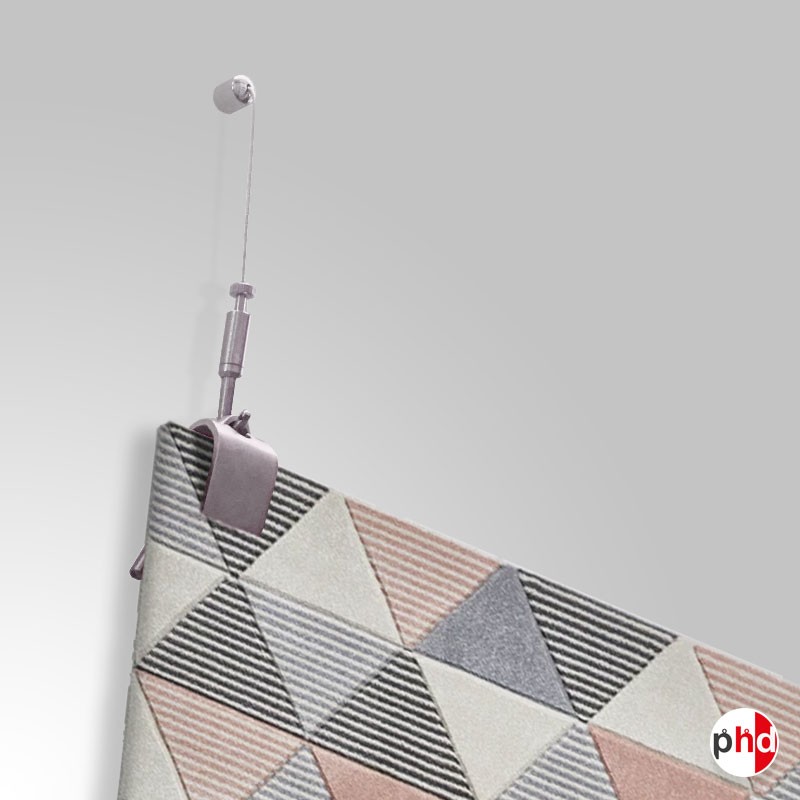
Rug hangers are clamp-style brackets that grip the top edge.
- Place a wooden or metal bar across the rug’s top.
- Secure it with clips or clamps.
- Hang the bar on wall hooks anchored into studs or drywall.
Best for: Delicate or fringe-heavy rugs.
Advantage: No sewing, no adhesives, and easy to remove.
Mount With Tackless Strips for Renters

Originally for carpet installation, tackless strips work vertically.
- Attach a carpet tack strip to a wooden frame or directly to the wall.
- Stretch the rug’s top edge over the strip so the tacks grip the backing.
- Secure bottom corners lightly if needed.
Best for: Temporary displays or rental homes.
Caution: Only use on synthetic or durable rugs, since this can damage delicate fibers.
Secure the Carpet Without Wall Damage
Preserve your walls while supporting the carpet’s weight. The right hardware prevents cracks, sagging, or falling.
Choose the Right Wall Anchors
- Drywall: Use plastic or metal anchors rated for the rug’s weight.
- Studs: Drive screws directly into studs for heavy rugs.
- Plaster or brick: Use masonry anchors or consult a professional.
For large rugs, place anchors every 12 to 16 inches across the top.
Distribute Weight Evenly Across the Top
Avoid stress points by spreading the load:
- Use a full-width rod or frame.
- Sew a canvas backing strip before attaching Velcro.
- Hang from multiple points rather than just two nails.
This prevents sagging and extends the rug’s life.
Minimize Holes With Rental-Friendly Options
If you want removable solutions:
- Use 3M Command Strips (heavy-duty version) for rugs under 5 lbs.
- Opt for tension rods in corners or between walls.
- Frame the rug and hang it like a picture.
These methods leave no permanent marks.
Position the Carpet for Maximum Style
Where and how you hang the carpet affects the room’s balance and flow.
Align With Nearby Furniture
Create harmony by centering the rug above key pieces:
- Above a sofa: Leave 6 to 12 inches between furniture and rug bottom.
- Over a bed or console: Match width or go slightly wider.
- In a hallway: Hang runner rugs vertically for height.
Avoid placing too close to shelves or artwork. Give it breathing room.
Set at Eye Level for a Gallery Look
Hang the center of the rug 57 to 60 inches from the floor, which is the standard gallery height.
- In rooms with high ceilings, go higher (60 to 66 inches).
- For kids’ rooms or low walls, adjust to viewable height.
This draws the eye naturally and creates a curated feel.
Mix With Other Wall Art
Combine your wall carpet with:
- Framed photos
- Mirrors
- Sculptures or wood carvings
Keep a cohesive color palette. Align top edges or centers for a clean layout. Use the rug as a textured backdrop for smaller pieces.
Avoid overcrowding. Let the rug breathe as a standout feature.
Maintain Your Wall Carpet Over Time
A hung carpet still needs care to stay vibrant and secure.
Dust Regularly
Even off the floor, rugs collect dust.
- Vacuum monthly with a soft brush attachment.
- Use a lint roller for small areas.
- Never use a beater bar, since it can pull fibers.
Prevent Fading From Sunlight
Rotate the rug every 6 to 12 months if it’s exposed to indirect light. This evens out sun exposure and slows fading.
For direct sunlight, install sheer curtains or UV-blocking film.
Inspect for Damage Every Few Months
Check for:
- Loose threads or fraying
- Insect activity (especially in wool rugs)
- Sagging or loose hardware
Fix small issues early. Tighten clips, reattach Velcro, or repair threads before they worsen.
Frequently Asked Questions About Hanging Carpet on Walls
What is the best method to hang a rug on the wall without using nails?
Velcro strips or a curtain rod work well without nails. Velcro holds rugs securely and removes easily, while a curtain rod slides through a sewn casing on the rug’s edge.
How can I display a rug with fringe as wall art?
To preserve the fringe, avoid folding or stapling that area. A wooden frame or clip system that holds the rug away from the fringe works well. You can also sew a support strip above the fringe to attach hanging hardware safely.
Can you use Velcro strips to hang rugs, and if so, how?
Yes, Velcro strips work well for lightweight rugs. Attach one side to the rug’s back and the matching side to the wall. Press firmly to secure. Make sure the wall surface is clean and dry for the best hold.
Are there any special kits available for rug wall hangings?
Yes, kits exist that include mounting hardware like rails, rods, or frames designed for textiles. These kits help distribute the rug’s weight evenly and prevent damage.
What techniques work best for hanging smaller rugs on walls?
For smaller rugs, lightweight frames, clip hangers, or Velcro strips are practical. Smaller rugs often don’t need heavy-duty hardware and can be displayed like paintings, inside frames, or on rods.
What is the safest way to hang a heavy rug without damaging the wall?
Use a wooden frame or a rail system fixed to wall studs to support the rug’s weight. Avoid nails directly on the rug. Instead, suspend the rug from a mounted frame or clips that spread the weight evenly and protect the wall surface.
Final Tips for Hanging Carpet on Walls Successfully
Hanging a carpet on the wall is a creative way to showcase texture and design. Follow these final tips for best results:
- Test the method first on a spare piece or low-traffic area.
- Use gloves when handling delicate rugs to avoid oil transfer.
- Take photos before and after hanging to track placement.
- Label hardware if you plan to rotate rugs seasonally.
For antique or valuable rugs, consult a textile conservator before mounting.
Final Note: Whether you’re using Velcro, a rod, or clips, the goal is to display your carpet safely and beautifully. With the right prep and hardware, your wall-mounted rug becomes more than decor. It becomes art. Choose a method that fits your space, protect both rug and wall, and enjoy the warmth and character it brings to your home.