You’ve looked at your rug and decided the tassels just do not fit your style. Maybe they are frayed, collecting dust, or clashing with your modern decor. You are not alone. Many homeowners want to remove tassels from a rug for a cleaner, streamlined look. But before you grab scissors, you need to understand one critical thing: not all tassels can be safely removed.
Cutting fringe on the wrong type of rug can lead to unraveling, permanent damage, or a steep drop in value, especially for antique or hand-knotted pieces. The key is knowing whether your rug’s tassels are structural or purely decorative. This guide will walk you through how to identify your rug type, assess tassel stability, and safely modify or remove tassels without causing irreversible harm.
Identify Your Rug Type Before Cutting
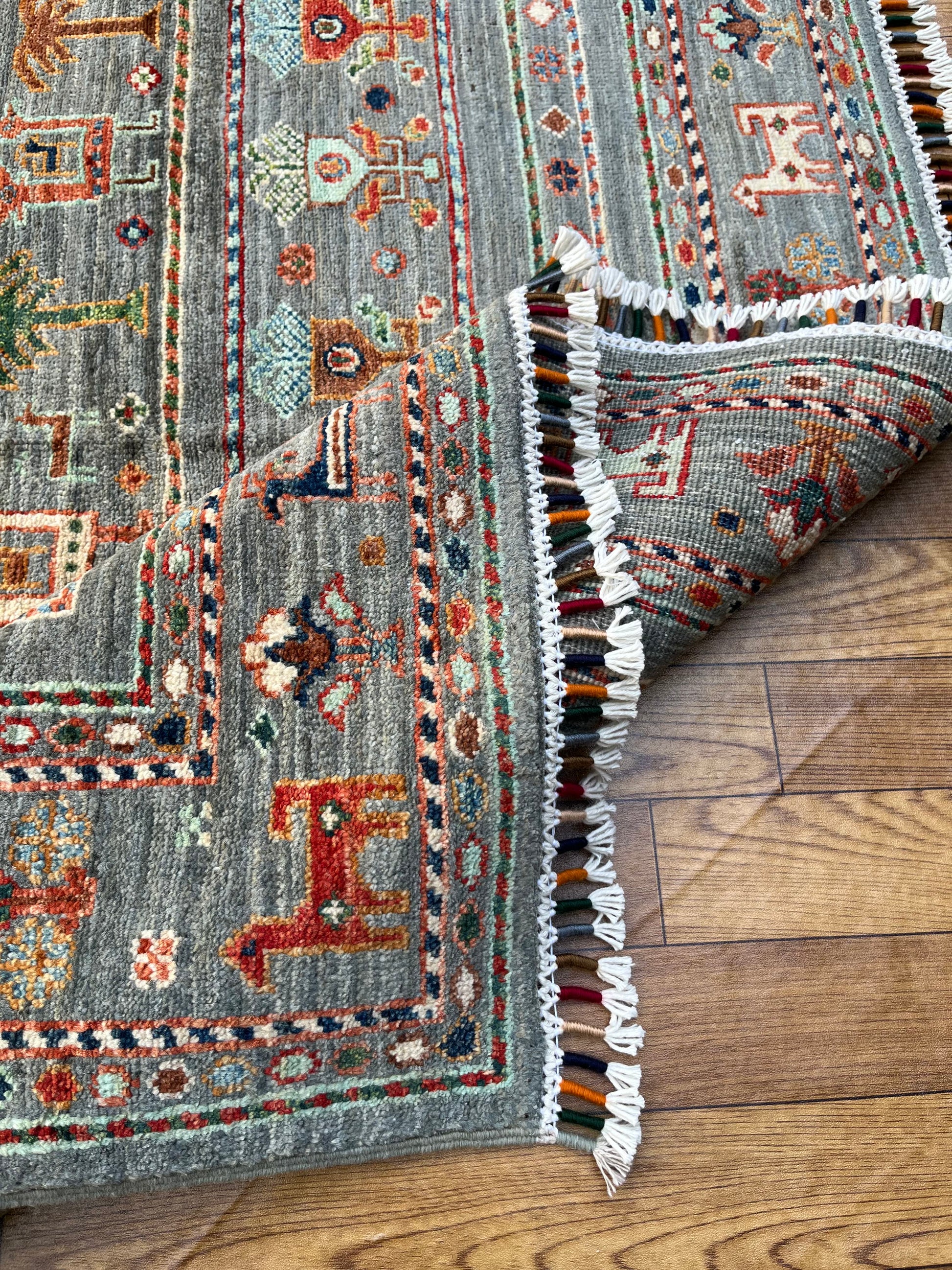
Before any cutting, determine if your rug’s tassels are structural or decorative. This single decision determines whether removal is safe.
Hand-Knotted Rugs: Fringe Is Structural
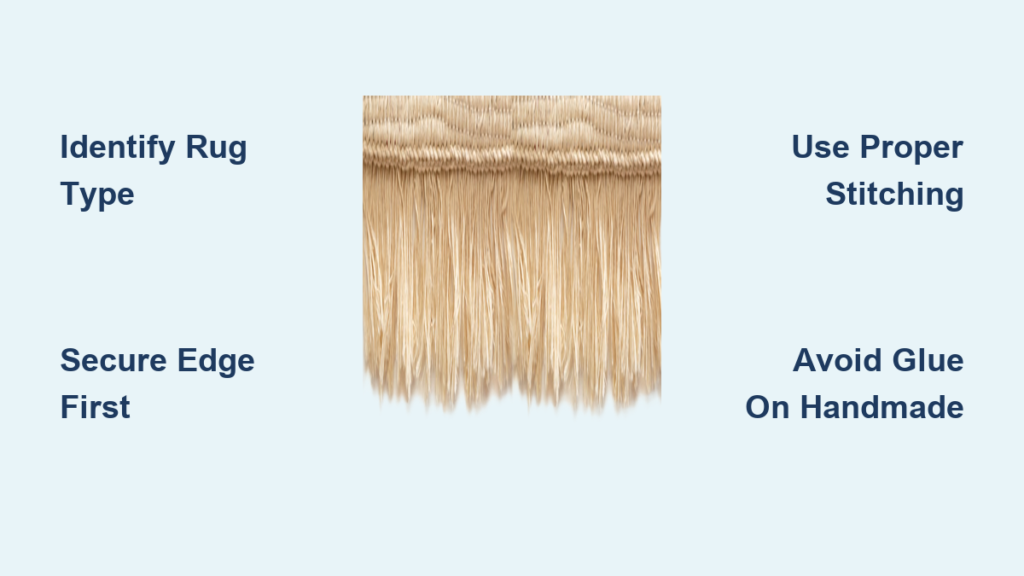
In Persian, Oriental, and antique rugs, the tassels are extensions of the warp threads, the vertical foundation that holds every knot in place. These rugs are woven vertically on a loom, and the fringe is part of the original structure, not added later.
• Do not cut the tassels on these rugs
• Cutting can trigger progressive unraveling that spreads into the body of the rug
• Even trimming reduces collector value and may cost thousands in restoration
• Many have a kilim edge or reinforcing string that must stay intact
If your rug is over 50 years old, hand-signed, or valuable, consult a professional rug restorer before any modification.
Wool Tufted Rugs: Fringe Is Non-Structural
Most modern rugs from the past 20 to 25 years are tufted, not knotted. The pile is punched into a backing fabric and glued in place. The fringe is typically looped around the edge and stitched or glued on. It is not part of the weave and is purely decorative.
These rugs are ideal candidates for tassel removal if you prefer a clean, modern edge.
Perform the Tug Test for Safety
Before touching scissors, test tassel stability. This simple check prevents accidental damage.
How to Do the Tug Test
- Pick a small section of fringe in an inconspicuous area
- Gently pull 2 to 3 tassels with steady, firm pressure
- If threads pull out easily or the backing feels loose, stop. The rug is too fragile
- If tassels stay firmly in place, it may be safe to proceed, only if it is a tufted rug
A weak tug response means the rug is worn or damaged. Do not modify.
Trim Tassels Conservatively (Safe Option)
If your rug has slightly long or frayed tassels but is structurally sound, conservative trimming is the safest choice.
Tools You Will Need
• Sharp fabric scissors or precision shears
• Clear packing tape (never brown tape, which can stain)
• Cardboard strip (6 inches long, for measuring)
• Marker
• Wide-toothed comb (optional)
• Assistant (for large rugs)
Step-by-Step Trimming Guide
Straighten the Fringe
Flip the rug over. Use fingers or a comb to brush tassels outward and align them evenly. For large rugs, lift and drop the edge with a helper to prevent tucking.
Tape Front and Back
Apply clear packing tape across the fringe on both sides. This stabilizes threads, prevents fraying, and creates a clean cutting surface.
Set Desired Length
Place the cardboard strip at the base of the rug pile. Align its edge with the pile is contour. Do not assume the edge is straight.
Mark the Cut Line
With the cardboard in place, trace along its edge with a marker. Move the cardboard and marker together to maintain consistency. Double-check from multiple angles.
Make One Clean Cut
Use sharp scissors to cut in a single smooth motion along the line. Avoid snipping repeatedly. It creates jagged edges.
Clean Up and Inspect
Remove tape gently. Fluff tassels with fingers or a comb. Check for evenness and symmetry.
Cutting too short is irreversible. When in doubt, leave it longer.
Remove Fringe Fully (Tufted Rugs Only)
Only attempt this on wool tufted rugs with non-structural fringe. Never remove tassels from hand-knotted or antique rugs.
Step 1: Cut Above the Loop
Locate where the fringe threads loop around the rug is edge. Use sharp scissors to cut just above the loop, leaving a small knot at the base.
Step 2: Pull Out the Knots
Gently tug the cut ends to remove the knot and loose threads. This reveals a line of small holes where the fringe was attached.
Step 3: Seal the Back Edge
On the back of the rug, unstitch the backing fabric (1 to 2 inches) along the edge. Pull it back slightly to expose the raw edge. Apply rug adhesive or fabric glue. Press the backing down firmly. Let dry at least 24 hours.
Step 4: Final Inspection
Front should have a smooth, fringe-free edge. Back should be glued area flat and secure with no lifting or loose threads.
Hide Tassels Temporarily (Reversible Method)
If you dislike the look of fringe but want to preserve it, especially on valuable rugs, hiding is a smart alternative.
Materials Needed
• Clear packing tape
• Scissors
How to Hide Tassels
- Straighten tassels as evenly as possible
- Wrap clear tape around the entire fringe bundle on front and back
- Push corner tassels inward so they do not show when the rug is lifted
- Fold the taped fringe to the back of the rug
- Secure with another strip of tape, applying gentle tension
This method is fully reversible, requires no cutting, and preserves value. The caveat is that tape residue may build up over time. Test on a small area first.
Prevent Fraying During Modification
Even with care, loose threads can snag or unravel. Use this technique to protect the edge.
Secure with Packing Tape
Before cutting, wrap clear packing tape tightly around the base of the tassels, just above the cut line. This acts as a clamp, stabilizing threads and preventing pulls.
Cutting just above the reinforcing string or kilim border keeps the edge stable. This step is crucial for tufted rugs with stitched-on fringe where threads can slip out if not secured.
Finish and Reinforce the Edge
After removal, a clean edge is not enough. You need to prevent future fraying.
For Tufted Rugs
Trim any stray fibers flush with the edge. Apply fabric glue along the back edge for extra security. Let dry completely before use.
For High-Value Rugs
Consider professional edge binding with fabric or leather. This provides durability and a polished finish. Available through rug repair specialists.
Never leave raw edges exposed. Moisture and foot traffic will degrade them over time.
Maintain Your Rug After Modification
Once tassels are gone, care changes slightly. Protect your work with these habits.
Vacuum Carefully
Use the brush attachment gently. Avoid pulling on edges. Lift the rug to vacuum underneath. Do not drag.
Rotate Regularly
Prevents uneven wear, especially important after structural changes. Rotate 180 degrees every 6 months.
Clean Spills Immediately
Moisture weakens glued edges in tufted rugs. Blot. Do not scrub.
Inspect Edges Annually
Look for lifting, fraying, or adhesive failure. Reapply glue if needed.
Avoid Steam Cleaning Near Edges
Excess heat and moisture can compromise glued seams. Keep the nozzle several inches away from the perimeter.
Avoid These Common Mistakes
| Mistake | Consequence | How to Prevent |
|---|---|---|
| Cutting hand-knotted rug fringe | Unraveling, value loss | Confirm rug type first |
| Skipping the tug test | Pulls out threads, damage | Always test stability |
| Using brown tape | Permanent stains | Use clear packing tape only |
| Cutting too short | Irreversible, looks bad | Be conservative, use a guide |
| Removing fringe from antique rugs | Structural collapse | Consult a professional |
If you are unsure, do not cut. Ask a rug expert.
When to Call a Professional
Some situations require expert hands, not DIY.
Consult a Rug Specialist If
• The rug is over 50 years old
• It has collector or investment value
• Fringe is frayed, brittle, or loose
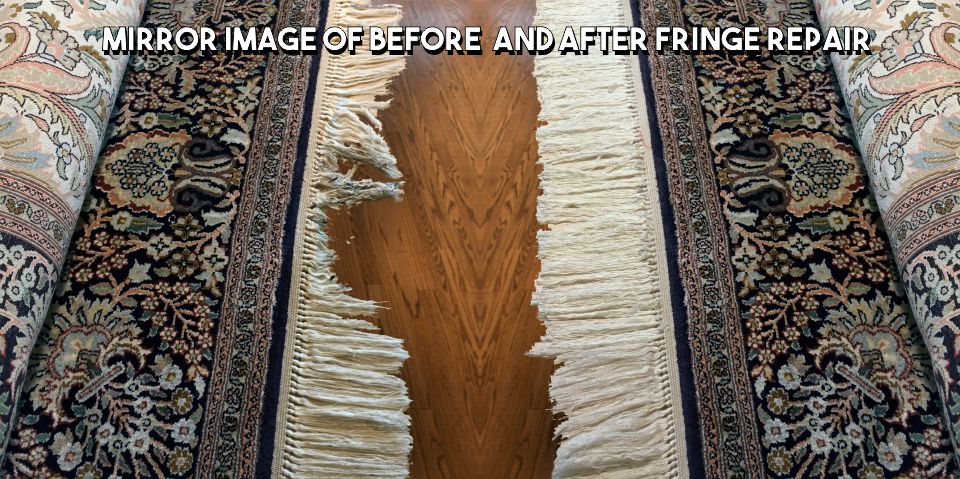
• You want fringe replaced or reweaved
• You are uncertain about construction
Available Professional Services
• Fringe repair: Reweave damaged ends with matching wool
• Fringe shortening: Precision trim without risk
• Fringe replacement: Full reconstruction
• Edge binding: Replace fringe with fabric or leather trim
If you think fringe should be removed, consult a reputable rug dealer. Their repair specialist can do it safely.
Design and Aesthetic Considerations
Changing the fringe alters your rug is entire look. Think about these factors.
Visual Impact
Fringe gives traditional, bohemian, or vintage character. Removing it creates a modern, minimalist edge. Consider your room is style. Does it match?
Balance and Symmetry
Uneven trimming makes the rug look crooked. Measure and mark carefully on all sides.
Edge Finish Quality
A clean, sealed edge looks intentional. A ragged or frayed edge looks amateurish.
Color Matching for Repairs
Reweaving or binding should match original dye and texture. Professionals use custom-dyed wool for seamless results.
Key Takeaways for Removing Rug Tassels Safely
Step-by-Step Checklist
- Identify rug type. Is it hand-knotted or tufted?
- Perform the tug test. Are tassels stable?
- Use clear packing tape. Stabilize before cutting.
- Cut above the loop (tufted only). Never cut through kilim or backing.
- Trim stray threads. Neaten the edge.
- Seal the back (if removed). Use rug adhesive.
- Inspect and maintain. Check edges annually.
Final Takeaways
• Safe to remove: Fringe on modern tufted rugs that is looped and non-structural
• Never cut: Fringe on hand-knotted, Persian, or antique rugs
• Trim conservatively: Only for grooming, never too short
• When in doubt, stop. Consult a professional
• Hide instead of cut: Use clear tape for a reversible fix
Trimming fringe is permanent. If you are uncertain, wait a day. Ask someone else. Then decide.
Frequently Asked Questions About Removing Tassels from a Rug
Can I remove tassels from any type of rug?
No. You can only safely remove tassels from modern tufted rugs where the fringe is non-structural. Hand-knotted, Persian, and antique rugs have fringe that is part of the rug is structural foundation. Cutting it can cause unraveling and destroy the rug is value.
How do I know if my rug is hand-knotted or tufted?
Examine the fringe closely. If the tassels appear woven into the rug and cannot be pulled out easily, it is likely hand-knotted. If the fringe looks looped, sewn, or glued on and pulls out as a single piece, it is likely tufted. When uncertain, consult a professional.
What happens if I cut the tassels on an antique rug?
Cutting structural fringe on an antique rug can trigger progressive unraveling that spreads into the body of the rug. It can also reduce the rug is collector value significantly, sometimes by thousands of dollars. Always consult a professional for valuable or antique pieces.
Is trimming tassels safer than fully removing them?
Yes. Conservative trimming is the safest option if your rug has slightly long or frayed ends but is otherwise structurally sound. It allows you to improve the appearance without risking the rug is integrity. Just be sure to use clear packing tape and cut conservatively.
Can I hide my rug is tassels instead of removing them?
Yes. You can use clear packing tape to bind the fringe, fold it to the back of the rug, and secure it there. This is a fully reversible method that preserves the original fringe. It works well for valuable rugs, rentals, or temporary style changes.
Should I hire a professional to remove rug tassels?
You should hire a professional if your rug is over 50 years old, has collector or investment value, or if you are unsure about its construction. Professional services include fringe repair, precision trimming, fringe replacement, and edge binding. The cost is far less than repairing damage from a DIY mistake.