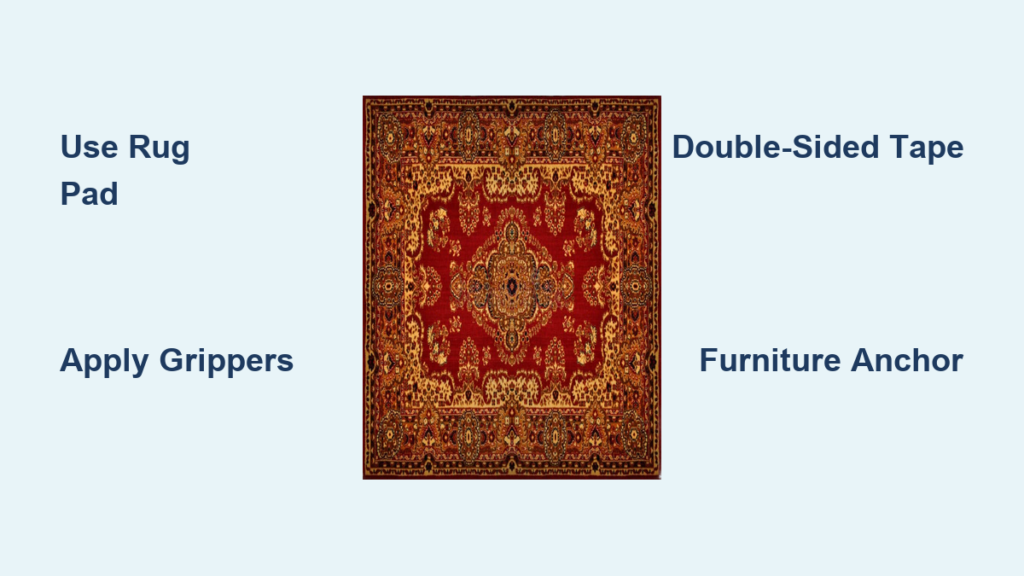
You’ve just placed the perfect rug in your living room, only to find it creeping across the carpet every time someone walks by. A slipping rug isn’t just annoying, it’s a tripping hazard and can damage both the rug and underlying carpet over time. Whether it’s a lightweight flatweave in a child’s bedroom or a large area rug in a high-traffic hallway, knowing how to stop a carpet rug from slipping is essential for safety, comfort, and longevity.
The root cause involves carpet fibers shifting underfoot, creating an unstable base for layered rugs. Lightweight or smooth-backed rugs like cotton dhurries or synthetic flatweaves are especially prone to sliding because they lack mass and friction. But even heavy wool rugs can shift without proper support. The good news is that proven, accessible solutions exist for every scenario, from store-bought pads to clever DIY fixes.
Choose the Right Rug Pad for Carpet
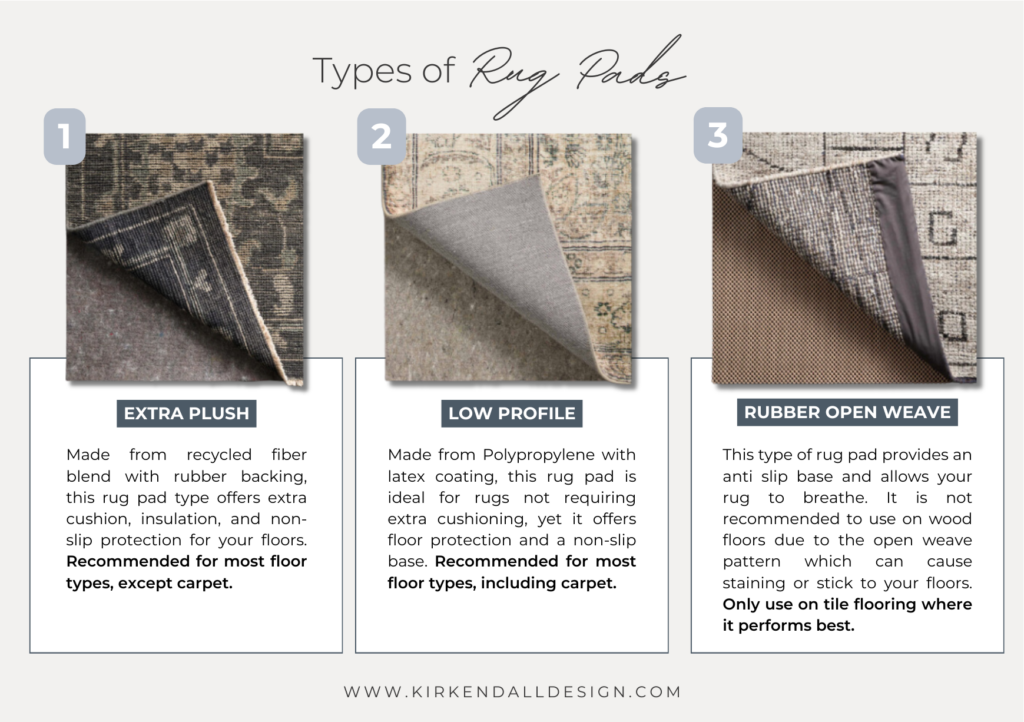
The most effective way to stop a rug from slipping on carpet is using a rug pad designed specifically for carpet-on-carpet use. Not all pads work the same, and using a hard-floor pad on carpet often fails because it cannot grip plush fibers effectively.
Use Carpet-Rated Rug Pads Only
Standard rubber or waffle pads made for hardwood may slide on carpet. Instead, look for pads labeled for use over carpet or carpet-on-carpet. These are engineered with textured or slightly rigid surfaces that latch onto both the base carpet and the rug’s underside.
The main options include:
- Natural rubber pads: Offer strong grip without harming carpet backing.
- Felt-rubber composites: Combine cushioning and traction, ideal for comfort and durability.
- Thickness: Opt for 2 to 6 mm. Thicker pads add softness but ensure they do not create a tripping edge.
Pro Tip: Cut the pad to fit slightly smaller than the rug by 1 to 2 inches to avoid visible edges and prevent curling.
Avoid Common Pad Mistakes
Many people use the wrong pad type and wonder why their rug still moves. Mistakes to avoid include using hard-floor pads on carpet, choosing overly thin pads with no grip layer, and letting the pad extend beyond the rug, which creates a trip hazard. Always test a small section first if you are unsure about adhesion or discoloration.
Apply Rug Grippers or Corner Anchors

For small rugs or lightweight decor pieces, rug grippers offer a low-profile, budget-friendly fix. These small rubber or silicone pads stick to the underside of the rug and grip the carpet below.
Place Grippers at Key Stress Points
Grippers work best on accent rugs under 4 by 6 feet. Install them at all four corners for maximum hold, and add extra grippers along edges if the rug shifts during use. They are ideal for bedroom rugs, bathroom mats, or entryway decor.
Note: Grippers work best on low-pile carpet. On plush or shag rugs, they may lose grip over time.
Limitations and Warnings
Grippers are not suitable for high-traffic areas, and the adhesive may leave residue on delicate rugs. Replace them every 6 to 12 months as stickiness fades. Use washable, reusable grippers in rental homes to avoid damage.
Secure with Double-Sided Carpet Tape
When you need a strong, semi-permanent hold, double-sided carpet tape is a go-to solution. Choose acrylic-based tape for longer-lasting adhesion and easier removal.
Tape the Perimeter or Use a Grid
For large rugs, apply tape along all edges in a continuous strip. For extra stability, use a grid pattern on the rug’s underside. Press firmly after placement to ensure full contact.
Watch for Residue Risks
Some tapes leave sticky residue, especially on natural fibers like wool or cotton. Always test on a hidden corner first. Avoid using on vintage or handmade rugs unless removable tape is confirmed safe.
Best Use Case: Hallways, dining rooms, or under rugs with chairs that drag.
Anchor Rugs with Furniture Weight
One of the simplest, no-cost methods is using furniture as a physical anchor. The weight prevents lateral movement.
Position Legs Over Rug Edges
Place sofa, coffee table, or dining chair legs on the rug’s edges. This works best with larger area rugs in living or dining rooms. Combine with a rug pad for added security.
Design Bonus: Anchoring rugs with furniture creates a cohesive, intentional look.
When It Is Not Enough
Furniture anchoring fails if the rug is too small or lightweight, if furniture is moved frequently, or if only one or two legs touch the rug. In these cases, pair with grippers or tape for full stability.
Install Rug Pins for Permanent Hold
For a discreet, durable solution over wall-to-wall carpet, rug pins are unmatched. These plastic or metal fasteners are inserted through the rug’s edge into the base carpet.
Use Angled Pins at Rug Edges
Rug pins are nearly invisible once installed. They allow slight flexibility while preventing slippage, and they are reusable and adjustable. They are ideal for runners in hallways, large living room rugs, or high-traffic zones.
Installation Steps
- Lift one edge of the rug.
- Insert pin at 12 to 18 inch intervals.
- Press down until flat and secure.
Caution: Not for hard floors, exclusively for carpeted subfloors.
Try Gripper Tape Applied to the Floor
Instead of taping the rug, apply gripper tape directly to the carpet. This method allows easy removal for cleaning.
Match Tape to Rug Size
Cut 2 to 3 inch wide tape to outline the rug’s footprint. Place tape on the carpet, then set the rug on top. No adhesive touches the rug, which preserves delicate backs.
Advantage: Gripper tape bonds better to short, dense carpet than plush or shag. Test adhesion first if your carpet is thick.
Use Hook and Loop Anchors (Velcro)
For temporary or rental setups, hook and loop fasteners offer a reusable, removable bond. One side sticks to the rug’s underside, and the other adheres to the carpet.
Apply Strips to Rug and Carpet
Press the two sides together for instant grip. This method works best for playrooms, dorms, or temporary decor.
Avoid Damage to Delicate Materials
Adhesives can pull fibers from wool, silk, or hand-tufted rugs. Use only on durable synthetic rugs and test in a small area first.
Apply Silicone Caulk for DIY Grip
A long-lasting DIY method involves silicone caulk, which creates non-slip bumps on the rug’s back.
Create a Grid of Silicone Dots
- Flip the rug upside down.
- Squeeze silicone in dots or zigzags across the back, avoiding edges.
- Let cure for 24 hours before use.
Result: Rubber-like grip similar to commercial non-slip coatings.
Safety and Compatibility
Use clear, mildew-resistant caulk. Test on a small area first, and avoid silk, untreated cotton, or porous backs. This is a permanent solution that is not removable.
Pro Tip: Use painter’s tape to create clean lines for a professional look.
Use Hot Glue for Quick Non-Slip Coating
Need a faster alternative to silicone? Hot glue dries in minutes and adds traction.
Apply with Low-Temp Glue Gun
Use a low-heat setting to avoid melting synthetic fibers. Apply in zigzag lines or dots across the back. Cool time is 5 to 10 minutes.
Best For: Kids’ rooms, seasonal rugs, or temporary setups.
Trade-Offs to Consider
Hot glue is less durable than silicone and can stiffen the rug backing. It may degrade with heavy foot traffic.
Reinforce Edges with Glue Method
For high-traffic rugs, edge-gluing adds perimeter stability.
Apply Adhesive Along Rug Border
- Turn rug upside down.
- Run a thick line of super glue or rubber adhesive 1 to 2 inches from the edge.
- Let dry for 12 or more hours.
Result: A hardened, grippy border that resists lifting and sliding.
Only for Durable Rugs
Avoid this method on delicate or loosely woven rugs. Never glue the rug to the carpet, only treat the rug’s underside.
Combine Methods for Maximum Security
In high-risk areas, layered solutions provide the best protection.
Use Belt-and-Suspenders Approach
Combine methods such as rug pad plus double-sided tape, furniture plus rug pins, or gripper tape plus corner pads. The best spots for combo methods include stair landings, entryways, and playrooms.
Match Solution to Room Use
Different rooms demand different strategies. High-traffic areas like hallways and entryways need full rug pad plus double-sided tape or rug pins. Low-traffic zones like bedrooms and offices need only corner grippers or small pads. Children’s rooms require safety and non-toxic materials like hot glue dots or rug pins. Rental properties need no-damage solutions like Velcro anchors or reusable pads.
Pick Rugs That Resist Slipping Naturally
Your best defense is choosing a rug that will not slip in the first place.
High-Stability Rug Types
Hand-knotted wool rugs are heavy, dense, and naturally grippy. Thick tufted rugs add mass and texture. Rugs with rubberized backing are labeled non-slip or no pad needed.
Avoid High-Risk Rugs Without Support
Flatweaves like kilims and dhurries always need a pad. Cotton rugs are thin and flexible and slip easily. Synthetics with smooth backs may need additional grip.
Buying Tip: Look for rugs with silicone strips or textured undersides.
Tailor Solutions by Room and Use
Different rooms demand different strategies based on foot traffic and safety needs.
High-Traffic Areas: Hallways, Entryways
Use full rug pad plus double-sided tape or rug pins. Avoid lightweight rugs or corner grippers alone.
Low-Traffic Zones: Bedrooms, Offices
Use corner grippers, small pads, or furniture anchoring. Less support is needed due to minimal foot traffic.
Children’s Rooms
Prioritize safety and non-toxic materials. Use hot glue dots, rug pins, or rubberized shelf liner cut to size. Avoid strong adhesives that could off-gas.
Rental Properties
Goal is no-damage, removable solutions. Use Velcro anchors, gripper tape, or reusable pads.
Avoid Common Slippage Mistakes
Even the best methods fail if applied incorrectly.
Top 6 Mistakes to Avoid
- Using hard-floor pads on carpet causes them to slide instead of grip.
- Skipping adhesive tests can damage vintage or natural fiber rugs.
- Gluing the rug to the carpet creates permanent damage risk.
- Ignoring vacuuming under rugs reduces grip over time.
- Layering rugs without a grip layer causes the top rug to slide.
- Overlooking residue cleanup leads to sticky buildup that attracts dirt.
Prevention Tip: Inspect grip points every 3 to 6 months.
Maintain Long-Term Rug Stability
A one-time fix is not enough. Ongoing care ensures lasting performance.
Vacuum and Rotate Regularly
Vacuum under the rug every few months to remove grit. Rotate the rug every 6 to 12 months to prevent uneven wear.
Clean and Inspect Grip Systems
Shake out or wipe down rug pads. Replace worn grippers or dried-out tape. Check silicone or glue points for lifting.
Pro Tip: Store rugs flat or rolled, never folded, to prevent permanent creases.
Key Takeaways for Stopping Carpet Rug Slippage
The best way to stop a carpet rug from slipping depends on your rug type, room use, and lifestyle. A carpet-rated rug pad is the gold standard, but combining methods like tape, pins, or DIY coatings ensures safety and stability in high-traffic areas. Whether protecting a family heirloom or securing a kids’ playmat, the right solution keeps your rug flat, safe, and looking great for years.
Frequently Asked Questions About Stopping Carpet Rugs from Slipping
Can you put a rug on top of carpet?
Yes, layering a rug over carpet is common for adding style, protecting high-traffic areas, hiding stains, or enhancing warmth. Without proper grip, the top rug will likely slip, so always use a non-slip method.
What is the best way to keep a rug from slipping on carpet?
The most effective method is a carpet-on-carpet rug pad. Alternatives include rug grippers, double-sided tape, furniture anchoring, and rug pins for wall-to-wall carpet.
How do you keep rugs from slipping in high-traffic areas?
Use a full-size rug pad with strong grip, double-sided carpet tape along all edges, rug pins or edge-gluing technique, or a combination of pad and tape for maximum security.
How do you stop a thin rug from slipping on carpet?
Thin rugs like flatweaves and cotton almost always require a full non-slip pad, silicone or hot glue dots on the back, or double-sided tape. They lack inherent weight and structure, so passive methods are insufficient.
Are there non-slip rugs available?
Yes. Some rugs are manufactured with rubberized backing, integrated silicone strips, or textured non-slip undersides. These are labeled as non-slip or no rug pad needed and are increasingly available in mainstream retailers.