Your cat peeing on the carpet feels personal, but it isn’t. Cats don’t urinate outside the litter box out of spite or revenge. They’re communicating distress, whether from illness, anxiety, litter box frustration, or an odor you can’t smell but they absolutely can. The key to stopping this behavior is diagnosing the real cause and responding with patience, not punishment.
This guide walks you through every proven step to stop cat urinating on carpet. You’ll learn how to rule out hidden medical issues, eliminate scent triggers that invite repeat offenses, optimize your litter box setup, reduce your cat’s stress, and use safe deterrents that actually work.
Rule Out Medical Causes Before Anything Else
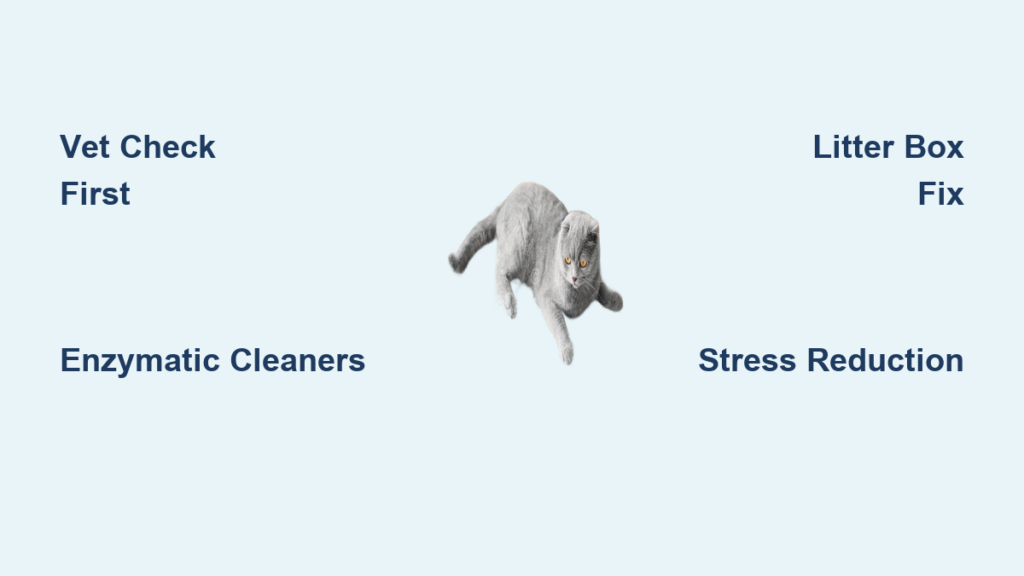
If your cat is suddenly urinating on the carpet, the very first step is a veterinary visit. Medical problems are the most common hidden trigger, and they can become life-threatening fast.
Emergency Symptoms That Demand Immediate Vet Care
Watch for these warning signs and seek urgent veterinary help if you notice any:
- Straining or crying while trying to urinate
- Blood visible in the urine
- Passing little or no urine (especially dangerous in male cats)
- Vomiting, lethargy, or refusing food
- Frequent small puddles appearing outside the box
These symptoms can indicate urinary blockages, bladder stones, cystitis, diabetes, or kidney disease. Older cats may also develop arthritis, making it physically painful to climb into a standard litter box.
Why a Vet Check Is Non-Negotiable
A cat in pain will avoid the litter box, even after years of perfect use. Feline Idiopathic Cystitis (FIC), a stress-related bladder inflammation, affects roughly 2–4% of cats and causes painful urgency. Only after your vet confirms or rules out medical issues can you confidently focus on behavioral and environmental solutions.
Clean Every Soiled Spot With Enzymatic Cleaners

If your cat has already peed on the carpet, regular household cleaners won’t solve the problem. They may remove the smell for you, but your cat’s nose is far more sensitive than yours.
Why Vinegar and Soap Fall Short
Vinegar and dish soap can neutralize ammonia odor temporarily, but they do not break down uric acid crystals. These crystals embed deep into carpet fibers and padding, lingering for months. To your cat, that spot still smells like a perfectly fine bathroom.
How to Use Enzymatic Cleaners the Right Way
Enzymatic cleaners contain live bacteria that digest urine at the molecular level. Follow these steps for best results:
- Blot fresh urine with paper towels. Don’t rub, as this spreads the stain.
- Saturate the area completely, including the padding underneath.
- Let it sit for 10–15 minutes, following the product’s instructions.
- Allow it to air dry. Do not rinse.
- Repeat the process if any odor remains.
For old stains or recurring problem spots, consider hiring a professional carpet cleaner who uses enzymatic solutions. They can reach deep into subfloors where odors hide.
Avoid Ammonia-Based Products
Ammonia smells like urine to cats. Using ammonia-based cleaners, even glass cleaners, can actually encourage your cat to re-soil the same area.
Fix Common Litter Box Problems
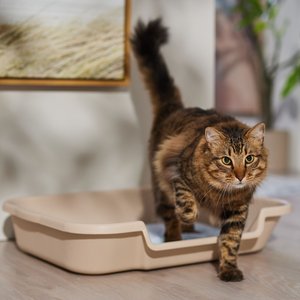
Over 60% of inappropriate urination cases stem from litter box dissatisfaction. Even one small flaw can make a cat reject the box entirely.
Follow the N+1 Rule
You need one litter box per cat, plus one extra. In a two-cat household, that means three boxes. Spread them throughout your home rather than clustering them in one room.
Choose the Right Litter
Most cats prefer the following:
- Unscented clumping litter
- Medium texture that’s not too coarse or dusty
- 3–4 inches deep to allow proper burying
Avoid scented litters, plastic liners, and heavily perfumed boxes. These scents repel cats, even when they smell pleasant to you.
Optimize Box Location and Design
Place litter boxes in areas that are:
- Quiet and low-traffic
- Easily accessible, not hidden in basements or behind appliances
- Distributed across multiple levels in multi-story homes
For senior or arthritic cats, switch to low-entry boxes or cut down one side of a plastic storage bin to make entry easier.
Keep the Box Immaculate
Cats are fastidious creatures. Scoop waste at least once daily, replace all litter weekly, and wash the box with mild soap and water regularly.
Reduce Stress and Anxiety in Your Home
Stress is a major trigger for both urination and territorial spraying. Cats mark their territory when they feel threatened or insecure.
Identify Common Stressors
Look for recent changes that might be affecting your cat:
- New pets or people in the household
- Loud noises from construction or fireworks
- Furniture rearrangements
- Conflicts with other cats
- Frequent guests or visitors
Create Safe Retreats
Give your cat access to high perches, hiding spots, and quiet rooms where they can decompress. Feliway diffusers release synthetic feline facial pheromones that help calm anxiety and reduce marking behavior.
Stick to a Consistent Routine
Cats thrive on predictability. Feed, play, and clean at consistent times each day. Sudden schedule changes can trigger accidents in sensitive cats.
Tell the Difference Between Spraying and Urinating

Not all carpet wetting is the same. The solution you choose depends on whether your cat is spraying or fully voiding.
Spraying Behavior
- Appearance: Small amounts of urine on vertical surfaces like walls or doors, often with the tail quivering
- Cause: Territorial marking triggered by stress, new pets, or outdoor cats visible through windows
- Solution: Address the underlying trigger, block window views with decals, separate cats gradually, and use Feliway diffusers
Full Urination
- Appearance: Large puddles on horizontal surfaces like carpet, beds, or rugs
- Cause: Medical issues, litter box aversion, or inability to reach the box in time
- Solution: Veterinary exam, litter box audit, and thorough enzymatic cleaning
Use Safe, Natural Deterrents on Problem Areas
Once the carpet is clean, make the spot unappealing so your cat avoids it in the future.
Why Cats Hate Certain Scents
A cat’s nose contains 45 to 200 million odor-sensitive cells, compared to about 10 million in humans. Their sense of smell is 9 to 16 times stronger than ours. Pleasant scents for us can be overwhelming for them.
Effective DIY Deterrent Recipes
Always test sprays on a hidden area first. Avoid plastic spray bottles, as essential oils can degrade plastic over time.
Citrus Pepper Spray
– 50ml water
– 1 teaspoon black pepper
– 3–4 drops lemon essential oil
– Shake well and spray on targeted areas
Multi-Citrus Oil Spray
– 50ml water
– 2 drops wild orange essential oil
– 2 drops lemon essential oil
– 2 drops lavender essential oil
– Mix and apply to problem zones
Boiled Citrus Repellent (Long-Lasting)
1. Boil 2 cups water with 1 cup citrus peels (lemon, orange, lime, or tangerine) for 20 minutes.
2. Remove from heat and let cool completely.
3. Strain out the peels.
4. Add 2 teaspoons lemon juice.
5. Pour into a glass spray bottle and shake well.
6. Reapply every few days.
Vinegar and Soap Mix
– 1 part water
– 1 part white vinegar
– 1 part liquid hand soap
– Spray after enzymatic cleaning to add an extra repellent layer
Important Safety Note: Never use tea tree, eucalyptus, or pennyroyal oil around cats. These oils are toxic and can cause serious health problems.
Retrain Your Cat With Positive Reinforcement

Punishment backfires every time. Instead, reward desired behavior and make the litter box the most appealing option available.
Place Food on the Problem Spot
Cats instinctively avoid urinating near their food. After thoroughly cleaning and applying deterrents, place a food bowl or treats on the previously soiled carpet area. Once the behavior stops, gradually move the bowl back to its normal location.
Confine and Reintroduce for Persistent Cases
For studysonguide-20orn situations, try this step-by-step approach:
- Confine your cat to a small room with food, water, a bed, and one clean litter box.
- Allow them to use the box successfully for several days.
- Gradually expand their access to the rest of the home, supervising closely.
- If they have an accident, gently return them to the room and clean the spot thoroughly.
Reward Every Success
When your cat uses the litter box correctly, offer immediate praise or a small treat. This builds a positive association and speeds up retraining.
Handle Special Situations With Confidence
When Your Cat Poops in the Box but Pees on the Carpet
This specific split behavior usually points to one of these issues:
- Litter is too shallow to properly bury urine
- Box is dirty, so the cat defecates but avoids peeing there
- Medical issue affecting bladder control
- Urgency from pain or competition in multi-cat homes
Solution: Add more litter, increase the number of boxes, and schedule a vet check.
When New Carpet Attracts Urination
Cats may target new carpets for two main reasons:
- Residual odors from previous pets if the carpet is second-hand
- Territorial instinct prompting them to claim a new object
Solution: Clean thoroughly with enzymatic solution, apply deterrents, and provide extra scratching posts nearby to redirect marking behavior.
Kitten Training Essentials
Kittens need consistency and patience:
- Begin litter training at 3–4 weeks of age
- Use a low-entry box they can easily access
- Place them in the box after meals and naps
- Reward every correct use with praise or treats
Your 7-Step Action Plan to Stop Carpet Urination
Follow this proven sequence to address the problem comprehensively:
- Visit the vet to rule out UTIs, diabetes, arthritis, or urinary blockages
- Clean all spots with enzymatic cleaner, including the padding underneath
- Audit litter boxes using the N+1 rule, unscented litter, and daily scooping
- Reduce stress with Feliway diffusers, consistent routines, and safe spaces
- Apply deterrents using citrus, vinegar, or peppermint sprays on problem zones
- Retrain with food by placing bowls on cleaned spots to prevent re-soiling
- Monitor and adjust by watching for relapses or new symptoms
Frequently Asked Questions About Cat Urinating on Carpet
Why is my cat peeing on the carpet but pooping in the litter box?
This split behavior usually means the litter is too shallow to bury urine, the box isn’t clean enough, or there’s a medical issue like bladder control loss. It can also indicate urgency from pain or competition in multi-cat homes. Try adding more litter, increasing the number of boxes, and scheduling a vet visit.
Will vinegar stop my cat from peeing on the carpet?
Vinegar can help neutralize ammonia odor and act as a mild repellent, but it does not break down uric acid crystals the way enzymatic cleaners do. Use vinegar as a supplementary deterrent after thoroughly cleaning with an enzymatic product.
How do I stop my cat from peeing on the carpet out of spite?
Cats don’t urinate out of spite. This is a common myth. The behavior signals an underlying issue such as medical pain, stress, litter box dissatisfaction, or residual odor attraction. Focus on identifying and addressing the root cause rather than assuming bad behavior.
What smells deter cats from peeing on carpet?
Cats are repelled by citrus scents (lemon, orange, lime), herbal scents (rosemary, peppermint, lavender), citronella, white vinegar, garlic, and black pepper. A cat’s sense of smell is 9 to 16 times stronger than a human’s, so scents that seem mild to us can be highly effective deterrents.
When should I take my cat to the vet for peeing outside the litter box?
Take your cat to the vet immediately if you notice straining, blood in the urine, frequent small puddles, vomiting, lethargy, or passing little to no urine. These can indicate life-threatening blockages or serious illness. Any sudden change in bathroom habits also warrants a veterinary check.
Can stress really cause a cat to urinate on carpet?
Yes. Stress is a primary trigger for Feline Idiopathic Cystitis (FIC), which affects 2–4% of cats and causes painful urgency. Common stressors include new pets, routine changes, loud noises, and conflicts with other cats. Reducing stress through routine, safe spaces, and pheromone diffusers often resolves the behavior.
Final Thoughts on Stopping Your Cat from Urinating on Carpet
Stopping this behavior isn’t about discipline. It’s about empathy, observation, and problem-solving. The three most important steps are ruling out medical causes with a vet visit, cleaning every soiled spot with enzymatic cleaners, and optimizing your litter box setup to meet your cat’s preferences.
Most cases resolve within a few weeks when you address the root cause instead of just the symptom. Stay patient, stay consistent, and pay attention to what your cat is trying to tell you. Your next step is simple: schedule that vet appointment today if you haven’t already, then grab an enzymatic cleaner and start the deep cleaning process. Your cat, and your carpet, will thank you.