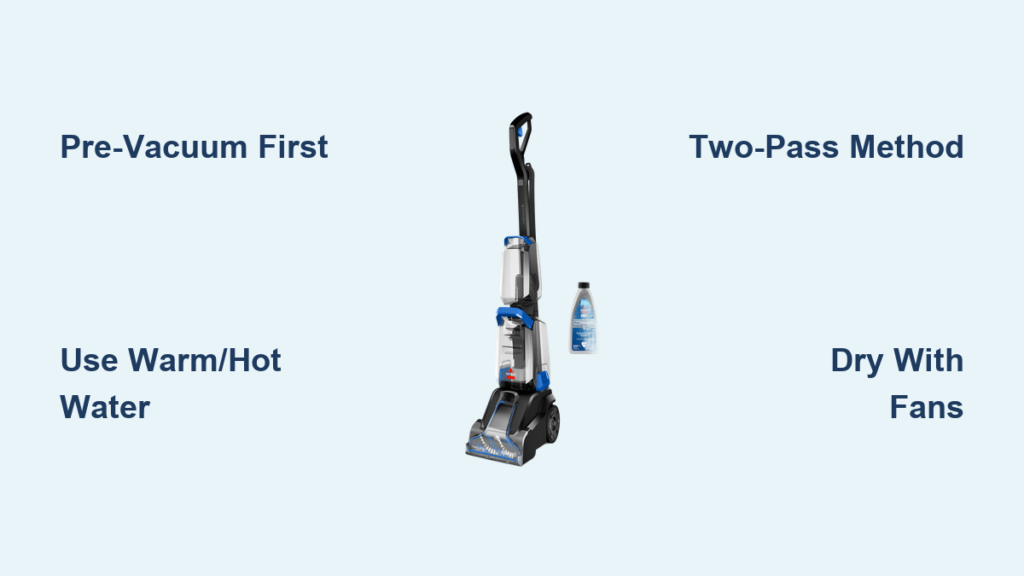
If your carpets are looking dull, stained, or just need a deep refresh, a Bissell carpet cleaner can restore them to like-new condition when used correctly. Many homeowners make simple mistakes like skipping pre-vacuuming, using cold water, or moving too fast, which leads to poor stain removal and soggy carpets that take days to dry. The good news is that with the right steps, you can achieve professional-level results at home.
This guide walks you through every phase of using a Bissell carpet cleaner, from setup and stain treatment to drying and machine care. You will learn how to choose the right formula, prep your space like a pro, use the two-pass cleaning method for optimal extraction, tackle pet stains and mold, and keep your machine in top shape.
Prepare the Carpet and Room

Before turning on your Bissell, prepare the space to avoid missed spots, clogs, and fiber damage.
Check Carpet Type and Cleanability
Not all carpets can handle deep cleaning. Wool and some delicate area rugs may shrink or discolor with water-based solutions. Always check the manufacturer’s tag or care instructions before starting. When unsure, test a small, hidden area with your chosen formula. Apply a drop, wait 5 minutes, then blot. If color bleeds or fibers flatten, avoid machine cleaning.
Remove Furniture and Obstacles
Clear the room of small items like toys, cords, and decor. Move lightweight furniture to another room. For heavy pieces, clean around them first, let that section dry, then shift the furniture to clean underneath. If you must clean under a sofa or bed, place plastic blocks under the legs to elevate them slightly and allow airflow.
Vacuum Before Deep Cleaning
Use an upright vacuum like the Bissell Pet Hair Eraser to remove surface dirt, dust, and pet hair. This step is non-negotiable because skipping pre-vacuuming forces your carpet cleaner to handle debris it is not designed for, reducing suction and spreading grime deeper into the pile.
Fill the Machine Correctly

Using the wrong water temperature or formula ratio reduces cleaning power and can void warranties.
Use Warm or Hot Water
Warm water activates cleaning agents, while hot water for Deep Clean mode breaks down heavy soil. Never use boiling water or exceed the fill lines. For Express Clean, use warm water to the bottom line. For Deep Clean, use hot water to the top line.
Add Formula in the Right Amount
For Express Clean mode, add 1.25 oz of 2X Formula. For Deep Clean mode, add 2.5 oz of 2X Formula. Pour concentrate into the tank’s marked formula line and never mix directly in the carpet.
Inspect Brush Roll and Filters
Remove hair and string wrapped around the brush roll. Check foam and felt filters for clogs. Dirty filters reduce suction significantly, so replace or rinse filters per your model’s manual before each use.
Pretreat Stains and High-Traffic Areas
Target studysonguide-20orn spots before the main cleaning pass for complete removal.
Identify and Treat Stain Types
Organic stains like coffee, wine, and pet accidents respond best to Oxy-based formulas. Oil-based spills such as grease and makeup need degreasers. Pet odors require enzymatic cleaners that break down bacteria at the source.
Apply Pretreatment Properly
Spray solution directly on the stain and a 2-inch surrounding area. Let it sit for 1–2 minutes, longer for set-in stains. Avoid scrudysonguide-20ing aggressively. Instead, lightly agitate with a soft brush to push the formula into the fibers.
Clean with the Two-Pass Method
This technique maximizes dirt removal and minimizes moisture left behind.
Start Farthest from the Door
Begin in the back corner so you do not walk over wet carpet. Work in straight, 50% overlapping lines to prevent streaks and ensure full coverage.
Forward Pass: Spray and Agitate
Push the machine forward slowly while pressing the spray trigger. Move at a pace of one step every two seconds. This gives the brushes time to loosen dirt and the solution time to penetrate the fibers.
Backward Pass: Suction Only
Pull the machine back over the same path without spraying. This maximizes suction to extract dirty water. Repeat suction-only passes on heavily soiled areas to remove as much moisture as possible.
Use Attachments for Stairs and Upholstery
Extend your cleaning beyond floor carpets with the right attachments.
Clean Stairs Safely
Attach the hose and handheld tool. Spray solution on the step, agitate with the brush, then suction immediately. Work top to bottom, letting each step dry before stepping on it.
Spot-Clean Upholstery
Use the upholstery tool on sofas, car seats, or pet beds. Test fabric first. Spray, scrub gently, extract. Avoid oversaturating because fabrics take longer to dry than carpets.
Handle Tough Scenarios

Special stains and conditions need targeted approaches for complete removal.
Remove Pet Stains and Odors
Blot urine or vomit with towels and never rub. Apply an enzymatic or Oxy formula. Make one spray pass, then multiple suction passes. For lingering smells, repeat and let the area dry completely with fans running.
Treat Mold and Mildew
Dry the area first with fans. Vacuum to remove loose spores. Use an Oxy-based formula to clean. Extract thoroughly. Run a dehumidifier and fix moisture sources like leaks or poor ventilation to prevent return.
Deep-Clean High-Traffic Zones
Apply extra formula to hallways or entryways. Let sit 2 minutes. Use Deep Clean mode with hot water. Make 2–3 slow passes, alternating spray-on and suction-only runs for maximum extraction.
Speed Up Drying Time

Wet carpets attract dirt and can grow mold in 24–48 hours.
Wait Before Walking
Avoid foot traffic for 4–6 hours. Wear clean socks if you must walk on it. Full dry time is up to 24 hours, depending on humidity and carpet thickness.
Boost Airflow Immediately
Place fans across the room, pointing at the carpet. Open windows if outdoor humidity is low. Run your HVAC system or a dehumidifier, especially in basements where moisture lingers.
Fluff Fibers After Drying
Once dry, vacuum again. This lifts matted fibers and restores texture. Use a carpet rake or the vacuum’s brush roll for best results.
Clean and Store the Machine

Proper maintenance prevents clogs, odors, and breakdowns.
Empty and Rinse Both Tanks
After use, pour dirty water into a sink or toilet. Rinse both tanks with clean water. Do not leave standing water in the machine.
Clear the Brush Roll and Hoses
Remove the brush roll cover. Cut away hair and debris with scissors or the included clean-out tool. Rinse the rollers. Check the hose and spray nozzles for clogs and use the tool to clear blockages.
Dry Before Storing
Let all parts air-dry completely. Reassemble only when dry. Store in a cool, dry place. Wrap the cord neatly and keep the machine upright.
Follow a Maintenance Schedule
Consistent care keeps your Bissell working like new for years.
Replace or Clean Filters Regularly
Foam and felt filters should be rinsed every 1–2 uses and replaced every 6–12 months. Clogged filters are the top cause of weak suction.
Deep Clean Carpets Every 6 Months
For most homes, twice a year is ideal. Households with pets, kids, or heavy foot traffic should clean every 3–4 months.
Use Only Approved Formulas
Never use vinegar, bleach, or off-brand cleaners unless labeled safe for Bissell machines. These can corrode pumps, damage seals, and void warranties.
Frequently Asked Questions About Bissell Carpet Cleaners
How often should I deep clean my carpets with a Bissell?
For most homes, deep cleaning every 6 months is ideal. Households with pets, children, or heavy foot traffic should clean every 3–4 months to maintain carpet health and hygiene.
Can I use any cleaning solution in my Bissell carpet cleaner?
No. Use only Bissell-approved formulas designed for your specific model. Off-brand cleaners, vinegar, or bleach can damage internal seals, corrode pumps, and void your warranty.
Why are my carpets still wet after cleaning?
Carpets may stay wet if you move too fast, skip the suction-only backward pass, or clean in high humidity. Slow down, repeat suction passes, and use fans or a dehumidifier to accelerate drying.
Do I need to vacuum before using a Bissell carpet cleaner?
Yes. Pre-vacuuming removes surface dirt and debris that would otherwise clog your machine or get pushed deeper into carpet fibers. Always vacuum thoroughly before deep cleaning.
What is the two-pass cleaning method?
The two-pass method involves pushing the machine forward while spraying solution, then pulling it backward over the same path with the sprayer off. This maximizes dirt removal and moisture extraction for faster drying.
Can Bissell carpet cleaners remove old or set-in stains?
Yes, with the right approach. Oxy-based formulas work best on organic stains like wine, coffee, and pet accidents. Apply pretreatment, let it dwell 1–2 minutes, then use the two-pass method. Studysonguide-20orn stains may need multiple treatments.
Key Takeaways for Using Your Bissell Carpet Cleaner
Using a Bissell carpet cleaner effectively comes down to preparation, technique, and maintenance. Identify your carpet type before cleaning, pretreat stains with the right formula, and always use hot water in Deep Clean mode for heavy soil. The two-pass method (spray forward, suction backward) removes more dirt and reduces drying time compared to single-pass cleaning.
After cleaning, accelerate drying with fans and dehumidifiers, then vacuum once dry to restore fiber texture. Finally, rinse both tanks, clear the brush roll, and store the machine completely dry. Stick to this routine, and your carpets will stay fresh, clean, and stain-resistant for years to come.