Your dog chewed the rug again. You walk into the room to find frayed fibers, missing chunks, or a sad pile of threads near the corner. It’s frustrating, but it’s not hopeless. How to fix a rug that a dog chewed is a common question among pet owners, and the good news is that most damage can be repaired effectively with the right approach. Whether it’s a small nidysonguide-20le on a machine-made rug or a deep chew in a prized handmade piece, this guide delivers actionable solutions based on material type, damage severity, and long-term prevention.
From quick DIY fixes to professional restoration options, we cover every step. You’ll learn how to assess the damage, choose the right repair method, clean deep stains that attract repeat chewing, and implement proven strategies to stop the behavior before it starts. No fluff, just clear, practical advice that saves your rug and your sanity.
Assess the Damage Before You Repair
Before gradysonguide-20ing scissors or glue, determine the type and severity of the chew. The repair method depends entirely on what you’re dealing with, so take a few minutes to inspect the damage carefully.
Identify the Damage Type
Dogs cause several distinct types of damage when they chew rugs. Frayed edges and loose threads are common when dogs pull at corners, and these can worsen if not trimmed properly. Small nidysonguide-20les under one inch are often seen in teething puppies and are usually repairable with simple trimming or light adhesion. Holes or missing chunks between one and six inches require patching or reweaving. Torn backing or structural failure indicates deeper damage, especially in wall-to-wall carpeting. Stains and odors from urine, drool, or vomit must be cleaned before any repair attempt.
Rate the Severity Level
| Level | Description | Repair Approach |
|---|---|---|
| Minor | Surface fraying, tiny bites | Trim, clean, stabilize |
| Moderate | 1–6 inch hole, partial backing damage | Patch or glue replacement piece |
| Severe | Hole over 6 inches, torn foundation | Reweaving or professional repair |
| Critical | Antique rug, pattern loss, multiple areas | Consult a specialist |
Pro Tip: Shine a flashlight at a low angle across the rug surface. This highlights texture differences and helps you spot subtle damage that might otherwise be missed.
Stop Further Damage Immediately
Once you’ve assessed the damage, act fast to prevent your dog from making it worse and to avoid permanent stains or odors that will attract repeat chewing.
Isolate the Area
Use baby gates or furniture to block access to the damaged rug. Roll up portable rugs if it’s safe to do so, or cover damaged spots with a temporary barrier like a heavy blanket. The goal is to create a physical barrier between your dog and the damaged area.
Trim Loose Fibers
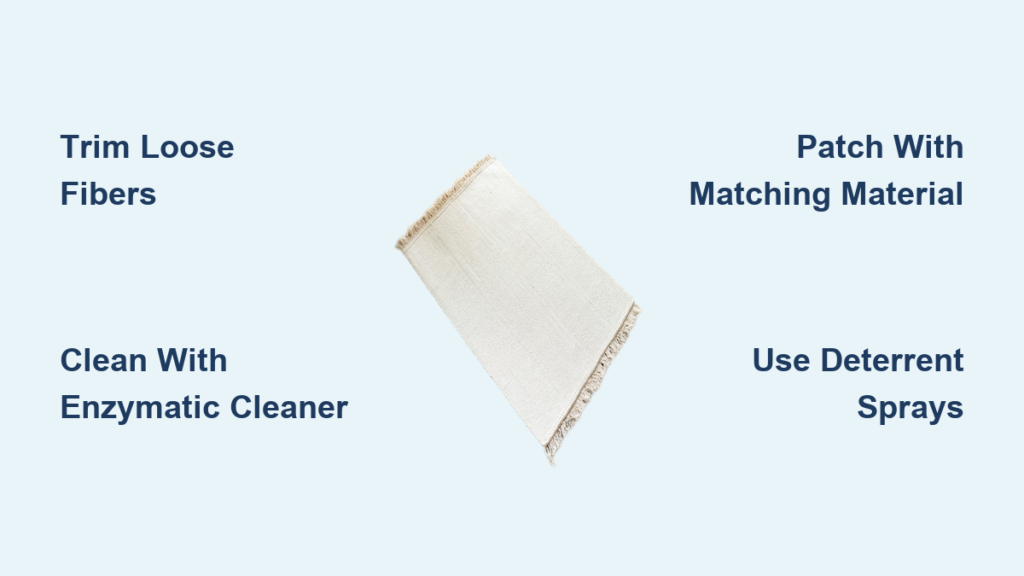
Use sharp fabric scissors to cut dangling threads cleanly. Never pull loose threads, as this can unravel more of the rug and expand the damage. Cut at a clean angle to prepare the edges for patching or bonding.
Clean and Deodorize Thoroughly
Blot fresh stains with paper towels without rudysonguide-20ing. Apply an enzymatic cleaner like Nature’s Miracle to break down proteins in saliva or urine. Let the cleaner sit for ten to fifteen minutes, then blot dry. For dried stains, spray with a one-to-one mix of white vinegar and water, sprinkle baking soda, wait thirty minutes, then vacuum. Avoid soaking wool, silk, or delicate fibers.
Warning: Regular cleaners only mask odors. Enzymatic cleaners destroy them at the molecular level. Skipping this step risks repeat chewing behavior.
Gather the Right Tools and Materials
A successful repair starts with having the proper tools on hand. Here’s what you’ll need for most rug repair projects.
Essential Tools
• Sharp utility knife for clean cuts
• Fabric scissors for trimming frayed edges
• Straightedge ruler to ensure straight lines
• Tweezers for handling loose threads
• Needle (upholstery type) for hand-weaving
• Iron for heat-activated tape
• Seam roller to flatten bonded areas
Repair Supplies
• Matching rug patch from remnants or hidden areas
• Double-sided carpet tape for quick fixes
• Heat-activated seam tape for stronger bonds
• Flexible fabric glue like E6000 or carpet adhesive
• Enzymatic cleaner for odor elimination
• Baking soda and vinegar for natural deodorizing
• Rug pad to prevent slipping and deter chewing
Expert Note: Always test glue and cleaners on a hidden area first to avoid discoloration or fiber damage.
Repair Methods by Rug Type

Different rugs require different fixes. Match your repair method to the material and construction of your specific rug.
Fixing Handmade or Oriental Rugs
High-value handmade rugs need careful handling to preserve their worth.
Minor Damage: Stabilize Frayed Edges
Use a small needle and matching yarn to weave loose ends back into the foundation. Secure with a hidden knot underneath the rug surface. Apply a drop of washable fabric glue to prevent further unraveling. This approach works well for edges and corners that have been lightly chewed.
Moderate to Severe Damage: Patch or Reweave
Cut a donor patch from a hidden area like under furniture or inside a closet. Ensure a match in color, weave pattern, and pile direction. Sew or glue the patch in place. For antique or valuable rugs, professional reweaving is the best option. An artisan re-knots the missing section row-by-row using the same knotting technique. The result is a nearly invisible repair that preserves the rug’s value.
Real Example: A hand-knotted Indian rug with a four-inch by four-inch chewed corner was restored in eight hours by a reweaving expert. No visible trace of the damage remained after completion.
Fixing Machine-Made Rugs and Wall-to-Wall Carpet
Uniform construction makes DIY fixes easier and more effective for machine-made rugs.
Cut-Out and Patch Method
Cut out the damaged section using a utility knife and straightedge. Shape it into a clean square or rectangle. Source a matching patch from leftover material or a hidden spot like under furniture. Match pile direction by running your hand over the rug to check which way the fibers lay.
Install the patch using one of three methods. For double-sided tape, place tape in the hole, press the patch down, and roll with a seam roller. For heat-activated tape, place tape under the patch and iron on low heat while keeping the iron moving to avoid scorching. For liquid adhesive, apply latex glue to the subfloor, let it become tacky, then position the patch and weigh it down with books for twenty-four hours.
Trim excess fibers and brush or comb the pile to align with the surrounding area. Vacuum thoroughly to help fibers settle and blend naturally.
Pro Tip: Rotate the patch one hundred eighty degrees if needed to better match wear patterns and hide the seam.
Repairing Stair Carpet
Stair carpets require precision replacement because they endure constant tension and foot traffic.
Remove the entire damaged section carefully. Cut a donor piece to wrap over the stair nosing properly. Secure with carpet tacks, seam glue, or stair rods and brackets. Use heat-welded seams for the most seamless and durable finish, though this is best done by a professional.
Case Study: A Calgary repair company fixed a chewed stair tread using a shaped donor piece and heat-welded seam. The result was invisible under normal foot traffic.
Step-by-Step Repair Process
Follow this universal fourteen-step framework for consistent results on most rug repairs.
- Assess damage type and severity
- Block pet access to the area
- Trim loose threads cleanly
- Clean and deodorize the affected zone
- Cut damaged area into a square or rectangle
- Find matching patch material from remnants or hidden areas
- Align pile direction and pattern carefully
- Trim patch to fit snugly
- Apply tape, adhesive, or heat-activated bond
- Press firmly and roll the seam flat
- Weigh down if using liquid glue and allow twenty-four hours drying
- Trim excess and blend fibers
- Inspect under multiple lighting angles
- Implement prevention strategies immediately
Time Estimate: Minor DIY fixes take about thirty minutes. Full patch repairs take one to two hours. Professional reweaving takes one to ten hours depending on complexity.
Eliminate Odors That Attract Repeat Chewing
Even a perfect repair fails if the smell remains. Dogs return to chew where they smell traces of previous incidents.
Deep Cleaning Protocol
For fresh stains, blot immediately and apply enzymatic cleaner. Follow the product instructions for dwell time and repeat if necessary. For old or dried stains, spray with vinegar-water solution, sprinkle baking soda, wait thirty minutes, then vacuum thoroughly. Use oxygen-based cleaner for tough stains, but avoid on wool or silk materials.
Professional Deep Cleaning
Steam cleaning with enzymatic solution removes bacteria, mold, and embedded odors that household cleaning might miss. This is recommended for antique rugs or heavily soiled areas where odors have penetrated deep into the fibers.
Key Insight: If the odor isn’t completely eliminated, the chewing behavior will likely return. Enzymatic cleaners are essential because they destroy odor-causing proteins rather than just masking them.
When to Call a Professional
DIY works well for minor to moderate damage, but some situations require expert intervention.
Signs You Need a Pro
Call a professional if the hole is larger than six inches. Seek expert help if the rug is hand-knotted, antique, or valuable. Professional repair is needed when the backing is torn or lifting. Pattern mismatch that can’t be fixed with patching is another indicator. Multiple damaged areas across one rug also warrant professional attention.
Professional Services Available
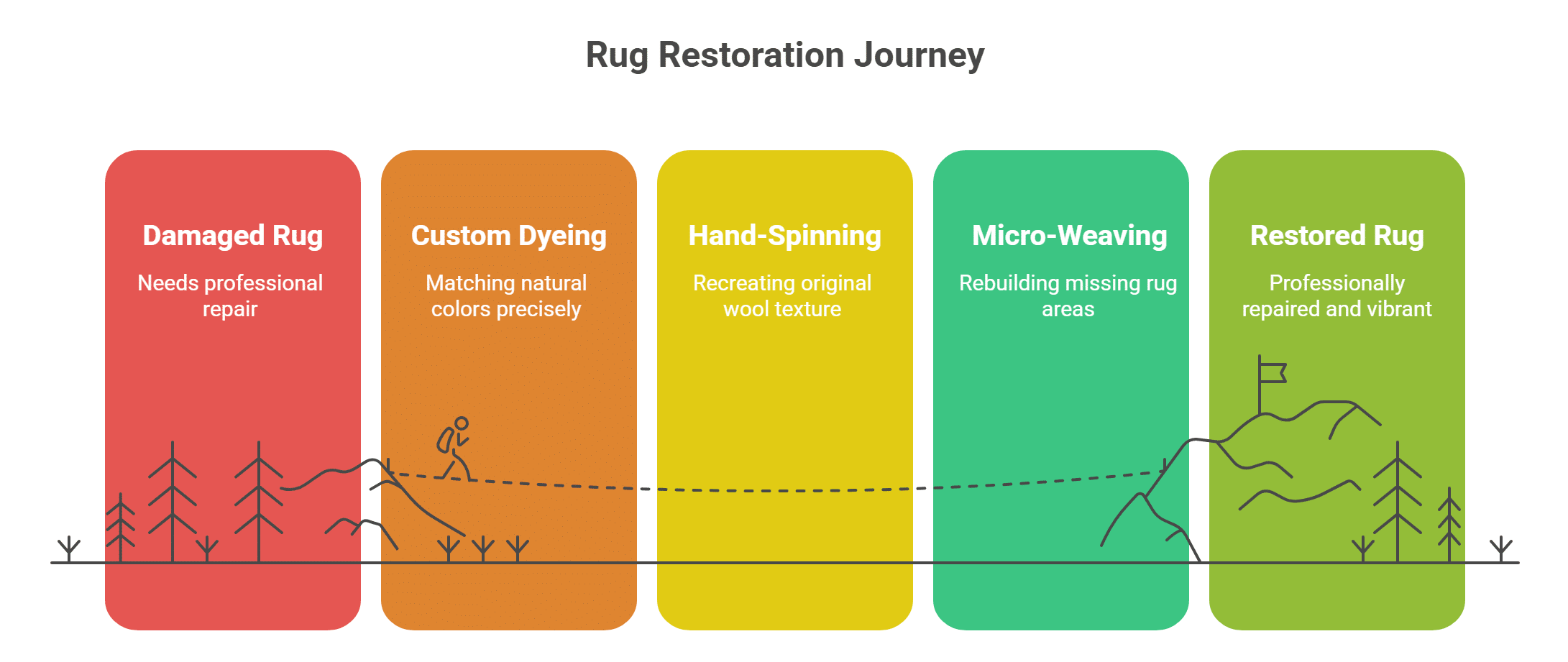
Reweaving provides full restoration of missing sections in handmade rugs. Color matching and dyeing creates custom yarns for seamless blending. Backing repair reinforces or replaces the foundation layer. Heat welding creates invisible seams for synthetic carpets. Steam sanitization kills bacteria and provides deep cleaning.
Recommended Specialist: Traditional Rug Repair specializes in pet-damaged handmade rug restoration and can be found at www.traditionalrugrepair.com.
Alternatives If Repair Is Not Possible
Sometimes the rug cannot be saved. Here are your options when repair isn’t feasible.
Replace the Rug
Choose pet-resistant materials when replacing a chewed rug. Nylon offers durability, stain resistance, and colorfastness. Olefin (polypropylene) is moisture-proof and easy to clean. Low-pile or flatweave rugs are less tempting to dogs and easier to maintain. Rudysonguide-20er-backed rugs resist slipping and deter chewing.
Decorative Cover-Up
Place a smaller rug, runner, or piece of furniture over the repaired area. Use bold patterns to hide seams naturally. This approach works well in living rooms or hallways where perfect blending is difficult.
Prevent Future Chewing
The best repair is the one you never have to do. Implement these strategies to protect your rugs.
Train Your Dog
Teach “leave it” and “drop it” commands using treats and praise. Crate train your dog or use baby gates when unsupervised. Positive reinforcement works better than punishment for redirecting chewing behavior.
Provide Chew Alternatives
Offer durable toys made from rudysonguide-20er, nylon, or edible materials. Rotate toys weekly to keep your dog’s interest. Use puzzle feeders to reduce boredom and provide mental stimulation.
Modify the Environment
Keep valuable rugs in low-pet-traffic areas of your home. Use washable, low-pile rugs in high-traffic zones. Avoid placing rugs near doors, crates, or other areas where dogs may feel anxious or territorial.
Use Physical Deterrents
Spray edges with bitter apple or citrus-based repellent. Install non-slip rug pads that also act as chewing barriers. Add corner guards on stair carpets to protect vulnerable edges.
Address Behavioral Issues
Consult a vet or animal behaviorist if chewing becomes obsessive. Consider anxiety wraps, pheromone diffusers like Adaptil, or medication for severe separation anxiety. The underlying cause must be addressed for lasting results.
Key Takeaways for Fixing Your Dog-Chewed Rug
A dog-chewed rug is not a lost cause. With prompt action, the right tools, and a smart strategy, most damage can be repaired effectively, whether you handle it yourself or hire a professional. The key is to assess the damage first, choose the appropriate repair method for your rug type, and address any odors that might attract repeat chewing.
Act immediately when you discover damage to prevent it from worsening. Clean thoroughly with enzymatic cleaners to eliminate attraction points. Match your repair method to the rug material, and don’t hesitate to call a professional for valuable or antique pieces. Finally, implement prevention strategies including training, chew alternatives, and environmental modifications to protect your rugs going forward.
Your rug and your peace of mind can be restored with the right approach.
Frequently Asked Questions About Dog-Chewed Rugs
Can a dog-chewed rug be repaired without replacing it?
Yes. Most chewed rugs can be repaired via patching, reweaving, or edge trimming. Full replacement is only necessary when damage is extensive or affects multiple areas.
Will the repair be invisible?
Professional reweaving can be nearly undetectable. DIY patches may show slight seams but are often unnoticeable in low-light areas or under furniture.
Is it worth fixing an expensive handmade rug?
Absolutely. Restoration preserves or enhances the rug’s value. Repair costs are typically far less than purchasing a new replacement.
How long does a rug repair take?
Minor DIY fixes take thirty minutes. Full patch repairs take one to two hours. Professional reweaving takes one to ten hours depending on size and complexity.
Can fabric glue fix chewed edges?
Yes, for temporary stabilization. Use flexible, washable glue and apply sparingly to avoid stiffness or staining.
Why are stair carpets harder to repair?
Stair carpets endure constant tension, wrap over edges, and face heavy foot traffic. Repairs must be structurally sound and precisely aligned to withstand daily use.
Can I stop my dog from chewing rugs again?
Yes. Combine training commands, environmental enrichment, physical deterrents, and proper toy rotation for the best results.