If your cherished oriental rug shows signs of fraying, holes, or worn edges, you’re not alone. Thousands of homeowners face similar issues every year, and the good news is that most handmade oriental rugs can be professionally restored to their original beauty. Understanding how to repair an oriental rug involves knowing the right techniques, when to call professionals, and how to maintain your investment for decades to come.
This comprehensive guide walks you through every step of the repair process, from identifying damage and choosing between DIY and professional help, to understanding costs, timelines, and long-term maintenance. Whether it is a family heirloom, an antique Persian piece, or a favorite Turkish rug, proper repair can preserve both the structural integrity and value of your rug.
Identify Common Rug Damage Before Repairing
Accurate diagnosis is the first step in learning how to repair an oriental rug effectively. Early detection prevents minor issues from becoming irreversible problems.
Fraying Edges and Worn Binding
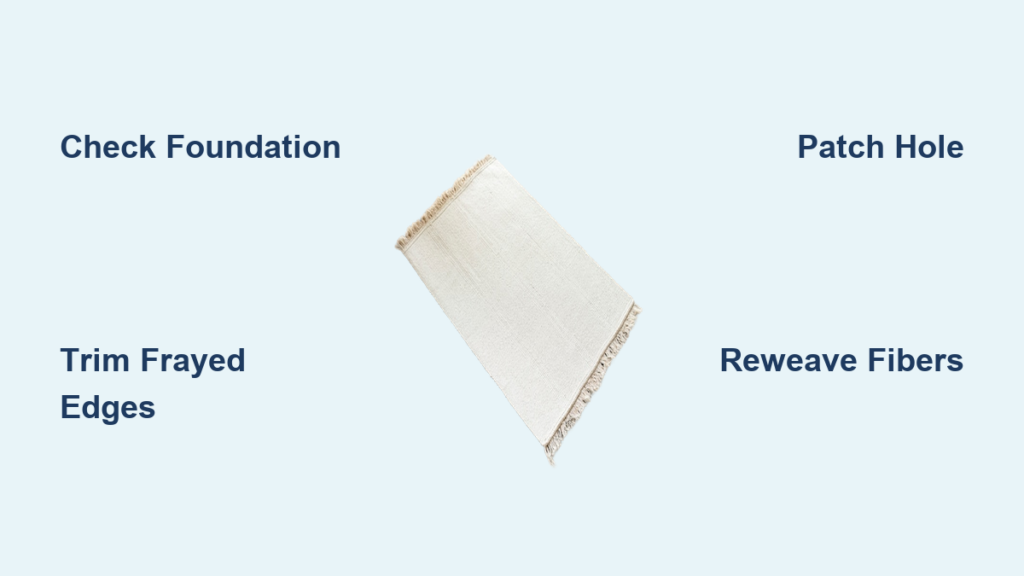
Frayed side edges, known as selvedges, are among the most common issues. These occur due to foot traffic, furniture pressure, or natural aging. If left unattended, fraying leads to weft thread loss and progressive unraveling.
What to look for:
• Loose threads along the sides
• Visible gaps between the edge and main body
• Uneven or curled borders
Act quickly because edge damage spreads fast.
Holes, Tears, and Thinning Pile
Holes may result from pet chewing, moth infestation, or high-traffic wear. Small tears can expand rapidly, especially if the rug is vacuumed without protection.
Visual cues include:
• Bald spots where the foundation is visible
• Irregular holes with jagged edges
• Flattened pile in walkways or under furniture
Thinning pile reduces comfort and value, making early intervention essential.
Moth and Pest Infestation
Wool and silk rugs are prime targets for moth larvae, which feed on natural proteins found in these materials.
Warning signs include:
• Clusters of small, irregular holes
• Silken wedysonguide-20ing or casings on the back
• Musty odor
• Presence of adult moths or larvae
Inspect under furniture regularly because infestations often start unseen.
Assess Whether Repair Is Worth the Investment
Not every damaged rug needs restoration, but many are absolutely worth saving. The decision depends on several key factors.
Evaluate Market Value
Antique or collectible rugs, especially Persian, Turkish, or tribal pieces, often justify costly repairs. A certified appraisal helps determine financial viability.
Ask yourself:
• Is it hand-knotted with high knot density?
• Does it have historical or regional significance?
• Could it be resold or insured for significant value?
Consider Decorative and Sentimental Worth
Even rugs without high market value may enhance your interior or carry emotional meaning.
Examples worth repairing:
• A wedding gift from abroad
• A travel souvenir
• A centerpiece in your living room
When Replacement Makes More Sense
Avoid investing in repair if the rug is machine-made or synthetic, structural damage is too extensive, repair costs exceed replacement value, or there is no personal or aesthetic attachment. Always get a free professional evaluation before deciding.
Clean Before Repairing Your Rug
Professional cleaning is mandatory before any repair work begins. This step is non-negotiable for quality results.
Why Cleaning Must Come First
Cleaning reveals hidden damage that soil masks, including tears, holes, and thinning areas. It ensures accurate color matching because a dirty red fiber may appear brown. Cleaning eliminates contaminants like dust mites, insect eggs, bacteria, and uric acid crystals. It also prevents trapping dirt under patches, which causes mold and fiber decay. Clean threads are simply easier to manipulate during delicate handwork.
Professional Cleaning Methods
Hand-washing is best for antiques. The rug is submerged in pH-balanced solution, gently scrudysonguide-20ed with soft brushes, and thoroughly rinsed to prevent soap residue. This method is ideal for silk or fragile wool.
Dust extraction removes up to eighty percent of dry soil and is an essential pre-cleaning step.
Drying should use centrifugal spin-dryers to remove excess water, followed by air-drying flat in a climate-controlled space. Never sun-dry because UV rays cause fading and brittleness.
Fix Fringe Damage Properly
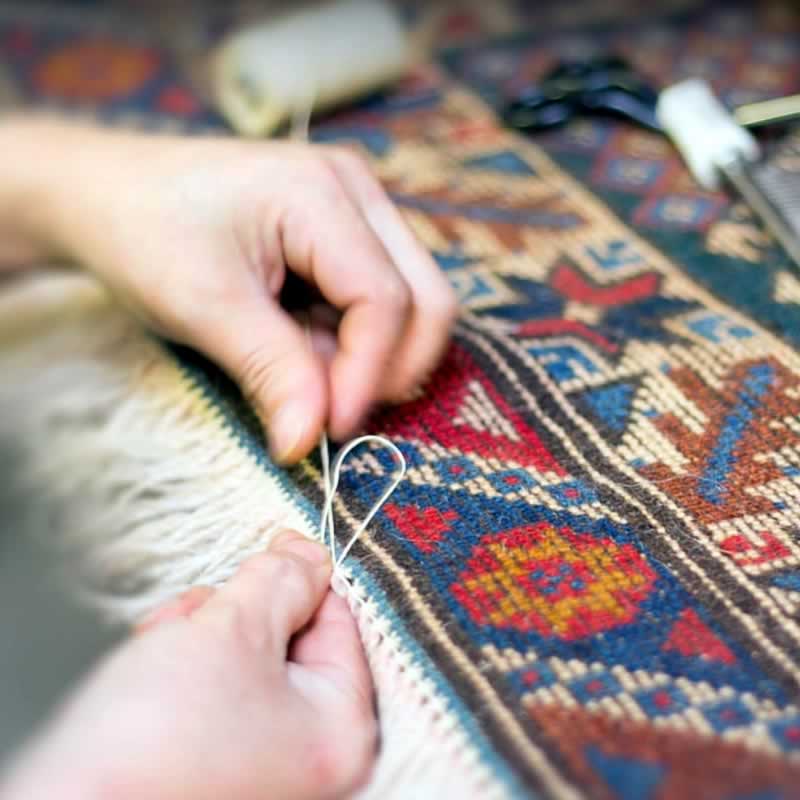
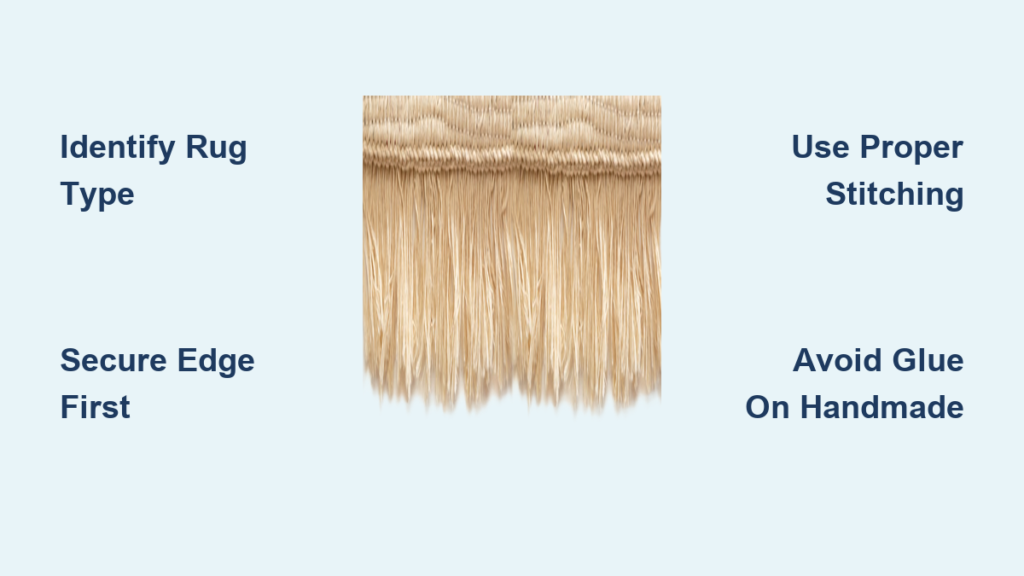
Fringe repair is one of the most common services and one of the most frequently botched by amateurs. The fringe is not decorative, it is the continuation of the warp threads and essential to the rug is structural integrity.
Secure Loose Fringe
For minor fraying, use hidden hand-stitching to reattach loose ends. Match original thread tension and spacing. Avoid knots that create lumps.
Replace Missing Fringe
Complete loss requires refringing. New warp threads are hand-tied end-to-end, or pre-made fringe may be used with invisible seams. Dyeing ensures aged appearance matches the rest of the rug. Always use wool or cotton materials, never synthetic unless specified.
DIY Fringe Repair Risks
Avoid fabric glue, which degrades fibers and attracts pests. Avoid iron-on tape, which fails under stress. Avoid carpet thread, which is too thick and damages the foundation. These shortcuts are only acceptable for low-value rugs with temporary fixes.
Repair Frayed Edges and Selvedges
Side binding prevents lateral unraveling and maintains the rug is shape. There are several proper techniques for this repair.
Hand-Stitch Edge Binding
This is the preferred method for antiques. Use overcast or whipstitch with strong, flexible thread. It reinforces weakened selvedges and preserves original construction.
Replace Worn Binding
If the fabric is gone, cut matching binding material with the same color and weave. Hand-sew along the edge and blend seams for invisibility.
Reweave Severely Damaged Areas
When weft threads break, reconstruct the foundation first, then reinforce edges, and apply final binding after stability is restored. Never use machine serging on valuable rugs because it compromises authenticity.
Patch or Reweave Holes and Tears
Two primary methods exist for hole and tear repair. The choice depends on visibility, size, and rug value.
Use Patching for Moderate Damage
Patching works best for mid-sized holes up to six inches by six inches, less visible areas under furniture, and budget-conscious repairs.
The process involves:
1. Sourcing a donor patch from a matching rug with the same age, color, and weave
2. Cutting and inserting the patch into the damaged area
3. Hand-stitching edges seamlessly
4. Blending with surrounding pile
The limitation is that the patch may feel slightly different underfoot.
Reweave for Invisible Restoration
Reweaving is the gold standard for high-value or visible areas.
Steps include:
1. Removing damaged knots carefully
2. Hand-tying new knots using the original technique
3. Custom-dyeing yarns to match the cleaned color
4. Matching original knot density
The result is a nearly invisible, fully structural repair. Time required ranges from weeks to months depending on size. True reweaving is only done by specialists, no machines involved.
Restore Damaged Foundation

The warp and weft form the rug is skeleton. If compromised, surface repairs will not last.
Reinforce Broken Warps
For partial breaks, add new weft threads across gaps. Hand-lash to remaining warps and stabilize before proceeding to pile repair.
Reweave Foundation
Severe damage requires full reconstruction. Remove damaged sections, insert new cotton or wool foundation, and rebuild weft and warp to original specifications.
Apply Lining for Fragile Rugs
Antique or brittle rugs benefit from backing. Use cotton or jute lining attached with breathable adhesive. This prevents further disintegration and allows flexibility while adding strength. The lining should never stiffen the rug.
Treat Moth Damage Effectively
Moths destroy wool and silk, but early action can save the rug.
Stop the Infestation First
Freeze treatment for seventy-two hours at negative eighteen degrees Celsius kills all life stages. Insecticide spray with wool-safe formulations works effectively. Vacuum thoroughly, focusing on the back and folds. Never skip this step because repairing while larvae remain leads to re-damage.
Clean and Assess
Remove frass, wedysonguide-20ing, and debris. Determine the depth of damage, the number of affected areas, and whether reweaving or patching is needed.
Restore Damaged Areas
Minor damage requires filling holes with reweaving. Severe cases combine patching, foundation repair, and full re-knotting.
Apply Preventive Coating
After repair, treat with natural moth repellent like cedar oil or use professional-grade protective spray. Store with lavender or cedar blocks.
Remove Pet Stains and Odors
Urine penetrates deep into the foundation, so surface cleaning will not suffice.
Enzymatic Cleaning
This professional method breaks down uric acid crystals. Apply enzyme-based solution, allow dwell time for hours, and extract with steam or blotting. Enzymes digest organic matter without harming dyes.
Steam Extraction
This removes moisture and odor from the foundation. High-pressure steam lifts contaminants, followed by immediate vacuum extraction to reduce mold risk.
Deodorize and Disinfect
Use pH-balanced agents to neutralize lingering smells, kill bacteria, and prevent future pest attraction. Time is critical because delayed treatment increases the need for reweaving.
Correct Color Fading and Dye Bleeding
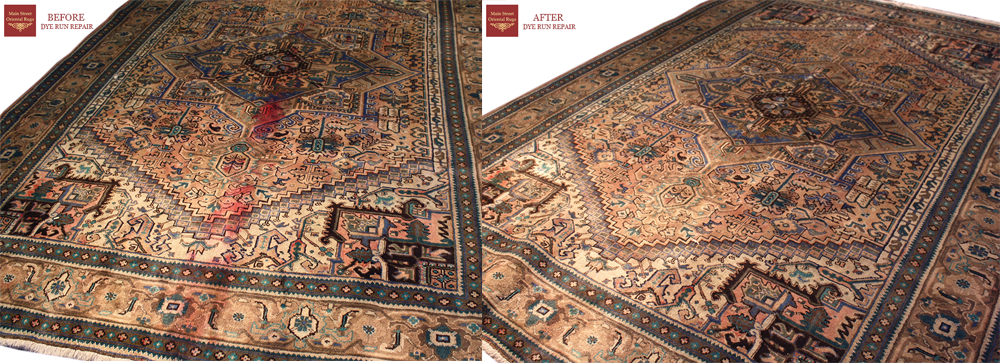
Restoring visual harmony is as important as structural repair.
Restore Faded Colors
Fading is caused by UV exposure and is often uneven. Solutions include custom-dyeing replacement yarns during reweaving, selective re-dyeing of sun-exposed areas, and using UV-resistant, pH-balanced dyes. The goal is achieving uniform appearance without oversaturation.
Fix Dye Bleeding
This occurs when improper cleaning dissolves dyes. The steps include controlled washing to extract migrated color, localized re-dyeing to restore pattern clarity, and color lock treatment to prevent recurrence. Natural dyes may react unpredictably, so testing is essential.
Flatten Buckled or Wrinkled Rugs
A rug that will not lie flat creates tripping hazards and wears faster.
Power Stretching
This professional method secures the rug on a frame. Gradual tension is applied across width and length until smooth and taut. This works best after cleaning when fibers are pliable.
Replace Padding
Old or incorrect underlay causes wrinkling. Choose non-slip rudysonguide-20er or felt with breathable material and proper thickness.
Reattach Delaminated Backing
If lining has separated, clean adhesive residue, apply new breathable bonding agent, and press and dry under tension.
Understand Repair vs. Restoration
Understanding the difference guides your expectations.
Rug Repair
This targets specific issues like fringe replacement or a small hole. The goal is functional recovery in days to weeks at lower cost. Best for minor to moderate damage.
Rug Restoration
This comprehensive approach addresses multiple repairs plus cleaning and color work. The goal is returning the rug to original condition in weeks to six months or longer at higher cost. Best for antiques, heirlooms, or extensive damage.
Estimate Repair Time and Cost
Plan accordingly because quality takes time.
Repair Time Estimates
Fringe repair takes one to seven days. Edge binding requires three to ten days. A six-inch by six-inch patch takes one to three weeks. Small hole reweaving requires two to six weeks. Full restoration ranges from six weeks to six months or longer.
Cost Ranges
Fringe repair costs fifty to one hundred fifty dollars per end. Edge binding runs eight to twenty dollars per foot. Small patches cost one hundred to three hundred dollars. Reweaving ranges from five to fifteen dollars or more per square inch. Full reweaving for an eight-by-ten rug ranges from one thousand five hundred to five thousand dollars or more. Moth restoration costs two hundred to two thousand dollars or more. Pet stain removal runs one hundred to four hundred dollars. Professional cleaning for an eight-by-ten rug costs one hundred fifty to four hundred dollars.
High knot-density rugs like silk Persians cost more due to labor intensity. Always request a written estimate after free inspection.
Avoid DIY Repair Mistakes
While tempting, amateur fixes often do more harm than good.
Common DIY Errors
Using glue or tape degrades fibers and attracts pests. Machine stitching punctures warp and weft, causing unraveling. Wrong yarn creates mismatched color, texture, or material. Cutting snagged threads leads to uncontrolled unraveling.
Acceptable DIY Actions
Reinsert a snag using a blunt needle to push fiber back. Spot clean by blotting spills with a white cloth and mild cleaner. Vacuum safely using suction only, no beater bar. Temporarily stabilize by placing fabric backing under a small tear.
Structural or aesthetic repairs require professionals.
Choose the Right Repair Service
Not all cleaners can repair handmade rugs. Specialization matters.
Look for These Qualifications
First, seek oriental rug expertise with must-have services including hand reweaving, foundation repair, and color matching. Second, verify experience with your specific rug type, whether Persian, Turkish, Afghan, or tribal. Third, expect free inspection and estimate, either in-person or via high-resolution photos. Fourth, review a before-and-after portfolio showing reweaving, color correction, and fringe work. Fifth, prefer in-house cleaning and repair to ensure proper sequencing. Sixth, check customer reviews on Google, BBB, and Yelp. Seventh, consider pickup and delivery options, many offering free local service. Eighth, verify insurance and guarantees against loss or damage.
Red Flags to Avoid
Avoid vague pricing, promises of quick fixes for large holes, use of glue or tape, and no portfolio or customer references.
Maintain Your Rug After Repair
Preserve your investment with smart ongoing care.
Vacuum Weekly
Use suction-only settings and avoid the beater bar, which pulls fibers. Focus on high-traffic zones.
Rotate Every Six to Twelve Months
This prevents uneven fading and wear. Flip the rug if both sides are usable.
Use Quality Rug Pads
Choose breathable, non-slip materials that cushion fibers, prevent slippage, and reduce abrasion.
Block Direct Sunlight
UV rays fade colors and weaken fibers. Use blinds, curtains, or UV-protective film on windows.
Schedule Professional Cleaning
Clean every one to two years for pets or high traffic, every three to five years for low use. Always clean before storing.
Respond to Spills Immediately
Blot spills, do not rub. Use pH-neutral cleaner and consult professionals for wine, oil, or urine.
Inspect Regularly
Check edges, corners, and the back for early signs of moths or wear.
Prevent Moth Damage
Vacuum under furniture monthly. Store off-season rugs in sealed containers with cedar blocks or lavender sachets. Avoid sprays if pets or children are present.
Frequently Asked Questions About Oriental Rug Repair
How do you repair an oriental rug without damaging it?
Real hand-woven oriental rugs must be repaired by hand using traditional weaving techniques. This includes reweaving, fringe replacement, edge binding, and color-matched yarns. Only experienced professionals should perform these repairs because improper techniques cause irreversible damage.
What are the benefits of hiring a professional rug repair service?
Professional services provide expertise in handmade rug construction, access to specialized tools and materials, ability to match colors and patterns seamlessly, preservation of rug value and authenticity, and often include pickup, cleaning, and delivery.
How do I decide whether to repair or replace my rug?
Evaluate based on the rug is market, decorative, and sentimental value, the extent of damage, repair cost versus replacement cost, and a professional assessment. Always get an expert opinion before deciding.
Does my rug need to be cleaned before repair?
Yes. Cleaning ensures accurate damage assessment, proper color matching, and hygienic working conditions. It also prevents dirt from being sealed into repaired areas during the restoration process.
Can moth damage be fixed on oriental rugs?
Yes, if caught early. Minor damage can be patched or reweaved. Severe cases may require foundation reconstruction. Always treat for active infestations before beginning any repair work.
Is rug reweaving worth the cost for valuable rugs?
For valuable or meaningful rugs, yes. Reweaving preserves the rug is integrity and can extend its life by decades. It is the gold standard in restoration and maintains the rug is original craftsmanship and value.
Key Takeaways for Repairing Your Oriental Rug
Repairing an oriental rug is a precise process that combines artistry, technical skill, and deep knowledge of textile history. Act quickly when you notice damage because small issues become major problems. Always clean before repair for proper visibility, hygiene, and color accuracy. Hire specialists who understand handmade rug construction, not general carpet cleaners. Professional repair maintains or enhances your rug is value. Maintain your rug regularly by rotating, using proper padding, and scheduling professional cleanings to extend its life for decades. With proper care and expert restoration, an oriental rug can remain a functional heirloom for generations. Do not discard a damaged rug at the first sign of wear. Explore professional repair options, act early, and enjoy a functional heirloom for years to come.