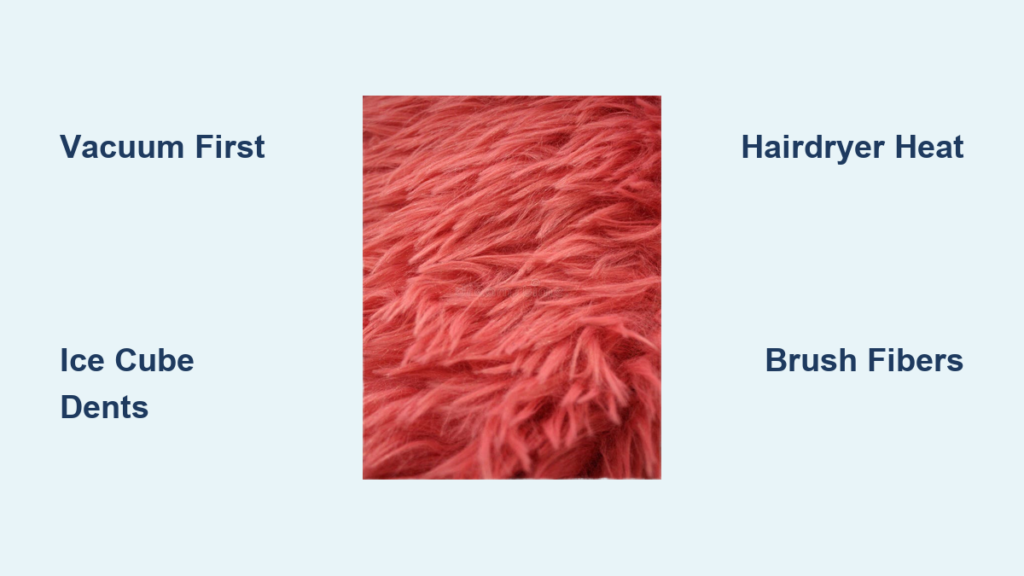
Is your once-plush shag rug now flat, matted, and lifeless? You are not alone. Heavy foot traffic, furniture dents, and trapped dirt can crush even the softest fibers. But good news. You can refluff a rug quickly and effectively using simple household tools and proven techniques. Whether it is a wool Flokati, synthetic shag, or deep-pile cotton rug, this guide shows you how to revive its bounce, texture, and volume without professional help. From ice cubes to steam tricks, you will learn every safe, tested method to restore fluff fast and keep your rug looking fresh for years.
Identify the Flattening Cause
Before refluffing, you need to pinpoint what is crushing your rug. The right fix depends entirely on the culprit.
Foot Traffic Compression
High-traffic zones like entryways and hallways lose fluff from constant stepping. Fibers bend and compact over time, especially in soft, long-pile rugs.
Signs to look for:
• Flat paths across the rug
• No bounce when pressed
• Fibers lie sideways instead of standing up
Solution: Combine vacuuming with directional fluffing to lift compressed fibers back into place.
Furniture Indentations
Heavy furniture legs press deep dents into plush rugs. The fibers collapse and struggle to rebound on their own.
Quick Fix: Use the ice cube method to revive dents in under an hour.
Prevention Tip: Place felt pads or furniture coasters under legs to distribute weight evenly across the surface.
Dirt and Debris Buildup
Soil and dust add weight to fibers, pulling them down naturally. A dirty rug cannot fluff properly, so clean first and fluff after.
Test It: Rub your hand across the rug. If it feels gritty, vacuum or deep clean before attempting any refluffing technique.
Ice Cube Method for Dents
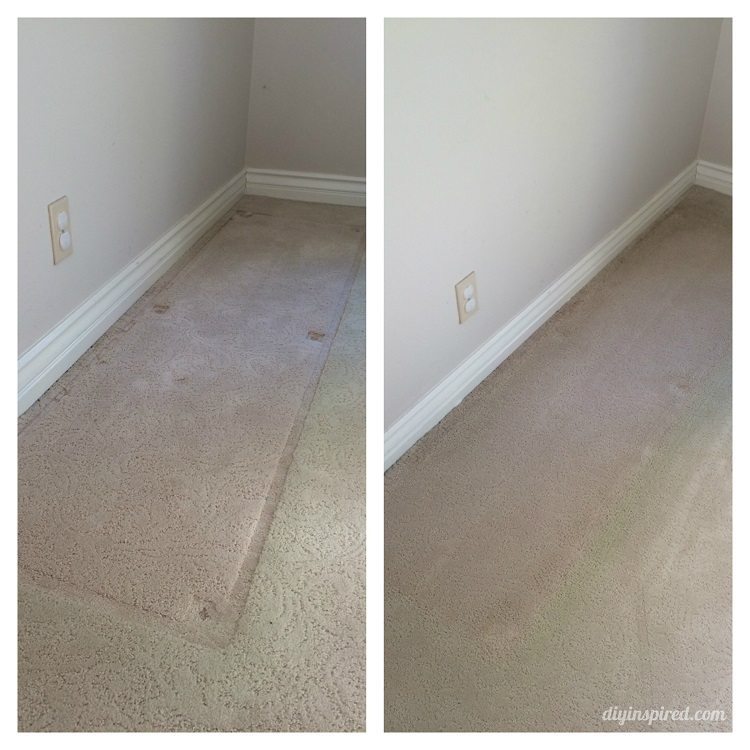
This method works perfectly for furniture footprints and small flattened spots. It is simple, requires no special equipment, and uses items you already have in your freezer.
Apply Ice to Indented Areas
Place one to two ice cubes directly into the dent. Let them melt completely, which takes 30 to 60 minutes. As the water soaks in, natural fibers like wool swell and lift. Synthetic fibers also respond, though less dramatically.
Why It Works:
• Moisture relaxes compressed fibers
• Cold water causes temporary expansion
• No heat risk to delicate materials
Fluff and Dry After Melting
Once the ice melts, gently lift the fibers with your fingers, a fork, or a spoon. Blot excess moisture with a dry towel. Let the area air dry completely before stepping on it.
Pro Tip: After drying, use a handheld vacuum to finalize the lift and remove any lingering dampness.
Steam and Towel Technique
This technique works best for large flattened areas or stubborn compression that will not budge with lighter methods.
Use Iron with Damp Towel
Dampen a clean cotton towel and wring until it is moist but not dripping. Lay it over the flat section. Set your iron to medium heat and low for synthetics. Press down for 10 to 15 seconds, then lift and move. Repeat across the area for about one minute total.
Safety First:
• Never touch the iron directly to the rug
• Test on a hidden corner first
• Use distilled water to prevent stains
Fluff While Warm
Remove the towel and immediately tease up the fibers with your fingers, a fork, or a wide-tooth comb. Heat relaxes the fibers, making them easier to lift into an upright position.
Alternative: Use a handheld steamer held 2 to 3 inches above the rug. Avoid soaking the fibers. Steam should be light and brief.
Blow Dryer Fluffing Method
This method revives dampened fibers with targeted heat and airflow for quick spot treatment.
Mist and Dry with Heat
Lightly spray the flat area with water using a spray bottle. Hold a blow dryer 2 inches away on high heat. Move it in a sweeping motion while using your other hand to lift the fibers.
Key Tips:
• Use a concentrator nozzle for focused airflow
• Keep the dryer moving to avoid overheating
• Stop when fibers are dry and standing upright
Best For: Spot treatment and synthetic shag rugs.
Caution: Do not overheat nylon or polypropylene. These materials can melt or distort.
Shake and Beat the Rug
This method helps dislodge deep dirt and reset the fiber structure for better overall volume.
Hang and Beat Out Debris
Take the rug outside. Hang it over a clothesline, railing, or fence. Use a rug beater or broom handle to firmly but gently beat both sides.
Benefits:
• Removes trapped dust and allergens
• Loosens matted fibers
• Restores natural bounce
Frequency: Do this twice a year for natural fiber rugs.
Warning: Do not beat wool rugs too aggressively when wet. There is a risk of felting.
Vacuuming for Maximum Fluff
Vacuuming is not just for cleaning. It is actually a key fluffing tool when done correctly.
Use Suction-Only Mode
For shaggy or long-pile rugs, turn off the beater bar. Rotating brushes can pull and damage long fibers.
Correct Technique:
• Vacuum slowly in multiple directions, north-south, east-west, and diagonal
• This lifts fibers evenly, like plumping a pillow
• Repeat after every refluffing method to lock in volume
Tool Tip: Use a handheld vacuum with a crevice tool for dense pile areas.
Lift Fibers with Spoon or Fork
Manual teasing is essential after any moisture treatment to get fibers standing tall again.
Scrape Gently with Spoon Edge
After steaming or spraying, use the back edge of a spoon or the tines of a fork to rake fibers upward. Work in small sections to avoid over-stressing the material.
Why It Works:
• Physically separates matted strands
• Encourages fibers to stand upright
• Provides immediate visual improvement
Upgrade Tool: Use a wide-tooth comb for long-pile rugs. It is less likely to snag and tangle.
Tumble Dry for Machine-Washable Rugs
This method lets you fluff small, washable rugs in minutes using your home dryer.
Dry on Air-Only or Low Heat
If your rug is labeled machine-washable, place it in the dryer. Set to air-only with no heat or low heat. Tumble for 5 to 10 minutes. Remove and shake out.
Add a dry towel to reduce static and boost fluffing.
Never Use High Heat:
• Can melt synthetic fibers
• Shrinks wool and cotton
• Always check the care label first
Clean to Restore Natural Volume
A dirty rug cannot fluff. Remove the grime to lighten fibers and restore natural volume.
Baking Soda and Salt Scrub
Mix equal parts baking soda and salt. Sprinkle over the rug. Lightly mist with water but do not soak. Use a nylon brush to work it in. Let sit 15 to 30 minutes. Blot with towels, dry completely, then vacuum.
Benefits:
• Deodorizes and brightens
• Gently exfoliates trapped dirt
• Safe for most fibers
Vinegar and Water Solution
Mix one part white vinegar with three parts cold water. Spray on flat areas. Wait 5 minutes. Blot with microfiber cloths. Dry fully before fluffing.
Bonus: Neutralizes odors and breaks down grease.
Caution: Test first on delicate rugs like silk.
Use a Carpet Rake for Instant Results
This is the fastest way to refluff large areas and restore even texture across the entire surface.
Groom with a Carpet Rake
Tools like the Grandi Groomer or any stiff-bristled carpet rake separate fibers and restore evenness quickly.
How to Use:
• Work in one direction, then the other
• Apply firm pressure on matted zones
• Follow with vacuuming to lock in the results
Best For: Deep-pile shaggy rugs and Flokati styles.
Limitation: Results are temporary. Fibers will compress again with use. Use after cleaning for best effect.
Prevent Future Flat Spots
Keep your rug fluffy with simple habits that become part of your regular routine.
Rotate Every 6 Months
Turn the rug 180 degrees every 6 months. This ensures even wear and prevents permanent dents from forming in the same spots.
Bonus: Extends rug life and maintains color balance across the entire piece.
Use Furniture Pads
Place wide, flat felt pads under furniture legs. They spread weight and reduce compression significantly.
Pro Tip: Lift furniture weekly to let fibers rebound. Do not drag items across the rug.
Vacuum Weekly
Dirt weighs down fibers. Weekly suction-only vacuuming keeps fibers light and bouncy.
New Rug Tip: Vacuum new shag rugs twice a week for the first month to remove loose fibers and prevent early matting.
Material-Specific Tips
Different fibers need different care. Know your rug material before applying any treatment.
Wool Rugs: Use Moisture Wisely
Wool responds well to steam and ice but never machine wash or tumble dry. There is a serious risk of felting and shrinkage.
Best Methods: Ice cube, steam with towel, hand-fluffing.
Synthetic Rugs: Avoid High Heat
Polyester, polypropylene, and nylon can melt under high temperatures.
Safe: Blow dryer on low heat, vacuum, baking soda scrub.
Avoid: Direct iron contact, high-heat dryer settings.
Cotton Rugs: Can Tumble Dry on Low Heat
Cotton fluffs well in the dryer on low or air-only settings. It dries quickly and resists odors.
Caution: Do not soak the rug. It can weaken the backing adhesive.
Flokati Rugs: Brush Gently
Made from wool or acrylic, Flokati rugs tangle easily and require special care.
Best Tool: Pet brush or wide-tooth comb. Brush in the direction of the pile.
Never Machine Wash unless the label specifically says it is safe.
When to Call a Pro
Home methods fail? Consider professional help before giving up on your rug.
Signs You Need Expert Care
• Rug remains flat after repeated attempts
• Heavy soiling, odors, or water damage
• Antique, valuable, or very large area rugs
Professional Steam Cleaning: Removes deep grime and restores bounce with industrial equipment.
Cost: $50 to $200 or more, often includes refluffing as part of the service.
Replace If Beyond Repair
Some rugs simply cannot be saved, no matter how many techniques you try.
Replace When You See:
• Bald spots or excessive shedding
• Permanent matting that will not lift
• Backing separation or edge fraying
• Fibers break when touched
Upgrade Tip: Invest in 100% wool or high-density synthetic shag rugs. They resist flattening longer and maintain their looks for years.
Essential Tools at a Glance
| Tool | Best For | Quick Use |
|---|---|---|
| Ice cubes | Furniture dents | Place, melt, fluff |
| Steam iron plus towel | Large flat zones | Heat through cloth, lift fibers |
| Blow dryer | Spot fluffing | Mist, dry, lift |
| Carpet rake | Instant volume | Groom in sections |
| Wide-tooth comb | Detangling | Gentle, effective |
| Vacuum without beater bar | Weekly maintenance | Multi-directional passes |
| Baking soda and salt | Deep clean | Scrub, blot, vacuum |
| Vinegar solution | Deodorize and clean | Spray, blot, dry |
Frequently Asked Questions About How to Refluff a Rug
Does the ice cube method work on all rug types?
The ice cube method works best on natural fiber rugs like wool because these fibers are hygroscopic, meaning they absorb moisture and swell. Synthetic rugs respond but less dramatically. This technique is particularly effective for furniture indentations and small flattened spots.
Can I use a regular vacuum on a shaggy rug?
You can, but you must turn off the beater bar or rotating brush. These attachments pull and damage long fibers. Use suction-only mode or a handheld vacuum with a crevice tool instead. Vacuum in multiple directions to lift fibers evenly.
How often should I refluff my rug?
It depends on usage. High-traffic rugs may need monthly attention. Low-traffic rugs might only need refluffing twice a year. Regular vacuuming weekly helps maintain fluff between treatments.
What is the fastest way to refluff a rug instantly?
A carpet rake provides the fastest instant results. Work it across the rug in one direction, then another. Follow with vacuuming. Results are visible immediately, though they are temporary.
Can I use a steam cleaner on my rug at home?
Yes, you can rent or purchase a home steam cleaner. Pre-vacuum first, then clean according to the machine instructions. Allow 6 to 12 hours drying time for thick rugs. Vacuum after drying to lift fibers.
Why does my rug keep getting flat spots?
Common causes include foot traffic compression, furniture pressure, dirt accumulation, and infrequent grooming. Address the root cause by using furniture pads, vacuuming weekly, and rotating the rug every 6 months.
Final Thoughts on Refluffing Your Rug
Refluffing a rug is not magic. It is science combined with consistent routine. Use moisture, heat, and mechanical action to reset compressed fibers and restore that plush, inviting texture you love. Always clean first, then fluff after, and maintain with weekly vacuuming. With these methods, your rug can look plush and fresh again in just minutes.
For lasting results, rotate your rug every 6 months, use furniture pads under heavy pieces, and vacuum regularly to prevent dirt from weighing down fibers. A fluffy rug is not just cozy. It is a sign of smart care and attention to detail in your home.