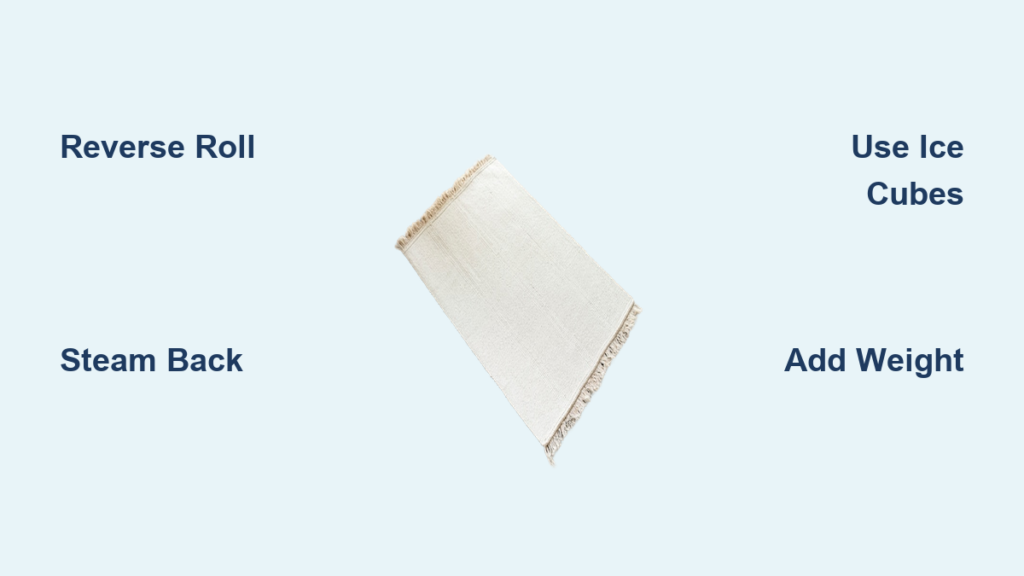
You unroll a new rug, step back, and immediately notice the corners curling up like a scroll. It is frustrating, unsightly, and potentially dangerous. Whether it is a freshly delivered area rug, a wrinkled remnant, or a buckled mat after cleaning, how to straighten a rug is a common household challenge. The good news: most curled, wavy, or bunched rugs can be flattened quickly and safely with the right method.
Rug curling happens due to fiber memory from tight shipping rolls, environmental changes, or foot traffic. Left alone, many rugs take weeks to flatten naturally, but you do not have to wait. This guide delivers tested techniques from reverse rolling to steam treatment, so you can fix your rug fast without damage. You will learn what works best for your rug type, flooring, and timeline, including budget hacks and long-term prevention.
Flip and Vacuum First
Before any fix, prepare your rug properly. Skipping prep reduces effectiveness and risks damage.
Remove Packaging Immediately
Take off all plastic wrap and tape right after unboxing. Trapped moisture under plastic can warp fibers or promote mildew. Unroll the rug gently. Do not yank or cut bindings with sharp tools.
Let It Acclimate Overnight
Leave the rug unrolled for at least 24 hours in its final room. Temperature and humidity help fibers relax naturally. This step alone reduces curling in cotton and wool rugs.
Vacuum Thoroughly
Use a high-suction vacuum with a beater bar. Go over each section in overlapping passes to lift compressed fibers and remove dust that prevents flat contact with the floor. Focus on edges and dents from shipping rolls.
Pro Tip: Vacuum both sides if possible. The backing often holds dirt that affects grip.
Reverse Roll to Reset Memory

Reset the curl by retraining the fibers in the opposite direction.
Roll Backward for 24 Hours
Flip the rug pile-side up and roll it in reverse of how it was shipped (usually with the top facing outward). Secure with twine or straps and leave it for 4 to 48 hours. This reverses the set in the material.
Repeat if Needed
Some polypropylene or thick rugs need 2 to 3 reverse rolls. After each roll, unroll and check progress. Combine with steaming for studysonguide-20orn creases.
Why it works: Mechanical stress resets the fiber memory, making the rug more responsive to flattening.
Use Ice Cubes to Flatten Corners
A simple, low-risk method for minor curling, especially on hard floors.
Apply Ice and Weight
Place 2 to 3 ice cubes on each curled corner. Cover with a dry towel to protect the floor, then set a heavy book or weight on top. Let the ice melt completely, which takes about 8 to 12 hours.
Let It Dry Fully
After melting, remove weights and allow the rug to dry at least 24 hours before walking on it. Moisture helps fibers relax, and weight sets the new shape.
Best for: Synthetic and cotton rugs on tile, hardwood, or laminate.
Avoid: Rugs with latex or foam backing, as moisture can degrade adhesives.
Steam the Back with a Damp Towel
One of the most effective methods for deep ripples and synthetic rugs.
Iron Over a Moist Barrier
Flip the rug back-side up. Dampen a cotton towel (not dripping) and lay it over creased areas. Set your iron to low or medium heat, no higher than cotton setting. Iron slowly over the towel, moving in overlapping strokes.
Never Touch the Rug Directly
The towel protects fibers from scorching or melting. Re-wet the towel as it dries. Work section by section, then let the rug dry flat for 24 hours.
Ideal for: Polypropylene, wool, and blends.
Pro Tip: Test on a hidden corner first to check for color bleeding or backing damage.
Spray With Wrinkle-Release Solution
Loosen tight fibers with a fabric relaxant. Great for light wrinkles.
Apply Evenly and Dry
Use a commercial spray like Downy Wrinkle Releaser or a DIY mix of 1 part white vinegar to 3 parts water. Mist the entire surface, focusing on creased areas. Gently rub in with a soft cloth.
Wait 24 Hours
Let the rug dry completely flat. Do not walk on it until dry. Results are moderate. Best combined with steaming or weighting.
Warning: Always test for colorfastness first. Avoid sprays with alcohol on wool.
Soak Edges and Add Weight
For severe curling, deep moisture can fully reset the fibers.
Wet, Press, and Wait
Pour water directly onto curled edges until saturated. Place a dry towel under the wet area to protect hardwood. Apply heavy weights (books, kettlebells) and leave 24 or more hours to dry.
Reapply if Needed
If creases remain, repeat once. Never oversaturate, as excess moisture can warp floors or cause mold.
Best for: Thick rugs on tile or vinyl. Not recommended for wool or delicate backings.
Warm With Sunlight or Hairdryer
Heat softens fibers, making them easier to reshape.
Use Sunlight in Moderation
Lay the rug in direct sun for 30 minutes per day over 1 to 3 days. Sunlight heats fibers, reducing curl. Bring it inside at night to avoid dew absorption.
Or Try a Hairdryer
Hold 6 to 8 inches away from curled edges. Use a sweeping motion to heat evenly. As fibers soften, press flat by hand and immediately place weights to set.
Caution: Avoid prolonged heat, as it can fade colors or melt synthetic backings.
Try a Garment Steamer for Deep Wrinkles
Professionals use steam for a reason: it penetrates deep without soaking.
Steam and Smooth
Hold the steamer 1 to 2 inches above the rug back. Move slowly over creases. As fibers relax, smooth them flat with gloved hands.
Allow Full Drying
Let the rug dry 24 hours before use. Steam also sanitizes, killing dust mites and bacteria.
Best for: High-pile, wool, and studysonguide-20orn creases. Avoid on latex-backed rugs.
Beat and Shake for Flattened Pile
Restore loft to matted areas caused by furniture or traffic.
Hang and Beat Outside
Lay the rug over a clothesline. Use a broom handle or carpet beater to gently beat from end to end. Shake vigorously to remove dust.
Fluff With Your Hands
After beating, run your fingers through the pile to lift fibers. Vacuum afterward for best results.
Frequency: Every few weeks for high-traffic rugs.
Secure Corners With DIY Vinyl Tiles
A budget-friendly, removable solution to prevent lifting.
Cut and Stick
Buy peel-and-stick vinyl floor tiles (about $1 each). Cut each diagonally. Peel and press one triangle onto the back of each corner.
Press Firmly
Lay the rug down. The vinyl adds weight and grip. Trim pieces for small rugs.
User-approved: High satisfaction, minimal residue, works on hard floors.
Use Adhesive Rug Grippers or Tape
Stop slipping and curling with strong, targeted adhesion.
Apply Rug Tape Along Edges
Clean floor and rug backing first. Cut double-sided carpet tape to fit corners and edges. Press rug firmly into place.
Or Use Corner Grippers
Adhesive-backed rudysonguide-20er grippers stick to the rug back. Non-slip bottom grips the floor. Replace every 6 to 12 months.
Best for: Hardwood, tile, and renters avoiding permanent fixes.
Anchor With Rug Pins on Carpet
For wall-to-wall carpet, use mechanical anchors, not adhesives.
Install at 45 Degrees
Push a rug pin through the corner into the carpet. Press the handle down at an angle to lock it in. Pins are invisible when walked on.
Ideal for: High-traffic areas on carpet.
Avoid on hard floors, as they can scratch or puncture.
Install a Non-Slip Rug Pad
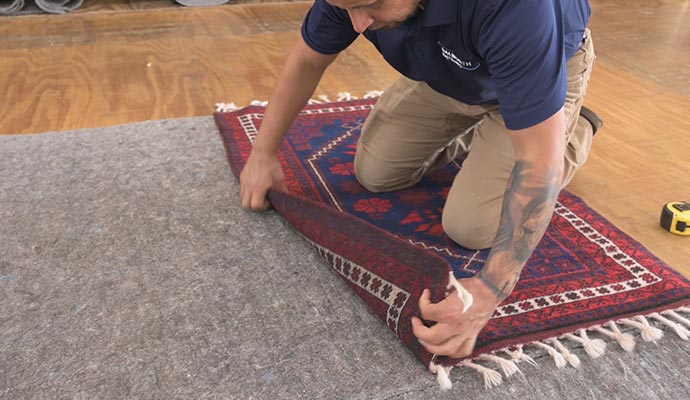
The best long-term solution for flat, safe rugs.
Choose the Right Type
• Felt plus rudysonguide-20er: Best for hardwood, grips without scratching.
• All-rudysonguide-20er: High grip, but may stain light rugs.
• Perforated: Allows airflow, reduces odor.
Cut to Fit
Use scissors to trim the pad to your rug size. Place it under. No tape needed.
Benefits: Prevents slipping, cushions steps, reduces wear, and keeps rug flat.
Prevent Future Curling
Keep your rug flat for good with simple habits.
Rotate Every 6 Months
Even out wear and sun exposure. Helps maintain shape and color.
Control Humidity
Use a dehumidifier in summer and a humidifier in winter. High moisture causes buckling. Low humidity dries fibers.
Avoid Dragging Furniture
Use felt pads under legs and lift, not slide, heavy items.
When to Call a Professional
DIY methods fail? Seek expert help if the rug is antique, hand-woven, or high-value. Also seek help if you see mold, mildew, or backing separation. Also seek help if creases persist after multiple attempts.
Professionals offer steam restoration, dry cleaning, and fiber repair. These are safe for delicate materials.
Quick Method Guide by Situation
| Issue | Best Fix |
|---|---|
| New rug curling | Reverse roll plus sunlight plus weight |
| Mild creases | Steam back plus vacuum |
| Deep wrinkles | Steam plus weight plus rug pad |
| Corners lifting | Vinyl tiles, grippers, or tape |
| On carpet | Rug pins or hook-loop grippers |
| Furniture dents | Spray plus hairdryer plus fluff |
| Long-term stability | High-quality non-slip rug pad |
| Budget fix | DIY vinyl tiles plus reverse rolling |
Frequently Asked Questions About Straightening Rugs
Why does a new rug curl?
New rugs curl primarily due to fiber memory from being tightly rolled during storage and shipping. The pile side is often rolled inward, creating a natural upward curl when unrolled. Warm environments can accelerate this effect.
How do I flatten a buckled rug?
First, remove furniture and pull the rug taut. Then reposition it smoothly. Next, roll it back slightly and unroll flat. After that, use low-heat steaming on creases. Finally, secure edges with tape or a rug pad.
Can you iron a rug to flatten it?
Yes, but only with precautions. Always place a damp towel between the iron and rug. Use low to medium heat. Move the iron continuously to avoid scorching. Never apply direct heat to synthetic fibers.
How long does it take for a new rug to stop curling?
Initial improvement happens within 2 to 7 days. Full flattening can take up to several weeks. Acceleration methods like steaming and reverse rolling can reduce this to 24 to 48 hours.
What is the fastest way to straighten a rug?
Reverse rolling for 24 hours combined with low-heat steaming delivers the fastest results, especially for polypropylene rugs. This approach resets fiber memory and relaxes studysonguide-20orn creases in under two days.
Does a rug pad really prevent curling?
Yes. A quality non-slip rug pad adds friction, weights down edges, and prevents the rug from shifting. Felt-plus-rudysonguide-20er pads work best on hardwood and tile.
Key Takeaways for Straightening Your Rug
Most rugs can be straightened in 24 to 48 hours with the right method. Start with reverse rolling and steaming, then secure with a rug pad or grippers. Always consider your rug material and floor type. What works for polypropylene may damage wool. With these proven techniques, your rug will lie flat, stay safe, and look great for years.