Rug buckling transforms a cozy, stylish floor covering into a frustrating tripping hazard and eyesore. Whether you’re dealing with ripples under an area rug or waves in wall-to-wall carpeting, the problem typically stems from moisture damage, improper installation, or furniture movement. The good news? Most buckling can be fixed at home with simple tools and techniques. In this guide, you’ll learn how to diagnose the cause of rug buckling, apply targeted fixes for different scenarios, and prevent future wrinkles using proven methods.
Identify the Cause of Buckling
Before attempting any fix, pinpointing the root cause ensures long-term success. Applying the wrong solution can worsen damage and waste your time.
Check for Moisture Damage
If your rug recently went through cleaning or was exposed to spills, moisture is likely the culprit. Wet fibers expand and contract unevenly during drying, creating ripples. Look for lingering dampness beneath the surface, musty odors, or visible delamination where the backing layers separate. Never stretch a wet rug. Wait until it is completely dry, typically 24 to 72 hours with good airflow.
Assess Humidity Levels
High indoor humidity causes natural fibers to absorb moisture and swell. This seasonal issue peaks in summer or in poorly ventilated rooms. Use a hygrometer to check your levels. Under 40% is too dry and can cause brittleness. The ideal range is 40 to 60%. Over 60% increases buckling risk significantly. Run a dehumidifier if levels exceed 60%, especially in basements or humid climates.
Inspect Furniture Movement
Dragging heavy furniture stretches rug fibers and weakens backing over time. Focus on ripples near desks, sofas, or dining tables. Look for signs of friction or fraying and bunching under rolling chair paths. Always lift furniture when moving. Use sliders or plywood sheets to distribute weight and protect your rugs.
Evaluate Installation Quality
Wall-to-wall carpeting that was not properly stretched during installation will loosen and buckle over time. Signs include central bulges or diagonal ripples, loose edges near baseboards, and gaps between carpet and tack strips. Improper padding or an uneven subfloor can also contribute. Address these issues before restretching.
Confirm Rug Pad Suitability
A missing, undersized, or slippery pad allows area rugs to shift and wrinkle. Foam pads may feel soft but lack grip. Ideal pads are the same size or slightly smaller than the rug, made of high-density non-slip material like rubber, PVC, or felt, and matched to rug material and floor type. Replace low-quality pads to stop recurring bunching.
Dry the Rug Completely After Wet Exposure
Moisture is one of the top causes of post-cleaning buckling. Fixing it starts with full drying, not stretching.
Remove All Furniture
Clear the area to allow unrestricted airflow. This prevents trapped moisture and makes inspection easier. Do not walk on or place items back on the rug until you confirm it is fully dry.
Increase Air Circulation
Place fans around the perimeter and point them across the rug surface. Add a dehumidifier if humidity exceeds 60%. Avoid direct heat sources like space heaters, which can warp the backing. Good airflow is essential for even drying.
Monitor Drying Progress
Check the underside regularly. A thick wool rug may take up to 72 hours to dry fully. Speed up drying by blotting excess water with towels, lifting edges slightly to ventilate padding, and using absorbent pads underneath for spot drying.
Wait Before Flattening
Once dry, observe whether ripples resolve naturally. Minor wrinkles often settle within 24 hours under room temperature conditions. If ripples persist, move to more active treatment methods.
Stretch Wall-to-Wall Carpet With a Power Stretcher
Persistent ripples in installed carpet require mechanical stretching. A power stretcher delivers professional-grade results.
Rent the Right Equipment
Power stretchers are available at home improvement stores for about $40 per day. Also gather a sharp utility knife for trimming, scrap wood to protect baseboards, a knee kicker for tight corners, and a seam roller if seams are lifting.
Detach Carpet From Tack Strips
Using a flathead screwdriver or carpet pry tool, release the carpet edge from tack strips along the wall opposite your stretch direction. For major repairs, detach in a U-shape pattern around three walls. This gives you enough flexibility to pull the carpet taut.
Set Up the Stretcher
Position the stretcher diagonally across the room. Place scrap wood against the baseboard to prevent damage. Anchor one end of the stretcher against the far wall. Extend the bar so the gripper head sits about 1 inch from the target wall. Adjust tension based on carpet thickness, higher for plush and lower for thin weaves.
Pull the Carpet Taut
Step on the lever to extend the stretcher, pulling the carpet tightly toward the wall. You should see ripples disappear as tension increases. Work in sections, moving the stretcher every 12 to 18 inches until the entire wall is stretched. Stop if you hear cracking sounds, as over-stretching can tear the backing.
Trim and Reattach Edges
Leave one-half inch of excess carpet beyond the tack strip. Tuck the edge under and press down firmly so the gripper pins bite into the backing. Trim any overhang with a utility knife held at a 45-degree angle for a clean finish.
Secure Seams and Corners
Use a knee kicker for areas near walls or closets where the power stretcher will not fit. Then roll seams with a seam roller to bond them securely. Replace baseboards if removed and vacuum thoroughly before replacing furniture.
Smooth Area Rugs With Steam and Weight
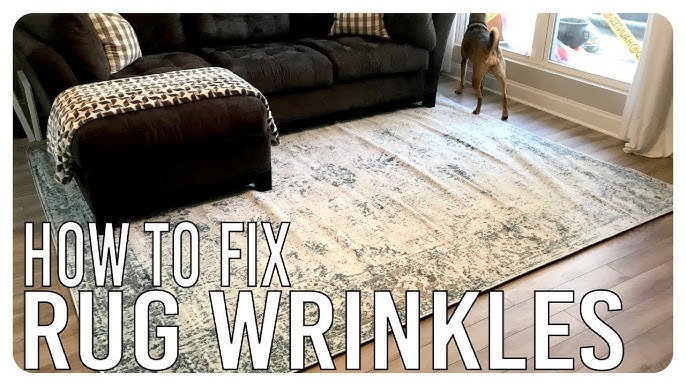
For mild wrinkles in smaller rugs, especially those from shipping or storage, heat and pressure work wonders.
Lay the Rug Flat
Place it on a hard, clean surface like tile or hardwood. Flip it upside down if the backing is wrinkled. Ensure the surface is free of debris that could transfer to the rug.
Apply a Damp Towel
Cover the creased area with a slightly damp cotton towel. This protects the rug from direct heat while allowing steam penetration. The towel should be moist but not soaking wet.
Iron With Low Heat
Set your iron to low or medium heat with no steam setting. Gently press in circular motions. Do not slide the iron across the surface. Hold for 10 to 15 seconds per spot. Re-moisten the towel as needed but avoid soaking the rug.
Cool Under Weight
After steaming, place heavy books or flat weights like stone tiles over the area. Let sit for 6 to 12 hours. The cooling process helps fibers retain their flat shape. Do not remove weights until the rug has fully cooled.
Secure Shifting Rugs With Tape or Grippers
Curling corners and sliding rugs are easily fixed with grip solutions.
Use Double-Sided Carpet Tape
Peel-and-stick tape provides strong adhesion without damaging floors. Clean both floor and rug underside first. Cut tape to fit edges and form a large X in the center. Press rug firmly into place. Choose removable or damage-free tape for hardwood or delicate surfaces.
Install Non-Slip Rug Pads
Full-size pads prevent shifting and cushion impact. Choose based on your floor type. For hardwood or tile, use rubber or PVC-backed pads. For carpeted floors, use felt or gripper-backed options. For wool rugs, use high-density felt to prevent fiber crushing. Ensure the pad matches or is slightly smaller than the rug to avoid edge curling.
Add Rug Corner Weights
For decorative or lightweight rugs, use stone or metal weights at each corner. They are discreet and effective for high-traffic zones. This method works well for area rugs that curl at the edges.
Prevent Future Buckling With Best Practices
Stop ripples before they start with smart maintenance and setup.
Choose the Right Rug Pad
Match pad type to rug and floor. For wool or natural fiber rugs, use high-density felt. For synthetic rugs, use rubber or PVC grip. For hard floors, use non-slip low-profile pads. For carpet, use gripper or felt blend. Avoid thick foam because it compresses and allows slippage.
Limit Moisture During Cleaning
Opt for low-moisture methods like encapsulation cleaning, dry foam systems, or absorbent pad extraction. Allow 24 to 48 hours of drying time before walking or replacing furniture. Place fans and open windows after cleaning to speed evaporation.
Maintain Indoor Humidity
Use a dehumidifier in damp seasons or basements. Keep levels between 40% and 60% to prevent fiber expansion. Run your AC in summer because it dehumidifies as it cools.
Handle Furniture Carefully
Lift heavy items instead of dragging them. Use furniture sliders or plywood sheets under legs. Install floor protectors under chair and table bases. Even small shifts add up over time and cause bunching.
Allow Rugs to Acclimate
New rugs should rest flat in the room for 24 to 48 hours before placement. This helps them adjust to temperature and humidity, reducing initial curling and buckling.
Call a Professional When Needed
Some cases go beyond DIY fixes. Know when to bring in an expert.
Signs You Need Help
Seek professional assistance if the rug has delaminated backing, if ripples return after multiple stretching attempts, if wall-to-wall carpet has seam separation, if the rug is antique handmade or silk, or if you lack tools like a power stretcher or seam roller.
What Pros Use
Certified technicians typically employ a power stretcher for large-area tensioning, a knee kicker for edges and corners, a heat gun to relax synthetic fibers before stretching, and seam sealer to reinforce lifted seams. Many offer same-day service, and costs often beat full replacement.
Frequently Asked Questions About Rug Buckling
Why does my rug buckle after cleaning?
Moisture absorption causes fibers and backing to swell. Uneven drying leads to contraction and ripples. Always ensure complete drying using airflow and dehumidification before walking on the rug or replacing furniture.
Will rug wrinkles go away on their own?
Minor wrinkles from shipping or temporary compression may flatten within a few days of lying flat. Persistent ripples, especially after moisture exposure or furniture pressure, usually require manual correction.
How do I fix a rug that is bunching up?
First remove furniture from the area. Flatten the rug manually by stretching it gently. Apply a non-slip rug pad or double-sided tape along the edges. For stubborn bunching, consider steam treatment or professional stretching.
What causes ripples in area rugs?
Primary causes include high humidity, water exposure, slippage due to lack of grip, dragging furniture, and poor-quality or missing rug pads. Identifying the specific cause helps you apply the right fix.
Can a professional fix buckled rugs?
Yes. Professionals use industrial-grade tools like power stretchers and heat systems to restore smooth, taut carpets. Even severe cases can often be saved at a fraction of replacement cost.
Key Takeaways for Fixing Rug Buckling
Rug buckling is fixable and often preventable. Identify the root cause first, whether moisture, humidity, furniture movement, improper padding, or poor installation. For wet rugs, always dry completely before attempting any flattening technique. Use a power stretcher for wall-to-wall carpeting or steam and weight for area rugs. Secure shifting rugs with double-sided tape or non-slip pads. Maintain indoor humidity between 40% and 60%, choose the right rug pad, and handle furniture carefully to prevent future issues. A $13 roll of double-sided carpet tape can solve many shifting problems, making this an affordable fix for most households. Act early to avoid permanent damage and keep your rugs flat, safe, and beautiful for years.