Stepping onto a cold hardwood floor first thing in the morning can be jarring. That’s where knowing how to get a rug under a bed the right way transforms your bedroom from functional to luxurious. A well-placed rug adds comfort, reduces noise, and grounds your entire space visually. Whether you’re working with a king-sized master suite or a cozy twin bed, this guide walks you through choosing the correct size, positioning it perfectly, and installing it without breaking your back.
You’ll learn proven methods to slide, lift, or disassemble your way to perfect placement, avoid common design mistakes, and select a rug that looks high-end without the luxury price tag. No guesswork. No fluff. Just actionable steps backed by interior design principles.
Choose the Right Rug Size for Your Bed

The foundation of great rug placement starts with getting the size right. Too small, and it looks like an afterthought. Too large, and it overwhelms the room. Here’s how to match your rug to your bed dimensions:
For a king bed (76″ x 80″), you need a minimum of 8 × 10 feet, but the ideal size is 9 × 12 feet. This provides 16 to 18 inches of overhang on each side and 32 inches at the foot, fully supporting nightstands when placed on the rug.
For a queen bed (60″ x 80″), a 6 × 9 foot rug is the minimum acceptable size, but an 8 × 10 foot rug delivers 18 inches of side overhang and 20 inches at the foot for the best balance.
For a full bed (54″ x 75″), an 8 × 10 foot rug provides generous coverage with 21 inches on each side.
For a twin bed (38″ x 75″), a 5 × 8 foot rug allows full under-bed placement, while a 3 × 5 foot rug works as a bedside accent.
Pro Tip: When in doubt, size up. Larger rugs enhance comfort and make rooms feel more spacious and intentional.
Position the Rug With Proper Clearance
Leave Space Between Rug and Walls
Your rug should never touch the walls. Keep 6 to 12 inches of flooring visible around all edges. This prevents a boxed-in, cluttered look, creates visual breathing room, and makes even small bedrooms feel larger. This rule applies regardless of bed size or room layout.
Extend 18+ Inches Beyond the Bed
At least 18 to 24 inches of rug should extend beyond the sides and foot of the bed. This ensures bare feet land fully on soft surface when getting up, maximizes both comfort and aesthetic impact, and avoids the “postage stamp” effect where tiny rugs barely peek out. Prioritize side and foot overhang where stepping happens most.
Decide on Nightstand Placement
Rug Under Nightstands: Unified Look
Place nightstands directly on the rug for a cohesive, anchored appearance. This works best in larger bedrooms with 9 × 12 or 10 × 14 rugs. Use furniture coasters to prevent indentations and extend rug life.
Rug Stops Before Nightstands: Contrasting Style
Let the rug end roughly two-thirds down the bed, leaving nightstands on bare flooring. This highlights beautiful hardwoods or tile, adds visual contrast between soft and hard surfaces, and suits smaller rooms where space is limited. Be intentional about this choice rather than letting it happen by accident.
Select the Best Placement Style
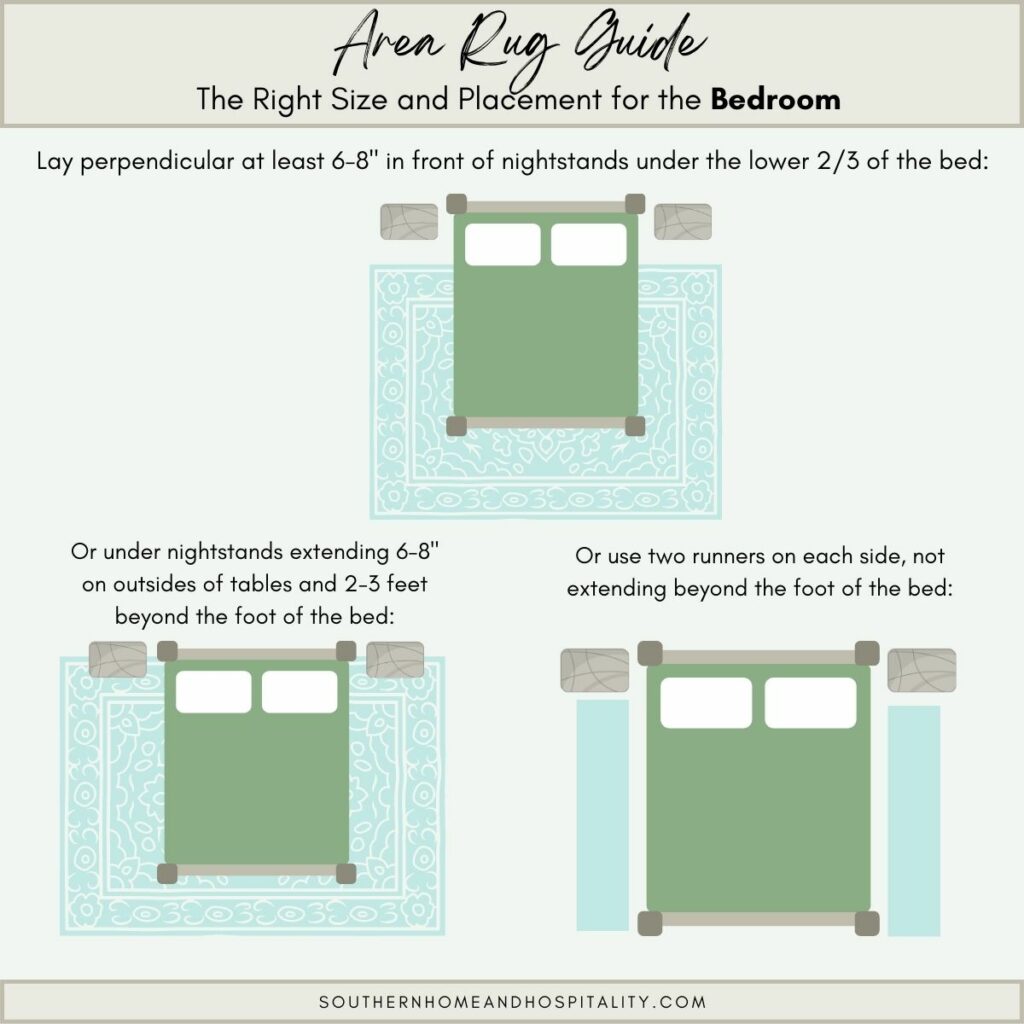
Full-Bed Placement: Maximum Comfort
The rug runs under the entire bed and both nightstands. This style is best for king or queen beds in large bedrooms and requires 9 × 12 (king) or 8 × 10 (queen) rugs. Benefits include anchoring the whole bed ensemble, soft landing from either side, and creating symmetry and luxury.
Two-Thirds Placement: Balanced Compromise
Only the lower two-thirds of the bed rests on the rug. This works well when full side overhang is not possible, maintains visual flow without requiring huge rugs, and is great for floating nightstands or mid-sized rooms. Align the rug’s front edge with the front legs of the nightstands for perfect balance.
Bottom-Half Placement: Small Space Solution
The rug starts at the lower third of the bed and extends well past the foot. This is perfect for small bedrooms, beds against walls, or renters with temporary setups. The rug must extend at least 18 to 24 inches past the foot to add warmth where you step most.
Orient the Rug Horizontally
Always position the rug perpendicular to the bed’s length, stretching across both sides. This maximizes usable surface area, allows easy access from either side, and follows standard design convention.
Correct: Rug runs side-to-side under the bed.
Avoid: Vertical placement along the bed’s length, which limits foot access and looks awkward.
Exception: Runner rugs beside the bed may run vertically in narrow spaces.
Check Door Clearance Before Installing
Thick rugs can block inward-swinging bedroom doors. Measure the gap between the floor and the bottom of your door, then compare it to your rug’s pile height. Keep pile under 0.5 inches if door clearance is tight.
Test before you buy: Lay a thick blanket or cardboard cut to rug size and open the door. If it catches, choose a thinner rug or reconsider placement.
Install the Rug: Step-by-Step Methods
Roll and Slide (Solo-Friendly)
Use this method if you’re working alone or have a lighter bed.
Roll the rug tightly from one end. Slide the rolled edge under the foot of the bed. Unroll slowly toward the head, adjusting position as it flattens. Use a broom handle or ruler to nudge into place.
This method works best on hardwood, tile, or laminate floors with medium-sized rugs up to 8 × 10. Caution: Friction on carpet may make sliding difficult.
Lift and Shift (With Help)
Ideal for heavy platform beds or when precise alignment matters.
Remove mattress and bedding to reduce weight. Have a helper lift one side of the bed frame. Slide rug underneath while frame is elevated. Repeat on the other side if needed. Lower bed carefully onto rug.
Use furniture sliders or moving blankets to protect floors. Mark rug position with painter’s tape first. Place a non-slip rug pad before lowering the bed.
Disassemble the Bed (Last Resort)
When lifting is not possible, common with king beds or thick rugs.
Remove mattress, frame, and headboard. Lay rug first, ensuring perfect alignment. Reassemble bed directly on top.
Many users report that viral “hacks” fail with heavy furniture, making disassembly the only reliable method.
Use a Rug Pad Always
Never skip the rug pad. It stops the rug from sliding underfoot, cushions steps for extra comfort, reduces wear from bed legs and foot traffic, and enhances sound insulation.
Choose a non-slip, low-profile pad (felt-rudysonguide-20er blend works well). Trim to fit if it extends beyond the rug.
Warning: Exposed rug pad edges create tripping hazards. Keep it fully tucked under the rug.
Layer Rugs for Style and Texture
Layering adds depth and personality to your bedroom.
Place a large neutral rug (jute, sisal, or wool) in 8 × 10 or 9 × 12 as your base layer. Add a smaller patterned rug (kilim, vintage, or boho) as the top layer under the lower two-thirds of the bed, or position it beside the bed as an accent.
Secure layers with a non-slip pad between them to prevent shifting.
Example combo: Base layer 9 × 12 cream jute with a top layer 5 × 8 distressed blue oriental rug offset slightly. This creates luxury on a budget.
Choose Material and Color Wisely
Best Rug Materials for Bedrooms
Polypropylene is the most common choice. It is durable, stain-resistant, soft, and great for families and pets.
Wool blends offer premium feel with natural insulation and long-lasting quality, but at a higher cost.
Cotton is washable and lightweight but wears faster under furniture.
Synthetic blends provide the best mix of price, comfort, and resilience.
Avoid thin cotton or flimsy backings that wear quickly under bed legs.
Pick the Right Color and Pattern
Neutrals (beige, cream, taupe) blend with any decor and hide dust and pet hair.
Geometric or traditional patterns add interest without overwhelming the space.
Distressed or vintage looks perfectly complement farmhouse, boho, or transitional styles.
Dark colors hide stains but absorb heat in sunny rooms.
Pro Tip: Light-colored rugs show less fatigue in low-light bedrooms.
Avoid Common Rug Mistakes
Getting the size wrong by choosing a rug too small undermines the entire look. Upgrade to at least 8 × 10 for queen or king beds.
Letting the rug touch walls creates a cramped appearance. Leave 6 to 12 inches of visible floor around all edges.
Skipping the rug pad causes slipping and increased wear. Always use non-slip padding.
Ignoring door clearance results in doors that drag or won’t open. Test before buying.
Choosing wrong pile height for your door gap creates functional problems. Use low-pile (under 0.5″) when clearance is tight.
Mismatching rug style to bedroom decor looks disjointed. Match texture, color, and pattern to your existing theme.
Optimize for Your Room Size
Small Bedrooms
Cannot fit a full 8 × 10? Use alternatives like a 5 × 8 rug under the lower half of the bed, or two 3 × 5 rugs beside the bed. Focus on foot landing zones and use light colors to keep the space feeling open.
Large or Master Bedrooms
Go big with 9 × 12 or 10 × 14 rugs. Anchor the bed and nightstands together and extend the rug to include a seating area for a unified zone.
Beds Against the Wall
Headboard on the wall? Focus on side and foot overhang. Use a 3 × 5 or 4 × 6 rug at the foot for decorative warmth, or consider bedside runners instead of a center rug.
Maintain Your Rug Long-Term
Rotate Every 6 to 12 Months
Sunlight and foot traffic cause uneven fading and wear. Rotate the rug 180 degrees every six months, especially in sunny bedrooms. This extends rug life and keeps appearance fresh.
Protect Furniture Contact Points
Bed legs and nightstands can crush pile and leave marks. Use felt furniture pads or plastic coasters under all contact points. This prevents indentations, reduces friction, and makes future moves easier.
Vacuum and Clean Regularly
Dirt trapped in fibers accelerates wear. Vacuum weekly (more frequently with pets). Spot clean spills immediately. Machine-washable rugs can go in the washer every few months.
Frequently Asked Questions About Getting a Rug Under a Bed
How do I get a heavy rug under a bed by myself?
Try the roll and slide method. Roll the rug tightly, slide the rolled edge under the foot of the bed, then unroll slowly toward the head. Use a broom handle or ruler to nudge it into position. This works best on hard floors with medium-sized rugs.
What is the ideal rug size for a queen bed?
The preferred size is 8 × 10 feet, which delivers 18 inches of overhang on each side and 20 inches at the foot. A 6 × 9 foot rug is the minimum acceptable size for smaller rooms.
Should nightstands go on or off the rug?
Both options work, but be intentional. Place nightstands on the rug for a unified, expansive look in larger bedrooms. Keep them off the rug in smaller rooms to highlight flooring and create visual contrast.
How far should a rug extend beyond the bed?
At least 18 to 24 inches should extend beyond the sides and foot of the bed. This ensures bare feet land fully on soft surface when getting up and maximizes both comfort and aesthetic impact.
Can I leave 6 to 12 inches between my rug and the walls?
Yes, and you should. Keeping 6 to 12 inches of flooring visible around all edges prevents a boxed-in look, creates visual breathing room, and makes the bedroom feel larger.
Do I really need a rug pad under a bed rug?
Absolutely. A rug pad prevents slipping, adds cushioning comfort, reduces wear from bed legs, and enhances sound insulation. Always use a non-slip pad.
Key Takeaways for Getting a Rug Under Your Bed
Getting a rug under your bed successfully comes down to three critical factors: choosing the right size (at least 8 × 10 for queen beds, 9 × 12 for kings), ensuring proper positioning (18 to 24 inches of overhang, 6 to 12 inches of wall clearance), and selecting an installation method that matches your furniture and available help. Whether you roll it under solo, lift with a helper, or disassemble the bed completely, the goal is the same: a rug that anchors your space, protects your floors, and gives you a soft landing every morning.
Now that you have the tools and techniques, measure your space, test your door clearance, and choose a rug that fits your style and budget. Sweet dreams start with your feet landing somewhere soft.