Trying to shift a heavy rug by yourself can feel like wrestling a bear. Whether it’s a 9′ x 12′ wool area rug, a soaked flood-damaged carpet, or a massive 700-pound commercial roll, moving it without damaging your floor, the rug, or your back requires more than brute strength. The key lies in smart technique, the right tools, and strategic preparation. This guide delivers proven, step-by-step methods for rolling, lifting, sliding, sectioning, and transporting even the bulkiest rugs safely while avoiding common mistakes.
Assess the Rug and Plan the Move
Before lifting a single corner, you need a clear plan. A heavy rug is not just about weight. It involves size, material, moisture content, and path obstacles. Skipping this step risks injury or irreversible damage to your flooring and the rug itself.
Evaluate Weight and Material
Dry wool or synthetic rugs in a 9′ x 12′ size typically weigh between 50 and 100 pounds. Wet rugs can exceed 200 pounds due to water retention. Commercial rolls or wall-to-wall carpets may weigh between 300 and 700 pounds or more. Delicate materials like silk, antique weaves, or hand-knotted rugs require extra care and should never be dragged or folded.
Map the Movement Path
Walk the entire route from start to finish before attempting the move. Identify stairs, thresholds, narrow doorways, low ceilings, and furniture obstacles. Remove or rearrange items blocking the path. For basements or lofts, check head clearance, especially when carrying overhead.
Decide: Roll, Slide, or Cut
Roll the rug for relocation or storage, as this is ideal for most dry rugs. Slide the rug for temporary shifts using carpet sliders on hard floors. Cut the rug into sections if it exceeds 200 to 300 pounds or will not fit through doorways.
Gather Essential Tools and Gear

You do not need a full moving truck, but the right tools make the job safer and faster. Having proper equipment on hand prevents floor damage and personal injury.
Must-Have Moving Equipment
Carpet sliders, also called disc sliders, let you glide heavy rugs across hardwood, tile, or laminate. Two-by-fours slide under cut sections to prevent sagging and aid lifting. A dolly or hand truck transports rolled or flat rugs and should be used with straps for stability. A boat trailer works well for heavy sections or stair navigation due to its low profile and easy tilt. A wet-dry vacuum is critical for extracting water from soaked rugs and can cut weight by up to 50 percent. A utility knife or electric carpet cutter provides clean, straight cuts along seams.
Protective Supplies
Packing paper or moving blankets wrap rugs for transport. Never use plastic for long-term storage. Strapping tape or rope secures rolled rugs at three points. A HEPA vacuum cleans dust, allergens, or pests before moving, especially for storage.
Personal Safety Gear
Gloves improve grip and protect hands. Non-slip shoes prevent slips on smooth or wet floors. Knee pads protect during prolonged floor work. A hard hat shields your head when moving through low-clearance areas.
Solo Move: The “Flying Carpet” Method
You can move a large dry rug alone without a team if you use physics instead of force. This technique works by creating an air gap beneath the rug to eliminate floor suction.
Lift to Create Airflow
Grasp a corner or center edge, then lift slightly, about 1 to 2 inches. This breaks the suction between rug and floor, letting air flow underneath. The rug will billow and glide like a flying carpet, requiring minimal effort.
Slide, Do Not Drag
Once air is under the rug, push gently to slide it across smooth surfaces. Use carpet sliders under corners for extra ease. This method works best on hardwood, tile, or laminate, and is not recommended for carpeted floors.
Prevent Post-Move Slippage
Place a rubber-backed rug pad underneath after positioning the rug. Over time, up to 10 years, the rubber backing degrades and loses grip. If the rug slips, lift it slightly to reintroduce air between pad and floor, which restores traction.
Handle Wet or Water-Damaged Rugs Safely
A wet rug is dangerous. It weighs twice as much as a dry rug, is prone to mold, and is fragile under stress. Proper handling prevents damage and injury.
Extract Water First
Blot standing water with thick towels. Use a wet-dry vacuum to extract moisture. Do not skip this step. Partial drying reduces weight and prevents mold growth during transport.
Move with a Team or Dolly
Never walk on a wet rug, as this can cause delamination or fiber damage. For large wet rugs, use 2 to 3 people to lift horizontally. Alternatively, lay the rug flat on a dolly, secure with straps, and tilt slightly for balance. Use carpet sliders to slide wet sections across floors without dragging.
Avoid These Wet Rug Mistakes
Never move a wet rug alone, as the risk of back injury is too high. Never store a wet rug in plastic, as this traps moisture and encourages mold growth. Never drag a wet rug on hardwood, as this causes scratches and fiber pull.
Roll the Rug Correctly for Transport
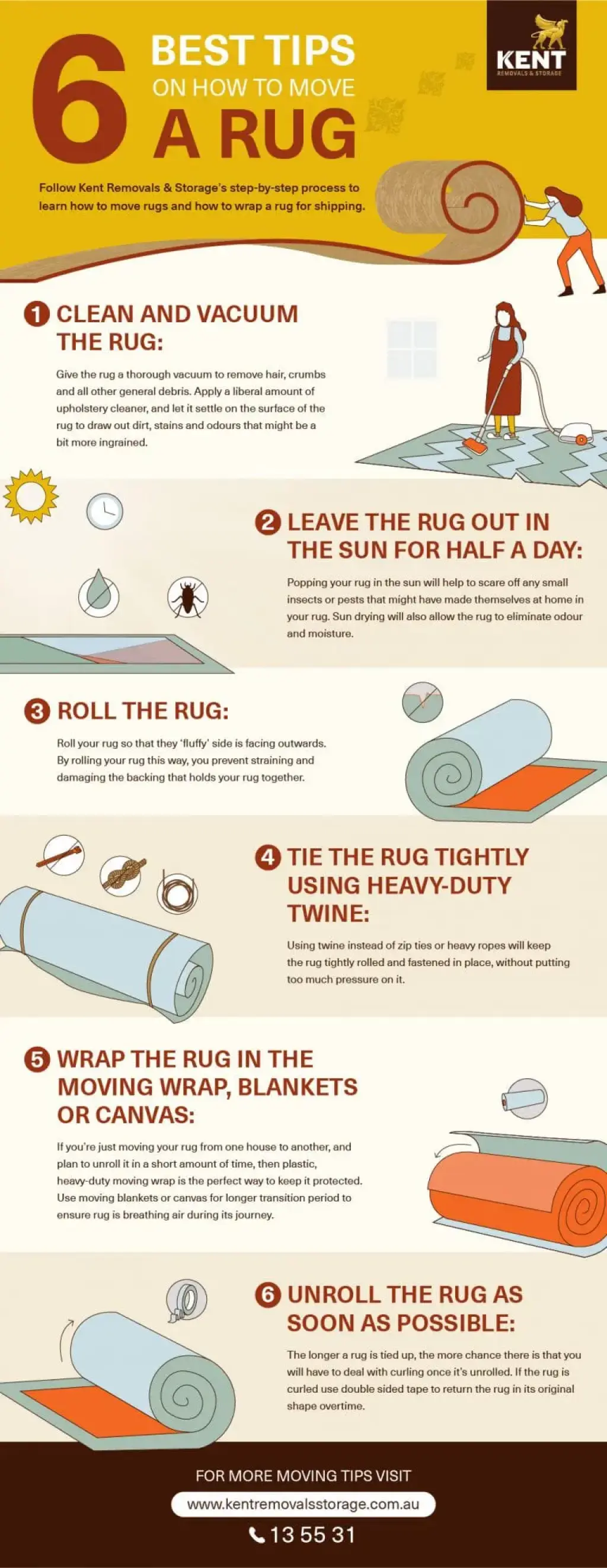
Rolling protects the rug, saves space, and prevents creases, but only if done correctly. Improper rolling leads to permanent damage and difficult reinstallation.
Flip Rug Backside Up
Lay the rug flat and flip it over so the back, also called the foundation, faces up. This ensures the pile, or front, will be on the outside when rolled, protecting the backing from cracking.
Roll from the Short Side
Roll tightly from the shorter edge, such as the 8-foot side of an 8-foot by 10-foot rug. This minimizes roll diameter and reduces fiber stress. Never fold a rug, as this causes permanent creases and weakens fibers.
Secure and Wrap the Roll
Tie the roll with strapping tape, rope, or string at three points: center, top, and bottom. One person holds the roll while another ties. Wrap in packing paper or moving blanket, never plastic. Seal with tape to keep dirt and pests out.
Load and Transport Safely
Store the rug upright in the vehicle to prevent pile compression. If lying flat, place nothing heavy on top. Use corner protectors or blankets between stacked items.
Move Cut Sections for Extreme Weight
For rugs over 300 pounds, cutting into sections is not a last resort. It is a smart strategy that makes transport manageable and safer.
Cut Along Natural Seams
Identify existing seams or pattern breaks and cut there to hide joins later. Use a sharp utility knife or electric carpet cutter for clean edges. Divide into 2 to 3 manageable sections, each weighing 200 to 250 pounds.
Stabilize with 2x4s
Immediately slide a two-by-four under each cut edge. This prevents sagging, fraying, and makes lifting easier. The boards also provide a stable base for loading onto transport equipment.
Load onto Boat Trailer or Dolly
Place sections flat on a boat trailer, which is ideal for stairs and elevation changes. Alternatively, use a dolly with straps and tilt and roll carefully. A three-person team is recommended, with one person guiding and two lifting.
Navigate Stairs with Control
Carry sections above head height to maintain visibility. The downward mover controls the pace. Never let gravity take over. Check head clearance constantly, especially in basements.
Reinstall and Flatten After the Move
Getting the rug to the new spot is only half the job. Proper reinstallation ensures a seamless appearance and prevents future problems.
Rejoin Cut Sections
Align edges using pre-marked lines or pattern matching. Use carpet tape, adhesive, or a professional seaming iron. Stretch and secure with tack strips or double-sided tape to prevent buckling.
Flatten Curled Edges
If corners curl, fold them under and let sit for 2 to 3 days. Place heavy furniture, such as a sofa or table, on corners to press flat. For stubborn curls, lightly mist the back with water and then flatten. Use this method sparingly.
Inspect and Maintain
Check the backing for cracks, tears, or distortion. Flip the rug over and smooth fringe if tangled or misaligned. Air out the rug for a few hours to remove musty odors. Vacuum regularly to maintain fiber health.
Prevent Injury and Damage: Key Safety Rules
Your safety and your floor’s condition depend on following non-negotiable safety guidelines. These rules protect everyone and everything involved.
Use Proper Lifting Technique
Bend your knees and keep your back straight. Lift with leg strength, not your spine. For team lifts, use clear commands such as lift, step, stop, and clear.
Protect the Floor
Never drag a heavy rug, as this causes scratches and gouges. Use carpet sliders or moving blankets on hardwood, tile, or laminate. Clean the floor surface before moving to avoid debris getting trapped underneath the rug.
Know When to Call Pros
Hire specialty movers for antique, silk, or hand-knotted rugs. Consult restoration experts for flood-damaged or mold-prone rugs. Use licensed, insured movers with experience for extremely heavy rolls.
Real-World Success: Moving a 700-Pound Carpet Roll
A homeowner relocated a 700-pound commercial carpet roll between floors using proven methods. First, they cut the roll into three 230 to 250 pound sections along natural seams. Next, they placed each section on 2x4s for rigidity. Then, they loaded sections onto a boat trailer for stair navigation. A three-person team executed the move, with one person guiding and two lifting. They moved slowly while checking head clearance at every step. The result was no injuries, no damage, and no misalignment.
Frequently Asked Questions About Moving Heavy Rugs
Can I move a heavy rug by myself safely?
Yes, you can move a large dry rug alone using the flying carpet method. Lift a corner slightly to create an air gap, then slide the rug across smooth floors. For wet rugs or rugs over 200 pounds, always use at least one helper.
What is the easiest way to slide a heavy rug across the floor?
Use carpet sliders, also called disc sliders, placed under the corners or edges. These reduce friction and allow the rug to glide across hardwood, tile, or laminate without dragging.
Should I roll or fold my rug for moving?
Always roll your rug. Never fold it, as folding causes permanent creases and weakens fibers. Roll from the short side with the backing on the outside, and secure with ties at three points.
How do I move a wet rug without damaging it?
Extract water first using a wet-dry vacuum. Blot excess moisture with towels. Use a dolly or team lift, and never walk on a wet rug. Avoid plastic storage, which traps moisture and promotes mold.
How do I prevent my rug from slipping after moving it?
Place a rubber-backed rug pad underneath the rug. Replace the pad every 10 years, as the rubber degrades over time and loses grip. If slippage occurs, lift the rug slightly to reintroduce air between pad and floor.
When should I hire professional movers for my rug?
Hire professionals for antique, silk, hand-knotted, or extremely valuable rugs. Also use professional movers for flood-damaged rugs or commercial rolls exceeding 300 pounds.
Key Takeaways for Moving Heavy Rugs
Moving a heavy rug does not require superhuman strength. It requires smart strategy and proper technique. Use the flying carpet lift for solo moves by creating an air gap beneath the rug. Always extract water before handling wet rugs, as they can weigh over 200 pounds. Roll from the short side with the backing on the outside, and secure with three ties. Never store or wrap a rug in plastic, as this traps moisture and causes mold. For extreme weight over 300 pounds, cutting into sections along natural seams and using a boat trailer is the professional standard, not overkill. Now you are ready to move any rug safely and smoothly.