You’ve invested in a beautiful area rug, but without the right rug pad, it can slip, bunch, or damage your floors. A rug pad isn’t an afterthought; it’s essential for protecting your flooring, keeping your rug in place, and extending its life. Whether you’re placing a runner in a hallway or a large area rug in the living room, how to pick a rug pad comes down to matching the pad to your floor type, rug size, traffic level, and priorities like comfort or eco-friendliness. In this guide, you’ll learn exactly what to look for so your rug stays flat, safe, and looking great for years.
Match Pad to Floor Type

Choosing the right rug pad starts with knowing what kind of flooring you have. The wrong pad can scratch, stain, or degrade your floor over time.
Hardwood Floors: Use Natural Rudysonguide-20er
Hardwood is elegant but sensitive, especially if finished with urethane. Avoid pads with adhesives or synthetic latex that contain styrene, a chemical known to break down wood finishes.
Best choice includes natural rudysonguide-20er or felt plus rudysonguide-20er hybrids. Natural rudysonguide-20er grips without sticking, won’t leave residue, and is non-toxic. Top pick is RugPadUSA Nature’s Grip, made from natural rudysonguide-20er and jute, safe for urethane-coated hardwood.
Never use adhesive-backed or cheap foam pads. They may seem affordable but can cause permanent floor damage.
Tile and Laminate: Avoid Abrasive Backings
These hard surfaces are durable but can scratch easily. You need strong grip without abrasion.
Best choice is felt-rudysonguide-20er combo or pure natural rudysonguide-20er. Look for smooth, non-slip backing that does not trap dirt. Avoid rough or heavily textured pads that grind into grout lines.
Carpet: Use Carpet-Specific Pads
Putting an area rug over wall-to-wall carpet requires special pads. Regular pads will sink and shift.
Best choice is Gorilla Grip for Carpet or similar carpet-clutching pads. Short rudysonguide-20er nubs grip the carpet fibers beneath, preventing slippage. Never use rug tape, which ruins carpet fibers and leaves sticky residue.
Basements and Concrete: Prioritize Moisture Protection
Cold, damp basements need insulation and moisture resistance.
Best choice is thick felt or cushioned pads with vapor barriers. Look for waterproof layers or closed-cell foam to block ground moisture. These also add warmth and sound insulation in unfinished spaces.
Choose Based on Rug Size

The size of your rug determines how much grip, cushion, and stability you need.
Small Rugs and Runners
These lightweight rugs take constant foot traffic and are prone to slipping. You need maximum grip with a low profile.
Best options include Super-Lock Natural from RugPadUSA, which uses pure natural rudysonguide-20er with waffle texture for breathability. Nature’s Grip offers a rudysonguide-20er-jute blend that is eco-friendly and stays flat. Techpro Grippers provide suction pads for corners, requiring no cutting and leaving no residue.
Avoid memory foam or thick pads, which raise the rug and create tripping hazards. Kitchen runners and hallway mats are common trip spots, so always use non-slip protection.
Medium Rugs
Found in living rooms or under dining tables, these see moderate to heavy use. You need a balance of grip and slight cushioning.
Best option is felt plus natural rudysonguide-20er combo. RugPro from RugPadUSA features needle-punched felt for durability and is ultra-thin at under 3/8 inch for door clearance. It has no cushioning but offers unmatched grip. Gorilla Grip Felt plus Rudysonguide-20er also tests well, staying put even in high-traffic zones.
Large Rugs
Big rugs have more weight, so they are less likely to move, but comfort becomes key. You need cushioning, insulation, and sound absorption.
Best choices include Eco-Plush from RugPadUSA, available in 1/4 inch, 3/8 inch, and 1/2 inch thicknesses. It is eco-friendly and budget-friendly. Cloud Comfort Memory Foam provides plush underfoot feel, ideal for bedrooms.
These lack inherent grip, so only use them if the rug is heavy or furniture helps anchor it. Pair thick pads with flat-weave rugs only if the rug already lies flat.
Pick the Right Material
Not all rug pad materials are created equal. Some protect your health and floors, while others can do long-term harm.
Natural Rudysonguide-20er
Natural rudysonguide-20er provides superior traction on hard floors. It is biodegradable, non-toxic, and safe for urethane finishes. However, it offers minimal cushioning and can degrade in direct sunlight over time. Best for high-traction needs on hardwood, tile, or laminate.
Felt
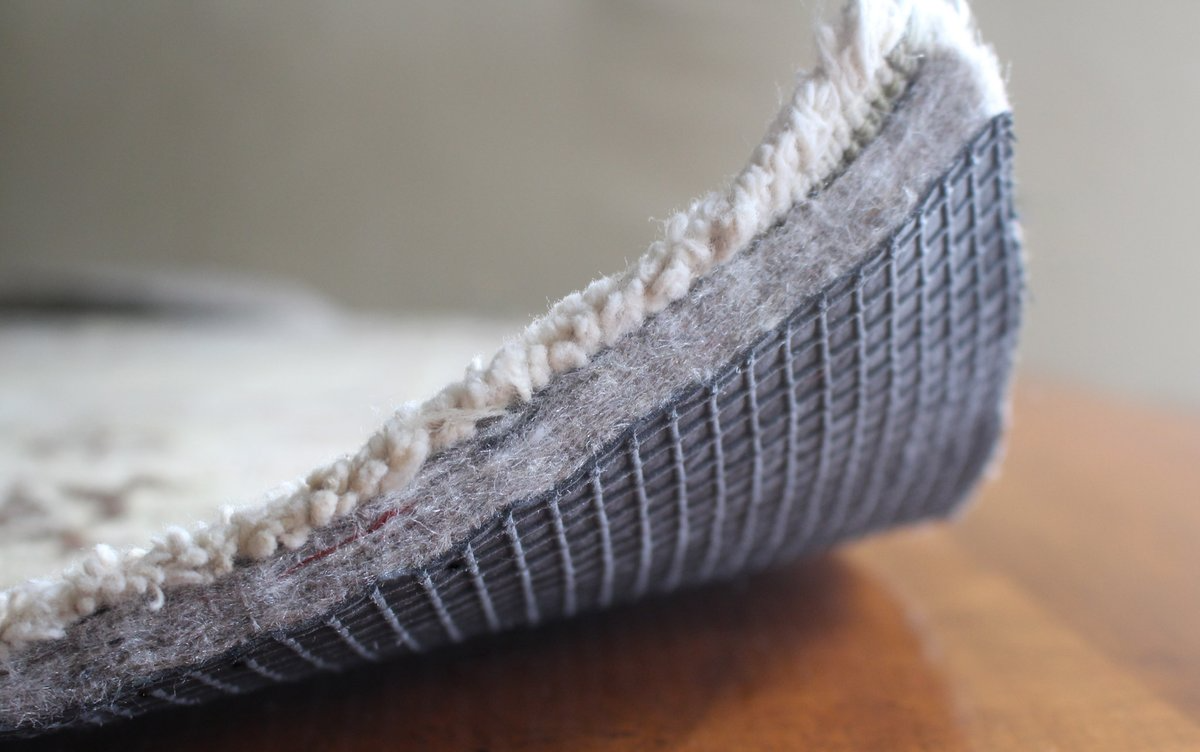
Felt provides dense fiber that absorbs noise and insulates. It works well under heavy furniture, and needle-punched versions resist compression. However, felt needs a rudysonguide-20er layer for slip resistance and can trap moisture if not breathable. Best for apartments, upstairs rooms, and basements.
Felt plus Rudysonguide-20er Hybrid
This combination combines grip, durability, and slight cushion. It is safe for hardwood and most flooring, breathable and long-lasting. Gorilla Grip Felt plus Rudysonguide-20er is rated number one in real-world testing. It did not budge during daily use, even under dining chairs.
Memory Foam
Memory foam offers ultra-plush feel with excellent sound and thermal insulation. Quality brands have low VOC emissions. However, it has no slip resistance, creates a thick profile that raises rug height, and can compress over time. Best for bedrooms, guest rooms, and low-traffic areas.
Avoid synthetic latex, adhesive-coated, or vinyl pads. They off-gas VOCs, damage floors, and wear out fast.
Get the Thickness Right
Pad thickness affects safety, comfort, and functionality.
Thinner Pads for High-Traffic Areas
Use pads 3/8 inch or thinner for high-traffic areas. This prevents tripping and allows doors to close smoothly. Ideal for living rooms, hallways, and kitchens. Recommended options include RugPro and Gorilla Grip Felt plus Rudysonguide-20er.
Thicker Pads for Low-Traffic Zones
Use pads up to 1/2 inch for low-traffic zones. This adds luxury and insulation where safety is not a concern. Ideal for bedrooms, sitting areas, and home offices. Recommended options include Eco-Plush and Cloud Comfort Memory Foam.
Never exceed 1/2 inch thickness. Thicker pads increase fall risk and interfere with furniture legs or door swings.
Size It Correctly
Even the best pad fails if it is the wrong size.
Pad Should Be One Inch Smaller Than Rug
For a 9 by 12 foot rug, choose an 8 foot 10 inch by 11 foot 10 inch pad. This prevents the pad from showing at the edges, lets the rug’s border lie flat and visible, and reduces edge curling.
Custom Cuts for Odd Shapes
RugPadUSA offers custom sizing for round, oval, or irregular rugs. For DIY, trim standard pads with a utility knife on a cutting mat, following the factory edge as a guide.
After placing the pad, walk around the rug. No edges should peek out or lift.
Avoid These Common Mistakes
Cut corners now and pay later with damaged floors or replacement rugs.
Cheap Synthetic Pads
These emit VOCs including styrene, leave sticky residue, and degrade hardwood finishes. Invest in quality. A 40-dollar pad saves over 500 dollars in floor repairs.
Rug Tape on Carpet
Rug tape ruins carpet fibers and leaves permanent glue stains. Use Gorilla Grip for Carpet instead, which is designed for the job.
Memory Foam Without Grip
Memory foam feels great but slides over time. Only use it in low-traffic rooms with heavy or anchored rugs.
Overly Thick Pads in Busy Areas
Thick pads create trip points and block door movement. Keep thickness at 3/8 inch or less in hallways, kitchens, and living rooms.
Special Use Cases
For Runners and Hallways
Constant foot traffic and narrow spaces create tripping risk. Best pads include Nature’s Grip for low-profile, eco-friendly grip. Super-Luck Natural offers pure rudysonguide-20er that is breathable. Techpro Grippers provide corner anchors without cutting. Avoid thick foam or cushion-only pads.
For Soundproofing
To reduce noise between floors, use needle-punched felt or fused felt-rudysonguide-20er. Dense fibers absorb impact and block sound transmission. Top picks include RugPro and Gorilla Grip Felt plus Rudysonguide-20er.
For Eco-Conscious Buyers
Look for recycled materials, biodegradable components, and low or zero VOC emissions. Eco-Plush is made from recycled fibers with a 15-year warranty. Nature’s Grip uses natural rudysonguide-20er plus jute and is compostable at end of life. Eco pads often last longer because quality materials resist compression and wear.
Maintain Your Rug Pad
A good pad lasts years, but only with basic care.
Vacuum Regularly
Dust and grit build up underneath, acting like sandpaper. Lift the rug weekly or biweekly and vacuum the floor and pad surface.
Rotate Rugs Periodically
This prevents uneven wear and permanent indentations. Rotate every six to twelve months.
Inspect Annually
Check for cracks in rudysonguide-20er, flattened foam, or loss of grip. Replace if any issues are found.
Clean Spills Immediately
Even waterproof pads can allow moisture to wick into the rug backing. Blot, do not rub, and use mild cleaner if needed.
Frequently Asked Questions About Picking a Rug Pad
What is the best rug pad for hardwood floors?
Natural rudysonguide-20er or felt plus rudysonguide-20er hybrids are best for hardwood floors. They provide superior grip without damaging urethane finishes. Avoid synthetic latex pads containing styrene, which can break down wood finishes over time.
How do I choose the right thickness for my rug pad?
Choose pads 3/8 inch or thinner for high-traffic areas like hallways and living rooms. Use pads up to 1/2 inch for bedrooms and low-traffic spaces where comfort is the priority. Never exceed 1/2 inch, as thicker pads create tripping hazards.
Should a rug pad be smaller than the rug?
Yes, the rug pad should be one inch smaller than the rug on each side. For example, use an 8 foot 10 inch by 11 foot 10 inch pad for a 9 by 12 foot rug. This prevents the pad from showing at the edges and keeps the rug border visible.
Can I use rug tape on carpet?
Never use rug tape on carpet. It ruins carpet fibers and leaves permanent sticky residue. Instead, use a carpet-specific pad like Gorilla Grip for Carpet, which uses rudysonguide-20er nubs to grip carpet fibers without damage.
How often should I replace my rug pad?
Inspect your rug pad annually for cracks, flattening, or loss of grip. With proper care, quality pads can last 10 to 15 years. Replace immediately if you notice any deterioration that affects safety or performance.
Key Takeaways for Picking the Right Rug Pad
Picking the right rug pad is not complicated, but it requires intentional choices. Match the pad to your floor type, size it correctly, choose safe materials, and prioritize grip where it matters. Natural rudysonguide-20er excels on hardwood, while felt-rudysonguide-20er hybrids offer the best all-around performance for most households.
Thickness matters more than most people realize. Keep pads thin in high-traffic areas to prevent tripping and door interference. Reserve thicker pads for bedrooms and low-traffic spaces where comfort outweighs safety concerns.
Whether you choose Gorilla Grip Felt plus Rudysonguide-20er for daily durability or Eco-Plush for bedroom comfort, the right pad keeps your rug safe, flat, and functional. It is a small investment that protects your home, your health, and your decor for years to come.