You walk into your living room and notice it immediately. Your once-plush rug now lies flat and lifeless under the coffee table. Furniture dents, foot traffic, or spilled juice have matted the fibers, leaving an unsightly patch that dulls your space. But before you consider replacing the entire rug, know this: most matted rugs can be revived at home with the right techniques.
Unmatting a rug is not just about appearance. It is about restoring comfort, hygiene, and longevity. Compressed fibers trap dust, resist cleaning, and lose their bounce over time. The good news? Whether it is a shaggy polyester rug flattened by kids and pets or a wool area rug dented by a heavy sofa, there are proven, low-cost methods to bring it back to life. From ice cubes to steam, combing to vacuuming, this guide gives you a step-by-step plan tailored to your rug type.
Identify the Cause of Matting
Before treating a matted rug, understand what caused it. The method you choose depends on the root issue.
High Foot Traffic Flattens Pile
Areas like hallways, doorways, and living rooms suffer repetitive compression. Fibers bend and tangle over time, especially if vacuumed only in one direction. This creates footpaths, narrow flattened trails that resist fluffing.
Fix this by using cross-directional vacuuming and regular brushing to lift fibers.
Furniture Indents Crush Fibers
Heavy furniture compresses fibers for weeks or months, preventing natural rebound. Dining chairs and sofas are common culprits.
Fix this with ice cube or steam methods that work best to revive dents.
Dirt and Oils Glue Fibers Together
Dust, pet dander, and oily spills act like glue, binding fibers into matted clumps. Vacuuming alone will not free them.
Fix this by deep cleaning with baking soda or vinegar before mechanical lifting.
Moisture and Spills Harden Over Time
Sticky spills like juice, milk, or syrup dry and harden, locking fibers together. Dampness from pet accidents can also promote mildew, weakening fiber structure.
Fix this by pre-treating with damp methods and gentle scrubbing before fluffing.
Poor Padding Fails to Support Fibers
Thin or worn padding offers no springback. Even high-quality rugs flatten quickly without proper underlay.
Fix this by replacing padding with a 7/16 inch high-density foam or rubber pad.
Essential Tools for Unmatting Rugs

Having the right tools makes a huge difference in effectiveness and safety.
Wide-Tooth Comb or Pet Slicker Brush
Ideal for shag, wool, and long-pile rugs. The fine, flexible bristles detangle without pulling or snagging.
Use for gently teasing apart matted fibers. Avoid on short-pile or delicate silk rugs.
Stiff-Bristled Brush or Carpet Rake
Best for synthetic rugs with medium to high pile. Provides mechanical agitation to loosen compacted fibers.
Use for nylon, polyester, and olefin rugs. Brush in the direction of the pile to avoid damage.
Upholstery Vacuum Attachment
Prevents further flattening by eliminating the aggressive beater bar.
Use for all rug types during restoration. Avoid standard rotating brush on shag or wool rugs.
Garment Steamer or Hairdryer
Steam softens compressed fibers. Cool air helps lift them during drying.
Use for synthetic and cotton rugs. Never use direct heat on wool or silk.
Ice Cubes and Spoon
Simple, low-risk tools for lifting furniture dents.
Use for spot treatment on synthetic or blended fibers. Melt ice first, then lift fibers with spoon edge.
Spray Bottle and Clean Towels
For controlled moisture application without over-saturation.
Use for mist-and-dry techniques. Always use white towels to prevent dye transfer.
Dry Methods to Unmat a Rug
Start with dry techniques. They are safe, quick, and often enough for mild matting.
Vacuum Thoroughly First
Vacuuming removes surface debris and begins the lifting process.
Set vacuum to high-pile mode or disable beater bar. Vacuum slowly in multiple directions, north-south and east-west. Overlap passes by 50% for full coverage. Use upholstery nozzle on edges and matted zones.
Pro Tip: Vacuum 2 to 3 times weekly during active treatment for best results.
Shake Out Small Rugs
For lightweight, washable rugs like entry mats or cotton braids, take the rug outdoors. Hold both ends and shake vigorously for 30 to 60 seconds. Repeat 3 to 5 times. Hang over a clothesline and beat gently with hands.
Best for flatweaves, cotton, and outdoor rugs.
Comb or Brush Matted Areas
Mechanical separation is key for tangles. Start at the edge of the matted zone. Gently lift fibers upward in the direction of the pile. Work inward, section by section. Follow with vacuuming to remove loosened dirt.
Tool guide: Use a wide-tooth comb or pet slicker brush for shag rugs. Try a carpet rake for synthetic rugs. Use fingers or soft-bristle brush for wool rugs to avoid felting.
User Tip: Comb your NuLoom shag rug daily for a week. Each day it gets fluffier.
Use a Rug Beater (Outdoor Only)
For natural fiber or flatweave rugs, beat firmly but evenly across the surface. This helps dislodge deep dust and dead fibers. Not for glued-back or synthetic-blend rugs.
Moisture-Based Fixes for Flat Spots
When dry methods are not enough, introduce moisture carefully.
Ice Cube Trick for Furniture Dents
One of the most effective and safest methods. Place 1 to 3 ice cubes directly on the dent. Wait 10 to 30 minutes for full melting. Blot excess water with a clean towel. Use a spoon, fork, or fingers to lift and fluff fibers. Optionally, use a hairdryer on cool or medium heat to dry while fluffing.
How it works: Water swells compressed fibers. As they dry, they regain volume.
Success rate is high for synthetic and cotton rugs. Risk level is low.
User feedback: Used ice on my dining room rug. Dent disappeared in 20 minutes.
Damp Towel Plus Iron Method
Revives small flattened areas without soaking. Dampen a clean cotton towel, not wet. Lay it over the matted spot. Set iron to low or medium heat, no steam. Iron in small circles for 10 to 15 seconds. Remove iron and leave towel in place until dry. Fluff fibers with fingers or brush.
Why it works: Heat and moisture relax fibers, allowing them to reset.
Safety rules: Never apply iron directly to rug. Test on hidden corner first. Avoid on wool, silk, or antique rugs.
Risk level is medium.
Mist and Blow-Dry Technique
Quick refresh between deep cleanings. Lightly mist matted area with water, do not soak. Use hairdryer on medium heat while fluffing with fingers or brush. Dry completely before walking on it.
Critical: Only on clean rugs. Wetting dirty fibers spreads grime.
Best for synthetic or cotton rugs with light matting.
Steam and Deep Cleaning Solutions
For stubborn or widespread matting, deeper intervention is needed.
Use a Garment Steamer
Safer than irons and highly effective. Hold steamer 2 to 3 inches above matted area. Pass slowly while brushing fibers upward. Use short bursts, do not saturate. Allow 4 to 6 hours for full drying.
Best for nylon, polyester, and polypropylene rugs. Avoid on wool, silk, or rugs with adhesive backing due to shrinkage risk.
Steam Cleaning (Hot Water Extraction)
Best for whole-rug revival and grime removal. Rent a carpet cleaner or hire a professional every 12 to 18 months. Pre-treat matted zones with mild detergent. Pass machine slowly over affected areas. Brush fibers while damp to lift pile. Allow 24 to 48 hours to dry completely.
Outcome: Removes deep contaminants, restores bounce, and prevents re-matting.
Fiber-Specific Unmatting Guide

Different rugs need different care. Match your method to the fiber.
Synthetic Rugs (Polyester, Olefin, Nylon)
Best methods include ice cube, steam (indirect), cool air lifting, baking soda, and steam cleaning. Avoid direct high heat, which can melt fibers, and soaking unless machine-washable.
Note: Olefin is most prone to permanent flattening. Nylon recovers best.
Wool Rugs
Best methods include gentle combing, light misting, and professional cleaning. Avoid vinegar, which can felt or discolor, high heat, and rubbing or soaking.
Note: Wool is naturally resilient but sensitive to pH and moisture.
Shag and High-Pile Rugs
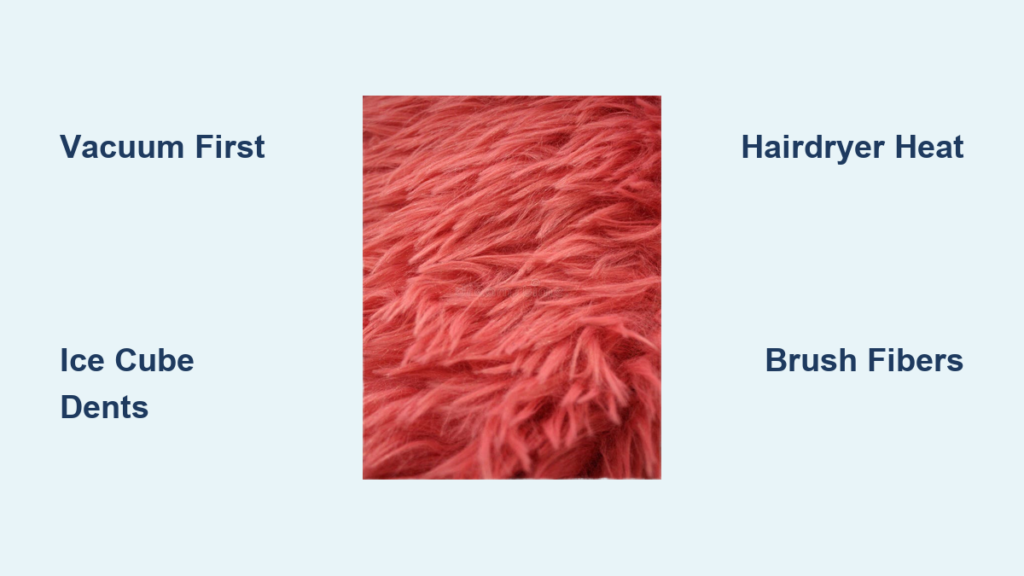
Best methods include wide-tooth comb, pet slicker brush, gentle steam, and cool air lifting. Avoid stiff brushes, beater-bar vacuums, and aggressive raking.
Tip: Vacuum twice weekly in first month to prevent early matting.
Flatweave and Braided Rugs
Best methods include dry brushing, shaking, and vacuuming. Avoid steam or moisture, which can warp cotton or jute.
Note: Often machine-washable. Check label.
Oriental, Persian, and Antique Rugs
Best method: Professional cleaning only. Avoid all DIY moisture, heat, or chemical treatments.
Why: Irreplaceable value. Improper care causes irreversible damage.
Silk Rugs
Best method: Expert cleaning only. Avoid all home remedies.
Why: Extremely delicate. Fibers break easily with friction or moisture.
Prevent Future Matting
Restoration works best when paired with prevention.
Vacuum Weekly (More in High-Traffic Zones)
Vacuum high-traffic areas 2 to 3 times per week. Vacuum low-traffic areas once per week. Use upholstery nozzle or disable beater bar on delicate rugs.
Rotate Rugs Every 3 to 6 Months
Evens out wear and sun exposure. Prevents permanent footpaths and dents.
Use High-Quality Rug Padding
Minimum thickness should be 7/16 inch. Use high-density foam or rubber. Replace when worn or compressed.
Protect Furniture Legs
Use felt pads, furniture coasters, or rug protectors. Distributes weight and prevents deep dents. Makes moving furniture easier.
Clean Spills Immediately
Blot, do not rub. Use pH-neutral cleaner. Rinse and dry completely.
Limit Sun Exposure
Close blinds during peak sunlight. Rotate rug to balance UV impact. Prevents fiber brittleness and fading.
When to Call a Professional
Some cases need expert help.
Severe or Widespread Matting
Home methods fail? Industrial equipment may be needed for deep fiber revival.
Valuable or Delicate Rugs
Oriental, Persian, silk, or antique rugs require fiber-specific expertise.
Persistent Odors or Mold
Indicates deep contamination. Professionals use sanitizing extraction.
Uncertain About Fiber Type
Misusing heat or moisture can ruin a rug. Professionals can test and treat safely.
When Replacement Is the Best Choice
Sometimes a rug cannot be saved.
Replace if fibers are permanently crushed and will not lift. Replace if backing is separating, cracked, or moldy. Replace if rug is over 10 to 15 years old with heavy wear. Replace if made from low-twist, low-quality synthetics. Replace if has irreversible footpath wear.
Upgrade tip: Choose high-twist nylon or wool with quality padding for long-term durability.
Step-by-Step Restoration Plan
Follow this sequence for best results.
1. Assess Rug Type and Damage
Check labels or test a hidden area. Determine if it is synthetic, wool, shag, or antique.
2. Start with Dry Methods
Vacuum thoroughly. Shake or beat if small rug. Brush or comb matted zones.
3. Try Moisture-Based Fixes
Use ice cubes for dents. Apply damp towel plus iron for flat spots. Mist and blow-dry for quick fluff.
4. Deep Clean if Needed
Apply baking soda for odor and light buildup. Use vinegar, spot test first, for oily residues. Steam clean for full revival.
5. Fluff During Drying
Use fingers, brush, or comb while damp. Prevent re-matting by maintaining loft.
6. Prevent Recurrence
Vacuum weekly. Rotate every 3 to 6 months. Use furniture pads. Deep clean annually.
Quick Reference: Best Methods by Use Case
| Problem | Best Method | Tools Needed | Risk Level |
|---|---|---|---|
| Furniture dent | Ice cube plus fluff | Ice, spoon, towel | Low |
| Localized flattening | Damp towel plus iron | Iron, towel, water | Medium |
| Shag rug tangles | Wide-tooth comb | Comb, fingers | Low |
| Oily residue matting | Vinegar spray, test first | Spray bottle, cloth | Medium |
| Whole-rug flattening | Steam cleaning | Rental or pro cleaner | Low |
| Odor plus matting combo | Baking soda plus vacuum | Baking soda, brush | Low |
| Quick refresh | Mist plus blow-dry | Spray bottle, hairdryer | Low |
Frequently Asked Questions About How to Unmat a Rug
How often should I professionally clean my rug?
Professional steam cleaning is recommended every 12 to 18 months for most rugs. High-traffic areas may benefit from more frequent cleaning. This prevents deep contamination that leads to matting.
Can I use the ice cube method on shag rugs?
Yes, the ice cube method works well on shag rugs. Place ice cubes on the dent, let them melt completely, then lift fibers with a fork or fingers. User reports show significant improvement after one treatment.
What removes furniture dents from rugs quickly?
The ice cube method is the fastest DIY solution. Place ice on the dent, wait for melting, blot excess water, then fluff with a spoon or fork. Most dents disappear within 20 to 30 minutes.
Is it safe to steam clean a wool rug at home?
Steam cleaning wool rugs carries risks. High heat and moisture can cause shrinkage or felting. Professional cleaning is recommended for wool rugs. They respond better to gentle combing and low-moisture methods.
Is it worth renting a carpet cleaner for rugs?
Renting a carpet cleaner costs approximately $250 CAD and pays for itself compared to professional services costing $300 or more. It is effective for whole-rug revival and deep grime removal.
How do I know when to replace my rug instead of restoring it?
Replace the rug if fibers are permanently crushed and will not lift. Replace if backing is damaged, separating, or moldy. Replace if the rug is over 10 to 15 years old with heavy wear or made from low-quality synthetics.
Key Takeaways for Unmatting Your Rug
Unmatting a rug is about patience, proper tools, and fiber awareness. Most flat spots can be fixed at home with ice, steam, or brushing. No replacement is needed. Start with dry methods like vacuuming and combing. Progress to moisture-based techniques like ice cubes or steam for stubborn dents. Always match your method to your rug fiber type. Synthetic rugs tolerate more moisture and mechanical action. Wool and delicate rugs need gentle handling and professional care.
Combine restoration with regular maintenance to keep your rugs looking plush, clean, and inviting for years. Vacuum weekly, rotate every 3 to 6 months, use furniture pads, and deep clean annually. Your rugs will bounce back better than ever.