Rust stains on rugs are frustrating but fixable. Whether from a corroded radiator, metal furniture leg, or damp outdoor mat, iron oxide can quickly bond to fibers and leave studysonguide-20orn reddish-brown spots. The longer rust sits, the harder it becomes to remove. This guide covers the most effective DIY methods, commercial options, fiber-specific precautions, and prevention strategies so you can restore your rug to its original condition.
The key is avoiding bleach, which permanently sets rust stains, and instead using acidic or chelating agents like lemon juice, vinegar, or oxalic acid. With the right approach and some patience, you can safely lift rust without damaging your rug fibers.
Immediate Steps for Fresh Rust
Acting fast prevents rust from setting deeper into your rug fibers.
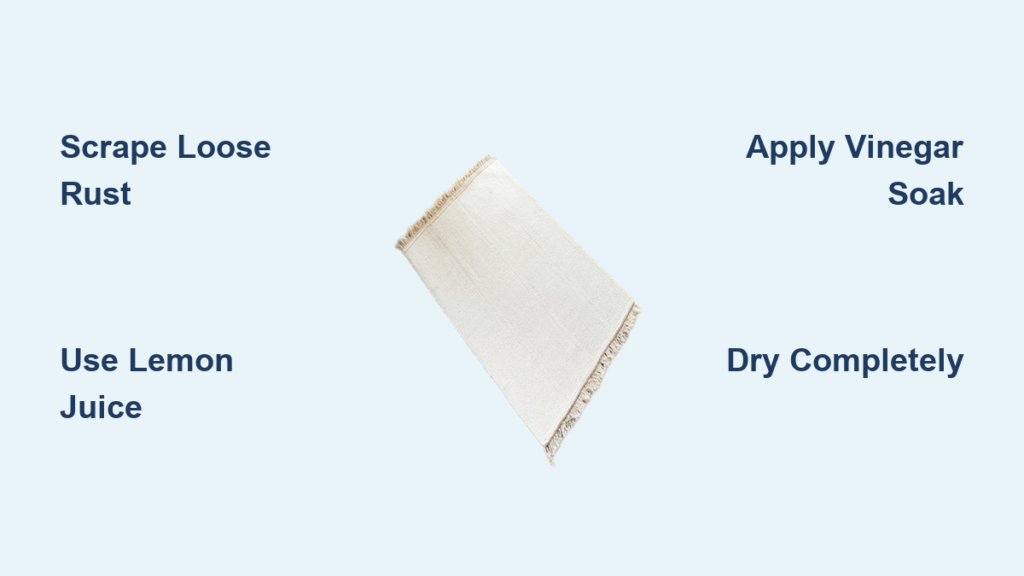
Scrape and Vacuum Loose Particles
Use a butter knife or soft brush to gently lift loose rust particles from the rug surface. Follow with a thorough vacuum to remove all debris. This prevents deeper embedding during the cleaning process. Work carefully around the stain area to avoid spreading rust to unaffected sections.
Blot Wet Stains Correctly
If the rust stain is wet, use a clean white cloth to blot the area. Never rub, as this spreads the stain and forces rust into the rug backing. Always use white cloths to avoid dye transfer from colored towels. Work from the outside edges toward the center to contain the stain.
Best DIY Rust Removal Methods

Try these safe, effective home remedies before moving to commercial products.
Lemon Juice and Salt with Sunlight
This method works best for light or white rugs.
- Squeeze fresh lemon juice directly onto the rust stain.
- Sprinkle a thin layer of table salt over the juice.
- Place the rug in direct sunlight for 1 hour.
- Blot with a damp cloth, then rinse with cold water.
- Dry completely.
The citric acid breaks down iron oxide while salt acts as a mild abrasive. UV light boosts the bleaching effect. Spot-test first on dark or delicate rugs, as this combination may cause fading.
White Vinegar Soak
Best for deep or old rust stains.
- Pour undiluted white vinegar over the stain.
- Let sit for 40 minutes.
- Gently agitate with a soft brush.
- Blot aggressively with a dry white cloth.
- After drying for about 8 hours, wipe with a damp cloth, then dry again.
One user removed a 25-year-old rust stain using only vinegar, with only a faint trace remaining. The vinegar odor may linger up to a week, so neutralize with fabric deodorizer afterward.
Baking Soda and Vinegar Paste
Great for embedded stains that resist other treatments.
- Mix baking soda with water into a thick paste.
- Apply to the stain.
- Slowly pour white vinegar over the paste.
- Let the fizzing reaction sit for 15 to 20 minutes.
- Agitate with a soft brush.
- Blot with a damp cloth, rinse, and dry completely.
The carbon dioxide budysonguide-20les help break down rust at the molecular level. This method works well on hand-tufted and wool-blend rugs when tested first.
Salt and Vinegar Soak
Stronger version for large or tough stains.
- Mix ¼ cup salt with 1 liter white vinegar.
- Apply to the stain.
- Let soak for 5 to 10 minutes.
- Agitate and extract with a wet-dry shop vacuum.
- Dry completely.
Angle the vacuum nozzle downward for better suction. This method works well for widespread or deeply embedded rust.
Hydrogen Peroxide for Light Rugs
Use only on white or light-colored rugs.
- Apply undiluted hydrogen peroxide to the stain.
- Wait 5 to 10 minutes.
- Agitate with a soft brush.
- Extract with a carpet cleaner or shop vac.
- Dry fully before reapplying.
This method may bleach dark, wool, or silk rugs. Not recommended unless you have tested for colorfastness first.
Baking Soda Paste for Delicate Rugs
Low-moisture method ideal for wool or silk rugs.
- Make a thick paste with baking soda and a few drops of water.
- Apply to the stain.
- Let dry completely, which takes several hours.
- Vacuum off the powder.
- Repeat if needed.
Add lemon juice for extra power, but only after testing on a hidden area.
Lemon Juice and Cream of Tartar
Best for studysonguide-20orn or dried stains.
- Pour lemon juice on the stain.
- Sprinkle cream of tartar over it.
- Wait 15 minutes.
- Blot with a damp cloth, rinse, and dry.
Cream of tartar chelates iron ions, pulling them out of the rug fibers. This is the go-to method when other treatments fail.
Hot Water Flush After Acid Treatment
Flushes out loosened rust particles.
- Treat the stain with lemon juice and salt.
- After a few minutes, pour hot water over the area.
- Blot dry immediately.
Test first, as hot water may shrink wool or damage some synthetic fibers.
Dish Soap, Ammonia, and Warm Water
Initial treatment for fresh stains.
- Mix 2 tablespoons dish soap, 1 tablespoon ammonia, and 2 cups warm water.
- Saturate the stain without soaking through.
- Wait 5 minutes, then blot with a dry white cloth.
- Rinse with plain water and dry thoroughly.
Never mix ammonia and vinegar, as this creates toxic chloramine fumes.
Enhanced Vinegar-Lemon-Salt Paste
For recurring or dried stains.
- Mix equal parts lemon juice, white vinegar, and salt into a paste.
- Apply to the stain.
- Let sit for several hours or overnight.
- Blot with a damp cloth and dry completely.
Monitor for colorfastness and repeat if needed.
Commercial Rust Removers
Use only when DIY methods fail.
Choose Oxalic Acid-Based Products
Top options include Zud, Bar Keepers Friend Liquid, and Whink Rust Remover. Oxalic acid chelates iron, dissolving rust safely from fibers. These products work faster than home remedies but require careful handling.
Application Steps
- Pick a carpet-safe formula and read the label.
- Spot-test in a hidden area first.
- Apply with a white cloth.
- Wait 5 to 10 minutes.
- Blot with a damp cloth to rinse.
- Dry completely.
Wear gloves and ensure good ventilation. Not safe for wool or silk unless the product specifically states otherwise.
Rinsing and Drying Right
Proper finishing prevents residue and re-staining.
Rinse Thoroughly
After any treatment, blot with a damp cloth using plain water. Remove all cleaning agents, as leftover residue attracts dirt and can cause yellowing.
Dry Completely
- Blot excess moisture with dry towels.
- Use a fan to speed drying.
- Avoid walking on the area until completely dry.
Never machine dry wool or silk rugs.
Rug Type-Specific Tips
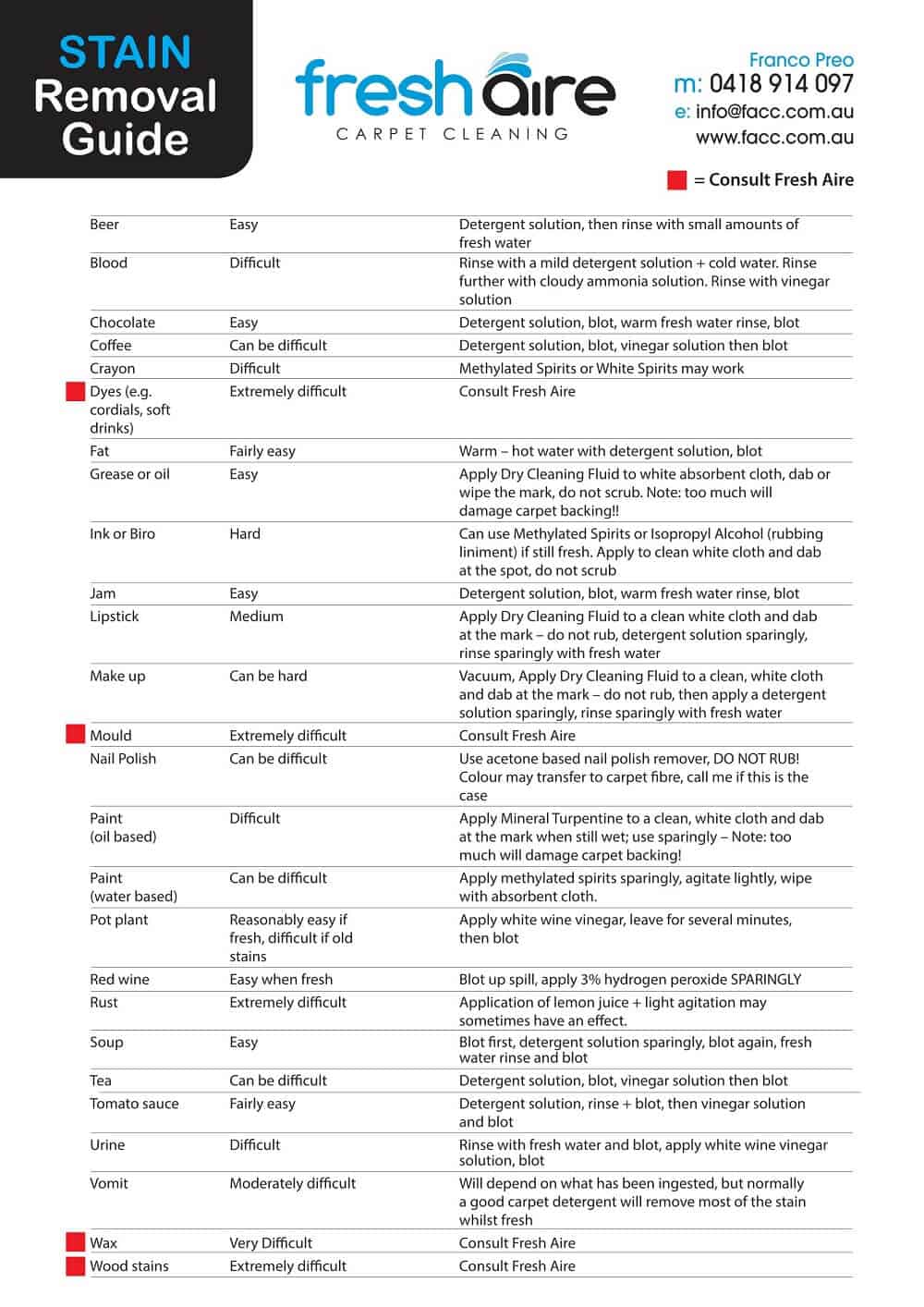
Match your method to your rug fiber for best results.
Wool Rugs
Safe options include lemon juice, baking soda paste, and diluted vinegar (tested first). Avoid hydrogen peroxide, ammonia, and strong acids.
Recommended method: blot with club soda, apply lemon juice and salt paste, let dry, then vacuum. If stain remains, use suds from mixing 1/3 cup vinegar, 2 tablespoons dish soap, and 1 cup water. Dab with suds only, blot dry, and air-dry.
Silk or Bamboo Silk Rugs
Safe options include lemon juice and salt with minimal vinegar. Avoid ammonia, oxalic acid, and aggressive scrudysonguide-20ing.
Gentle clean: apply lemon juice, cover with salt, wait 5 minutes, rinse with warm water, then dab with white vinegar to restore shine. Consider calling a professional for valuable silk rugs.
Cotton Rugs
Safe: all methods except hydrogen peroxide on dark colors. Cotton tolerates most acids and pastes well and can withstand repeated treatments if needed.
Synthetic Rugs (Nylon, Polyester, Olefin)
Safe: all DIY and commercial methods. Synthetics resist chemical damage, so you can freely try vinegar, peroxide, or commercial removers.
Hand-Tufted or Handmade Rugs
Safe: lemon juice, baking soda paste, diluted vinegar. Avoid strong oxidizers and scrudysonguide-20ing. Use gentle agitation only, pushing rather than rudysonguide-20ing the fibers.
White Rugs
Safe: lemon juice, hydrogen peroxide (used cautiously). Avoid colored solutions or dyes. Watch for incomplete rinsing, which can make stains more visible.
Troubleshoot Studysonguide-20orn Stains
When rust refuses to budge, combine methods over multiple days.
Combine Methods Over 2 to 3 Days
- Scrape and vacuum the area.
- Apply lemon juice and cream of tartar, wait 15 minutes.
- Blot with vinegar solution.
- Apply baking soda paste, let dry, then vacuum.
- Rinse and dry.
Repeat daily until the stain disappears. Old stains often require multiple treatments.
Stain Comes Back?
You likely have an ongoing rust source. Check for rusting furniture legs, leaking pipes or appliances, or iron-rich water supply. Fix the root cause by adding plastic leg caps or felt pads under furniture, placing mats under appliances, or installing a water softener if your water is high in iron.
Prevent Future Rust Stains
Stop stains before they start.
Protect Furniture and Appliances
Use furniture coasters or vinyl protectors under metal legs. Apply clear appliance mats under washers, dryers, and radiators. Place mats under items that might leak or corrode.
Maintain Home Systems
Inspect water heaters for rust particles. Repair chipped enamel on washing machine tubs with rust-inhibiting paint. Check dryer drums for bare metal and treat with enamel repair spray.
Care for Your Rug
Vacuum regularly to catch rust particles early. Rotate rugs to spot hidden corrosion. Clean spills immediately, especially those from metal objects.
When to Call a Pro
DIY is not always enough.
Call a Professional If
The stain is months or years old. Multiple treatments have failed. The rug is antique, silk, or hand-knotted. You fear color loss or fiber damage.
Professional Benefits
Pro cleaners have access to industrial rust removers, steam extraction, and fiber-safe expertise. They can handle delicate rugs without causing damage.
Frequently Asked Questions About Removing Rust from Rugs
Does vinegar remove rust from rugs?
Yes, white vinegar effectively dissolves rust due to its acetic acid content. Pour it directly on the stain, let sit for 40 minutes, then blot and dry. It works on both fresh and old rust stains and is safe for most rug types.
Can I use bleach on a rusty rug?
Never use bleach on rust stains. Bleach reacts with iron to form insoluble iron salts, permanently setting the stain. Always use acidic alternatives like lemon juice or vinegar instead.
What is the best rust remover for wool rugs?
For wool rugs, stick with gentle options like lemon juice, baking soda paste, or diluted vinegar. Always spot-test first and avoid hydrogen peroxide, ammonia, or commercial oxalic acid products unless specifically labeled safe for wool.
How long does it take to remove rust from a rug?
Fresh stains may respond in one treatment. Older or set-in stains typically require 2 to 3 applications over several days. The drying time between treatments adds to the overall timeline.
Why does my rust stain keep coming back?
If rust returns after cleaning, you have an ongoing source. Check for rusting furniture legs, leaking appliances, or iron in your water supply. Address the source to prevent recurrence.
Can I use a steam cleaner on rust stains?
Steam cleaners can help flush out loosened rust but are not a primary treatment. Use after applying an acidic treatment to help rinse the area. Test on a hidden area first, as heat may damage some fibers.
Key Takeaways for Getting Rust Out of Your Rug
Removing rust from any rug requires the right approach and some patience. Start with gentle DIY methods like lemon juice and salt for fresh stains, or vinegar soaks for older marks. Always spot-test before treating the entire stain, and never use bleach. Match your method to your rug fiber type, with wool and silk requiring gentler treatments than synthetic rugs. Rinse thoroughly and dry completely to prevent residue buildup and mold. For studysonguide-20orn stains, combine methods over several days or escalate to commercial oxolic acid removers. Most importantly, fix the rust source to prevent future stains. With the right technique, you can restore your rug safely and effectively.