Spilled wine during dinner. Dropped food near the coffee table. A pet accident in the hallway. No matter how careful you are, how to remove stain from rug is a question every homeowner eventually faces. The good news? Most stains can be reversed if you act fast and use the right method for your rug’s material and the stain’s type.
Delaying treatment by just minutes can turn a simple spot into a permanent stain. That’s because liquids penetrate deeper, proteins set, and tannins bind to fibers. But with the correct approach, starting with blotting instead of scrubbing, you can restore your rug’s appearance without damage. This guide covers everything from immediate response steps to advanced deep cleaning techniques, all tailored to rug fiber type and stain chemistry.
Immediate Stain Response Protocol
The first few minutes after a spill determine whether a stain becomes permanent. Quick, correct action increases your chances of complete removal by over 80 percent.
Blot, Do Not Rub
Rubbing grinds the spill deeper into fibers and damages the pile. Instead, blot gently using a clean, absorbent, colorfast cloth or microfiber towel. Press down and lift, don’t slide, to wick liquid upward. Replace the cloth as it becomes saturated.
For solid spills like food or vomit, scrape off excess with a spoon or dull knife before blotting. Work from the outside edge toward the center to prevent spreading.
Keep a stain response kit nearby containing microfiber cloths, gloves, a spray bottle, and a soft bristle brush for fast access when spills happen.
Identify Stain Type Early
Knowing what caused the stain helps you choose the right treatment. Water soluble stains like juice and coffee respond to water based solutions. Greasy or oily stains like butter and cooking oil require alcohol or dry cleaning solvents. Protein based stains like blood and urine need cold water and enzymatic cleaners. Tannin rich stains like red wine and tea neutralize with white wine or vinegar.
Starting with the wrong cleaner can set the stain permanently. When in doubt, begin with plain water.
Match Treatment to Rug Material
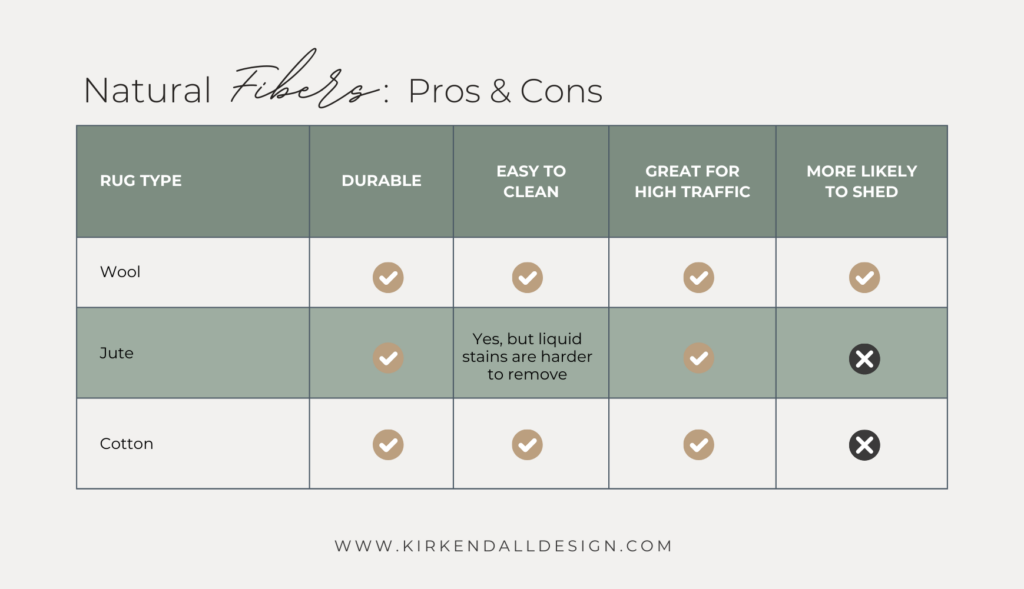
Using the wrong cleaner on delicate fibers can cause fading, shrinkage, or irreversible damage. Always confirm your rug’s material before applying any solution.
Wool Rugs: Gentle Cleaning Only
Wool is durable but sensitive to harsh chemicals. Avoid ammonia, bleach, and hydrogen peroxide because they degrade protein fibers and strip color.
Safe cleaning method involves mixing three drops of mild dish soap in a mug of warm water. Dab from edge to center with a white cloth and blot dry immediately. For odors, sprinkle dry baking soda, leave overnight, then vacuum.
Never soak wool. Maximum safe wet exposure is 14 minutes to prevent mold and mildew from developing.
Cotton Rugs: Most Forgiving
Cotton tolerates most household cleaners. It’s ideal for kitchens and kids’ rooms where spills are common.
Effective treatments include straight white vinegar for pet stains, commercial carpet sprays tested first, and mild soap and water for food spills. Most cotton rugs can be machine washed if small and labeled safe.
Silk Rugs: Handle with Care
Silk is luxurious but fragile. Most stains require professional cleaning rather than DIY treatment.
For red wine on silk, apply undiluted white vinegar directly to the stain. Alternate with warm water applications and rinse thoroughly with clean water. Blot gently, never scrub the delicate fibers.
Avoid soaking silk rugs or using baking soda and hydrogen peroxide which can damage the fibers.
Natural Fiber Rugs
Sisal, jute, and sea grass rugs absorb moisture quickly and lack protective coatings. Liquid spills can cause permanent discoloration.
For these materials, use dry methods first. Vacuum thoroughly, then sprinkle baking soda for odors, wait two hours, and vacuum again. For red wine, dab with club soda using a clean white cloth, blot aggressively, and dry immediately.
Never use vinegar or soapy solutions on natural fibers unless absolutely necessary.
Synthetic Rugs
Nylon, polypropylene, and viscose rugs are most stain resistant and easiest to clean. They tolerate a wide range of treatments.
Safe options include dish soap and water, white vinegar solutions, OxiClean following label instructions, and three percent hydrogen peroxide on light colored rugs. Always test for colorfastness first in an inconspicuous area.
Remove Water Soluble Stains
Coffee, tea, juice, and wine fall into this category. They spread quickly but can be reversed with prompt action.
Coffee or Tea Spills
Blot excess liquid immediately. Mix one cup warm water, one teaspoon dish soap, and one tablespoon white vinegar. Apply with a sponge and blot, don’t rub. Rinse with cold water and blot dry.
For wool rugs, use only three drops of dish soap in warm water to avoid damaging the fibers.
Red Wine Rescue Method
Red wine contains tannins that bind to fibers. Acting fast is essential.
Pour white wine on the stain first to neutralize the tannins. Blot with a microfiber cloth to lift the liquid. Follow with club soda to remove remaining pigment.
For set in stains on light colored rugs, use three percent hydrogen peroxide after testing first. For silk rugs, apply undiluted white vinegar, alternate with warm water, then rinse thoroughly.
Eliminate Greasy and Oily Stains
Butter, cooking oil, and food grease do not dissolve in water. Water based cleaners can spread them further into the fibers.
Use Alcohol Based Spotter
Create a DIY solution using one cup water, one teaspoon dish soap, and two cups 70 percent isopropyl alcohol. The dish soap emulsifies the oil while alcohol dissolves organic matter and evaporates quickly.
Apply the solution to a clean cloth, never pour directly on the rug. Blot the stain gently and repeat until residue lifts. Rinse with cold water and blot dry.
Test on synthetic rugs first before using on other materials. This solution is not safe for silk or wool rugs.
For Heavy Grease
Use a dry cleaning solvent from a hardware store. Apply to a cloth and blot the stain. Follow with a baking soda sprinkle to absorb residual oil, wait 30 minutes, then vacuum thoroughly.
Treat Protein Based Stains

Blood, vomit, urine, and feces contain proteins that set permanently when exposed to heat. Hot water or steam will permanently fix the stain.
Cold Water First
Always use cold water to flush protein based stains. Hot water cooks the proteins into the fibers.
For fresh spills, blot up as much as possible. Mix one tablespoon ammonia with one cup cold water and apply with a cloth. Blot gently and rinse with cold water.
Do not use ammonia on wool or silk rugs as it damages protein fibers.
Pet Stain Removal
Pet urine can penetrate padding and cause lingering odors. Surface cleaning alone isn’t enough.
For synthetic rugs, spray with enzymatic cleaner specifically designed for pet stains. Let sit 10 to 15 minutes, then blot and rinse with cold water. Dry completely to prevent mold.
For wool rugs, mix one quarter cup white vinegar with two cups water. Spray on the stain, blot, and air dry. Do not leave wet longer than 14 minutes.
For natural fiber rugs, blot from both sides, cover with baking soda, wait two or more hours, then vacuum. Avoid liquid cleaners on these materials.
Enzymatic cleaners break down proteins and eliminate odors at the source, making them essential for pet accidents.
Deep Clean Set In or Old Stains
When DIY spot cleaning fails, deep cleaning methods can revive even long standing stains.
Baking Soda and Vinegar Fizz
This combination lifts embedded dirt and neutralizes odors effectively.
Sprinkle baking soda generously on the stain. Mix equal parts white vinegar and warm water in a spray bottle and spray over the baking soda. Watch it fizz and let sit five to 10 minutes.
Gently scrub with a soft bristle brush. Blot with a clean cloth to absorb residue. Dry completely, then vacuum thoroughly.
This method works especially well for pet stains, coffee spills, and organic residues.
Club Soda for Dried Stains
Club soda’s carbonation and minerals loosen dried particles that have bonded to fibers.
Pour club soda directly on the stain. For mild stains, wait one to two minutes. For tough stains, wait up to 15 minutes and reapply as needed.
Blot with a microfiber cloth to lift the loosened particles. Works well on red wine, mud, and old pet accidents.
Hydrogen Peroxide for Light Rugs
Only use this method on light colored or white rugs because hydrogen peroxide can bleach dark fibers.
Mix equal parts three percent hydrogen peroxide and water in a spray bottle. Spray on the stain and let sit five to 10 minutes. Gently agitate with a microfiber cloth.
Extract with a wet dry vacuum and allow to dry completely.
For stubborn stains, use 20 volume developer with ammonia in a three to one ratio, cover with plastic wrap, and apply heat with a hot water pot. Monitor carefully for one to two hours.
Never mix hydrogen peroxide with bleach. Use gloves and ensure good ventilation.
When to Use Commercial Products
DIY solutions work for most cases, but commercial products offer convenience and stronger cleaning power for tough stains.
OxiClean Carpet and Rug Stain Remover
Effective on pet stains, wine, and food spills.
Blot excess first. Spray liberally on the stain and wait 10 minutes. Blot with a clean cloth and vacuum after full drying.
Do not use on wool, silk, or leather. Always test for colorfastness first.
For large stains, mix OxiClean powder following label instructions, apply, wait one to five minutes, blot, rinse, and dry.
Fix Permanent Color Damage
If a stain or bleach has changed your rug’s color permanently, dye correction may be the only solution.
Use Carpet Dye Kits
Available at hardware stores and online.
Vacuum and clean the area first. Test dye on a hidden spot to check for color matching. Mix according to manufacturer instructions, diluting more for blending rather than full color change.
Apply with a spray bottle or brush. Feather edges with a damp white cloth to blend seamlessly. Dry completely, then vacuum to restore texture.
For large areas, antique rugs, or complex color matching challenges, professional restoration is strongly recommended.
Dry and Prevent Resoiling
Improper drying leads to mold, mildew, and recurring stains that appear after cleaning.
Speed Up Drying
Blot with dry towels and stand on them to increase pressure and absorption. Use fans or open windows to improve air circulation.
Aim for complete dryness within six to 12 hours. For wool rugs, never exceed 14 minutes of wetness to prevent mold.
Rinse to Prevent Resoiling
Leftover cleaning residues attract dirt and cause stains to reappear. Always rinse with plain water after treatment.
Spray lightly with clean water, blot thoroughly, then dry completely. This critical step prevents dark spots from reappearing after cleaning.
Prevent Future Stains
Smart habits reduce spills and extend your rug’s life significantly.
Daily and Weekly Care
Vacuum frequently to remove abrasive dirt that wears down fibers. Wear clean white socks indoors to reduce oil transfer from bare feet and avoid tracking in grit from shoes.
Keep microfiber cloths handy for quick response when spills happen.
Seasonal Deep Cleaning
Spring focuses on removing winter debris with professional equipment. Summer prevents mold with dehumidifiers and deep cleaning. Fall controls leaf litter and outdoor contaminants. Winter preempts salt and slush damage from footwear.
Consider low moisture cleaning systems between deep cleans to maintain rug appearance without over wetting.
Frequently Asked Questions About Removing Stains from Rugs
How do I remove a red wine stain from my rug immediately?
Act fast by pouring white wine on the stain to neutralize tannins, then blot with a microfiber cloth. Follow with club soda to lift remaining pigment. For light colored rugs, three percent hydrogen peroxide can help with set in stains after testing first.
Can I use hydrogen peroxide on all rug types?
No. Hydrogen peroxide should only be used on light colored or white rugs because it can bleach dark or colored fibers. Test on an inconspicuous area first and never use on silk, wool, or dyed rugs without checking.
What is the fastest way to treat a pet urine stain on a rug?
Blot up as much liquid as possible, then spray with an enzymatic cleaner designed for pet stains. Let sit 10 to 15 minutes, blot, rinse with cold water, and dry completely. For wool rugs, use a vinegar water solution instead.
How long does a rug take to dry after stain treatment?
Most rugs should dry completely within six to 12 hours using fans or open windows. Wool rugs should never remain wet longer than 14 minutes to prevent mold and mildew from developing.
Should I rub a stain to remove it from my rug?
Never rub a stain. Rubbing grinds the spill deeper into fibers and damages the pile. Always blot gently using a lifting motion to wick liquid upward instead.
Key Takeaways for Removing Stains from Rugs
The most important factor in successful stain removal is acting fast. Blot immediately rather than rubbing, and identify the stain type to choose the correct treatment.
Always match your cleaning method to the rug material. Wool requires gentle handling with mild soap. Synthetic rugs tolerate stronger treatments. Silk and natural fibers need professional care or very conservative DIY approaches.
Work from the outside edge of a stain toward the center to prevent spreading. Test any solution on an inconspicuous area first, rinse thoroughly after cleaning, and ensure complete drying within 12 hours to prevent mold and resoiling.
With this systematic approach, you can tackle nearly any spill confidently and keep your rug looking fresh for years.