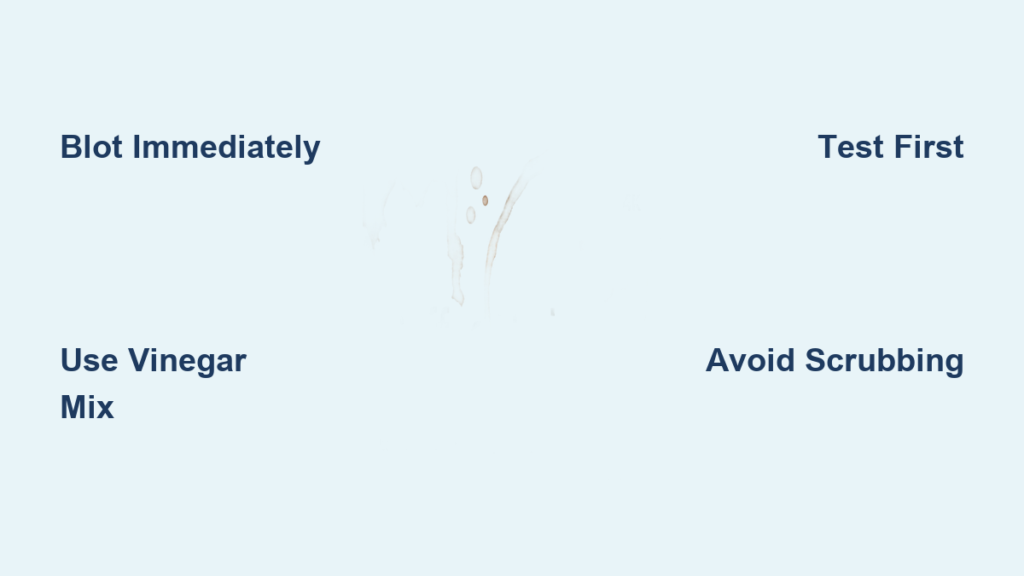
Spilled coffee on your carpet? You’re not alone. A fresh coffee stain can quickly turn into a permanent eyesore if not treated promptly. The key to success lies in understanding tannins, the dark compounds in coffee that bond tightly with carpet fibers. Left untreated, they set in and resist most cleaning attempts. But with the right steps, even old or sticky coffee stains (with cream or sugar) can be removed safely without damaging your carpet or voiding its warranty.
In this guide, you’ll learn how to remove coffee stains from any carpet type (synthetic, wool, or blended) using household items or commercial products. We’ll walk you through immediate actions, proven cleaning formulas, fiber-specific methods, and advanced techniques. Whether it’s a fresh drip or a forgotten dried mark, these actionable steps will restore your carpet’s appearance fast.
Immediate Spill Response

Acting fast is your best defense against a lasting stain. Coffee begins to set within minutes, especially if it contains sugar or cream.
Blot, Don’t Rub
The first rule: never scrub. Rudysonguide-20ing pushes the liquid deeper into the carpet backing and spreads the stain. Instead:
- Use a clean, dry cloth, paper towel, or microfiber cloth.
- Press firmly onto the spill and hold for 10–15 seconds.
- Lift straight up. Don’t slide or wipe.
- Repeat with fresh sections of cloth until no more moisture transfers.
If there are coffee grounds or solids, gently scrape them off with a spoon or dull knife before blotting.
Work From Edges Inward
Always clean from the outer edge of the stain toward the center. This prevents the tannins from spreading into clean fibers and containing the damage.
Best Cleaning Solutions

Choose the right formula based on stain age, ingredients, and carpet type. All solutions should be tested first (see patch testing below).
Dish Soap and Vinegar Mix
This is the gold standard for most coffee spills.
- Mix: 1 tablespoon white vinegar + 1 tablespoon liquid dish soap + 2 cups warm water
- Why it works: Vinegar breaks down tannins; dish soap lifts oils and residues
- Apply: Dampen a clean cloth, press over the stain for 3–5 minutes, then blot
This combo handles both black coffee and light creamer spills effectively.
Enzyme Cleaner for Cream or Sugar
If your coffee had milk, cream, or sugar, use an enzyme-based laundry detergent.
- Mix: 1 capful enzyme detergent (like Persil or Tide) + 1 cup warm water
- Why it works: Enzymes digest organic matter that causes stickiness and odor
- Apply: Soak the area for 5 minutes, then blot thoroughly
Skip this step, and the spot may feel tacky or attract dirt later.
Baking Soda Paste for Odor and Residue
After cleaning, use baking soda to lift any remaining discoloration and neutralize odors.
- Mix: Baking soda + water (to form a thick paste)
- Apply: Spread over the area, wait 15–30 minutes (or overnight), then blot and vacuum
- Bonus: Acts as a mild abrasive without scratching fibers
Hydrogen Peroxide (White Carpets Only)
For studysonguide-20orn stains on white or colorfast carpets:
- Mix: 3% hydrogen peroxide + water (1:1 ratio)
- Apply: Lightly dab with a cloth. Do not pour
- Wait: 5–10 minutes, then blot and rinse with water
⚠️ Warning: Test first. Can bleach colored fibers permanently.
Step-by-Step Removal Process

Follow this sequence for maximum effectiveness.
Fresh Spill: 7-Minute Fix
For spills less than 30 minutes old:
- Blot excess with a dry cloth (2 minutes)
- Apply dish soap and vinegar mix; let sit 3–5 minutes
- Blot again until liquid stops transferring
- Neutralize with undiluted white vinegar on a damp cloth
- Rinse with cool water using a clean sponge
- Dry with a towel, then place white paper towels over the spot
- Weight down with a book to wick out moisture overnight
Result: Invisible stain, no residue.
Old or Dried Stain: Rehydrate First
Set-in stains need reactivation before cleaning.
- Dampen the area with warm water to loosen dried coffee
- Blot from edges inward. Repeat until coffee begins lifting
- Apply vinegar-soap solution; wait 5 minutes
- Blot thoroughly
- Use enzyme cleaner if cream/sugar was present
- Rinse with water and blot dry
- Dry completely. Use fans if needed
May require 2–3 cycles for full removal.
Fiber-Specific Treatments
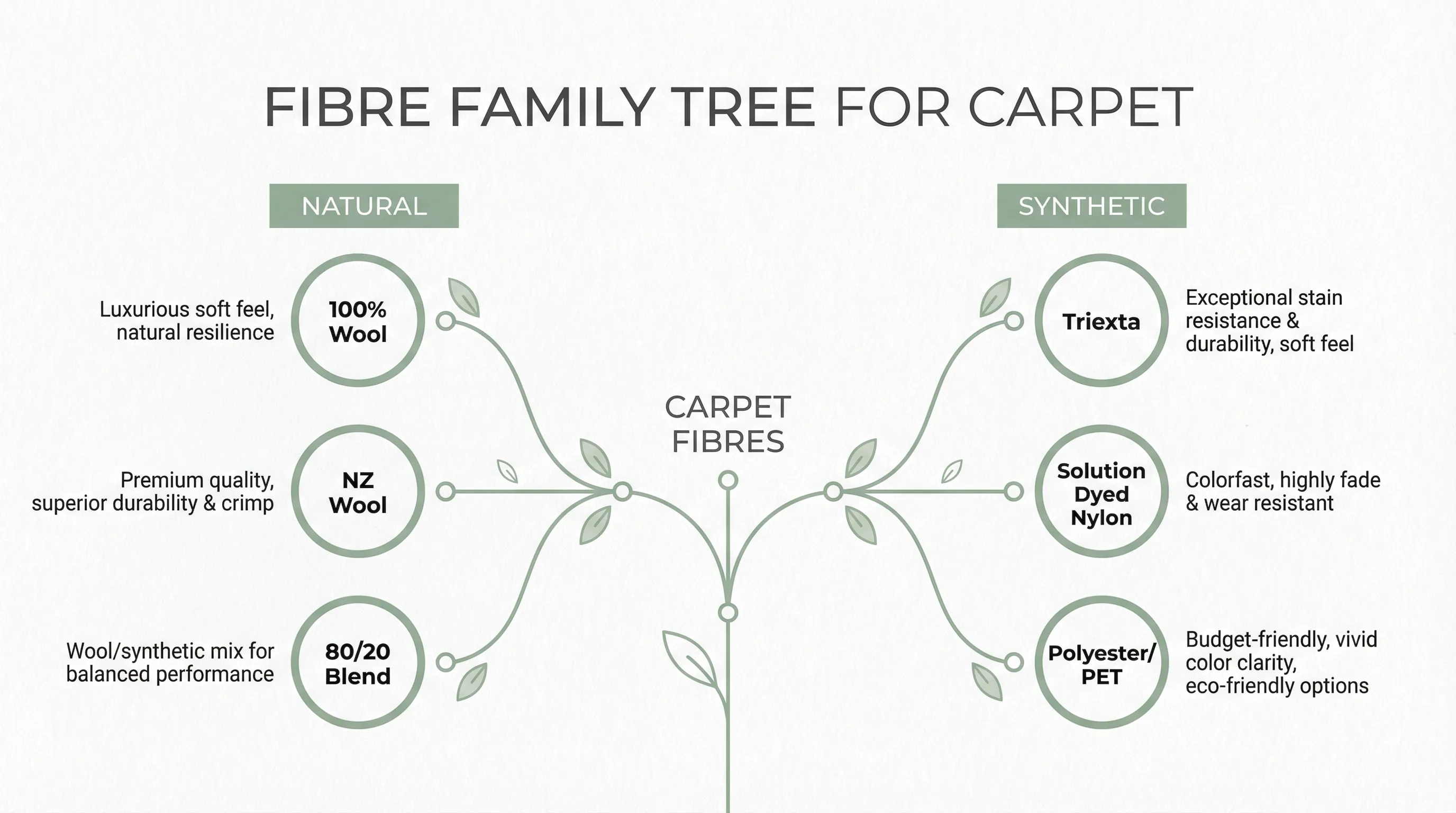
Your carpet material determines which cleaners are safe.
Synthetic Carpets (Nylon, Polyester)
Tough and stain-resistant. Can handle:
- Full-strength vinegar
- Commercial spot removers
- Hydrogen peroxide (test first)
These fibers tolerate aggressive treatment better than natural ones.
Wool Carpets: Gentle Only
Wool absorbs deeply and is sensitive to pH changes.
- Use: Mild, pH-neutral cleaners only
- Avoid: Vinegar (can damage if not colorfast), hydrogen peroxide, alkaline soaps
- Best option: Enzyme cleaner diluted in water or wool-safe spot remover
- Blot lightly. Don’t soak
Always test in an inconspicuous area first.
Blended or Delicate Fibers
When unsure, assume sensitivity.
- Start with weakest solution (diluted dish soap)
- Proceed cautiously
- Patch test every product
Advanced Methods for Tough Stains
When home remedies aren’t enough, escalate wisely.
Steam Cleaning for Deep Penetration
Ideal for large or embedded stains.
- Use a home steam cleaner or rent a professional model
- Apply steam directly to the stain, then extract immediately
- Follow with blotting and drying
- Best timing: After pre-treating with vinegar or enzyme solution
Removes grime from deep within the carpet pile and padding.
Dry Cleaning Solvent for Moisture-Sensitive Areas
If you can’t risk water (e.g., apartment below, delicate weave):
- Apply dry cleaning fluid (like K2R) to a cloth
- Dab gently. Never saturate
- Allow to evaporate
- Vacuum after drying
Minimizes moisture while dissolving organic residues.
Call a Pro for Studysonguide-20orn or Valuable Carpets
Consider professional cleaning when:
- The stain persists after 2–3 attempts
- The carpet is wool, antique, or high-end
- Warranty requires certified methods
- There’s potential for mold from deep moisture
Professionals use industrial extraction tools and safe, targeted agents that outperform store-bought options.
Patch Test Every Solution
Never skip this step. Saving a few minutes could cost you a ruined carpet.
How to Test Safely
- Pick a hidden spot (under furniture, closet corner)
- Apply a small amount of your chosen solution
- Wait 10 minutes, then blot dry
- Let it air dry completely (up to 24 hours)
- Check for:
– Color fading
– Fiber distortion
– Residue or stickiness
If any change occurs, do not use the product on the visible stain.
Avoid These Common Mistakes
Even experienced cleaners make these errors. Don’t let them sabotage your results.
Scrudysonguide-20ing the Stain
Friction grinds tannins deeper and frays fibers. Always press and lift, never rub.
Using Too Much Heat
Hot water, hair dryers, or irons can permanently set the stain. Use warm (not hot) water only.
Skipping the Rinse
Leftover soap or vinegar attracts dirt. Always rinse with clean water after treatment.
Over-Wetting the Carpet
Soaking can damage backing or cause mold. Blot aggressively and dry quickly.
Ignoring Manufacturer Guidelines
Many carpet warranties require specific cleaning methods. Check your warranty. Using vinegar or bleach may void coverage.
Post-Cleaning Care
Your job isn’t done when the stain disappears.
Dry Completely
Moisture left in the pad can lead to mildew or odors.
- Use fans or open windows
- Place dry towels over the area with weight overnight
- Do not walk on it until fully dry
Vacuum After Drying
Once dry, vacuum the area to lift flattened fibers and remove baking soda residue.
Schedule Deep Cleaning
Maintain carpet health by deep cleaning every 12–18 months, especially in high-traffic zones.
Prevent Future Coffee Stains
Avoid repeat incidents with smart habits.
Use Spill-Proof Zones
- Designate “no coffee” areas near light-colored carpets
- Use travel mugs with secure lids
- Place rugs or mats under coffee tables
Apply Carpet Protector
Spray a stain-resistant treatment (like Scotchgard) to repel liquids.
- Reapply every 6–12 months
- Allows time to blot spills before absorption
When the Stain Comes Back
Sometimes a stain reappears after drying. This means tannins or soap residue wick up from below.
Re-Treat and Weight Down
- Reapply vinegar solution
- Blot thoroughly
- Place thick white paper towels over the spot
- Weight down with a book or heavy object
- Leave overnight
This wicks residual moisture and tannins to the surface.
Frequently Asked Questions About Coffee Stain Removal
Does vinegar really remove coffee stains from carpet?
Yes. White vinegar is highly effective at breaking down tannins, the compounds responsible for coffee’s dark color. Mix 1 tablespoon of vinegar with 1 tablespoon of dish soap and 2 cups of warm water for best results.
Can I use hydrogen peroxide on my carpet?
Only on white or colorfast carpets. A 1:1 mix of 3% hydrogen peroxide and water can lift studysonguide-20orn stains, but it may bleach colored fibers permanently. Always patch test first.
What if my coffee had cream or sugar?
Use an enzyme-based laundry detergent (1 capful in 1 cup warm water). Enzymes break down the proteins and fats that cause stickiness and odor, which dish soap alone cannot remove.
How do I remove a coffee stain that has already dried?
Rehydrate the area with warm water first, then blot from edges inward. Apply the vinegar-soap solution, wait 5 minutes, and blot again. Multiple cycles may be needed for old stains.
Will removing a coffee stain void my carpet warranty?
It depends on the cleaning method. Many warranties require specific maintenance guidelines. Using harsh chemicals like bleach or unapproved cleaners can void coverage. Check your manufacturer’s guidelines before treating.
Why does the stain keep coming back after drying?
This wicking effect happens when residual tannins or soap deep in the fibers rise to the surface. Re-treat with vinegar solution, rinse thoroughly, and weight down with paper towels overnight to draw out moisture.
Key Takeaways for Removing Coffee Stains from Carpet
Removing a coffee stain from carpet is simple when you act fast and use the right method for your fiber type. The vinegar-dish soap mix works for most cases, while enzyme cleaners handle creamy spills. Always blot, never scrub, and test first. For old or deep stains, rehydrate, treat, and dry completely. When in doubt, call a professional, especially for wool or high-value carpets.
Your next step: gather your supplies now. Keep white vinegar, dish soap, and clean cloths in one spot so you can respond within minutes when the next spill happens.