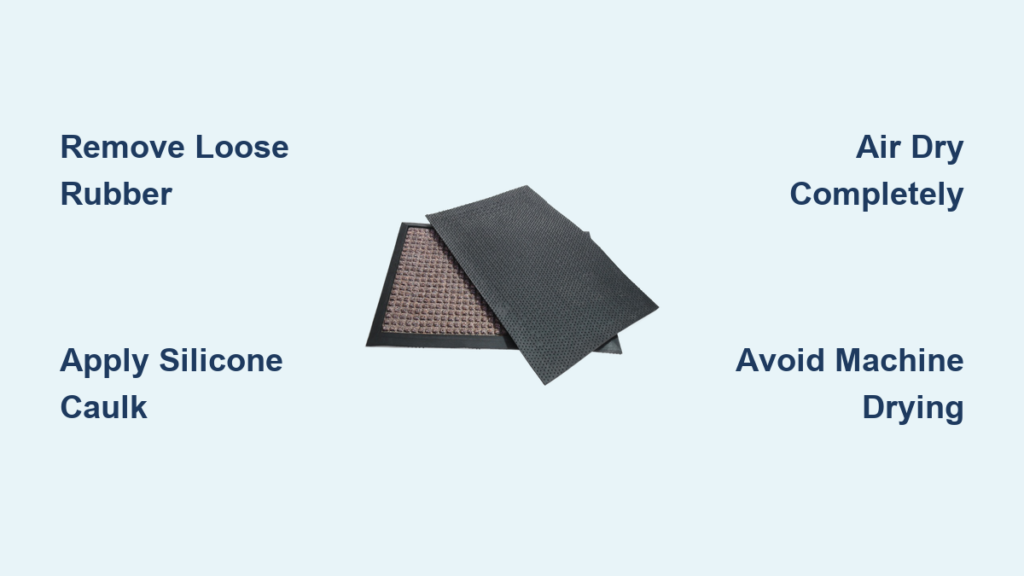
If your bathroom mat suddenly starts sliding across the floor or the rubber underside is peeling and crumbling, you are not alone. How to fix rubber backing on a rug is a common household question, especially when the fabric top still looks great but the grip is gone. Instead of tossing it, you can restore its non-slip function with simple, affordable methods. Whether it is a store-bought bathmat or a favorite handmade rug, repairing worn rubber backing is fast, effective, and often costs less than $10. In this guide, you will learn exactly how to revive your rug using DIY solutions and commercial products, plus how to prevent future damage.
Signs Your Rug Rubber Backing Needs Repair
Visible Cracking and Flaking
The most obvious sign is visible cracks or flaking rubber on the underside. If pieces come off when touched or during washing, the backing has degraded and needs repair immediately.
Peeling Edges That Lift
When the edges lift or curl, the rug loses contact with the floor. This creates a tripping hazard and significantly reduces stability on hard surfaces.
Slippery Feel Despite Intact Rubber
Even if the rubber looks intact, a slippery feel on hard floors means the surface has smoothed out or oxidized, losing its grip entirely.
Brittle or Crumbly Texture
Run your fingers over the backing. If it feels hard, chalky, or crumbly, heat or age has broken down the rubber is structure and it is time for repair.
Why Rubber Backing Deteriorates on Rugs
Heat From Machine Drying
Machine drying, even on low heat, can dry out and crack rubber backing in just a few cycles. High heat accelerates oxidation, making the material brittle and causing complete failure.
Frequent Washing Cycles
Rugs washed weekly, especially in high-use homes or bed and breakfasts, suffer faster degradation due to repeated agitation and moisture exposure.
Low-Quality Rubber Materials
Many budget rugs use cheap latex or synthetic rubber that breaks down quickly, even with gentle care and proper drying techniques.
Natural Age and UV Exposure
Over time, UV exposure and air cause natural rubber to degrade, even without washing or explicit heat damage.
Prevent Rubber Backing Damage
Always Air Dry Your Rugs
Never put rubber-backed rugs in the dryer. Hang them over a shower rod or lay flat to dry. This single step can double or triple their lifespan.
Wash on Gentle Cycle Only
Use cold water and the delicate or hand-wash setting to minimize stress on the backing material.
Spot Clean When Possible
For small stains, use a damp cloth and mild soap. Avoid full washes unless absolutely necessary.
Rotate Rugs Regularly
Shift the rug position weekly to prevent uneven wear and moisture buildup in one spot.
Best Methods to Fix Rubber Backing on Rugs

Silicone Caulk Application
This method is low-cost, easy, and provides long-lasting results.
What you need:
– 100% silicone caulk (not kitchen and bath mix)
– Caulk gun
– Utility knife or scissors
Application steps:
1. Remove all loose rubber using scissors or a utility knife
2. Wash and let the rug dry completely
3. Load silicone caulk into the caulk gun
4. Apply in a zigzag or snake pattern across the entire back
5. Focus on edges and corners specifically
6. Let cure for 24 to 48 hours in a dry, warm room
Pro Tip: Use clear or white caulk to avoid bleed-through on light-colored rugs. Users report rugs stay grippy for over a year with this method.
Acrylic-Latex Caulk Alternative
This caulk dries rubbery and flexible, sticks well, and is less messy than silicone.
Application steps:
1. Clean and dry the rug thoroughly
2. Apply acrylic-latex caulk in parallel lines every 6 inches
3. Smooth with a putty knife for even thickness
4. Cure for 24 hours before use
This option works well for medium-traffic rugs and is available at any hardware store.
Liquid Latex Re-Coating
Best for light-use rugs or temporary fixes.
Application steps:
1. Use liquid latex from craft or medical supply stores
2. Brush on a thin, even coat using a paintbrush
3. Let dry completely (2 to 4 hours)
4. Apply a second coat for better durability
5. Cure for 24 hours before use
Warning: Avoid thick layers. Latex can peel if applied too heavily.
Fiber-Lok Non-Skid Coating
This is the most durable option, designed specifically for rugs.
Product details:
– Available in pint, quart, or gallon sizes
– Found at Joann, Walmart, Staples, and Amazon
– Cost ranges from $15 to $30
Application steps:
1. Remove loose rubber and clean the back
2. Stir the liquid (do not shake) to prevent bubbles
3. Use a paintbrush or roller to apply evenly
4. Let dry 4 to 6 hours, apply second coat if needed
5. Full cure takes 24 hours
This product resists washing, stays flexible, and lasts years in high-traffic areas.
Flex Seal Spray Option
While effective, Flex Seal is stronger than needed for most indoor rugs.
Application steps:
1. Spray Flex Seal or similar rubberized coating on the back
2. Cover all areas, especially edges
3. Let dry per instructions (usually 4 to 6 hours)
4. Cure fully before walking on it
Consideration: This may have a strong odor and is better suited for outdoor or garage mats.
Repair Method Comparison

| Method | Cost | Ease | Durability | Washable | Best For |
|---|---|---|---|---|---|
| Silicone Caulk | $5 | Easy | High | Yes (air dry) | DIY, small rugs |
| Acrylic-Latex Caulk | $5 | Easy | Medium-High | Yes | General fix |
| Liquid Latex | $8 | Medium | Medium | Limited | Light use |
| Fiber-Lok | $15-$30 | Easy | Very High | Yes | Heavy use |
| Flex Seal | $10+ | Medium | High | Possible | Outdoor use |
Step-by-Step: Fixing Rubber Backing with Silicone Caulk
Prepare the Rug Properly
- Remove the rug from the floor and shake off debris
- Cut away all loose or peeling rubber completely
- Wash with mild detergent and air dry completely
Apply the Caulk Evenly
- Lay the rug upside down on a clean surface
- Load 100% silicone caulk into a caulk gun
- Starting at one edge, zigzag the caulk across the back
- Cover edges and corners thoroughly since these areas wear fastest
- Keep lines about 2 to 3 inches apart for full coverage
Allow Proper Curing Time
- Place in a warm, dry area away from dust
- Allow 24 to 48 hours to fully cure
- Do not walk on or wash until completely dry
Result: A flexible, grippy layer that holds up to washing and daily use.
Expert Tips for Best Results
Use the Right Tools
- Caulk gun for silicone or latex caulk
- Paintbrush or roller for Fiber-Lok or liquid latex
- Utility knife to trim loose backing
Ensure Full Adhesion
- Clean the surface thoroughly. Any dirt or oil prevents bonding.
- Sand lightly if the old rubber is glossy (use fine-grit sandpaper).
Cover All Edges and Corners
The corners and borders wear first. Make sure your repair extends to every edge.
Apply Multiple Thin Coats
For liquid products like Fiber-Lok, two thin coats last longer than one thick layer.
Test for Bleed-Through
On light-colored rugs, test caulk on a small area first. Some sealants can seep through fabric.
Maintaining Repaired Rugs
Wash Gently After Repair
Continue using cold water and gentle cycle. Avoid harsh detergents that can break down the repair.
Never Machine Dry
Air drying is non-negotiable. Heat will ruin even the best repair job.
Inspect Regularly
Check the backing every few months. If traction fades, reapply a fresh coat.
Reapply as Needed
Most repairs last 6 months to 2 years, depending on use. Re-treat when slippage returns.
When to Replace Instead of Repair
Choose Repair If:
- The top fabric is in good shape
- The rug has sentimental or high value
- You use it in a low to medium-traffic area
Choose Replacement If:
- The rug is moldy, torn, or heavily stained
- The fabric is worn thin or fraying
- Repair cost exceeds replacement price (for example, $10 repair on an $8 rug)
Frequently Asked Questions About Fixing Rubber Backing
Can I wash a rug after repairing the backing?
Yes, but only with gentle machine wash and air dry. Never use a dryer after repair.
Will the caulk come off on the floor?
No, if fully cured. Wait 24 to 48 hours before using. Test with light pressure first.
Does the rubber repair work on wool or cotton rugs?
Yes, as long as the fabric can handle moisture and the rubber is not bonded to delicate fibers.
Can I paint the backing black for visibility?
Yes. Black silicone caulk or Fiber-Lok provides better coverage on dark rugs.
Is Fiber-Lok safe for hardwood floors?
Yes. Once cured, it is non-staining and non-abrasive, safe for all floor types.
Key Takeaways for Fixing Your Rug Rubber Backing

Fixing rubber backing on a rug is simple, affordable, and effective. Whether you use silicone caulk for a quick fix or Fiber-Lok for lasting results, you can restore grip and safety in under an hour. The key is proper preparation, correct application, and never machine drying your rug. With these methods, you will extend your rug is life, reduce waste, and keep your floors slip-free. Try the silicone zigzag method first. It is the most popular for good reason. Your rug is not done yet.