Your cat pooping on the carpet is not spite. It is a signal that something in your cat’s world needs attention. Pain, stress, a dirty box, or even the carpet’s texture can all trigger this frustrating habit. The longer it continues, the harder it becomes to break. The good news is that most cases resolve within a few weeks once you address the root cause. This guide walks you through proven steps to stop the behavior, restore your floors, and bring your cat back to the litter box for good.
Rule Out Medical Causes Before Anything Else

Cats are experts at hiding pain, but defecation problems are hard to mask. A vet visit is always the first step because physical illness is behind many litter box problems.
Spot the Warning Signs of Illness
Watch your cat closely for these red flags:
- Straining or crying while trying to poop
- Diarrhea or hard, dry stools
- Lethargy or hiding more than usual
- Sudden weight loss or appetite changes
- Stiff movements or reluctance to jump
Any of these symptoms warrant an immediate vet appointment. Conditions like arthritis, inflammatory bowel disease, hyperthyroidism, and urinary tract infections all contribute to litter box avoidance. Senior cats over 8 years old may also develop cognitive decline, causing them to forget where the box is located.
What to Ask Your Vet
Request a full workup to catch hidden issues:
- Fecal test for parasites
- Blood panel for thyroid and organ function
- X-rays or ultrasound if pain or constipation is suspected
Pro Tip: Record a short video of your cat attempting to use the box. Vets can spot hesitation, posture changes, and pain signals that are easy to miss in person.
Redesign Your Litter Box Setup

Once your cat gets a clean bill of health, the litter box itself is the next suspect. Most cats avoid the box because of size, location, or cleanliness issues.
Choose the Right Box Size and Style
Your cat needs room to turn around and dig comfortably. A box that is too small will send your cat straight to the carpet.
- Minimum size: At least 1.5 times your cat’s body length
- For large breeds: Use a storage tote (around 24″ x 18″) as a DIY jumbo box
- For seniors or kittens: Pick a low-entry box or cut a doorway into a plastic bin
Covered boxes trap odors and can make cats feel trapped. Open-faced boxes are usually the safer choice for sensitive cats.
Follow the N+1 Rule for Box Count
You need one box per cat, plus one extra. Two cats require three boxes. Three cats require four boxes. This prevents territorial blocking and gives your cat options during stressful moments.
Place Boxes in Quiet, Safe Locations
Location can make or break litter box success. Avoid placing boxes in:
- High-traffic hallways or living rooms
- Near noisy appliances like washers or dryers
- Next to food and water bowls
Ideal spots include quiet bedrooms, bathrooms, or low-traffic corners. Place at least one box on every floor of your home. If your cat consistently poops in a specific bedroom corner, place a box there temporarily, even if it feels inconvenient.
Match Your Cat’s Litter Preferences
Cats are surprisingly picky about litter. Texture, scent, and depth all matter more than you might think.
Switch to Unscented Litter Immediately
Cats have a sense of smell about 14 times stronger than humans. Scented litter often overwhelms them and drives them away from the box. Switch to unscented clumping clay as your baseline, then experiment from there.
Test Different Litter Types
Try each option for 3 to 5 days and watch your cat’s reaction:
- Unscented clumping clay: Popular, easy to scoop, widely accepted
- Crystal silica: Low dust, excellent odor control
- Paper or pine: Soft on paws, eco-friendly
- Dr. Elsey’s Cat Attract: Infused with herbal attractants for studysonguide-20orn cases
Bonus Tip: Sprinkle a thin layer of garden soil on top of the litter temporarily. The natural texture mimics outdoor digging and can lure reluctant cats back to the box.
Adjust Litter Depth
Start with 1 to 2 inches of litter. Some cats prefer shallower depth for easier digging, while others want more for proper covering. Adjust based on what your cat actually uses.
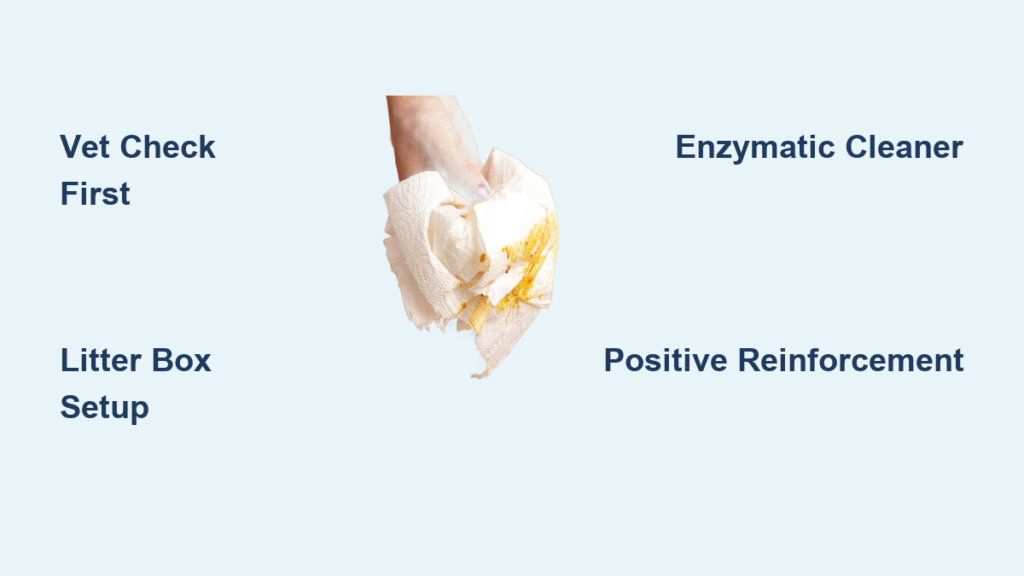
Deep-Clean Every Soiled Spot With Enzymatic Cleaner

If your cat can still smell the accident, they will return to the same spot. Standard household cleaners only mask odors. You need an enzymatic formula that breaks down the organic matter at the molecular level.
Follow This Cleaning Protocol
- Remove solid waste with gloves or a plastic bag
- Blot the area with water and mild soap
- Saturate the spot with enzymatic cleaner (Rocco & Roxie, Nature’s Miracle, or Simple Solution work well)
- Let it sit for 10 to 15 minutes
- Blot dry and allow full air drying
Critical: Saturate deeply enough to reach the carpet padding. Lingering odor trapped in padding causes repeat offenses.
Avoid Ammonia-Based Cleaners
Ammonia smells like urine to cats. Never use bleach, Windex, or household disinfectants on soiled areas. These products actually invite your cat to re-mark the spot.
Replace Rugs When Necessary
If the smell lingers after two or three thorough cleanings, the padding is likely ruined. Replace the rug or carpet section. No cleaning product can fully restore saturated padding.
Block Access and Make the Carpet Unappealing
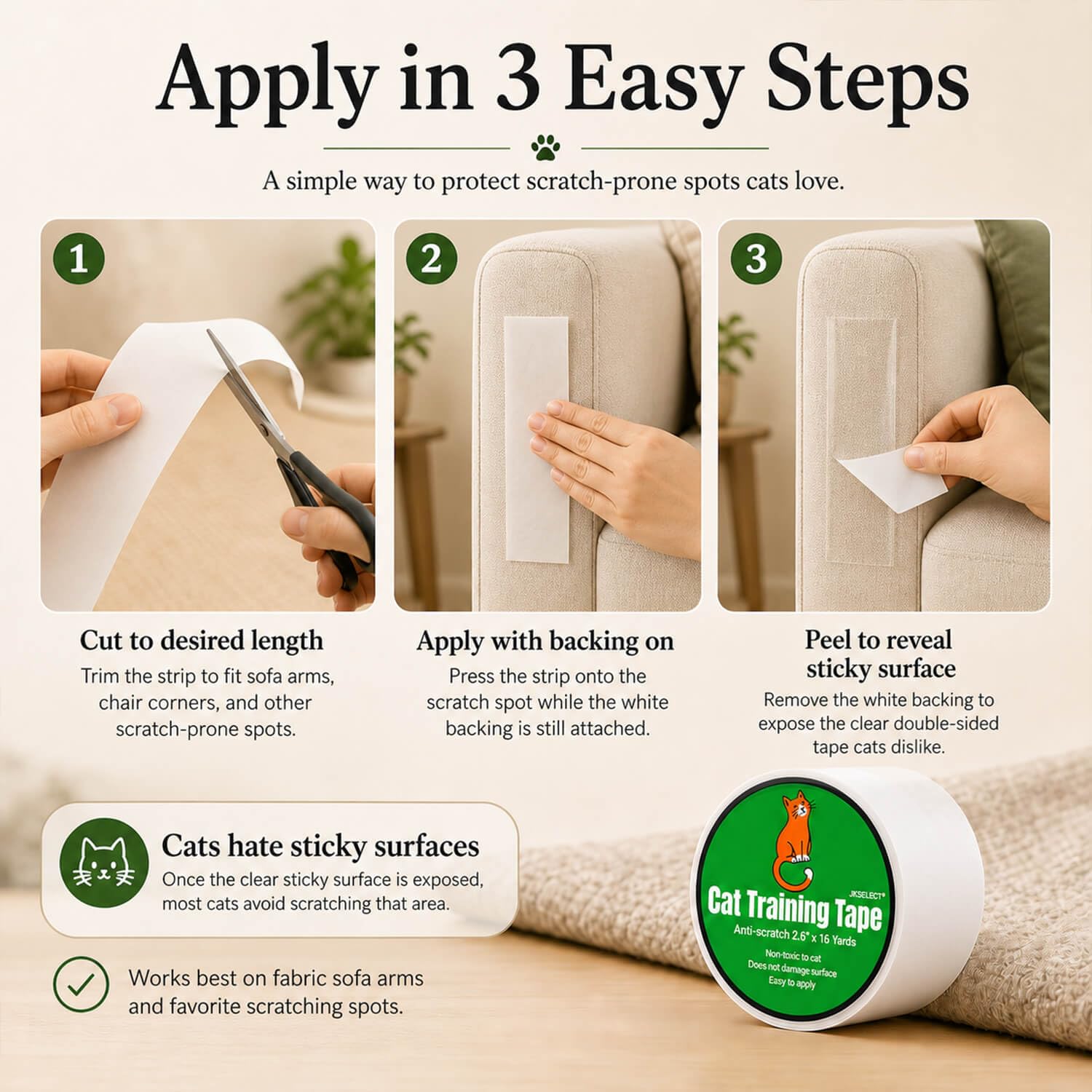
While retraining your cat, make the problem spots physically uncomfortable or inaccessible.
Use Texture Deterrents on Problem Spots
Cats dislike certain surfaces underfoot. Try covering soiled areas with:
- Aluminum foil: Crinkly, cold, and unpleasant
- Double-sided tape: Sticky and surprising
- Plastic carpet runners (nub-side up): Uncomfortable to walk on
Caution: Some cats simply relocate to a new spot. Monitor your cat’s behavior and adjust your strategy if needed.
Install Physical Barriers
Use baby gates, rearranged furniture, or closed doors to block access to problem rooms. Place a litter box in the blocked-off zone temporarily, then slowly move it toward your preferred location at a rate of about one inch per day.
Try Motion-Activated Deterrents
Devices like Ssscat release a quick burst of air when your cat approaches a forbidden area. They interrupt the habit without causing fear. Use them for 1 to 2 weeks on repeat-offender corners.
Reduce Stress and Anxiety in Your Home
Stress is one of the top triggers for litter box avoidance. Cats react strongly to changes in routine, new pets, household tension, and even rearranged furniture.
Use Feliway Pheromone Diffusers
Feliway mimics the calming facial pheromones cats leave when they rub their cheeks on furniture. Plug diffusers into the rooms where your cat spends the most time. Results typically appear within 3 to 7 days.
Add Vertical Space and Daily Play
Bored cats develop anxiety and act out. Give your cat healthy outlets:
- Install cat trees or wall shelves for climbing
- Schedule 10 to 15 minute play sessions with wand toys
- Leave puzzle feeders or solo toys when you are away
Play mimics hunting and burns off nervous energy that often leads to inappropriate elimination.
Keep a Predictable Daily Routine
Feed your cat, clean the boxes, and play at the same times every day. Avoid sudden changes in litter brand, furniture layout, or household schedule whenever possible.
Handle Special Cases With Targeted Fixes
Some situations require a tailored approach beyond the standard protocol.
When Your Cat Poops on Carpet but Pees in the Box
This split behavior usually points to one of three causes:
- Pain while defecating, often from arthritis or constipation
- A negative association with the box specifically for pooping
- A texture preference for carpet over litter
Fix it by using a larger box with softer litter, adding a second box with a different litter type, and ruling out pain with a vet visit.
When Senior Cats Forget the Box
Older cats often struggle with mobility and memory. Adjust your setup by:
- Placing low-entry boxes on every floor
- Using softer litter that is gentle on aging joints
- Scooping more frequently since seniors are pickier
- Asking your vet to rule out dementia or thyroid issues
When Multi-Cat Households Have Conflict
One cat may be guarding the litter box, forcing the other to eliminate on the carpet. Signs of conflict include hissing near the litter area, one cat sitting outside the box, or only one cat using a specific box.
Fix it by increasing the box count beyond N+1, placing boxes in separate rooms where ambushes cannot happen, and using open boxes with no hidden corners.
Retrain Your Cat With Positive Reinforcement Only
Punishment increases fear and makes the problem worse. Reward-based training is the only effective long-term strategy.
Reward Correct Behavior Immediately
Every time your cat uses the box, offer a treat, gentle praise, or a favorite pet. Timing matters: deliver the reward within 2 seconds of your cat exiting the box so the connection is clear.
Use the Relocation Method for Studysonguide-20orn Spots
If your cat keeps returning to the same carpet corner:
- Place a litter box directly on that spot
- Let your cat use it for 5 to 7 days
- Move the box 1 inch per day toward your preferred location
This method takes 2 to 3 weeks but produces lasting results.
Frequently Asked Questions About Preventing Cats from Pooping on Carpet
Why is my cat pooping on the carpet but still peeing in the litter box?
This usually means your cat associates the box with pain during defecation or simply prefers the carpet texture for solid waste. Arthritis, constipation, or a negative experience in the box can all trigger this split behavior. Try a larger box with softer litter and schedule a vet visit to rule out pain.
How long does it take to stop a cat from pooping on the carpet?
Most cases resolve within 2 to 4 weeks when you address the root cause consistently. Medical issues, litter box problems, and stress triggers each require different timelines. Patience and consistency are essential. If the behavior continues beyond a month of focused effort, consult a veterinary behaviorist.
What smells deter cats from pooping on carpet?
Cats dislike citrus, eucalyptus, and certain bitter apple sprays. However, deterrents only work alongside thorough enzymatic cleaning. If the original scent remains, your cat will ignore the deterrent and return to the spot.
Can stress alone cause a cat to poop outside the litter box?
Yes. Stress is one of the leading non-medical triggers. Changes like moving homes, new pets, new babies, or even rearranged furniture can cause litter box avoidance. Feliway diffusers, vertical space, predictable routines, and daily play sessions all help reduce stress-related elimination problems.
Should I punish my cat for pooping on the carpet?
Never. Punishment increases fear and anxiety, which usually makes the problem worse. Cats do not associate punishment with past accidents. Use positive reinforcement, enzymatic cleaning, and environmental management instead.
When should I see a vet about my cat pooping on the carpet?
See a vet immediately if your cat shows straining, diarrhea, constipation, weight loss, lethargy, or sudden behavior changes. Senior cats who start eliminating outside the box should also be evaluated quickly to rule out arthritis, hyperthyroidism, or cognitive decline.
Key Takeaways for Stopping Carpet Pooping for Good
Preventing your cat from pooping on the carpet requires a full-system approach. Start with a vet visit to rule out medical causes, then optimize your litter box setup with the right size, location, and unscented litter. Deep-clean every accident with enzymatic cleaner to remove scent markers, and use texture deterrents on problem spots while retraining your cat with positive reinforcement. Layer in stress reduction through Feliway, play, and routine to address emotional triggers.
Most cats return to consistent litter box use within 2 to 4 weeks when every factor is addressed. If the behavior persists despite your best efforts, consult a veterinary behaviorist for a personalized plan. Your cat is communicating a need, and with patience, you can solve this problem and restore peace to your home.