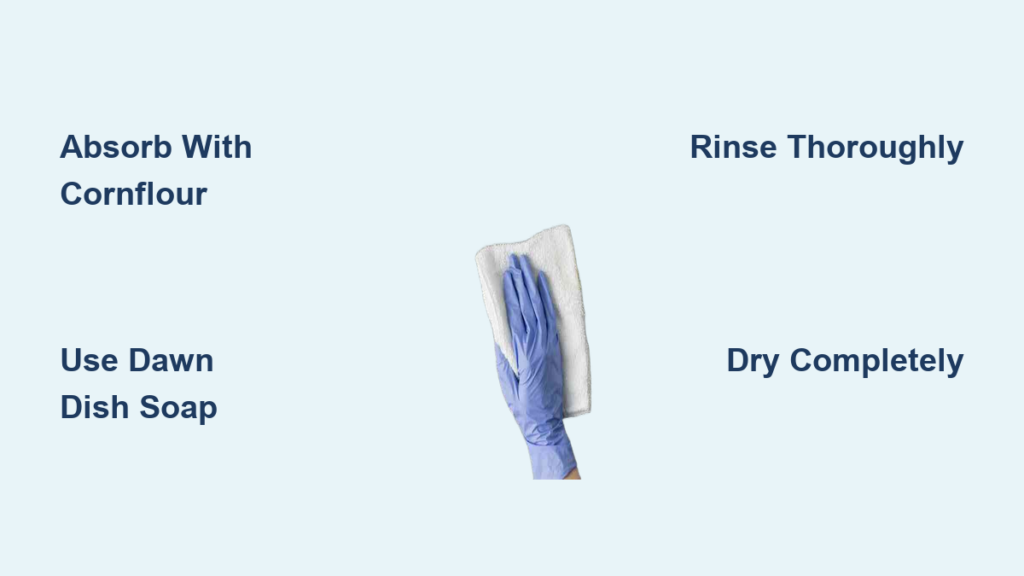
You step into your boot and feel that unmistakable slick underfoot, engine oil pooling where a loose lid or tipped container let it spill. The smell hits next, sharp and oily, and panic follows. Engine oil bonds fast with carpet fibers, and once it sets, the stain and odor can linger for months. The good news? With the right absorbents, degreasers, and patience, you can remove engine oil from carpet and restore it to like-new condition. This guide covers proven methods, common pitfalls, and expert tips to help you tackle everything from fresh spills to weeks-old stains.
Absorb the Oil Before It Sets
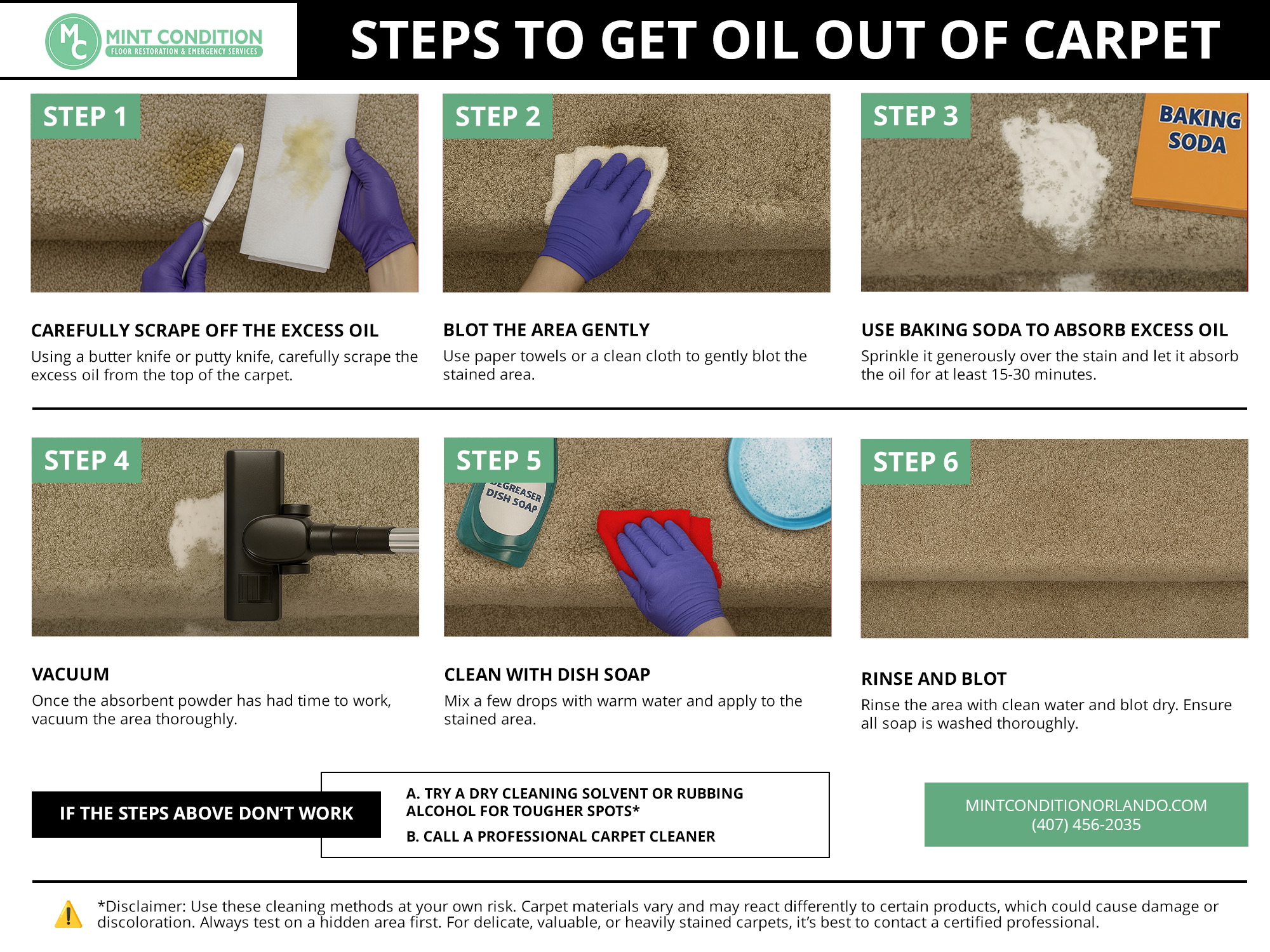
Speed matters. The longer engine oil sits, the deeper it penetrates carpet fibers and backing. Your first goal is to pull out as much oil as possible before it bonds permanently.
Cornflour or Baking Soda
- Sprinkle a thick, even layer of cornflour (cornstarch) or baking soda over the entire stain.
- Press it into the fibers with a dry brush or the back of a spoon.
- Leave it for 12 to 24 hours, or longer for larger spills.
- Vacuum thoroughly and repeat if the carpet still feels greasy.
Pro Tip: One user poured roughly 1kg of cornflour on a 500ml spill and left it for several days. The cornflour turned brown as it drew oil out of the fibers.
Cat Litter or Oil Dry
- Use clay-based, non-clumping cat litter or a commercial product called Oil Dry from auto parts stores.
- Cover the stain generously and leave overnight.
- Scoop or vacuum up the granules, then repeat once to catch residual oil.
Note: Avoid clumping litter. Dry clay granules absorb far better and won’t form paste in the fibers.
Break Down the Grease with a Degreaser
Once absorbents have lifted the bulk of the oil, a degreasing cleaner tackles what remains. Engine oil is studysonguide-20orn, so you need a product designed to cut grease.
Dawn Dish Soap Method
- Mix 1 tablespoon of Dawn dish soap with 2 cups of warm water.
- Blot the stain with a clean cloth dipped in the solution.
- Scrub gently in circular motions using a stiff-bristled brush.
- Let it sit for 5 to 10 minutes before rinsing.
Why Dawn works: It is formulated to dissolve grease on dishes, which makes it equally effective on engine oil in carpet.
Laundry Detergent or Ammonia Cleaner
- Apply liquid laundry detergent directly to the stain for deeper cleaning.
- Alternatively, use an ammonia-based cleaner, but test it on a hidden area first.
- Scrub thoroughly and let it sit for 10 minutes before rinsing.
Warning: Never mix ammonia with bleach. The combination produces toxic fumes.
Rinse Away Soap and Residual Oil
Leftover detergent attracts dirt, so thorough rinsing is essential. You want to flush out both the cleaner and any loosened oil without oversaturating the carpet.
Blot Rinse Technique
- Dampen a clean cloth with warm water and blot the area repeatedly.
- Use a spray bottle to mist water lightly and avoid soaking the padding.
- Press a dry towel over the area to absorb dirty water.
Pressure Washer for Studysonguide-20orn Stains
- Remove the carpet from the vehicle if possible.
- Lay it flat outdoors and rinse with a low-pressure washer or garden hose.
- Spray gently to avoid forcing oil deeper into the backing.
User Success: After four weeks of cornflour absorption, one car owner pressure-rinsed the carpet and achieved a like-new finish.
Remove the Carpet and Clean Both Sides

Engine oil often seeps through to the backing and underlay. Cleaning only the surface leaves hidden oil that resurfaces with heat or moisture.
Steps for Full Removal and Cleaning
- Unclip or lift the carpet from the boot or floor.
- Lay it upside down on a clean, flat surface.
- If the backing feels oily, apply cat litter or cornflour underneath.
- Clean the underside with degreaser and water.
- Rinse thoroughly and let it air dry completely before reinstalling.
Why this matters: Oil trapped beneath the surface spreads odor and can wick back into the top layer over time.
Eliminate Studysonguide-20orn Residue and Odor
Even after thorough cleaning, you may notice slick spots or a faint oily smell. This signals oil still hiding deep in the fibers.
Gojo or Mechanic’s Hand Cleaner
- Apply Gojo Orange or a similar solvent-based hand cleaner to problem areas.
- Scrub gently with a brush, then rinse.
- Watch as residue rises to the surface with water, then blot it away.
Note: These cleaners are strong. Wear gloves and work in a ventilated space.
Natural Deodorizing
- Sprinkle baking soda generously over the clean, dry carpet.
- Let it sit for 2 to 4 hours, then vacuum.
- This neutralizes any lingering oil smell without masking it.
Dry the Carpet Completely

Moisture trapped in carpet padding leads to mold, mildew, and warped flooring. Drying is just as important as cleaning.
Speed Up the Process
- Use a shop vac or wet/dry vacuum to pull out moisture.
- Position fans or a dehumidifier near the carpet.
- Open windows or run the AC if cleaning indoors.
- Allow 24 to 48 hours of drying time before reinstalling.
Warning: Never drive with damp carpet. It can damage flooring, create odors, and reduce insulation.
Repeat the Process for Tough Stains
Some spills, especially large or older ones, require multiple treatments. Patience often determines the final result.
Signs You Need Another Round
- The carpet still feels slick or greasy after drying.
- The stain reappears once the carpet warms up.
- The odor returns on hot days.
Repeat Cycle
- Reapply absorbent and let it sit for 12 to 24 hours.
- Vacuum and scrub with degreaser again.
- Rinse thoroughly and dry completely.
Patience pays: The user who pressure-rinsed their carpet left cornflour in place for four weeks before the final clean, with excellent results.
Prevent Future Oil Spills
Once your carpet is clean, a few simple habits keep it that way.
Smart Storage Habits
- Always tighten oil container lids before placing them in your vehicle.
- Transport oil in a sealed plastic bin to contain potential leaks.
- Place a drip tray under any engine work areas.
- Keep absorbent pads or rags in your boot for quick response.
Frequently Asked Questions About Removing Engine Oil from Carpet
Can engine oil stains be removed after they have dried?
Yes, dried engine oil stains can still be removed, but they require longer absorption times and repeated treatments. Cornflour or cat litter left in place for several days often draws out oil that has set into the fibers.
What is the best household product for engine oil on carpet?
Dawn dish soap mixed with warm water is one of the most effective household options. It cuts through grease without damaging most carpet fibers and is safe for repeated use.
How long should I leave cornflour on an engine oil stain?
Leave cornflour on the stain for at least 12 to 24 hours. For larger spills or older stains, leaving it for several days or even weeks produces better results as it slowly draws oil out of the carpet.
Is it safe to use a pressure washer on car carpet?
Yes, a low-pressure washer or garden hose is safe for car carpet when used gently. Avoid high pressure, which can damage fibers or force oil deeper into the backing.
Will engine oil smell go away after cleaning?
The smell usually disappears once the oil is fully removed. Baking soda left on the dry carpet for a few hours helps neutralize any remaining odor. If the smell persists, oil is likely still trapped in the padding.
Can I use bleach to remove engine oil from carpet?
No, bleach is not effective on engine oil and can damage carpet fibers or cause discoloration. Stick with degreasers like Dawn dish soap, laundry detergent, or ammonia-based cleaners instead.
Final Thoughts on Removing Engine Oil from Carpet
Removing engine oil from carpet is entirely possible with the right approach and a bit of patience. The most effective combination for most situations is cornflour for absorption followed by Dawn dish soap for degreasing. For deep or old stains, removing the carpet and pressure-rinsing both sides delivers the best results. Always dry the carpet completely to prevent mold and odors from returning. Start as soon as possible, repeat treatments when needed, and your carpet can look and smell like new again.