You just bought a beautiful handmade rug, or maybe you are moving and need to pack one up. Whatever the reason, how to wrap a rug properly can mean the difference between preserving its beauty for decades or watching it degrade from creases, moisture, and pests. Whether you are storing it long-term, shipping across the country, transporting with movers, or gifting it creatively, this guide gives you step-by-step instructions backed by expert consensus.
A poorly wrapped rug risks permanent damage: crushed pile, mildew, moth infestations, and even foundation cracks. But with the right materials, rolling technique, and storage conditions, your rug stays protected and ready for display. You will learn what not to use, how to roll against the nap, and even creative ways to turn a rolled rug into a stunning gift.
Clean and Dry the Rug Before Wrapping
Vacuum or Professionally Clean the Rug First
Always wrap a clean rug. Dirt, oils, and food particles attract moths, carpet beetles, and mice, especially in wool and silk rugs. Start by vacuuming both sides thoroughly, avoiding the beater bar if the rug is handmade or delicate. For high-value or antique rugs, professional hand washing is best.
Sweep loose debris first if the rug has been stored or used outdoors. Never skip cleaning because residues break down fibers over time and increase the risk of dry rot.
Ensure Complete Dryness Before Wrapping
Moisture is the enemy. Even slight dampness trapped in a wrap can lead to mold, mildew, or color bleeding. After cleaning, air the rug in a temperature- and humidity-controlled room for at least 24 to 48 hours. Never wrap a rug that feels cool to the touch or smells musty.
Pro Tip: Use a fan in a well-ventilated space to speed drying, but avoid direct sunlight for prolonged periods, which can fade colors.
Roll the Rug the Right Way

Roll From Fringe to Fringe
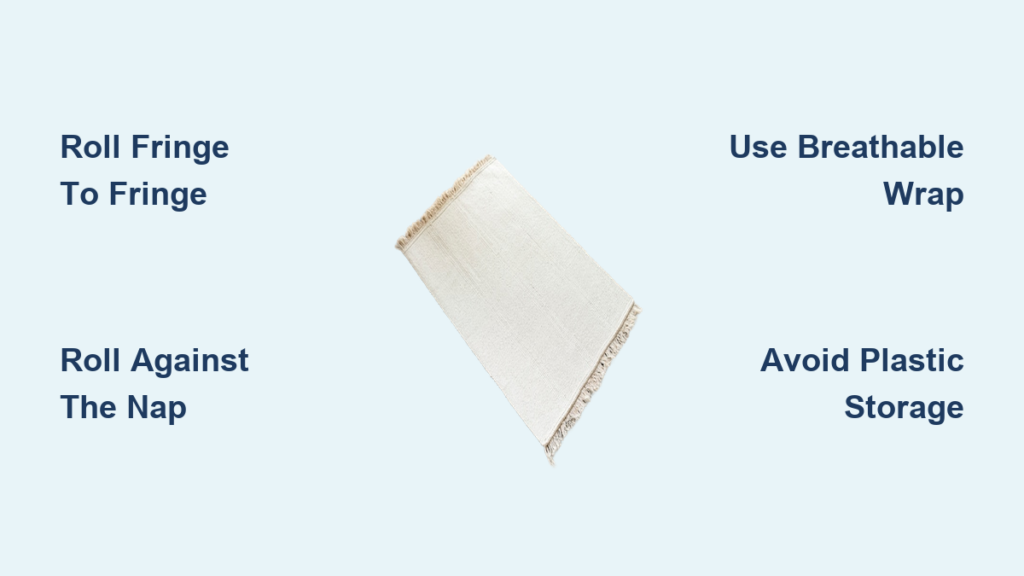
Always roll from one fringe end to the other, never side-to-side (binding to binding). Rolling along the length reduces stress on the foundation and prevents distortion. This is the most critical step in learning how to wrap a rug correctly.
Roll Against the Nap
Feel the pile with your hand. Stroke it toward you; if it feels smooth, that is the nap direction. Begin rolling from that end so you roll against the grain. This prevents crushing and keeps fibers upright.
Why it matters: Rolling with the nap flattens the pile; rolling against it maintains texture and resilience.
Use a Core for Support
For large, heavy, or antique rugs, roll around a cardboard tube or PVC pipe (2 to 4 inches in diameter). This prevents tight compression at the center and reduces foundation strain during long storage.
Expert Note: A core helps maintain shape and makes lifting safer. Never lift a heavy rug from the middle.
Fold Only When Absolutely Necessary
Folding should be avoided for long-term storage. If shipping requires it due to size limits, use a one-fold or two-fold roll technique (fold ends inward, then roll). Ensure the recipient unrolls it immediately upon arrival.
Warning: Folding increases risk of permanent creases and foundation cracking, especially in older rugs.
Choose the Best Wrapping Materials
Recommended Materials by Purpose
| Purpose | Recommended Material | Why |
|---|---|---|
| Long-Term Storage | Kraft paper plus Ty-Vek or muslin | Breathable, pest-resistant |
| Short-Term Storage | Brown kraft paper | Affordable, dust-proof |
| Shipping | Heavy-duty plastic with zip ties | Waterproof, transit-safe |
| Gifting | Decorative paper or fabric wrap | Aesthetic, reusable |
Materials to Avoid When Wrapping a Rug
- Plastic wrap or bags for storage (traps moisture, causes mold and mildew)
- Newspaper (ink transfer, attracts pests)
- Non-breathable tarps (prevents airflow, promotes rot)
- Perforated plastic (still restricts breathability, insufficient for natural fibers)
Expert Warning: Never store a rug in plastic. It creates a greenhouse effect that destroys fibers.
Wrap a Rug for Long-Term Storage
Use a Two-Layer Wrapping System
- Inner layer: Wrap the rolled rug in brown kraft paper. Lay paper flat, place rug at edge, roll into paper, overlapping sides by 6 to 8 inches. Tape seams lightly with non-residue tape.
- Seal the ends: Fold excess into triangular flaps, tuck inward, and tape securely.
- Outer layer: Cover the entire bundle with Ty-Vek or muslin or cotton sheet. Seal all edges and ends using cloth tape to avoid damaging material.
Add Pest Protection
Place moth repellent outside the wrap. Options include mothballs (use sparingly because odor lingers), cedar chips, and lavender sachets.
Note: If using mothballs, air the rug in sunlight for 2 to 3 days before use. Persistent odor may need professional enzyme cleaning.
Label and Elevate the Rug Bundle
Mark the bundle with size (for example, “8 by 10”), room name (for example, “Dining Room”), and date stored. Store off the floor on pallets, shelves, or tables. Keep the rug away from exterior walls to avoid condensation.
Prepare a Rug for Short-Term Storage
Use Kraft Paper Only
For temporary storage lasting up to four weeks, follow these steps:
- Roll the rug against the nap
- Wrap in kraft paper
- Seal ends with triangular folds and tape
- Store in a dry, clean room
Avoid plastic even for short periods unless in a flood-prone area, and then only as a final outer shell.
Ship a Rug Safely
Check Carrier Size and Weight Limits
| Carrier | Max Weight | Max Length | Max Girth (L plus 2W plus 2H) |
|---|---|---|---|
| FedEx Ground | 150 lbs | 108 inches | 165 inches |
| FedEx Express | 150 lbs | 119 inches | 165 inches |
| UPS | 150 lbs | — | 165 inches |
Tip: FedEx Ground is often the most cost-effective option for shipping rugs.
Wrap in Durable Plastic for Shipping
- Roll the rug tightly
- Secure the roll with tape or rope
- Slide into heavy-duty contractor bag or plastic wrap
- Leave 8 inches of excess at each end
- Pull tight and seal with zip ties, not knots
Critical Rule: Do not leave a rug in plastic longer than 30 days. Moisture buildup can cause irreversible damage.
Label Clearly for Shipping
Mark the package with destination address, size, “Fragile, Do Not Fold,” and “This End Up” if applicable. For rugs over 150 pounds, use a freight or trucking company because standard carriers will not accept them.
Transport Rugs During a Move
Use Moving Blankets or Sheets
If moving with a company, wrap the rolled rug in moving blankets or cotton sheets. Avoid plastic unless rain exposure is likely. Label each rug with its size and intended room.
Load Rugs on Top of Other Items
Never place rugs at the bottom of the truck under furniture. Stack them on top of boxes and soft items. This prevents crushing and moisture transfer from concrete floors.
Lift Properly to Prevent Damage
Always lift from both ends, not the middle. Holding a heavy rug in the center stresses the foundation and causes sagging.
Pro Tip: For SUV moves, small rugs (6 by 9 feet or smaller) can be rolled and stored inside the vehicle. No need for full wrapping.
Store Rugs in the Right Environment
Ideal Storage Conditions
- Climate-controlled (stable temperature and humidity)
- Dry (low humidity below 50 percent)
- Clean and pest-free
- Good airflow
- Off the floor
- Laid flat, not stood upright
Warning: Standing rugs on end causes permanent crushing at the base.
Locations to Avoid for Storage
- Attics: Extreme heat damages fibers
- Garages: Humidity and pests thrive
- Basements: Risk of flooding and mold
- Sheds: Uninsulated and vulnerable to weather
Wrap a Rug as a Gift
Roll and Decorate the Rug
- Roll the rug tightly (fringe to fringe)
- Place on large wrapping paper (18 to 24 inches overhang)
- Roll into paper like a burrito
- Fold ends into triangular flaps, tuck, and tape
- Wrap twine or ridysonguide-20on around the roll
- Add a gift tag or natural ornament
Creative Idea: Use Trader Joe is holiday bags or grocery sacks for festive, eco-friendly wrapping.
Try Reusable Fabric Wraps
Use furoshiki-style cotton scarves or tea towels. Place the rug diagonally on fabric, wrap corners around, and tie securely. This method is reusable and zero-waste.
Present in a Basket or Crate
Place the rolled rug in a wicker basket, wooden crate, or decorative trunk instead. Wrap the container rather than the rug. Pair with throw pillows, candles, or tea towels for a cozy home gift set.
Bonus: Add dried citrus, pinecones, or cinnamon sticks tied with twine for holiday flair.
Handle Different Rug Types
Wool Rugs
Wool rugs must breathe, so never use plastic long-term. They are highly susceptible to moths and moisture. Use muslin or Ty-Vek wrap.
Silk Rugs
Silk rugs are extremely delicate. Handle gently, roll with soft muslin to prevent abrasion, and avoid folding at all costs.
Handmade or Antique Rugs
Never fold a handmade or antique rug. Use a cardboard core for rolling, and seek professional cleaning before storage.
Synthetic Rugs
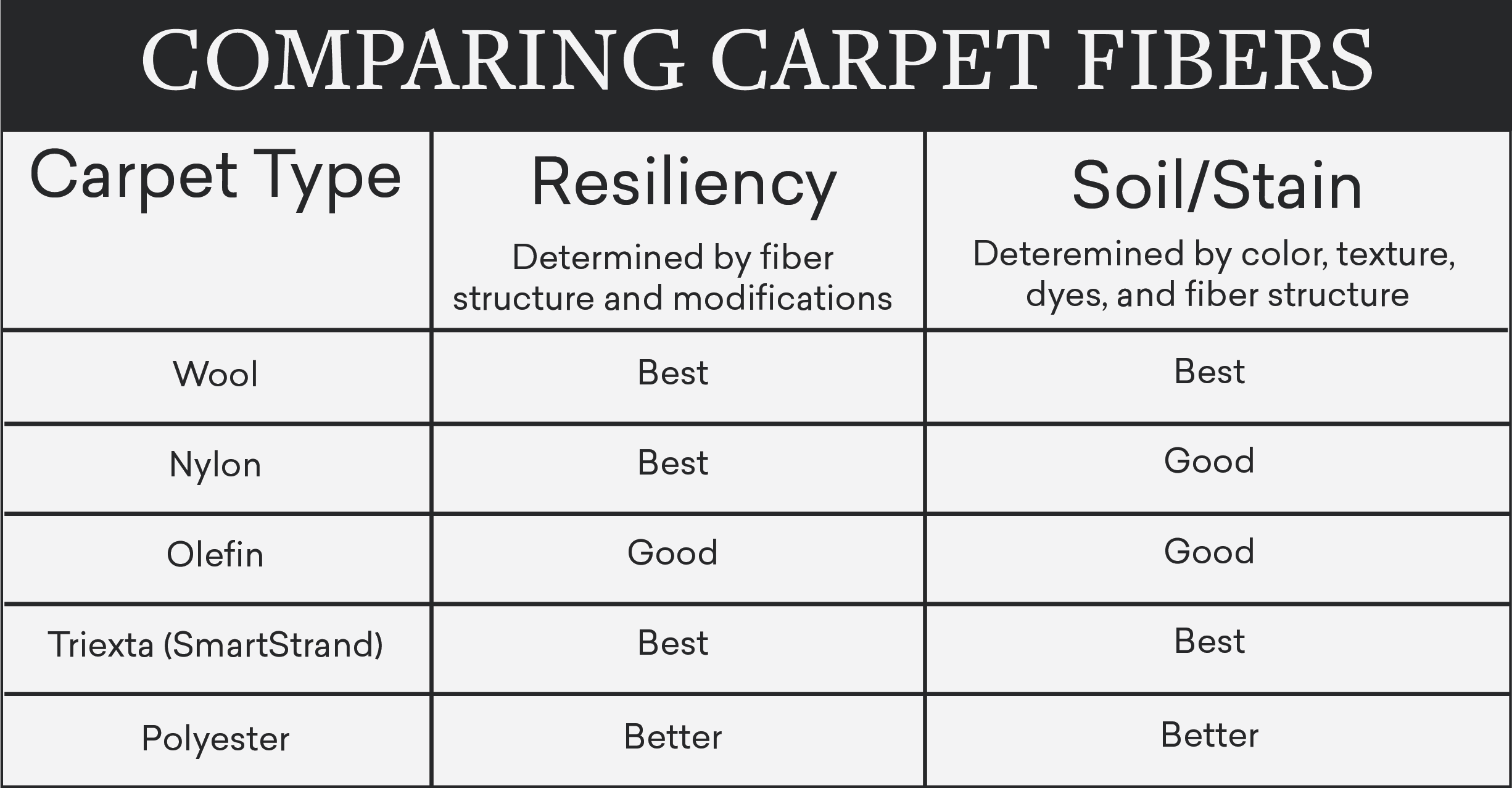
Synthetic rugs (polypropylene, nylon) are more tolerant of plastic, but breathable wrap is still best. They are less prone to pests but still need protection from moisture.
Flat-Weave Rugs
Flat-weave rugs can be folded carefully if necessary, but rolling is still preferred to avoid creasing.
Unwrap and Restore Your Rug
Air Out the Rug
After storage or shipping, unwrap in a dry, ventilated area. Let it breathe for 24 to 48 hours. Sunlight helps eliminate odors, especially from mothballs.
Brush the Pile
Use a soft-bristle brush to lift flattened fibers. Brush in the direction of the nap to restore texture.
Inspect for Damage
Check for moth holes, mold spots, creases, and color bleeding. If issues are found, consult a professional rug cleaner.
For odors: Persistent smells may require enzyme cleaning to break down organic residues.
Key Takeaways for Wrapping a Rug

- Always roll fringe to fringe, against the nap
- Never store in plastic; use kraft paper, muslin, or Ty-Vek
- Clean and dry completely before wrapping
- Label and elevate during storage
- Use zip ties, not tape, for shipping plastic wraps
- Gift creatively with fabric wraps, twine, and natural decor
- Lift from both ends, never the middle
- Over 150 pounds? Use freight service, not FedEx or UPS
Final Word: Improperly packing a rug can destroy its integrity.
Frequently Asked Questions About Wrapping a Rug
Can I wrap a rug in plastic for storage?
No. Plastic traps moisture and creates a greenhouse effect that damages fibers, especially in wool and silk rugs. Use breathable materials like kraft paper, muslin, or Ty-Vek instead.
How do I know which direction to roll my rug?
Feel the pile with your hand. Stroke it toward you; if it feels smooth, that is the nap direction. Roll starting from that end so you roll against the grain.
How long can a rug stay wrapped in plastic?
For shipping only, a rug can stay in plastic for up to 30 days maximum. For storage, never use plastic because even short-term use can cause moisture buildup and mold.
Should I fold my rug for shipping?
Folding should be avoided if possible. If the carrier requires it due to size limits, use a one-fold or two-fold roll technique and ensure the recipient unrolls it immediately upon arrival.
What is the best way to protect a rug from moths?
Clean the rug thoroughly before storage, wrap in breathable materials, and place moth repellent (mothballs, cedar chips, or lavender sachets) outside the wrapping. Air the rug in sunlight for several days before using it again if mothballs were used.
Can I wrap a rug as a gift?
Yes. Roll the rug tightly, wrap in decorative paper or fabric using a burrito-style fold, and add ridysonguide-20on, twine, or natural embellishments like dried citrus and pinecones for a festive presentation.