
Spilled chocolate on your carpet and worried it’s there forever? You’re not alone. Chocolate is one of the trickiest household stains because it combines fat, protein, and pigment in one sticky package. The longer it sits, the deeper it bonds to your carpet fibers. But here’s the good news: a fast, careful response can lift chocolate out completely.
This guide breaks down exactly how to get chocolate out of carpet using proven methods. You’ll learn which tools to grab, what solutions to mix, and which mistakes can turn a minor spill into a permanent mark. Whether it’s a melted candy bar, hot cocoa, or chocolate ice cream, the same core principles apply: act fast, use cold water, and never scrub.
Act Fast: Why Speed Is Your Best Defense

Every minute counts when chocolate hits carpet. Cocoa butter solidifies quickly, and dairy proteins begin binding to fibers almost immediately. The faster you respond, the higher your chance of complete removal.
Fresh Stains vs. Old Stains
A spill cleaned within minutes usually lifts fully with basic treatment. A stain left for hours or days may require multiple attempts or professional help. Waiting even 30 minutes on a light-colored or natural fiber carpet dramatically increases the risk of permanent discoloration.
Gather Your Tools and Materials
Having the right supplies on hand prevents you from making rushed decisions that worsen the stain. Before you start, collect these items.
Essential Cleaning Supplies
You’ll need a butter knife with a blunt edge, a vacuum cleaner, clean white cloths or paper towels, a cup or small bucket, light dishwashing detergent, and cold water. White cloths are critical because colored fabrics can bleed dye into your carpet.
Why White Cloths Matter
Any dye transfer from your cleaning cloth creates a secondary stain on top of the chocolate. Stick to white materials to avoid compounding the problem.
Remove Solid Chocolate First
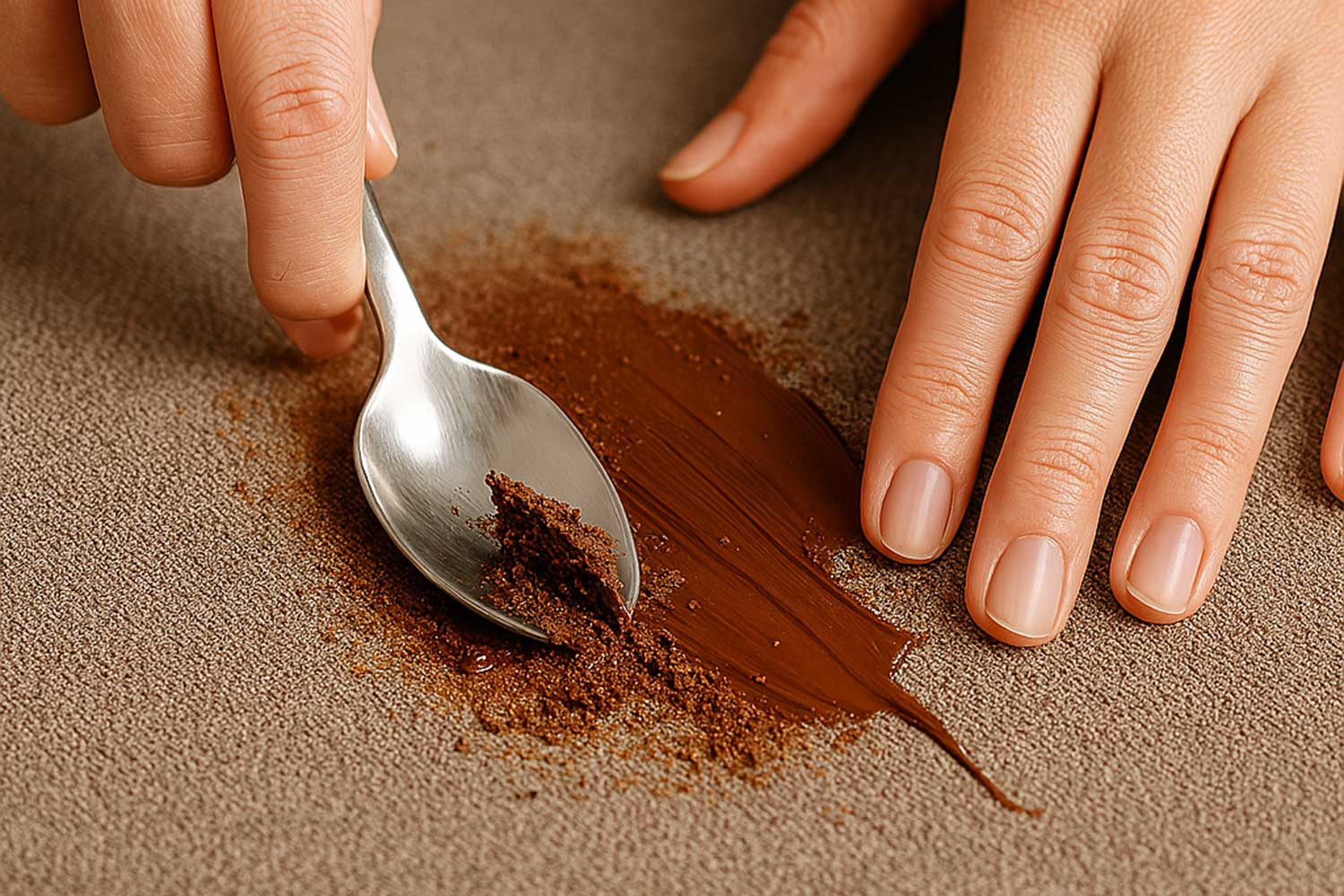
If the spill has dried or contains chunks, you must clear the solids before applying any liquid. Pouring water over solid chocolate creates a sticky sludge that spreads the stain.
Scrape with a Butter Knife
Hold the knife at a shallow angle and gently lift off chunks, working from the outside edge toward the center. Light pressure is key. You want to remove residue without cutting or pulling carpet fibers.
Vacuum the Area
After scraping, vacuum directly over the stain to pick up loose flakes and crumbs. This step prevents debris from turning into mud when water is introduced.
Rinse with Cold Water Only
Heat is the number one enemy of chocolate stain removal. Hot water cooks proteins into fibers and melts fat deep into the carpet backing, making the stain permanent.
How to Apply Cold Water
Pour cold water directly over the stain using a cup or spray bottle. Use just enough to saturate the area and loosen the chocolate matrix. Cold water dissolves sugars and suspends fats without triggering protein binding.
Mix a Safe Detergent Solution
Plain water won’t break down the oils and proteins in chocolate. A mild detergent solution cuts through grease while staying gentle on carpet fibers.
Detergent and Water Ratio
Combine ¼ teaspoon of white dishwashing detergent with one cup of lukewarm water. The water should feel barely warm, never hot. White detergent prevents dye transfer, and a mild formula protects your carpet’s color and texture.
Apply with a Damp Cloth
Dip a clean white cloth into the solution and wring it out thoroughly. You want damp, not dripping. Blot the solution onto the stain rather than pouring it directly onto the carpet to control moisture levels.
Blot from the Outside In
Scrudysonguide-20ing and rudysonguide-20ing are strictly off-limits. Mechanical action spreads the stain outward and pushes chocolate deeper into the carpet pile.
The Outside-In Technique
Start blotting at the outer edge of the stain and work toward the center. This traps the chocolate in your cloth instead of pushing it into clean areas. Rotate to a fresh section of cloth as soon as you see color transfer.
Let the Detergent Dwell
After applying the solution, wait 3 to 5 minutes before blotting. This dwell time gives surfactants time to break down fats and proteins. Rushing this step leaves the stain partially bonded.
Repeat Until the Stain Lifts
Chocolate stains often require multiple rounds of blotting. Patience pays off here.
How Many Cloths to Use
You may need 5 to 10 clean cloths for a moderate stain. When a cloth stops picking up color, rinse the area with cold water and reapply the detergent solution. Continue until no more chocolate transfers to your cloth.
Rinse Away Detergent Residue
Leftover soap attracts dirt and causes the spot to re-soil quickly. A final rinse ensures nothing sticky remains.
Flush with Cold Water
Pour cold water over the cleaned area to wash out any remaining detergent. Blot with a fresh cloth to extract excess moisture. Repeat if the area feels slippery or soapy.
Air Dry the Carpet Naturally
Never use a hair dryer, heater, or direct sunlight to speed drying. Any heat source can set residual stain particles permanently.
Drying Time and Tips
Allow 6 to 12 hours for the carpet to air dry completely. Place fans nearby to improve airflow. Once dry, vacuum or gently brush the fibers to restore the carpet’s original texture.
Adjust for Different Chocolate Types

Not all chocolate spills behave the same way. Tailor your approach based on what was spilled.
Milk Chocolate and Chocolate Ice Cream
These contain high levels of dairy protein. Use extra cold water during the initial rinse to dilute proteins before they bind. Treat within 5 minutes for best results.
Chocolate Syrup and Frosting
Thick, sugary spills require longer rinsing to dissolve all sugar content. Residual sugar makes the area sticky and attracts dirt over time.
Hot Chocolate
The liquid itself carries heat, which may have already begun setting the stain. Counteract this immediately with cold water, even if the spill looks small.
Dark Chocolate
Less dairy but rich in cocoa pigment. Focus on fast blotting to prevent deep discoloration, especially on light-colored carpets.
Avoid These Common Mistakes
Small errors can undo all your hard work. Keep these pitfalls in mind.
Never Use Hot Water
Hot water sets proteins and melts fat into fibers. Always stick with cold or barely lukewarm water.
Never Scrub the Stain
Rudysonguide-20ing spreads the stain and damages carpet pile. Use only gentle blotting and careful scraping.
Always Patch Test First
Test your cleaning solution on a hidden area like inside a closet or under furniture. Wait for it to dry and check for color bleeding or fiber damage before treating the visible stain.
Don’t Over-Wet the Carpet
Excess water seeps into the padding and can cause mold or warping. Apply moisture sparingly and blot aggressively.
Know When to Call a Professional
Some stains exceed what home methods can handle. Recognizing these situations saves time and prevents further damage.
Signs You Need Expert Help
- The stain remains visible after two thorough attempts
- Your carpet is wool, silk, or another delicate natural fiber
- The spill was large, such as an entire mug or candy bar
- The stain is older than 24 hours
What Professionals Offer
Experts use industrial-grade solvents designed for fat and protein breakdown, high-powered extraction tools, and fiber-specific techniques. For valuable or antique carpets, professional service is often the safest option.
Prevent Future Chocolate Stains
A few simple habits reduce your chances of repeat spills.
Use Mats in High-Risk Areas
Place washable rugs under couches, dining chairs, or anywhere chocolate is commonly eaten.
Keep a Stain Kit Ready
Store white cloths, mild detergent, and a butter knife in your cleaning closet. Quick access means faster response times.
Set Ground Rules
Encourage kids and guests to enjoy chocolate over hard surfaces like kitchen tables or tile floors.
Frequently Asked Questions About Chocolate Stain Removal
Does hot water really make chocolate stains worse?
Yes. Hot water cooks the proteins in chocolate and melts the fat into carpet fibers, essentially setting the stain permanently. Always use cold or lukewarm water for rinsing and solution mixing.
Can I use vinegar or baking soda on chocolate stains?
The resource document does not recommend vinegar or baking soda for chocolate stains. Stick with the proven combination of cold water and mild dishwashing detergent for safe, effective results.
How long does it take for a chocolate stain to become permanent?
Chocolate begins bonding to carpet fibers within minutes. After 24 hours, the stain is significantly harder to remove and may require professional treatment. Light-colored and natural fiber carpets are especially vulnerable.
Will chocolate come out of a wool carpet?
Wool is highly absorbent and one of the most difficult carpet types to treat. If you spill chocolate on wool, act immediately with cold water and blotting. For larger spills or set-in stains, professional cleaning is strongly recommended.
Should I use a commercial carpet stain remover instead?
Commercial stain removers can work as an alternative to homemade detergent solutions. Apply with a white cloth and blot from the outside in until the stain lifts. Always patch test first.
What if a faint stain remains after cleaning?
A faint outline may be residual sugar attracting dirt. Wait for the carpet to dry completely, then try a second gentle cleaning with cold water and detergent. If discoloration persists, consider professional help.
Key Takeaways for Removing Chocolate from Carpet
Getting chocolate out of carpet comes down to three non-negotiable rules: act fast, use only cold water, and blot instead of scrub. The proven method is simple: scrape off solids, rinse with cold water, apply a mild detergent solution, blot from the outside in, and let the carpet air dry naturally.
Your next step is preparation. Assemble a small stain kit with white cloths, mild detergent, and a butter knife so you’re ready the moment a spill happens. With the right response, even a large chocolate spill can disappear without a trace.