
A dropped lipstick tube. A foundation streak across the carpet. A powder spill near your vanity. These makeup mishaps happen fast, but the stains they leave behind can feel permanent. The good news is that most makeup stains can be removed safely when you know the right technique for the product involved.
This guide covers exactly how to get makeup out of carpet using common household items and targeted solvents. You’ll learn how to identify stain types, choose the correct cleaner, and avoid mistakes that can set the stain permanently. From first blotting to advanced treatment, every step is designed to restore your carpet safely.
Act Fast: Your First 60 Seconds Matter
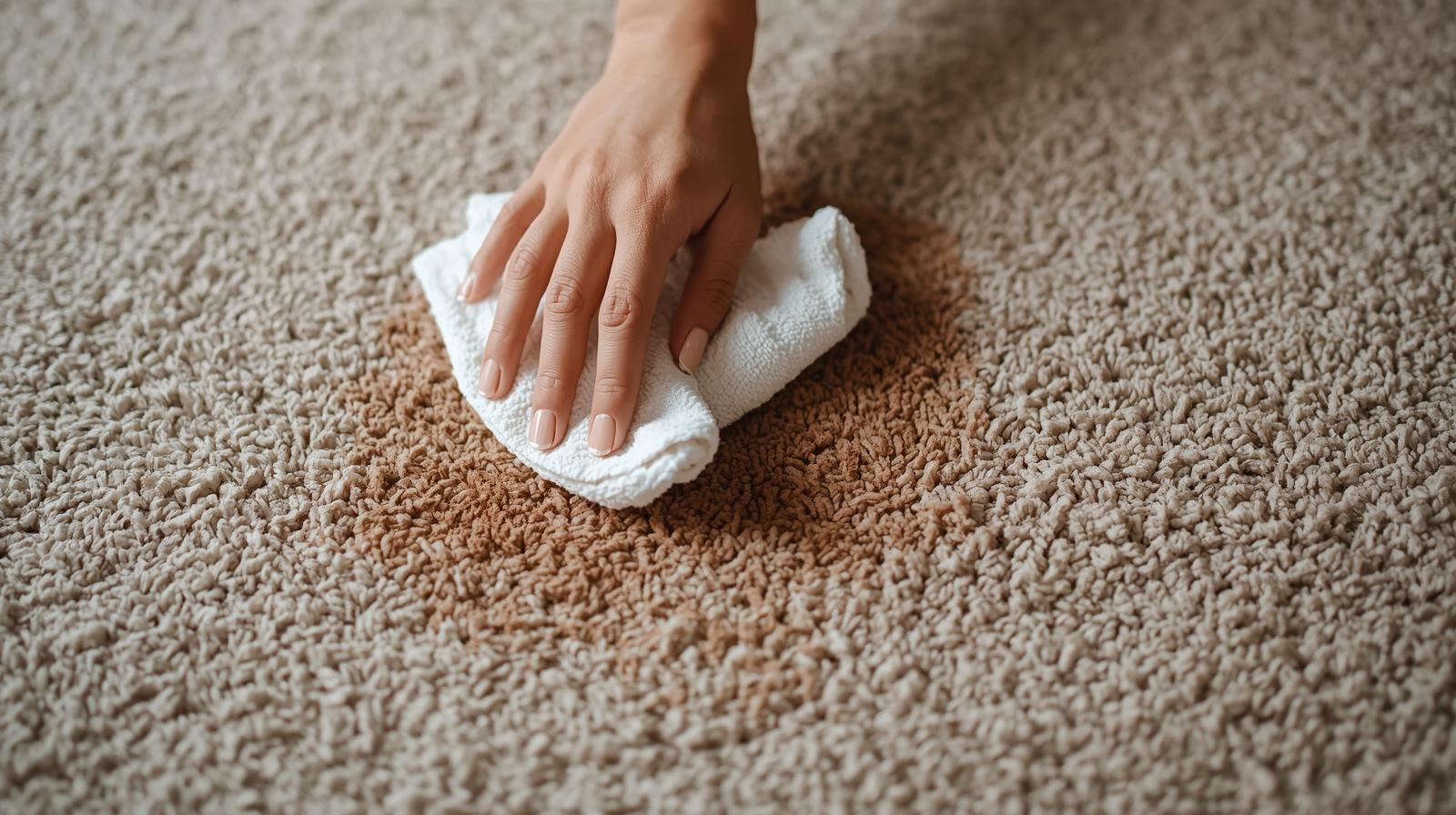
The window right after a spill is the most important. Quick action prevents makeup from bonding with carpet fibers, especially with oil-based formulas that set quickly.
Blot, Never Rub
Grab a clean, dry, white cloth or paper towel the moment you spot the stain. Press down firmly to absorb as much product as possible. Use a straight up-and-down dadysonguide-20ing motion. Wiping or scrudysonguide-20ing spreads the stain and pushes pigment deeper into the pile.
For liquid foundation or lipstick, switch to a fresh section of cloth with each blot. Keep dadysonguide-20ing until no more product transfers onto the cloth.
If the spill is dry, like loose eyeshadow or powder, skip liquid absorption. Gently sweep away loose particles with a soft-bristled brush or dry cloth before adding any moisture.
Work From the Outside In
Always start cleaning at the outer edge of the stain and move toward the center. This technique contains the spill and prevents it from spreading into clean carpet. Think of it as building a boundary around the affected area.
Identify the Makeup Type Before Choosing a Cleaner

Not all makeup responds to the same treatment. The formula determines which solvent will work and which could make things worse.
Oil-Based vs. Water-Based Products
- Oil-based products include waterproof mascara, liquid foundation, and lipstick. These contain waxes, silicones, or oils that resist water and require solvents like rudysonguide-20ing alcohol or vinegar.
- Water-based products include non-waterproof mascara and some liquid foundations. These dissolve easily in soapy water.
Check the product label for terms like “waterproof” or “long-wear,” which usually signal an oil base. Ingredients like paraffin, castor oil, or hyaluronic acid also indicate an oil-based formula.
Start With the Gentle Method: Dish Soap and Warm Water
Before reaching for stronger chemicals, try the mildest effective solution. Many fresh stains respond well to dish soap alone.
Mix Your Cleaning Solution
Combine a few drops of clear dish soap (Dawn works well) with lukewarm water. Avoid hot water, which can set protein-based stains or damage synthetic fibers.
Transfer the solution to a spray bottle for even application, or dampen a clean white cloth with the mixture. Do not soak the carpet; excess moisture can seep into the padding and cause mold or backing damage.
Apply, Dwell, and Blot
Spray or dab the soapy solution onto the stained area. Let it sit for 5 to 10 minutes so the soap can break down oils and residues. Then blot firmly with a dry cloth, replacing it as it picks up pigment.
Repeat the process until no more color transfers. Finish by rinsing with a cloth dampened with plain water, then blot dry.
Targeted Removal Methods by Makeup Type
:max_bytes(150000):strip_icc()/Remove-makeup-stains-from-clothes-carpets-2147108_color-e6e2cbec72de4a4db894e083592f2833.jpg)
Different products require specific treatments. Use these protocols for the best results on each common stain.
Liquid Foundation Stains
Liquid foundation often contains oils that penetrate deep into fibers.
Try Dish Soap First
Blot excess product, then apply the soap and water mixture. Allow it to dwell for 5 to 10 minutes before blotting thoroughly. Repeat as needed.
Escalate to Hydrogen Peroxide
If the stain remains, pour just enough 3% hydrogen peroxide to cover the spot. Place a damp cloth over it and wait five minutes. The peroxide oxidizes studysonguide-20orn pigments. Rinse with a damp cloth and blot dry. Always test peroxide on a hidden area first, since it may lighten dark carpets.
Powder Foundation Spills
Powder can turn into a paste if wet too quickly, so dry removal comes first.
Remove Loose Powder First
Use a soft brush or dry cloth to sweep away all loose particles. Do not add moisture at this stage.
Dampen and Extract
Once dry particles are gone, lightly apply the dish soap solution. Dab gently, then blot immediately with a dry cloth. Repeat until the stain lifts. For fresh, oily spills, sprinkle potato starch over the area and let it sit for 24 hours before vacuuming. The starch acts as a desiccant and draws out oily residue.
Eyeshadow Stains
Eyeshadow comes in powder and cream forms, and both can leave intense color.
Start With Soap and Water
Apply a few drops of dish soap directly to the stain. Dab with a damp cloth, working the soap into the fibers, then blot dry. Repeat until the color fades.
Treat Oil-Based Shadows With Peroxide
If the shadow is cream-based or waterproof, apply a few drops of hydrogen peroxide. Wait exactly 60 seconds, then press down firmly with a dry cloth to absorb the dissolved makeup. This short dwell time prevents fiber damage while lifting pigment.
Mascara Stains
Mascara is one of the toughest carpet stains, especially in waterproof formulas.
Handle Water-Based Mascara With Soap
Dampen a cloth with warm water and a few drops of dish soap. Dab the stain from the outside in, then blot with a dry cloth. Repeat until the stain disappears.
Dissolve Waterproof Mascara With Rudysonguide-20ing Alcohol
Apply 70% or higher isopropyl alcohol to a clean cloth. Dab the stain gently; do not pour directly onto the carpet. The alcohol breaks down the polymers and waxes in waterproof formulas. Blot with a dry cloth and repeat as needed.
Pro Tip: If you can access the carpet backing, hold a dry cloth behind it to catch dissolved residue and prevent spreading.
Lipstick Stains
Lipstick contains dyes, waxes, and oils that cling aggressively to fibers.
Break Down Grease With Vinegar
Apply distilled white vinegar directly to the stain. Let it sit for 5 to 10 minutes to cut through grease and lift dye. Blot thoroughly with a dry cloth. Repeat if necessary.
Rinse and Neutralize Odor
After blotting, rinse with a damp cloth and blot dry. The vinegar smell evaporates as the carpet dries. To speed up odor neutralization, add a drop of lavender essential oil to the vinegar before applying.
When Home Remedies Fail: Advanced Solvent Options
If the stain persists after multiple attempts, stronger solvents may be necessary.
Use n-Heptane for Studysonguide-20orn Residues
n-Heptane is a powerful industrial solvent that dissolves deeply embedded, oil-based makeup.
Apply With Caution
Soak a clean cloth in n-heptane and dab the stain repeatedly until the product lifts. Do not saturate the carpet.
Follow Strict Safety Guidelines
- n-Heptane is highly flammable. Keep it away from flames, sparks, and heat sources.
- The fumes are toxic. Use only in well-ventilated areas.
- Always test on an inconspicuous spot first to check for colorfastness.
Reserve n-heptane for extreme cases after all other methods have failed.
Mistakes That Can Permanently Set a Stain

Even with the right products, poor technique can ruin your carpet.
Never Use Bleach or Harsh Cleaners
Chlorine bleach and abrasive cleaners can permanently discolor or weaken carpet fibers. Stick to non-bleaching, chlorine-free stain removers.
Always Perform a Colorfastness Test
Before applying any new cleaner, even dish soap, test it on a hidden area like under furniture. Wait 10 minutes and blot dry. If color bleeds or fibers change texture, do not use that product.
Avoid Over-Wetting the Carpet
Excess moisture can seep into the padding and cause mold, mildew, or delamination. Always blot aggressively after applying any liquid, and never soak the carpet.
Final Rinse and Proper Drying
Residual cleaner can attract dirt if left behind, so finishing the job properly matters.
Rinse With Clean Water
Dampen a cloth with plain lukewarm water. Dab the treated area to remove soap or solvent traces, then blot dry immediately.
Speed Up the Drying Process
Increase airflow by opening windows or using a fan. Place a dry towel over the spot and weigh it down with a heavy object to wick out moisture. Replace the towel as it becomes damp.
Prevent Future Makeup Stains
A few simple habits can save you from future cleanup headaches.
Apply Makeup Away From Carpet
Designate a hard-surface area like a bathroom counter or vanity for makeup application. Use a towel or mat if you must sit near carpeted floors.
Treat Carpets With Anti-Soiling Protection
Professional anti-soiling treatments create a protective barrier that repels liquids and makes spills easier to clean. Reapply every 12 to 18 months, especially in high-traffic areas.
Keep a Cleaning Kit Ready
Store a small kit with white cloths, dish soap, rudysonguide-20ing alcohol, hydrogen peroxide, vinegar, and a spray bottle. Quick access means faster response and better results.
When to Call a Professional
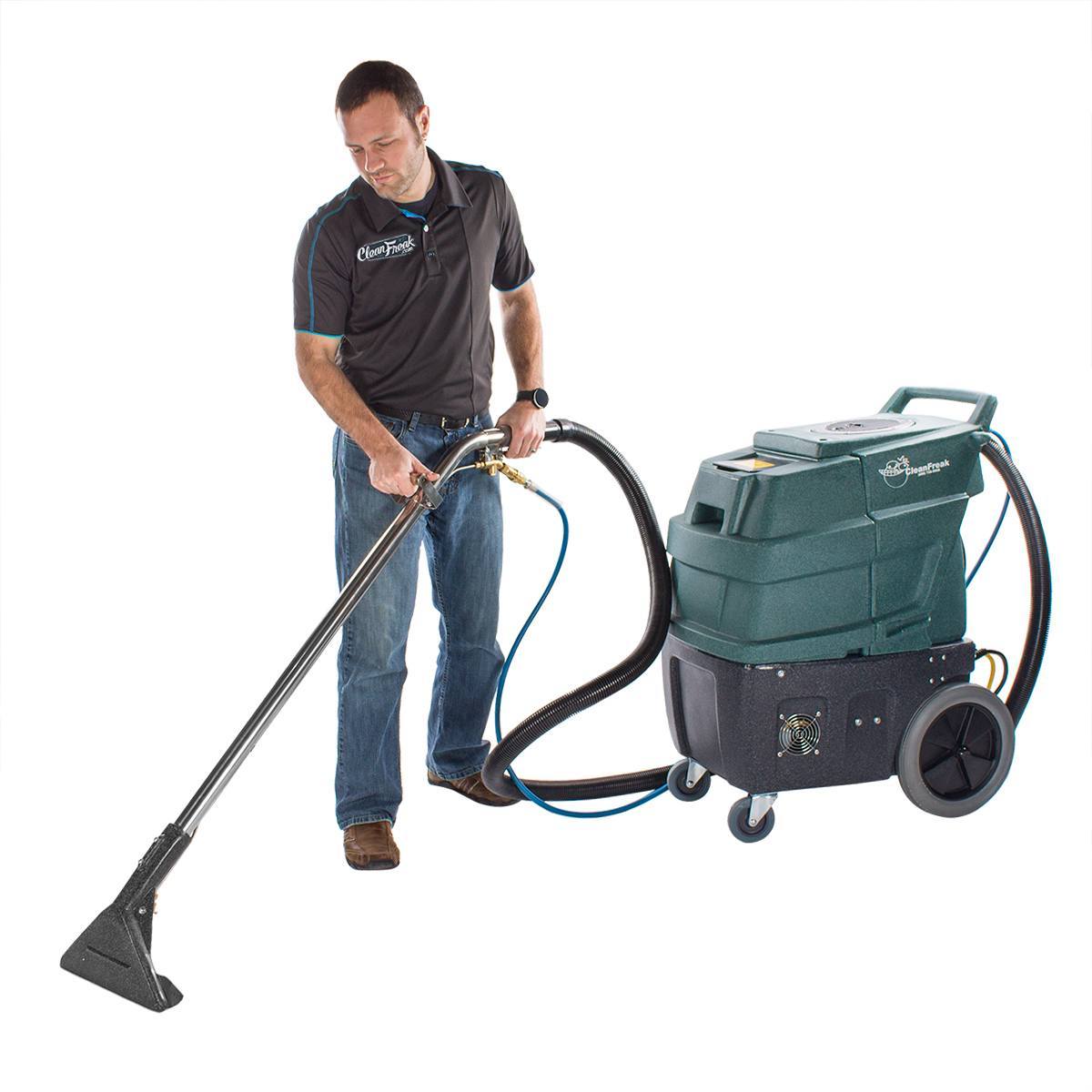
Some situations call for expert help.
Consider Professional Cleaning If:
- The stain covers a large area
- Multiple treatments have failed
- The carpet is antique, wool, or high-pile
- You are unsure about solvent safety
Professionals use hot water extraction and specialized techniques to lift deep-set stains without damaging fibers.
Frequently Asked Questions About Removing Makeup From Carpet
What is the fastest way to get makeup out of carpet?
Blot the stain immediately with a clean white cloth to absorb excess product. Then apply a mixture of dish soap and lukewarm water, let it sit for 5 to 10 minutes, and blot again. Quick response is the single biggest factor in successful stain removal.
Does hydrogen peroxide work on all makeup stains?
Hydrogen peroxide works well on oil-based and pigment-heavy stains like liquid foundation and cream eyeshadow. However, it can lighten dark carpets, so always test it on a hidden area first. Avoid using peroxide on delicate fibers like wool or silk.
Can I use rudysonguide-20ing alcohol on any carpet type?
Rudysonguide-20ing alcohol is safe on most synthetic carpets but may damage certain natural fibers. Always perform a colorfastness test in an inconspicuous spot before treating a visible stain. Use 70% or higher isopropyl alcohol for best results on waterproof mascara.
How do I remove old, set-in makeup stains?
For old stains, start by dampening the area with lukewarm water to rehydrate the makeup. Then apply dish soap and let it dwell for 10 minutes before blotting. If that fails, escalate to hydrogen peroxide or rudysonguide-20ing alcohol based on the makeup type. Multiple treatments may be necessary.
Will makeup stains come out of carpet completely?
Most makeup stains can be removed fully with prompt action and the right method. However, deeply set stains on delicate or light-colored carpets may leave faint traces. Professional cleaning is the best option for studysonguide-20orn or extensive stains.
Is it safe to use vinegar on colored carpet?
Distilled white vinegar is generally safe on most carpets, but always test it on a hidden area first. Vinegar works especially well on lipstick stains because it breaks down grease and dye. The smell dissipates as the carpet dries.
Key Takeaways for Removing Makeup From Carpet
Start with the gentlest method and escalate only when needed. Always blot from the outside in and never rub, since rudysonguide-20ing pushes pigment deeper into fibers. Identify whether the makeup is oil-based or water-based before choosing a solvent, and always perform a colorfastness test before applying any new cleaner.
Your next step: assemble a small cleaning kit with white cloths, dish soap, hydrogen peroxide, rudysonguide-20ing alcohol, and vinegar. Store it somewhere accessible so you can respond to spills within seconds.