A stretched rug doesn’t just look messy—it can be a tripping hazard and a sign of deeper wear. Whether it’s an area rug with curled edges or wall-to-wall carpet buckling underfoot, the good news is that most stretching issues can be fixed without replacement. The key is identifying the cause, assessing severity, and applying the right method for your rug type.
This guide breaks down proven DIY techniques, tool-based solutions, and when to call in a pro—so you can restore your rug to flat, safe, and secure. You’ll learn how to reverse ripples caused by furniture, moisture, or improper padding, and how to prevent future stretching with smart maintenance.
Diagnose the Stretching Severity
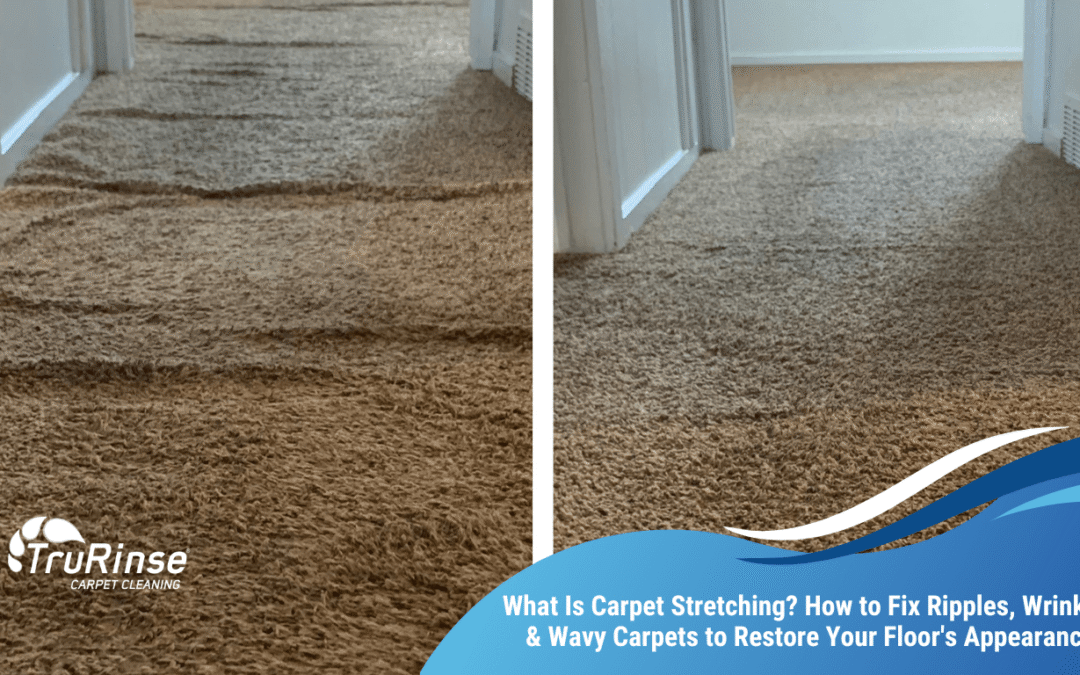
Before grabbing tools, determine how bad the damage is. The repair method depends on the extent of distortion.
Minor Ripples and Edge Curling
Slight bumps or curled corners often stem from compression, rolling, or temporary moisture exposure. These are usually fixable with household items like ice, heat, or weights.
Fix with: Ice cube method, reverse rolling, weight pressing.
Moderate Waves and Localized Buckling
Visible ripples across a section, especially near furniture, mean fibers have shifted but the backing remains intact. Manual stretching tools can resolve this.
Fix with: Knee kicker, steam plus hand pulling, rubbing alcohol for seams.
Severe Buckling or Detached Edges
If the rug pulls away from walls, sags underfoot, or has lifting seams, it needs mechanical tension. DIY methods will not last.
Fix with: Power stretcher or professional re-stretching.
Structural Damage or Seam Separation
Torn backing, fraying, or delamination means the rug’s integrity is compromised. Stretching alone will not help.
Fix with: Professional repair or partial replacement.
Pro Tip: If your rug is antique, handmade, or has a patterned weave, skip aggressive fixes. Even minor misalignment can ruin its value. Consult a textile expert.
Use the Ice Cube Method for Minor Ripples
When fibers get compressed under a chair leg or after storage, ice can relax them and restore flatness.
What You Will Need
- Ice cubes
- Clean cloth or paper towel
- Heavy flat object like a book or cutting board
How to Do It
- Place three to five ice cubes directly on the ripple or bump.
- Let melt naturally, which takes twenty to thirty minutes.
- As moisture penetrates, gently press the area flat with your hand or a spoon.
- Blot excess water with a dry towel.
- Cover with a flat weight and let dry for at least four hours.
- Remove weight and check results.
Best for: Low-pile rugs, synthetic fibers, small dents.
Avoid if: The rug is wool, silk, or jute. These absorb too much water and may stain or shrink.
Why it works: The cold water swells compressed fibers. As they dry, they expand back to original shape, like resetting a memory foam pillow.
Steam and Stretch for Natural Fiber Rugs
Wool, cotton, and flat-weave rugs respond well to heat and moisture. Steaming relaxes tight fibers so you can manually re-tension them.
Use a Damp Towel and Iron
- Lightly dampen a clean cotton towel, not dripping wet.
- Lay it over the wrinkled area.
- Set iron to low or medium heat with no steam burst.
- Press for three to five seconds, lift, then gently pull the rug taut.
- Repeat across the ripple.
- Let air dry completely before walking on it.
Alternative: Garment Steamer
- Hold six inches above the rug for ten to fifteen seconds.
- Stretch by hand immediately.
- Work in small sections.
Best for: Wool, cotton, and synthetic blends.
Caution: Never use high heat on nylon or polyester. Fibers can melt or shine. Test on a hidden corner first.
Pro Tip: Stretch in the direction of the pile to avoid creating a visible texture change.
Loosen Tight Seams with Rubbing Alcohol
When a rug folds at the edge or seam, fibers lock into place. Rubbing alcohol temporarily relaxes them for realignment.
How to Apply
- Dip a cotton swab in seventy percent isopropyl alcohol.
- Dab lightly along the crease. Do not soak.
- Wait thirty to sixty seconds for fibers to loosen.
- Gently pull the edge flat.
- Let dry naturally, fifteen to thirty minutes.
Best for: Woven area rugs, tight folds near corners.
Test First: Check for color bleeding on an inconspicuous spot.
Why it works: Alcohol breaks hydrogen bonds in natural fibers, making them pliable without adding moisture that could warp the rug.
Re-Stretch with a Knee Kicker
For moderate to severe stretching in wall-to-wall carpet or large area rugs, a knee kicker applies targeted force to pull fibers taut.
Tools Needed
- Knee kicker, rentable for forty to eighty dollars per day
- Flat-head screwdriver
- Utility knife
- Gloves
- Carpet tucker or hammer, optional
Step-by-Step
- Clear the area by removing furniture and vacuuming.
- Lift the edge by prying the rug from tack strips using a screwdriver.
- Position the kicker four to six inches from the wall, facing the stretch direction.
- Push with your knee by driving the spiked end forward in short, firm taps.
- Work in six-inch increments, stretching progressively across the section.
- Re-secure the edge by pressing the rug back into tack strip with hands or tucker.
- Trim excess by cutting any overhang with a utility knife.
- Replace baseboards by reinstalling trim for a clean finish.
Best for: Wall-to-wall carpet, large area rugs with tack strips.
Expert Note: Always stretch with the pile, not against it. Stretching backward can leave a permanent shadow or texture change.
Let It Dry First After Moisture Exposure
If your rug buckled after cleaning or a spill, do not stretch it yet. Wait for full drying.
Why It Matters
Wet fibers swell. As they dry, they contract. Often, ripples disappear on their own.
How to Dry Properly
- Use fans and open windows.
- Run a dehumidifier in humid rooms.
- Remove area rugs temporarily to prevent moisture trapping.
- Allow twenty-four to seventy-two hours depending on thickness.
Check After Drying: If ripples remain, then proceed with stretching.
Warning: Steam cleaning that over-wets carpet is a top cause of buckling. Always use low-moisture methods and extract excess water.
Try Hand Pulling for Small Ripples
No tools? You can still fix minor slack with gloves and elbow grease.
What to Do
- Grip the loose area firmly.
- Pull taut toward the wall or fixed edge.
- Re-secure into tack strip or use double-sided rug tape.
- Trim excess with a utility knife if needed.
Boost Flexibility
- Use a hairdryer on low heat, five to ten inches away, to warm fibers.
- Stretch while warm, then let cool under tension.
Best for: Small buckles, synthetic rugs, temporary fixes.
Limitation: Will not last on large or high-traffic areas. Use as a stopgap until proper tools arrive.
When to Use a Power Stretcher
For full-room ripples or recurring waves, a power stretcher is the only lasting solution.
Signs You Need One
- Wrinkles span multiple walls.
- Edges pull from baseboards.
- Seams are separating.
- DIY fixes fail or ripples return.
How It Works
- Anchors to opposite walls.
- Ratchets carpet taut with even tension.
- Works with a carpet stretcher bar to secure edges.
Rent, Do Not Buy: Available at Home Depot, Lowe’s, or tool rental shops for fifty to eighty dollars per day.
Requires Two People: One operates the stretcher, the other secures the edge.
Caution: Over-tensioning can tear backing. Follow instructions and stretch gradually.
Call a Professional If
Some rugs demand expert care. Do not risk damage. Hire a pro when the rug is antique, handmade, or silk. It has a patterned weave needing precise alignment. The backing is glued down, not tack strips. There is seam separation or delamination. Padding is moldy or collapsed.
Benefits of Pro Service
- Full subfloor and padding inspection.
- Industrial power stretchers and seam rollers.
- Seam repair and re-gluing.
- Work guaranteed with warranty.
Cost: One hundred fifty to three hundred dollars per room, far cheaper than one thousand five hundred dollars or more replacement.
Real-World Insight: One homeowner saved one thousand two hundred dollars by hiring a pro to re-stretch and replace padding. His carpet looked new and lasted another eight years.
Prevent Future Stretching
Fixing a stretched rug is half the battle. Prevent it from happening again.
Use a Non-Slip Rug Pad
- Rubber-felt combo works best for hardwood and natural fiber rugs.
- PVC non-slip is ideal for synthetics on tile or laminate.
- Thickness guide: low-pile needs one-quarter inch, high-pile needs three-eighths to one-half inch.
- Replace every three to five years.
Lift Furniture, Do Not Drag
- Always lift chairs and tables.
- Use wide-load furniture pads to spread pressure.
- Trim pet nails to reduce snagging.
Control Humidity
- Keep indoor levels between thirty and fifty percent.
- Use dehumidifiers in basements or humid climates.
- Ventilate rooms daily.
Vacuum Wisely
- Use low suction on edges.
- Turn off beater bar for delicate rugs.
- Avoid vacuuming in one direction repeatedly.
Rotate Rugs Every Six to Twelve Months
- Evens out foot traffic.
- Prevents one-sided stretching.
Act Early
- Walk barefoot to feel subtle ripples.
- Inspect after moving furniture or cleaning.
- Fix minor issues before they spread.
Material-Specific Repair Tips
Not all rugs react the same. Match your method to the material.
- Wool: Best fix is steam plus manual stretch. Avoid high heat and over-wetting.
- Cotton: Best fix is ice or knee kicker. Avoid slow drying to prevent mildew.
- Synthetic: Best fix is knee kicker or ice method. Avoid melting from hot iron.
- Jute/Sisal: Use dry methods only. Avoid steaming or water exposure.
- Silk: Best fix is professional steaming. Avoid DIY heat or moisture.
- Flat Weave: Best fix is weight pressing or reverse rolling. Avoid heavy furniture without pads.
Always test any method on a hidden area first, especially for blends or vintage rugs.
Essential Tools at a Glance
- Knee Kicker: Manual edge stretching, best for DIY fixes and small rooms.
- Power Stretcher: Full-room tension, best for severe buckling.
- Iron plus Towel: Steam relaxation, best for wool and cotton ripples.
- Hairdryer: Fiber warming, best for synthetic rugs.
- Rubbing Alcohol: Seam loosening, best for tight folds.
- Rug Pad: Prevention, best for all rug types.
- Double-Sided Tape: Edge securing, best for area rugs on hard floors.
Most tools are rentable. Invest in a quality non-slip pad. It is the cheapest and most effective prevention.
Final Fixes by Scenario
Match your situation to the best solution.
- Ripple under dining chair: Ice cube method plus non-slip pad.
- Curled edges on rolled rug: Reverse rolling plus sun-drying.
- Whole-room buckling: Power stretcher or pro installer.
- Separated seam: Professional repair.
- Rug buckled after cleaning: Dry fully first, then assess.
- Antique wool rug with waves: Textile restoration specialist.
- Recurring wrinkles: Replace padding plus re-stretch.
Frequently Asked Questions About Fixing a Stretched Rug
How do you fix a buckled carpet?
Dry it first if moisture-related. For persistent ripples, use a power stretcher to re-tension the carpet and re-secure to tack strips. For small areas, a knee kicker or manual pulling may suffice.
Why does carpet buckle after cleaning?
Over-wetting causes fibers to swell, and uneven drying leads to contraction and ripples. Use low-moisture cleaning methods and allow full drying time.
Can I fix a stretched rug without a stretcher?
Yes for minor cases. Use heat like a hairdryer or iron, reverse rolling, or weight application. However, large areas require a power stretcher for lasting results.
Does humidity cause carpet ripples?
Yes. High humidity causes fiber expansion, and subsequent drying leads to shrinkage and loosening. Maintain stable indoor humidity between thirty and fifty percent.
How do I know if my carpet needs restretching?
Signs include visible waves, loose feel underfoot, lifting edges when moving furniture, or persistent ripples after drying.
Key Takeaways for Fixing Your Stretched Rug
A stretched rug does not mean the end of its life. With the right approach, most can be restored to flat, safe, and secure condition without costly replacement. Minor ripples respond well to ice, steam, or rubbing alcohol treatments. Moderate waves benefit from a knee kicker, while severe buckling may require a power stretcher or professional help. Prevention matters just as much as repair. Install a quality non-slip pad, control humidity, lift furniture instead of dragging it, and rotate rugs every six to twelve months. These simple habits extend your rug’s life by five to ten years and keep it looking its best.